

Building an outdoor kitchen is exciting, but the project feels much easier when you understand the full process before anyone starts digging, wiring, framing, or installing appliances.
The outdoor kitchen build process usually moves through planning, layout design, permits, site preparation, utility work, construction, finishing, inspection, and maintenance. Knowing the order helps you avoid delays, budget surprises, and last-minute design changes.
- The outdoor kitchen build process starts with planning, budgeting, measurements, and local code checks.
- Layout decisions affect appliance placement, traffic flow, seating, utility runs, and long-term comfort.
- Gas, plumbing, electrical, drainage, and lighting should be planned before construction begins.
- Most projects move from site prep to utilities, framing, appliance installation, countertop work, and inspection.
- Simple grill islands can move faster, while larger custom kitchens usually take more planning and coordination.
- Choosing durable products and coordinated outdoor furniture helps the finished space feel complete from day one.
Understanding The Outdoor Kitchen Build Process From Start To Finish
The outdoor kitchen build process follows a practical sequence. Each stage supports the next one, so skipping early planning can create expensive problems later.
In most projects, the process includes planning, design, budgeting, permits, site preparation, utility installation, base construction, appliance installation, countertop work, finishing details, and final inspection.
Before choosing appliances, review BetterPatio’s full outdoor kitchen collection to compare compact grill islands, L-shaped layouts, modular options, and fully equipped outdoor kitchen setups.
Planning shortcutA successful outdoor kitchen build starts with the final use case. Decide whether you want casual grilling, family meals, frequent entertaining, or a full outdoor cooking station before choosing the layout.
Step 1: Plan Your Goals, Budget, And Build Scope

Planning is the most important part of the outdoor kitchen build process. This stage defines what you need, what you can spend, and how complex the build should be.
Start by deciding how the space will actually be used. A family that grills twice a week may need a simple built-in island with prep space. A homeowner who hosts often may want refrigeration, a sink, side burners, bar seating, shade, lighting, and dining furniture.
Decide whether you want a basic grill station, a compact outdoor kitchen, or a full backyard entertainment zone with cooking, serving, dining, and lounge areas.
Include appliances, counters, cabinets, foundation work, delivery, installation, permits, utilities, seating, shade, lighting, and a contingency fund for unexpected costs.
A prefab island can be faster and more predictable. A custom kitchen gives more layout control. A modular setup can balance speed, flexibility, and design quality.
For a deeper planning sequence, read BetterPatio’s guide on how to plan a custom outdoor kitchen. It breaks the planning process into clear steps before appliance purchases begin.
Step 2: Choose The Best Outdoor Kitchen Location
Location affects comfort, cost, safety, and convenience. A kitchen placed too far from the house may require longer utility runs. A kitchen placed in the wrong wind direction may send smoke toward guests or indoor doors.
- Keep access practical: place the kitchen close enough to your indoor kitchen, patio doors, or dining area.
- Watch wind direction: avoid sending smoke directly toward seating, windows, or neighbors.
- Plan shade early: sun exposure can affect appliance comfort, countertop heat, and furniture placement.
- Leave movement space: make sure guests can walk around the cooking area safely.
- Check utility access: gas, water, and electrical proximity can reduce installation complexity.
If your patio feels tight, use BetterPatio’s outdoor kitchen space requirements guide to understand clearances, seating space, and minimum working zones.
Step 3: Design The Outdoor Kitchen Layout
The layout determines how well the kitchen works once it is finished. A smart design keeps the grill, prep space, sink, storage, and seating arranged in a way that feels natural.
Use the cooking, prep, cleaning, and serving zones as your core planning framework. In a compact kitchen, these zones may be close together. In a larger kitchen, they should still be easy to reach without crossing crowded guest paths.
| Layout Type | Best For | Build Advantage | Planning Note |
|---|---|---|---|
| Straight Layout | Small patios and narrow spaces | Simple utility routing and lower complexity | Works best when all functions can fit in one clean run. |
| L-Shaped Layout | Corners and entertaining zones | Separates grilling from prep or bar seating | Needs enough patio width for movement around both legs. |
| U-Shaped Layout | Large dedicated cooking areas | Maximum counter space and appliance capacity | Requires careful spacing so the center does not feel cramped. |
| Island Layout | Open patios and social cooking | Lets the cook face guests while preparing food | Needs clearance on all sides for safe traffic flow. |
Compare shape options in BetterPatio’s guide to outdoor kitchen layout ideas, which explains straight, L-shaped, U-shaped, and island layouts in detail.
Step 4: Check Permits, Codes, And HOA Rules
Outdoor kitchens with gas, plumbing, electrical, roofing, or structural work may require permits. Requirements vary by city, county, and neighborhood, so it is important to check before construction begins.
Permits and inspections may feel like extra steps, but they protect the safety and long-term value of the project. They also help avoid fines, delays, and forced changes after the kitchen is already installed.
Code reminderGas lines, electrical outlets, plumbing, drainage, and covered grill installations should be reviewed against local code before work begins. When in doubt, use licensed professionals.
Step 5: Prepare The Site And Foundation
A stable foundation supports the entire outdoor kitchen build process. If the surface is uneven, weak, or poorly drained, the finished kitchen can shift, crack, or collect water around the base.
Site preparation may include clearing the area, leveling soil, correcting drainage, reinforcing an existing patio, installing pavers, or pouring a concrete slab. Most permanent outdoor kitchens need a strong, level surface that can support heavy appliances, counters, and cabinets.
- Clear the area: remove old furniture, debris, plants, or unstable materials.
- Check slope: water should drain away from the house and outdoor kitchen island.
- Confirm support: verify that the patio or slab can handle the finished weight.
- Plan access: make sure delivery crews can reach the build area safely.
Step 6: Install Utilities Before Construction Moves Forward

Utility planning is where many outdoor kitchen projects become more technical. Gas, water, drainage, and electrical systems should be installed before the final island, counters, and appliances are locked into place.
Built-in grills, burners, and pizza ovens may require a gas line, shutoff valve, pressure test, and professional inspection. Propane setups still need safe tank access and ventilation.
A sink may need water supply lines, a drain line, proper slope, shutoff valves, freeze protection, and code-compliant drainage depending on your location.
Refrigerators, lighting, outlets, ignitions, fans, and entertainment systems require outdoor-rated wiring and GFCI protection. Plan outlets before countertops and finishes go in.
If refrigeration is part of the plan, browse BetterPatio’s outdoor refrigeration collection before finalizing cabinet openings and electrical placement.
Step 7: Build The Base Structure
Once the site and utilities are ready, the base structure can be built or set in place. This may involve masonry, steel framing, modular panels, or a preassembled island depending on the project type.
Prefab and modular systems can speed up this part of the process because much of the structure is already designed. Custom masonry builds usually involve more on-site work and a longer timeline.
For faster project paths, compare prefabricated BBQ islands and modular outdoor kitchens before committing to a fully custom build.
Step 8: Install Appliances, Counters, And Finishes
This stage is when the kitchen starts to look finished. Appliances are placed into their openings, counters are installed, and exterior materials are completed.
Common appliance choices include built-in grills, side burners, outdoor refrigerators, sinks, storage drawers, trash bins, and access doors. Countertops and finishes should be outdoor rated, heat resistant, and compatible with your climate.
For finish planning, read BetterPatio’s guide to outdoor kitchen countertop materials. For structure decisions, compare stainless steel, stucco, and stone frames.
Step 9: Add Seating, Shade, Heating, And Comfort Features
The cooking station is only one part of the final backyard experience. Seating, shade, lighting, rugs, and heating help the outdoor kitchen feel like a complete outdoor room.
Plan these pieces while the kitchen is being designed so walking paths, furniture scale, and dining zones all work together.
- Dining furniture: gives guests a comfortable place to eat close to the kitchen.
- Shade: improves comfort during hot afternoons and protects some materials from constant sun.
- Lighting: supports safer cooking and better evening entertaining.
- Heating: extends the patio season in cooler weather.
To finish the surrounding space, explore BetterPatio’s outdoor living packages and outdoor heating options.
Outdoor Kitchen Build Process Timeline
The timeline depends on project complexity, product availability, permitting, weather, and contractor scheduling. A compact prebuilt setup can move faster, while a fully custom build with utilities and structural additions takes longer.
| Project Type | Typical Timeline | What Affects The Schedule |
|---|---|---|
| Basic Grill Island | 2 to 3 weeks | Delivery timing, surface readiness, and simple utility needs. |
| Mid-Range Outdoor Kitchen | 3 to 5 weeks | Appliance selection, electrical work, gas line setup, and countertop installation. |
| Custom Luxury Build | 5 to 8 weeks or longer | Permits, masonry, utility complexity, custom finishes, shade structures, and inspections. |
Weather, material delays, inspection scheduling, and change orders can extend these ranges. BetterPatio’s outdoor kitchen planning guide notes that fully custom projects can take longer because design consultations, 3D renderings, material selection, ordering, and delivery all happen before the final build is complete.
Outdoor Kitchen Build Cost Breakdown

Outdoor kitchen costs depend on size, appliances, materials, utilities, labor, and site conditions. A basic project may stay relatively simple, while a larger project with plumbing, refrigeration, stone counters, and shade can move into a higher budget range.
| Budget Level | Estimated Range | What It May Include | Best Fit |
|---|---|---|---|
| Basic Setup | $5,000 to $10,000 | Grill island, basic counter space, limited appliances, minimal utility work. | First-time outdoor kitchen owners or compact patios. |
| Mid-Range Build | $15,000 to $25,000 | Built-in grill, storage, upgraded counters, refrigerator, lighting, or simple utilities. | Homeowners who entertain regularly and want a finished cooking zone. |
| Luxury Custom Kitchen | $30,000 and up | Premium appliances, custom layout, plumbing, stone finishes, bar seating, shade, and full outdoor living design. | Large patios and frequent entertaining spaces. |
For more cost planning, review BetterPatio’s guide on how much an outdoor kitchen should cost.
Common Challenges During The Outdoor Kitchen Build Process
Even a well-planned project can run into challenges. The difference is that prepared homeowners are less likely to be surprised by them.
| Challenge | Why It Happens | How To Avoid It |
|---|---|---|
| Permit delays | Local approval can take longer than expected. | Check requirements before ordering major components. |
| Utility complications | Gas, water, or electrical runs are farther or harder to route than planned. | Map utility access during the design phase. |
| Weather delays | Rain, storms, heat, or freezing conditions can slow outdoor work. | Build schedule flexibility into the timeline. |
| Design changes | Appliances, counters, or seating plans change after construction starts. | Finalize the layout and product list before site work begins. |
To avoid avoidable errors, read BetterPatio’s guide to outdoor kitchen design mistakes before starting the build.
Shop Outdoor Kitchen Build Favorites
Use these BetterPatio picks as inspiration for different stages of the outdoor kitchen build process, from compact islands to larger entertaining-ready setups.
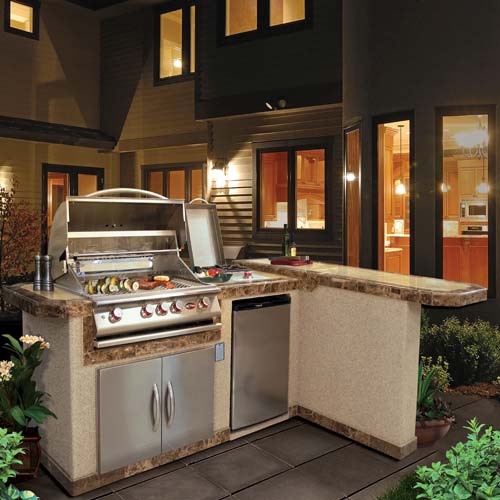
A corner-friendly island option for homeowners who want a defined cooking and prep zone.
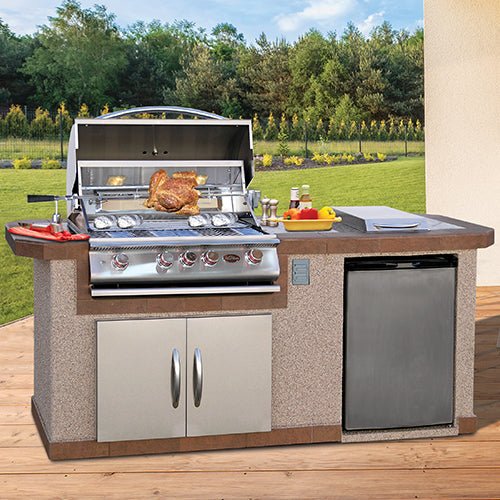
A flexible starting point when you want a compact island that still feels planned.
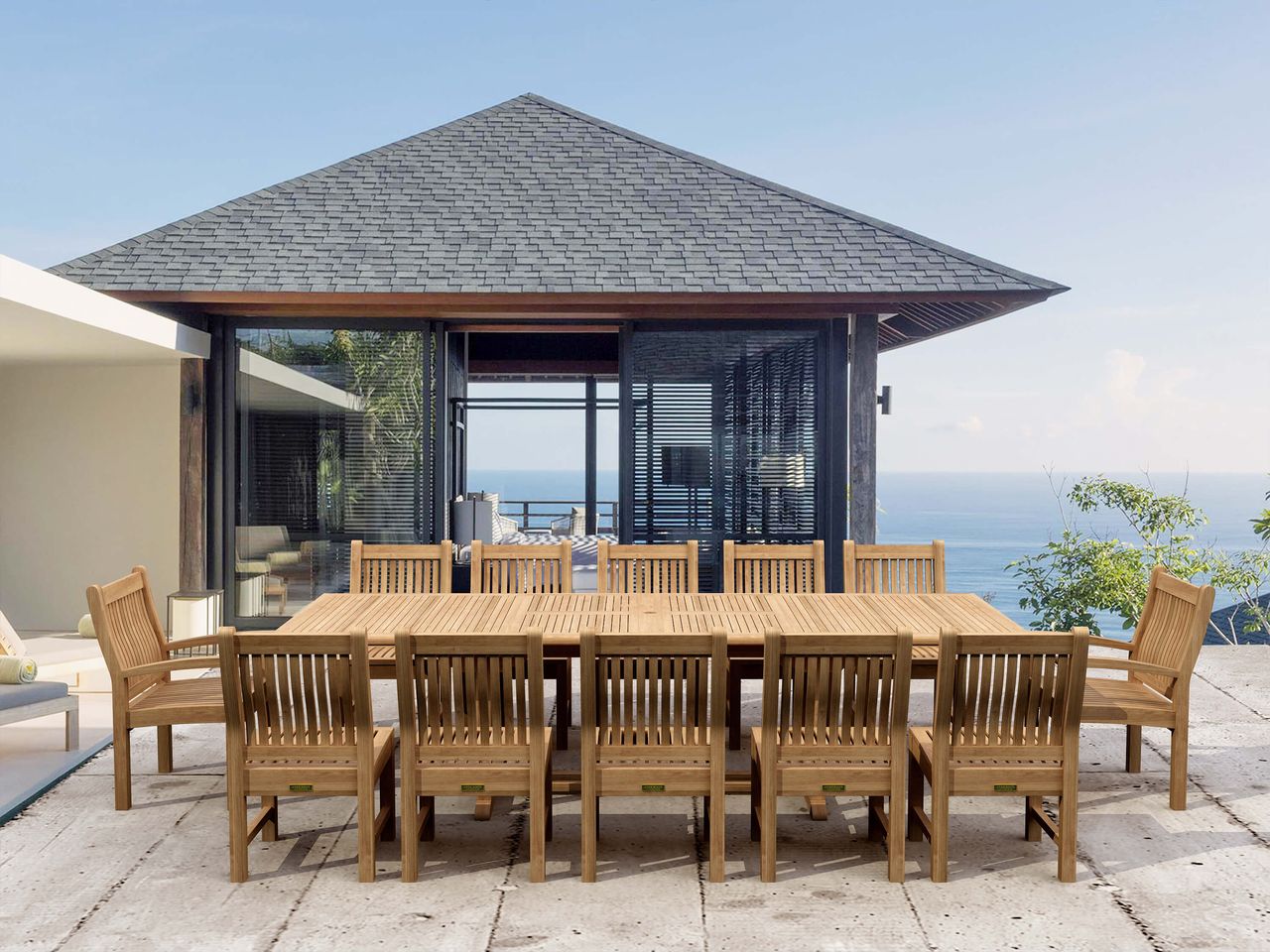
A complete dining setup for turning the build into a full outdoor entertaining area.
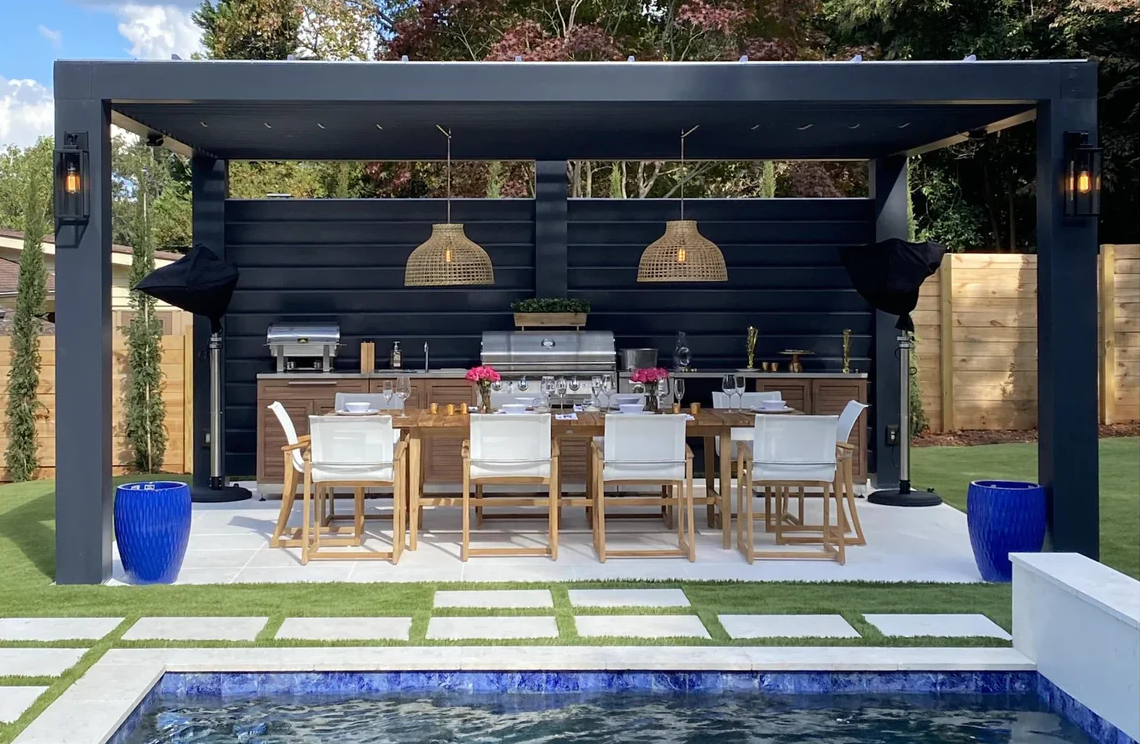
A shade upgrade that can help define the kitchen and dining zone before construction starts.
Maintaining Your Outdoor Kitchen After The Build
The build process does not end when the appliances are installed. Regular maintenance keeps the kitchen safe, clean, and attractive over time.
- Clean grills, burners, grates, counters, and sinks after use.
- Cover appliances when not in use, especially during storms or long off-seasons.
- Seal stone, concrete, and grout as recommended.
- Inspect gas, water, drainage, and electrical connections annually.
- Refresh furniture cushions, rugs, and accessories seasonally.
Frequently Asked Questions
How hard is it to build an outdoor kitchen?
Building an outdoor kitchen can be simple or complex depending on the features you choose. A basic grill island is easier than a full custom kitchen with gas, plumbing, electrical work, refrigeration, and shade structures. Licensed professionals are usually recommended for utilities and code-sensitive work.
Is $10,000 enough for a new outdoor kitchen?
A $10,000 budget can cover a small outdoor kitchen or basic grill island with essential features. It may not include premium appliances, plumbing, custom stonework, or major utility extensions. Keeping the layout compact helps stretch the budget.
What is the 3x4 kitchen rule?
The 3x4 kitchen rule is a planning concept that organizes key zones such as cooking, prep, cleaning, and serving so the kitchen feels efficient. In an outdoor kitchen, the grill, counter space, sink, and serving area should be close enough for easy movement without crowding the cook.
What is the average cost to build an outdoor kitchen?
Many outdoor kitchens fall between $10,000 and $25,000, but smaller setups can cost less and custom luxury kitchens can cost much more. Size, appliances, materials, utility work, site preparation, and labor all affect the final price.
How long does the outdoor kitchen build process take?
A basic grill island may take a few weeks, while a mid-range or custom outdoor kitchen can take several weeks or longer. Permits, weather, product availability, utility work, and inspections all affect the final timeline.
The outdoor kitchen build process becomes much easier when you know the order of events before construction begins. Start with goals, budget, location, and layout. Then plan utilities, permits, foundation work, appliance placement, counters, finishes, and final inspections.
When each stage is handled carefully, your outdoor kitchen becomes more than a grill station. It becomes a comfortable, durable, and useful backyard space for cooking, hosting, and relaxing.


