The frame material you choose for your outdoor kitchen determines how long it lasts, how it looks, and how much maintenance it needs for the next 10 to 20 years.
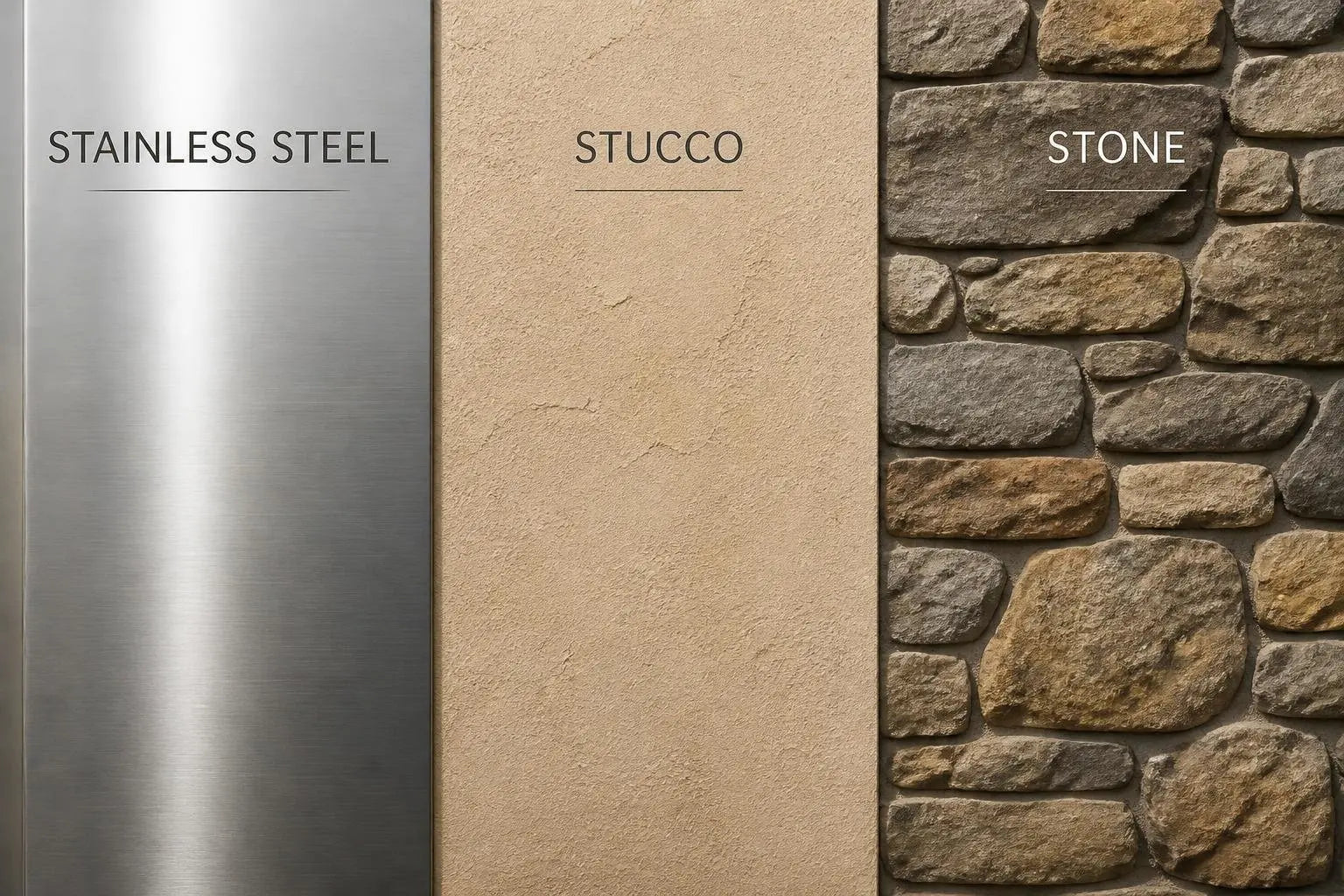
Stainless steel, stucco, and natural stone are the three most common frame and exterior finish options. Each solves different problems and creates a different look. Picking the wrong one for your climate or budget leads to repairs, replacements, or a kitchen that never looks quite right.
This guide compares all three materials on durability, maintenance, cost, and appearance so you can match the right frame to your backyard.
| Material | Durability | Maintenance | Fire Resistance | Appearance | Cost |
|---|---|---|---|---|---|
| Galvanized Steel Frame + Cement Board | Excellent | Very low | Non-combustible | Depends on finish | $$ |
| Stucco (over frame) | Good | Moderate (patching) | Good | Smooth, modern | $ |
| Natural Stone (over frame) Premium | Excellent | Very low | Non-combustible | High-end, textured | $$$ |
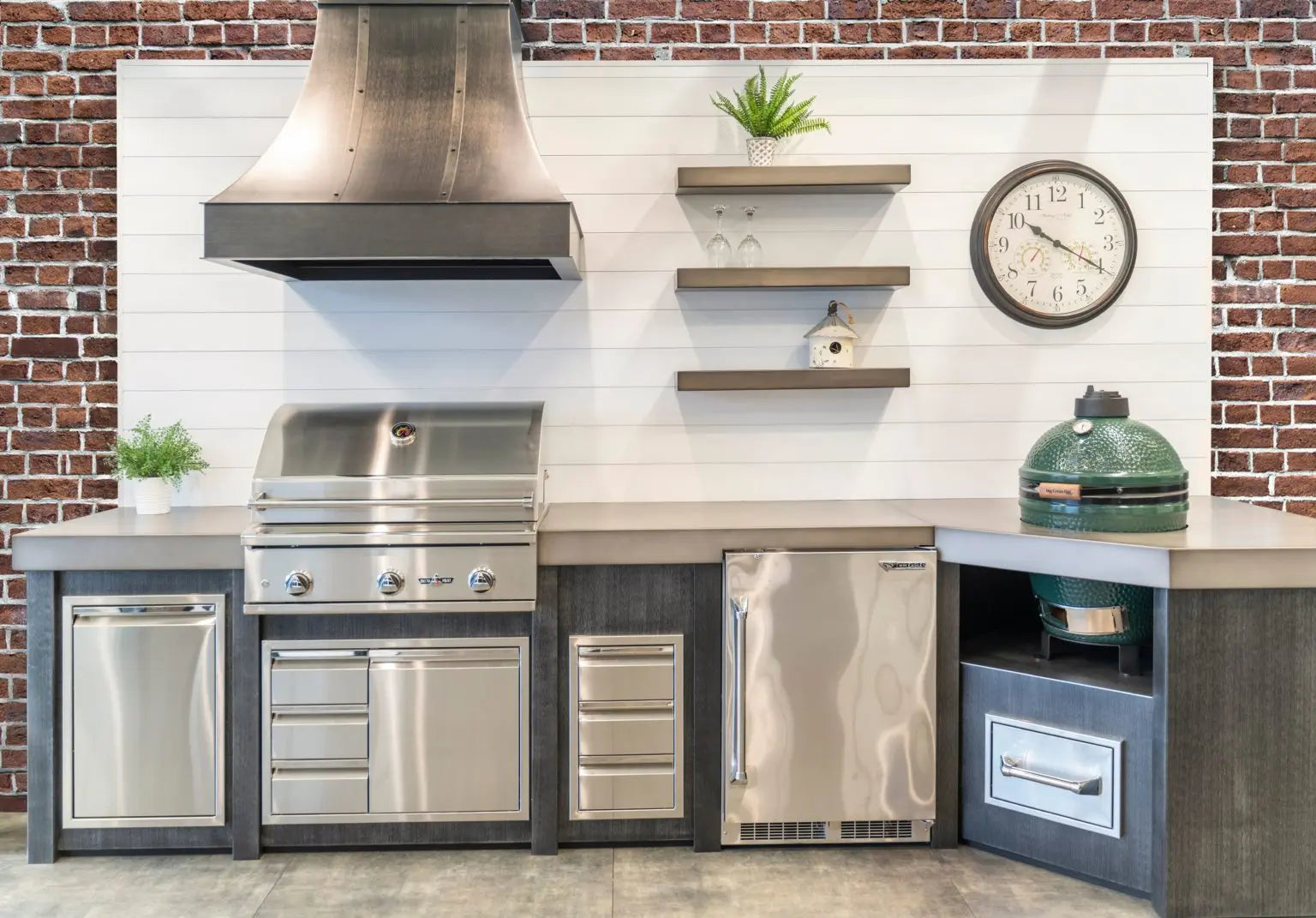
The frame is the skeleton of your outdoor kitchen. It carries the weight of countertops, appliances, and finishes. Steel is the standard for structural framing because it does not rot, warp, or attract pests.
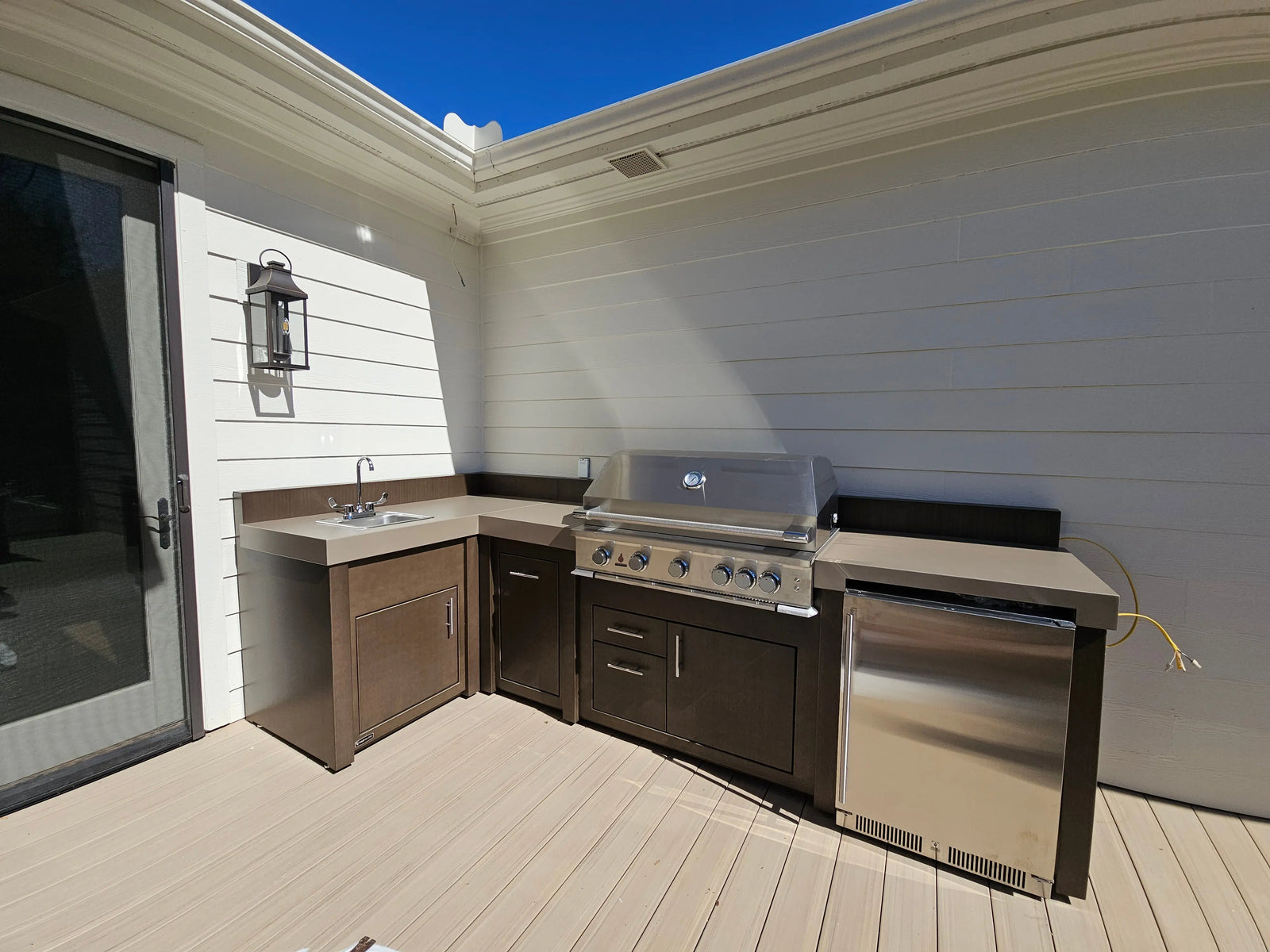
The BetterPatio Mountain Series uses heavy-duty triple-coat galvanized steel with precision-welded framing. The exterior sheathing is Wonderboard Lite cement board, which is non-combustible and resistant to mold, mildew, and pests. This combination gives you a frame that handles heat from gas appliances, shrugs off moisture, and lasts decades.
Never use wood framing for an outdoor kitchen that houses gas appliances. Wood is combustible and violates fire codes in most jurisdictions. Always use non-combustible framing materials.
Stucco is a cement-based plaster applied over a frame and sheathing. It creates a smooth, clean, modern look and is the most affordable exterior finish option.
Stucco works well in dry climates like the American Southwest. In wet or humid climates, it can absorb moisture, leading to cracks, staining, and mildew. It needs periodic patching and may require recoating every 5 to 10 years depending on exposure.
Natural stone is the premium option. It creates a high-end, textured look that blends with outdoor landscapes. Common types include stacked stone, flagstone, limestone, and fieldstone.
Stone is extremely durable. It does not fade, rot, or absorb significant moisture. It handles heat, cold, and UV exposure without degradation. The main drawback is cost, both for the material and the labor to install it.
The BetterPatio Mountain Series features natural stone side finishes with handcrafted stone vents replacing the industry-standard steel vents. This creates a cohesive look where even the functional elements match the aesthetic.
Your local weather should heavily influence which exterior finish you pick.
| Climate | Best Choice | Avoid |
|---|---|---|
| Hot and dry (Southwest, desert) | Stucco or stone | None (both work well) |
| Hot and humid (Southeast, Gulf Coast) | Stone or steel panels | Stucco (moisture absorption) |
| Cold winters with freeze-thaw | Stone (dense types) | Stucco (cracking risk) |
| Coastal / salt air | Stone, 316 stainless steel | Non-galvanized steel, stucco |
Yes. Many outdoor kitchens mix materials. A common combination is a galvanized steel frame with cement board sheathing, stone veneer on the front and sides, and a stucco finish on the back (which faces a wall and is not visible). This saves money while keeping the visible surfaces premium.
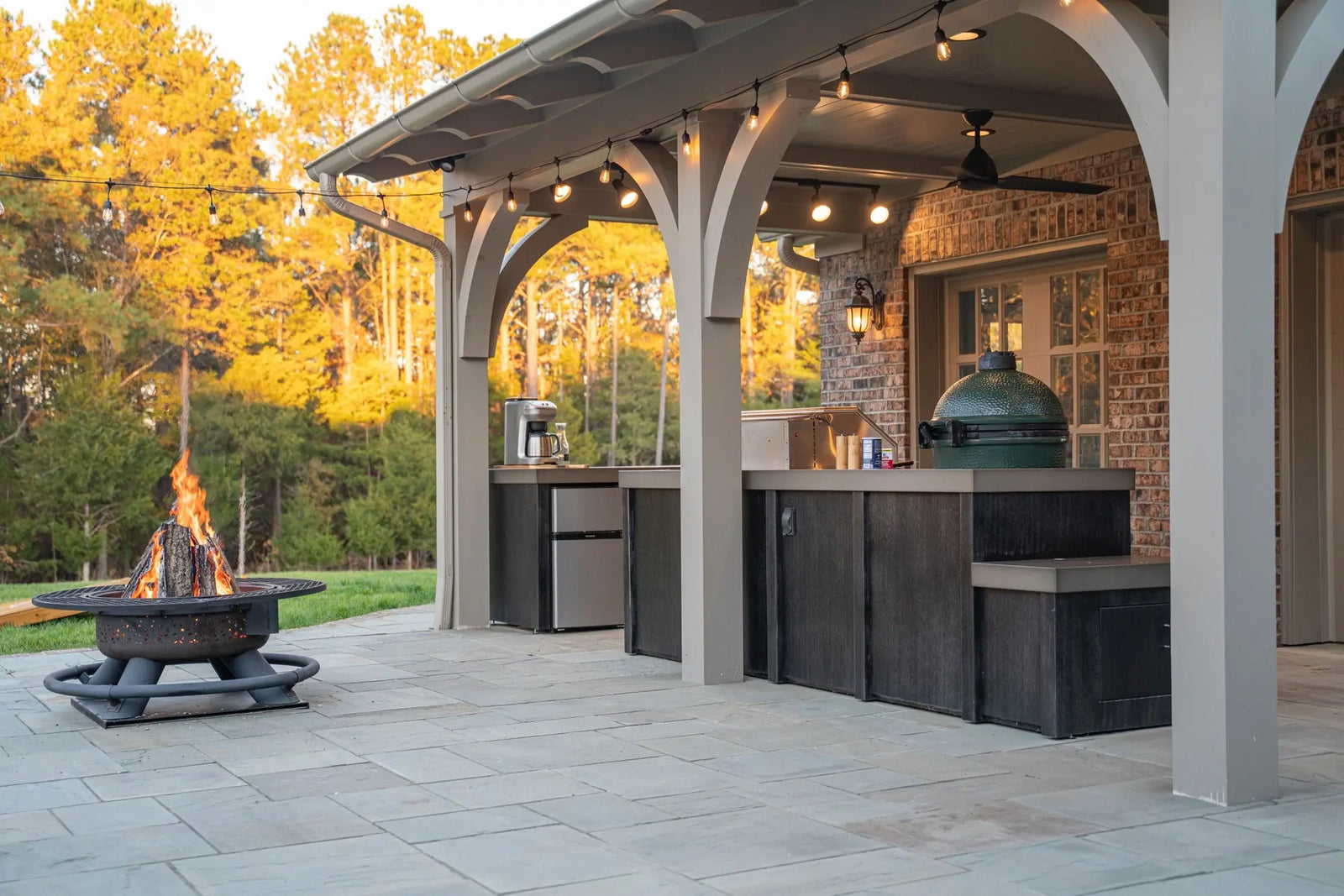
BetterPatio's Designer Series offers standard and premium aluminum powder coat finishes for countertops, base materials, and access doors, giving you another way to customize the look without choosing between all-stone and all-stucco.
Galvanized steel is the best frame material for outdoor kitchens. It is non-combustible, rust-resistant, pest-proof, and strong enough to support heavy countertops and appliances. Always pair it with non-combustible sheathing like cement board.
Stucco works well as an exterior finish in dry climates. It is affordable and creates a clean, modern look. However, stucco absorbs moisture and can crack in humid or freeze-thaw climates, so it requires more maintenance than stone.
A properly built stone outdoor kitchen can last 20 years or more with minimal maintenance. Natural stone does not fade, rot, or degrade under UV exposure. It is the most durable exterior finish option available.
No. Wood framing is combustible and should never be used to house gas grills, burners, or other heat-producing appliances. Building codes in most areas require non-combustible framing for outdoor kitchens with gas appliances.
Wonderboard Lite is a cement board used as exterior sheathing on outdoor kitchen frames. It is non-combustible and resistant to mold, mildew, and pests. The BetterPatio Mountain Series uses Wonderboard Lite over galvanized steel framing.
Your frame and exterior finish work together to determine how your outdoor kitchen holds up over time. Use a galvanized steel frame with non-combustible sheathing as the foundation, then choose stucco for budget builds in dry climates or natural stone for maximum durability and curb appeal.
Match your material to your climate and your willingness to maintain it. The right combination means your kitchen looks great for a decade or more with minimal upkeep.

As the outdoor living trend continues to thrive, you may be wonder...

How to transform your outdoor space in 5 steps to...