Your countertop is the surface you will touch, cook on, and clean every single time you use your outdoor kitchen. Picking the wrong material means cracks, stains, or replacement within a few years.
Not every countertop material that works indoors survives outdoors. Sun, rain, freezing temperatures, and hot grill pans demand materials that handle all four without fading, warping, or absorbing grease.
This guide covers the best outdoor kitchen countertop materials, what each one handles well, and where each one falls short.
| Material | Heat Resistance | Maintenance | UV Resistance | Cost |
|---|---|---|---|---|
| Granite Most Popular | Excellent | Seal annually | Good | $$-$$$ |
| Concrete | Good | Seal regularly | Good (if sealed) | $$ |
| Porcelain / Sintered Stone | Excellent | Very low | Excellent | $$$ |
| Natural Stone (Slate, Soapstone) | Good to excellent | Low to moderate | Good | $$-$$$ |
| Tile | Good | Grout needs sealing | Good | $ |
| Stainless Steel | Excellent | Wipe clean | Excellent | $$$ |
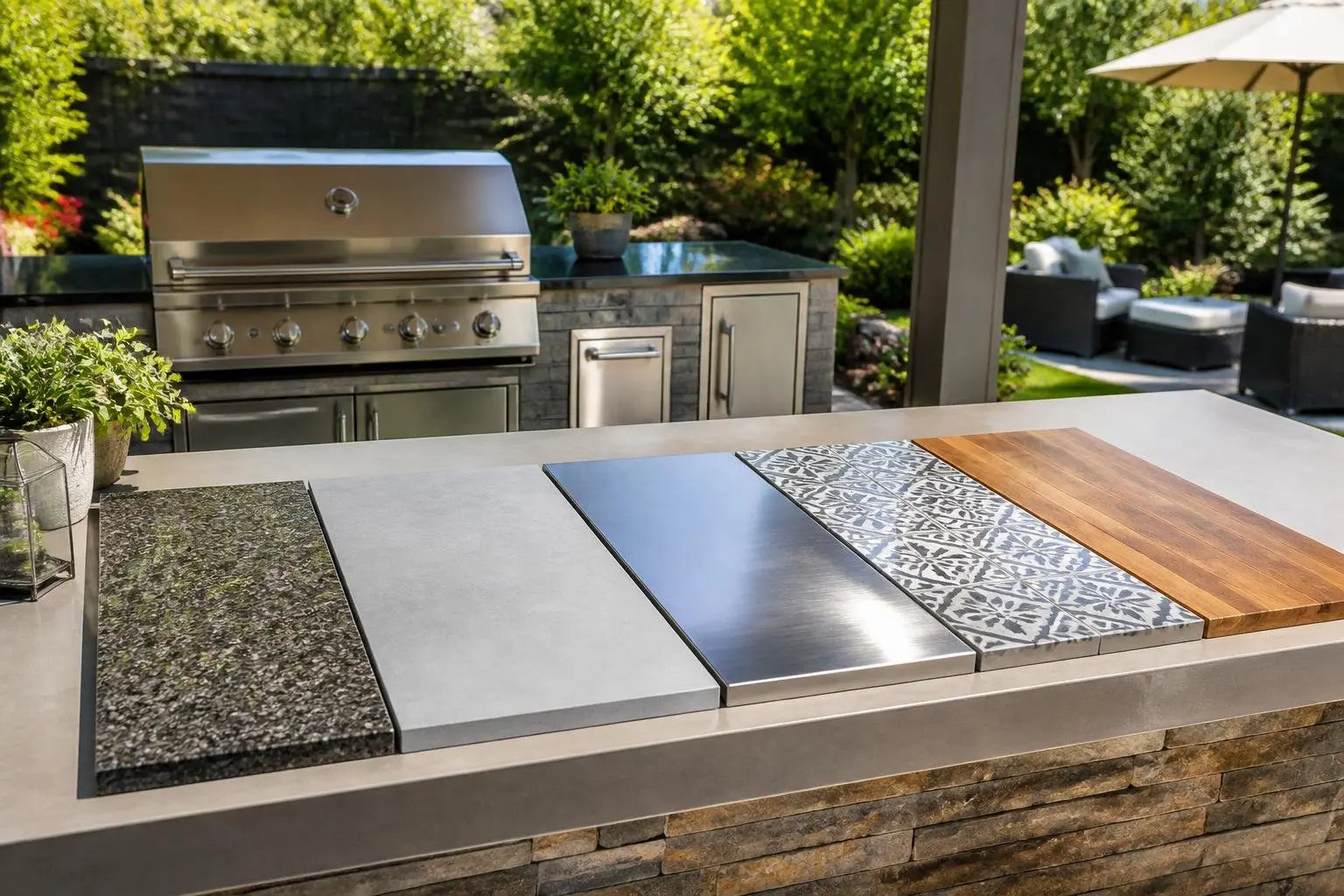
Granite is the most common countertop material for outdoor kitchens, and for good reason. It handles direct heat from grill pans, resists scratches from knives and tools, and comes in a wide range of colors and patterns.
The BetterPatio Mountain Series includes two-inch hand-polished premium granite slab countertops as standard. Slab granite (versus tile granite) eliminates grout lines, which means fewer places for grease and water to collect.
Concrete is the most customizable option. It can be poured in any shape, tinted any color, and finished with textures ranging from smooth and polished to rough and industrial.
The trade-off is maintenance. Concrete is porous, so it must be sealed regularly to prevent stains. In climates with freeze-thaw cycles, unsealed concrete can crack as water expands inside the material.
Porcelain and sintered stone slabs are the lowest-maintenance option on this list. They resist UV fading, do not absorb liquids, handle extreme heat, and never need sealing.
These materials are manufactured at very high temperatures, which makes them denser and more stain-resistant than natural stone. They are also lighter than granite, which can simplify installation.
Other natural stones besides granite can work outdoors. Soapstone is naturally non-porous and handles heat well. Slate has a textured surface that hides wear. Bluestone offers a flat, matte finish popular in traditional designs.
Each has trade-offs. Soapstone is softer and can scratch. Slate can flake in extreme cold. Bluestone needs sealing in wet climates.
Tile is the most budget-friendly option. Porcelain and ceramic tiles handle weather well, and there are hundreds of styles available.
The problem is grout. Grout lines trap grease, moisture, and food particles. Outdoors, grout deteriorates faster, and cleaning it becomes a recurring chore. If budget is the priority, tile works, but plan for more maintenance.
Stainless steel is what professional kitchens use indoors, and it works just as well outdoors. It handles heat, resists bacteria, cleans with a wipe, and never needs sealing.
The downsides are cosmetic. Stainless steel shows fingerprints, water spots, and scratches. It also gets very hot in direct sun, so it needs shade or a cover in summer climates.
Some countertop materials that work indoors will fail quickly outside.
If you want the look of marble without the maintenance risk, porcelain slabs now come in marble-look patterns that are UV stable, non-porous, and require zero sealing.
Granite is the most popular choice for outdoor kitchen countertops. It handles heat, resists scratches, and comes in many colors. It does require annual sealing. For a zero-maintenance option, porcelain or sintered stone slabs are the best alternative.
Standard quartz is not recommended for outdoor use. The resin binders in most engineered quartz discolor and yellow when exposed to direct UV light. Some manufacturers make outdoor-rated quartz, but you must verify UV stability before purchasing.
Two inches is the standard thickness for outdoor kitchen countertops. This provides durability against impacts and a substantial look. The BetterPatio Mountain Series includes two-inch hand-polished premium granite slab countertops as standard.
It depends on the material. Granite and concrete need annual sealing to prevent stains. Soapstone needs periodic oiling. Porcelain, sintered stone, and stainless steel require no sealing at all.
Tile is the most affordable option, using porcelain or ceramic tiles over a cement board substrate. The material cost is low, but grout lines require regular sealing and cleaning outdoors, which adds ongoing maintenance.
Granite is very resistant to freeze-thaw damage when properly sealed. Unsealed granite can absorb water that expands when frozen, which may cause small cracks over time. Annual sealing prevents this in cold-winter climates.
Your countertop material affects how your outdoor kitchen looks, how it ages, and how much time you spend maintaining it.
For most homeowners, granite offers the best balance of durability, appearance, and cost. For those who want zero maintenance, porcelain or sintered stone slabs are worth the premium. Avoid indoor-only materials entirely.

As the outdoor living trend continues to thrive, you may be wonder...

How to transform your outdoor space in 5 steps to...