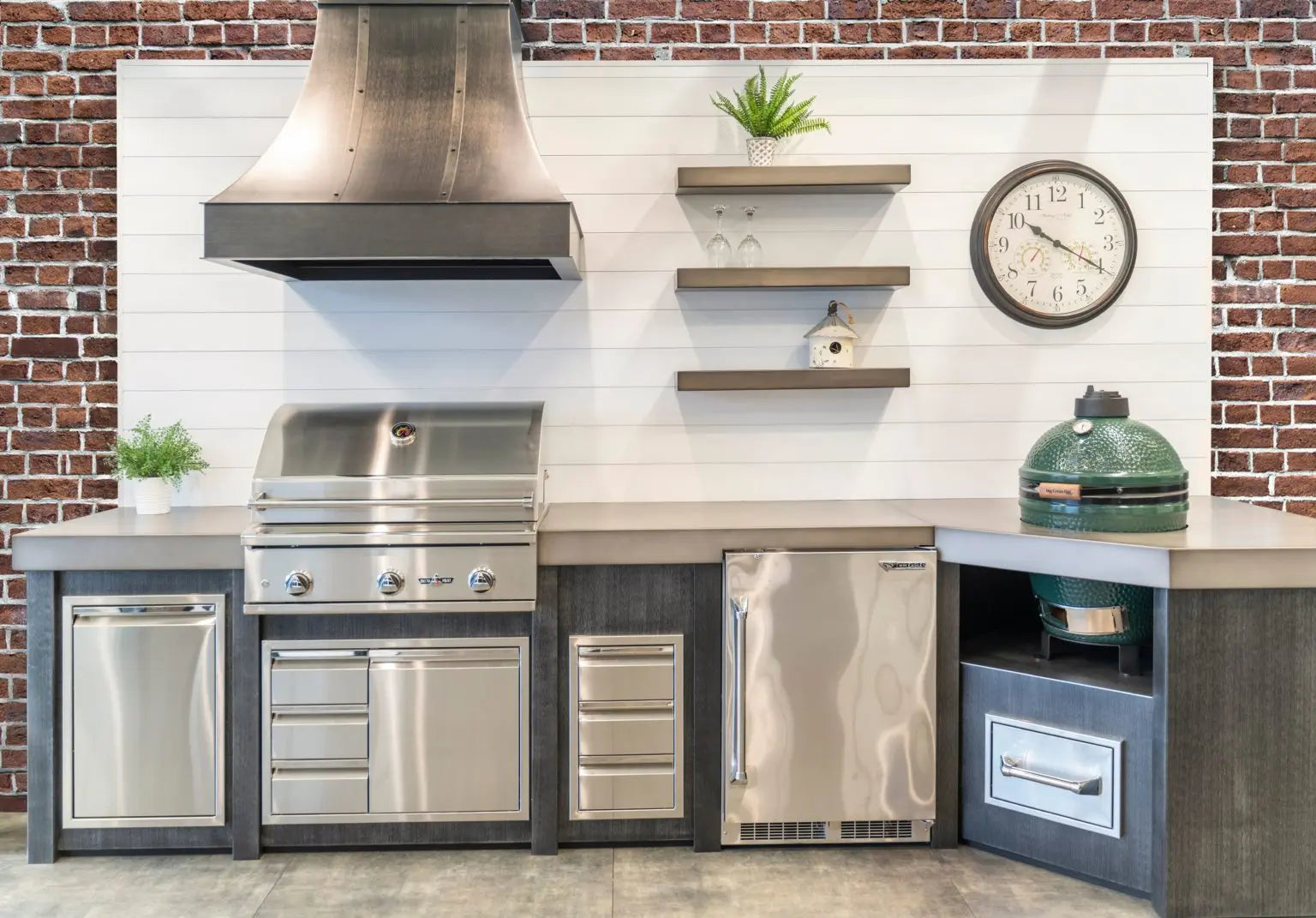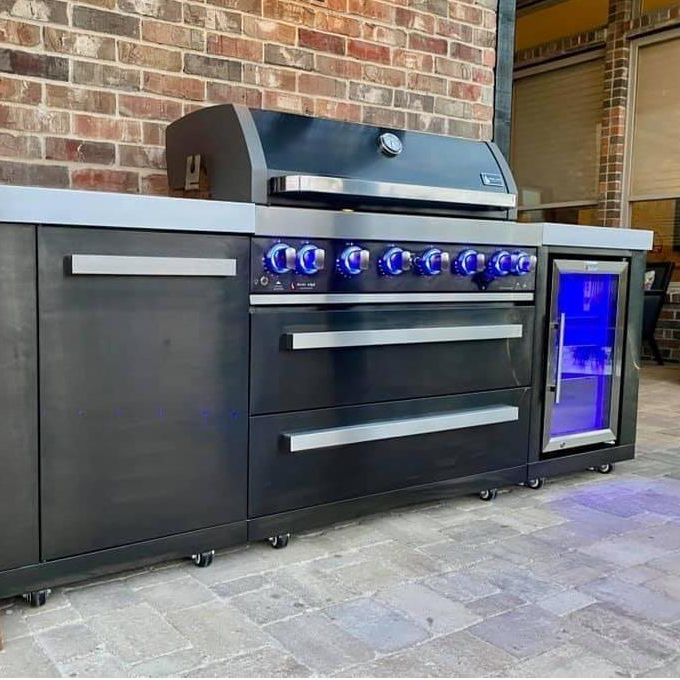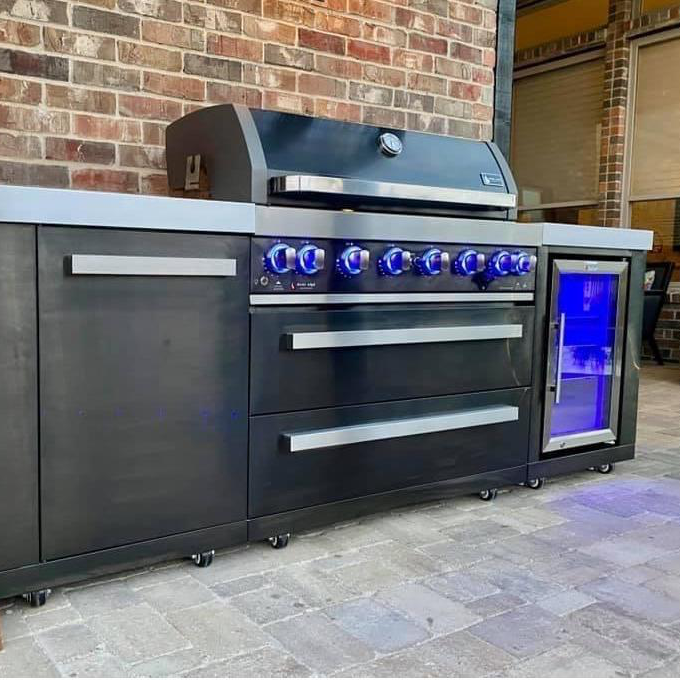

5 Foot Modern Linear Outdoor Grill Island, Customizable
Explore the layout and finish options, then confirm appliance choices, dimensions, and delivery requirements with BetterPatio.
Explore This Kitchen
A custom outdoor kitchen is the single biggest upgrade you can make to your backyard, but only if you plan it right before anything gets built.
Most homeowners jump straight to picking a grill or choosing countertop colors. That feels productive, but it skips the decisions that actually determine whether the kitchen works. Layout, utilities, workflow, weather, and budget all need answers first.
This guide walks through the full planning process from first measurements to final order, step by step.
Before anything else, go outside with a tape measure and a notepad. Record the full dimensions of the area where the kitchen will go. Mark the distance from your house, fence lines, property edges, and any existing structures.
Then use painter's tape or string to outline the kitchen footprint on the ground. Walk around it. Stand where the cook will stand. Sit where guests will sit. This five-minute exercise prevents the most common planning mistake: building a kitchen that looks great on paper but feels cramped in person.
Key measurements to capture:

The BetterPatio Mountain Series uses a panelized design specifically so panels can be carried through standard gates and into backyards or onto decks. Measure your gate width before assuming you need crane access.
Write two lists. The first is everything you absolutely need: a grill, counter space, maybe a sink or a fridge. The second is everything you want if the budget allows: a pizza oven, ice maker, bar seating, outdoor TV.
This matters because every appliance affects your layout size, utility requirements, and budget. A sink means you need a water supply line and a drain. An ice maker or fridge means you need an electrical outlet. Each addition has a ripple effect on the plan.
Your layout depends on how much space you have and how you plan to use the kitchen. There are four main options.
Straight (linear): Best for narrow patios or against a single wall. Simple, efficient, budget-friendly. Works well for kitchens under 10 feet.
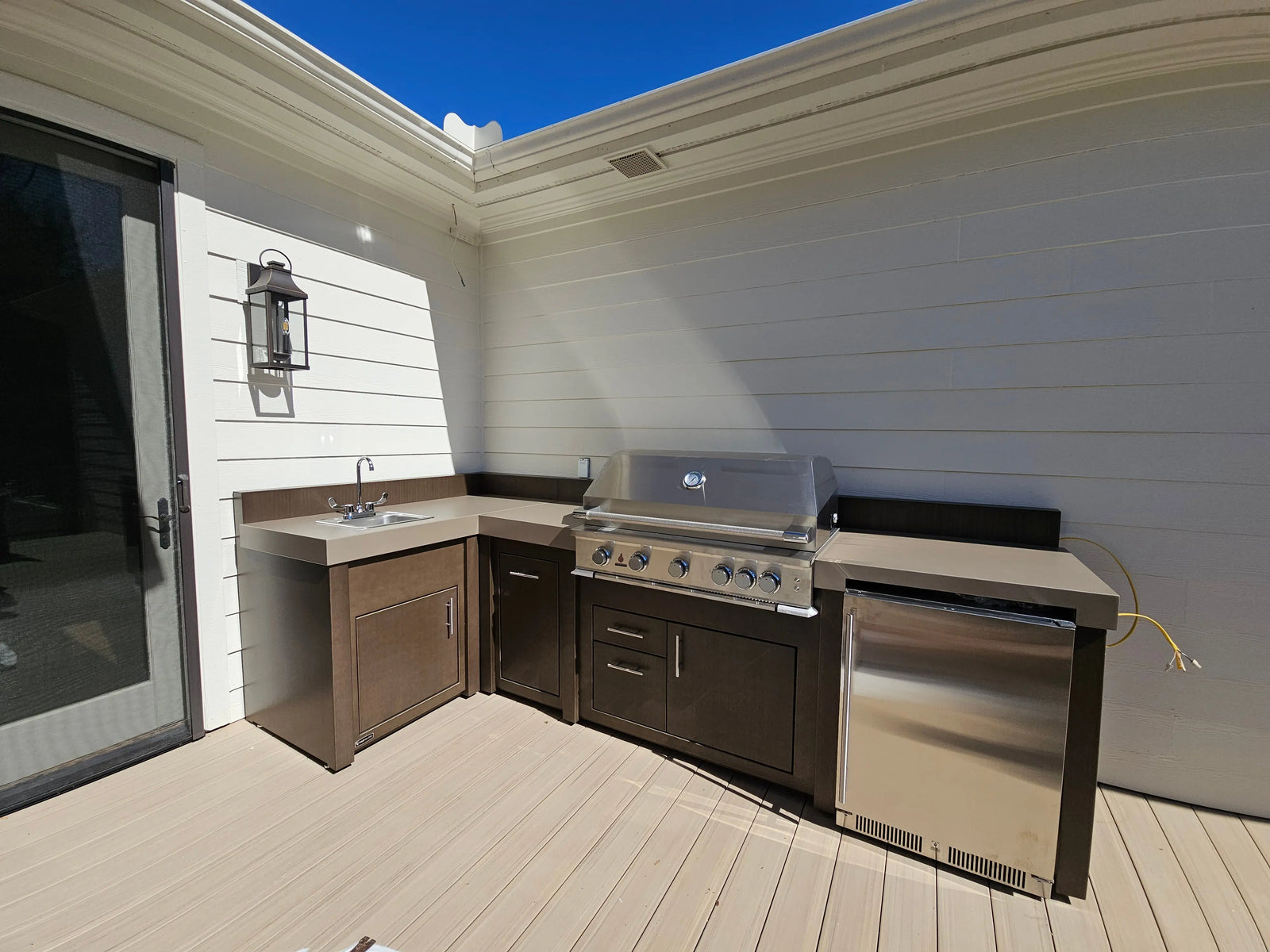
L-shaped: Fits into corners and adds significantly more counter space than a straight layout. Ideal for separating the grill zone from a prep or serving zone. This is the most popular configuration.
U-shaped: Wraps around the cook with counters on three sides. Gives maximum workspace and storage. Needs a larger patio, typically 15 by 15 feet or more.
Island: A freestanding unit in the middle of the patio, accessible from all sides. Great for open areas where the cook wants to face guests.
BetterPatio builds custom sizes and layouts including L-shaped and U-shaped configurations, so you are not locked into standard manufacturer dimensions.
This is the step most homeowners skip, and it is the most expensive mistake to fix later. Running gas, water, and electrical lines is far cheaper before the patio is poured than after.
What to plan for:
If you are not sure what you might want later, run extra conduit or stub-outs while everything is open. It costs almost nothing now and saves thousands later.
Every material in an outdoor kitchen must handle sun, rain, heat, and cold year after year. Indoor-grade materials fail within a single season.
Frame: Use non-combustible framing. The BetterPatio Mountain Series uses heavy-duty triple-coat galvanized steel with precision-welded framing and Wonderboard Lite cement board sheathing, which is non-combustible and resistant to mold, mildew, and pests.
Countertops: Granite, porcelain, and concrete are the top choices. The Mountain Series includes two-inch hand-polished premium granite slab countertops. Avoid tile with grout lines outdoors as it traps moisture and cracks in freeze-thaw climates.
Exterior finish: Natural stone, stucco, and stacked stone are the most common. The Mountain Series offers natural stone side finishes with handcrafted stone vents.
Appliance housings: 304 or 316 grade stainless steel for anything exposed to weather.

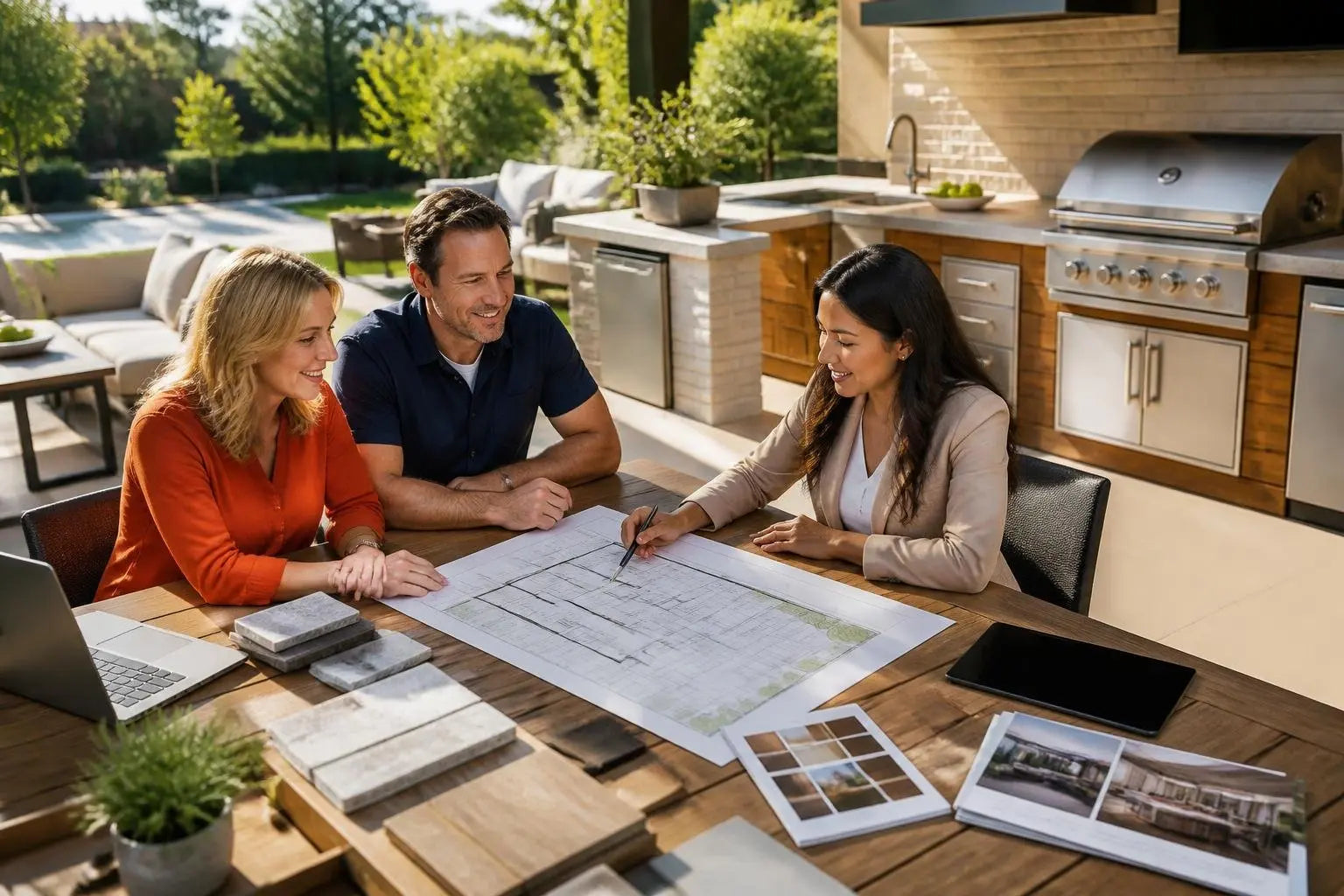
A 2D sketch on paper is helpful for rough planning, but a 3D rendering lets you see exactly how everything fits together before you spend a dollar on materials. You can spot problems, try different finishes, and rearrange appliances on screen instead of on the job site.
BetterPatio offers free 3D rendering services. Their design professionals walk you through design, measurement, and finish options, including grilling brands and appliances. A designer is assigned to your project at no charge.

Complete a form, and BetterPatio reaches out within 4 to 6 business hours. You discuss your rendering and next steps. Once the design is approved, you place the order and schedule delivery.
Most outdoor kitchen projects need permits for gas lines, electrical work, plumbing, or structural additions. Some HOAs have rules about setback distances, maximum heights, and approved materials.
Always check with your local building department before starting construction. Get approvals in writing. BetterPatio does not manage permits or oversee construction, so this step is on you or your contractor.
A custom outdoor kitchen is an investment. Costs vary widely based on size, materials, appliance brands, and whether you are doing a prefab island or a fully custom build.
For timeline expectations, the entire process for a custom outdoor kitchen usually takes 4 to 6 months from design to completion. Prefabricated options like the Mountain Series can ship in 7 to 10 business days after finish selection and assemble in approximately 15 minutes with bolt-together construction.
BetterPatio partners with Klarna for flexible financing, so you do not have to pay everything upfront. Their Price Match Guarantee also ensures you get the best price within 30 days of purchase.
Once your design is locked, finishes are selected, and permits are handled, it is time to order. Here is what to expect from BetterPatio on the delivery side.
Explore the layout and finish options, then confirm appliance choices, dimensions, and delivery requirements with BetterPatio.
Explore This Kitchen
Explore the layout and finish options, then confirm appliance choices, dimensions, and delivery requirements with BetterPatio.
Explore This Kitchen
Explore the layout and finish options, then confirm appliance choices, dimensions, and delivery requirements with BetterPatio.
Explore This KitchenThe entire process usually takes 4 to 6 months from design to completion for a fully custom build. This includes design consultations, 3D renderings, material selection, ordering, and delivery. Prefabricated options can ship in 7 to 10 business days after finish selection and assemble in about 15 minutes.
The first step is measuring your available space and mapping utility locations. Record the full dimensions of your patio or build area, note where gas, water, and electrical lines exist, and use painter's tape to outline the kitchen footprint on the ground before making any purchases.
Most outdoor kitchen projects require permits for gas, electrical, or plumbing work. Requirements vary by city and county. Check with your local building department and HOA before starting construction. Get all approvals in writing.
Yes. BetterPatio offers free 3D rendering services and one-on-one design support. A design professional walks you through layout, measurements, and finish options at no charge. You can start by completing a design form or calling 866-412-1555.
At minimum, you need a gas line for the grill and burners. If you want a sink, you need a water supply line and a drain. Refrigerators, ice makers, and lighting need electrical outlets. Plan all utility runs before pouring concrete to avoid expensive retrofits.
A straight (linear) layout works best for small patios. It places the grill, counter, and storage in a single run along one wall or edge. For slightly more space, an L-shaped layout adds counter area by turning one corner. Both configurations can be built in custom sizes to fit tight footprints.
Planning a custom outdoor kitchen takes more upfront work than buying a pre-assembled island, but the result is a kitchen that fits your exact space, cooking style, and entertaining needs.
Follow these nine steps in order, and you will avoid the expensive mistakes that come from rushing into appliance purchases or skipping utility planning.
Take the time to measure, plan, and visualize. The backyard kitchen you build from a solid plan is the one you will actually use for years.

As the outdoor living trend continues to thrive, you may be wonder...

How to transform your outdoor space in 5 steps to...