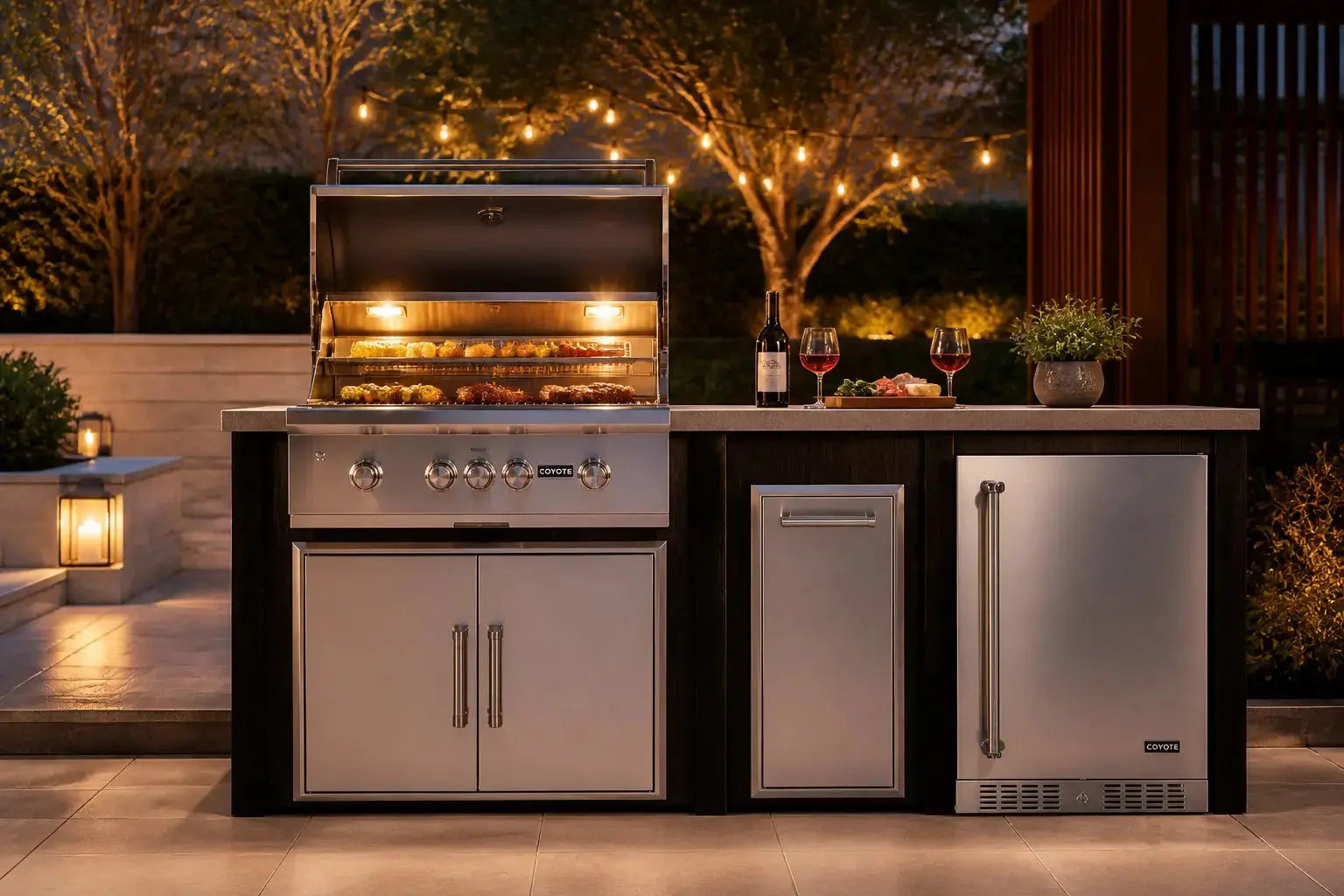
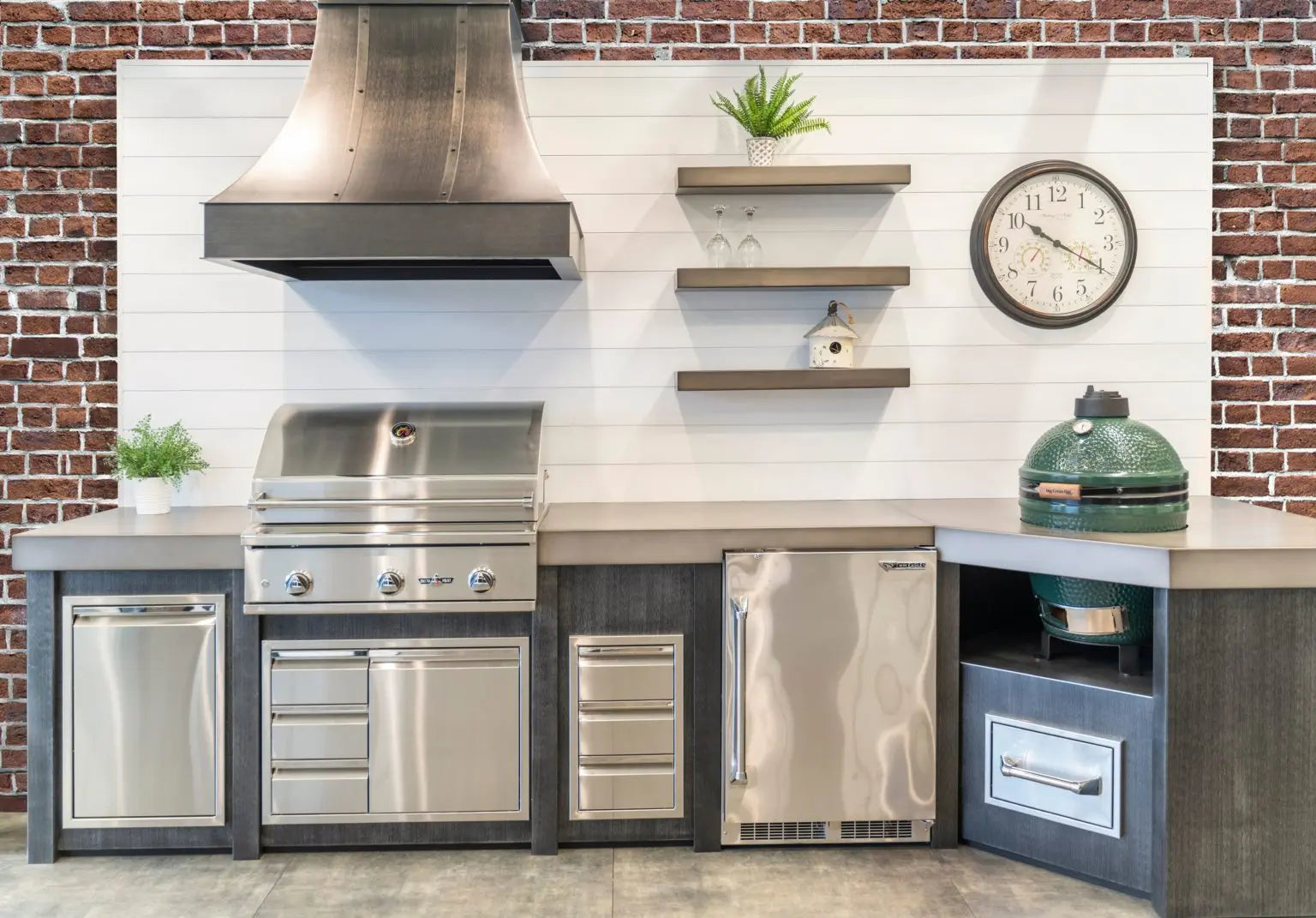
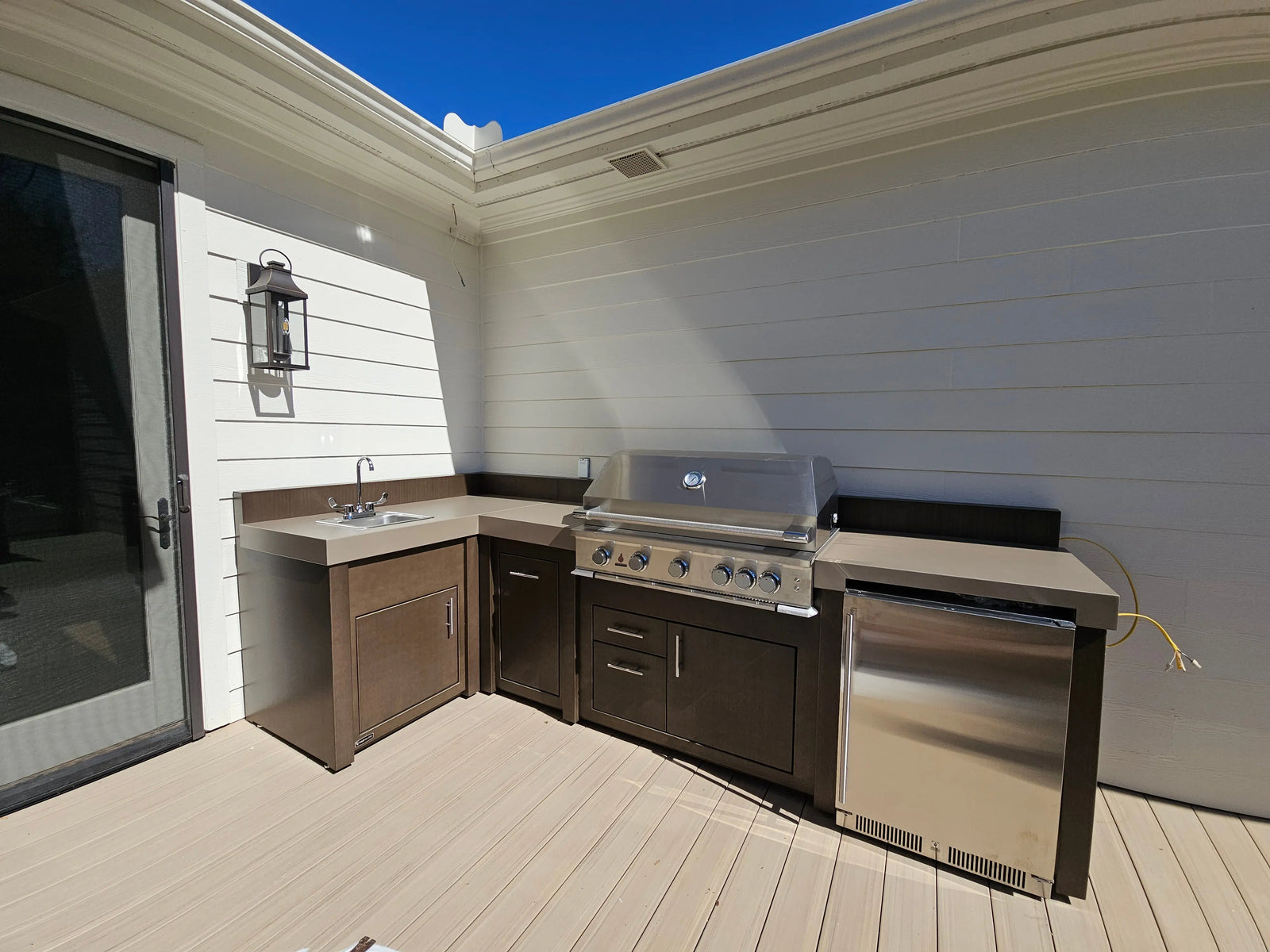
This Coyote grill lighting guide covers everything you need to get your grill fired up safely and consistently, whether you're lighting it for the first time or working through an ignition issue.
Coyote grills are built for serious outdoor cooking, but like any gas grill, they need to be set up and lit the right way to perform at their best. From first-time setup to troubleshooting a grill that won't ignite, this guide walks you through every step — plus recommendations on the best Coyote grill models available at Better Patio.
Ready to find your perfect Coyote grill? Browse our full collection of Coyote outdoor grills and smokers and find the right model for your backyard setup.

Before lighting your Coyote grill for the first time, finish the setup, make sure your fuel type matches your grill, and run key safety checks to prevent leaks or damage.
Assemble and install your Coyote stainless steel gas grill properly before use. If you have a built-in model, install it in an outdoor island with the ventilation clearances your manual lists.
Coyote grills come set up for either propane or natural gas — you can't use both without a conversion kit. The rating label on your grill tells you which fuel it takes.
Using the wrong fuel type will damage your grill and create serious safety risks. Always check your model number and fuel label before connecting any gas source.

Run a leak test whenever you connect or reconnect your gas supply. Mix dish soap and water, brush it on all connections, hoses, and fittings. Turn on the gas without lighting the grill. If you see bubbles, there's a leak — fix it before you do anything else.
Always open the grill lid before lighting a burner. A closed lid traps gas, which can cause a dangerous flare-up when you ignite.
Each time you grill, run through this quick checklist before lighting:
Make sure your grill has enough clearance from walls and anything flammable. Coyote lists minimum distances in the manual — stick to them every time.
Looking for a premium build with top-tier features? Shop our collection of Coyote S Series grills and find a grill built for serious outdoor cooking.

Lighting your Coyote grill is straightforward if you follow the right steps, whether you use the electronic ignition or light it manually. It only takes a few minutes once you know how.
Open the lid fully before doing anything else. This stops gas from building up inside the grill and prevents dangerous flare-ups on ignition.
Turn on your propane tank or natural gas line. Open the valve all the way to ensure full gas flow to the burners.
Press the knob for the burner you want to light and turn it until you hear a click. That clicking sound is the igniter working.
Keep holding the knob in after the burner lights. Hold it for 3 to 5 seconds to let the thermocouple heat up — this tells the valve to keep the gas flowing once you let go.
Let go of the knob once the burner is fully lit. Turn the remaining burner knobs to high — the flame will jump from the lit burner to ignite the others.
If the burner doesn't light after five seconds, turn the knob off and wait five full minutes for any gas to clear before trying again.
Keep the lid open and turn on the gas supply. Locate the match lighting hole near the burner you want to light.
Light a long match or use an extended butane lighter. Insert it through the match lighting hole and hold it close to the burner ports before turning on any gas.
Turn the control knob to high while the flame is in place near the burner. The burner should catch right away.
Take out the match once the first burner is lit. Use the control knobs to light any other burners you need for your cook.
If you smell gas when the grill is off or can't resolve the ignition issue after checking all of the above, call a gas appliance professional. Don't keep attempting to light a grill with an unresolved gas issue.
Knowing how to control heat and keeping up with maintenance will help your grill last longer and cook better. Adjust temperature zones, clean the essentials, and call in a pro when it's time.
Your Coyote grill lets you create different temperature zones with individual burner controls. Turn each knob to adjust that burner's flame independently.
Keeping your Coyote grill clean is the single best thing you can do to extend its life and keep it cooking well.
Want a high-performance grill at a more accessible price point? Shop our collection of Coyote C Series grills and get everything you need to grill with confidence.
Lighting a Coyote grill the right way comes down to a few simple habits — proper setup, safe ignition, and staying on top of basic maintenance to keep everything running smoothly.
Coyote grills are built to perform for years, but only if they're used and maintained correctly. Whether you're firing up for the first time or troubleshooting an ignition issue, the steps in this guide will get you there.
Want to dig deeper into Coyote models? Check out our guide on Coyote C Series vs S Series to find the right grill for your outdoor kitchen.
Coyote grill owners tend to ask about lighting, control settings, and the differences between C and CL series models.
Open the grill lid before lighting, then turn on the gas supply at the source. Push and turn the burner knob until you hear a click from the igniter, then hold it for 3 to 5 seconds after it lights so the thermocouple heats up and keeps the gas flowing. If it doesn't catch within 5 seconds, turn the knob off and wait 5 minutes for the gas to clear before trying again.
Coyote grill control knobs adjust the flame from high to low — high for searing, medium for everyday grilling, and low for gentle or slow cooking. Some models include removable heat zone dividers so you can run different temperature zones at the same time. This makes it easy to cook multiple foods at different temperatures without moving things around the grill.
Coyote grills are built with stainless steel and sit firmly in the premium outdoor cooking category. They feature multiple burners, zone controls, and solid construction designed for serious grillers. The brand puts a strong emphasis on quality, performance, and proper setup — making them a strong choice for anyone building a permanent outdoor kitchen.
The C and CL series differ in design, burner configuration, and available features. Coyote's grill lineup includes models with different burner setups and feature sets depending on your cooking needs and budget. Check your specific model number and manual to understand exactly what your grill includes, or browse our Coyote C Series vs S Series guide for a full breakdown.

As the outdoor living trend continues to thrive, you may be wonder...

How to transform your outdoor space in 5 steps to...