The layout you choose determines whether your outdoor kitchen feels like a professional cooking station or a cramped afterthought.
Every layout shape solves a different problem. A straight run saves space. An L-shape creates zones. A U-shape wraps the cook in workspace. An island puts the grill at the center of the party. The right choice depends on your patio size, how you cook, and how you entertain.
This guide breaks down each layout with dimensions, pros, cons, and the types of spaces they fit best.
Use this table to quickly compare all four layout types side by side before diving into the details below.
| Layout | Min. Patio Size | Best For | Counter Space | Cost Range |
|---|---|---|---|---|
| Straight (Linear) | 4 x 10 ft | Small patios, balconies, tight budgets | Low to moderate | Lowest |
| L-Shaped Most Popular | 12 x 12 ft | Corner patios, separating grill from bar | High | Mid-range |
| U-Shaped | 15 x 15 ft | Dedicated cooking areas, multiple cooks | Highest | Higher |
| Island | 12 x 12 ft (open) | Open yards, social cooking, pool areas | Moderate | Varies |
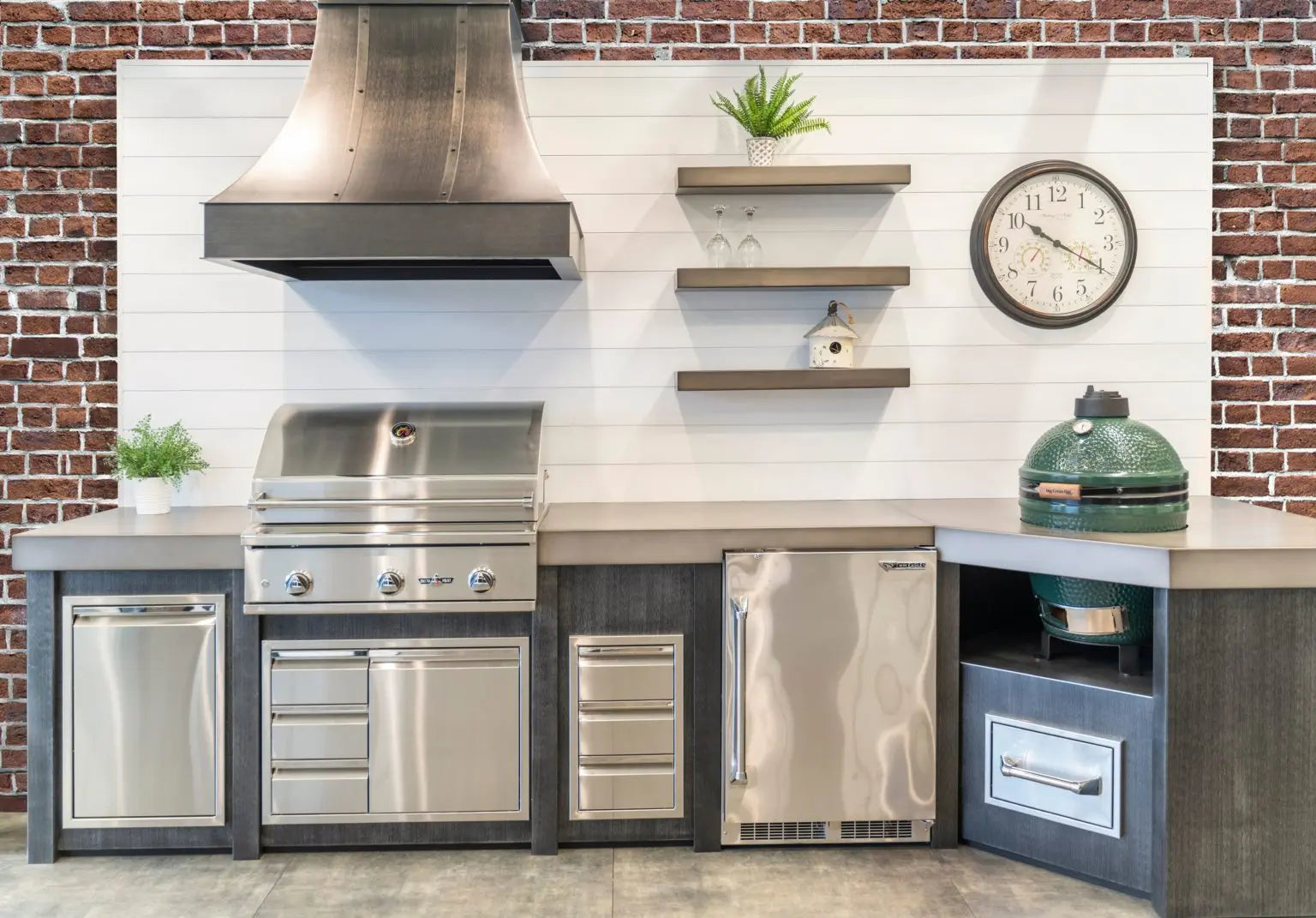
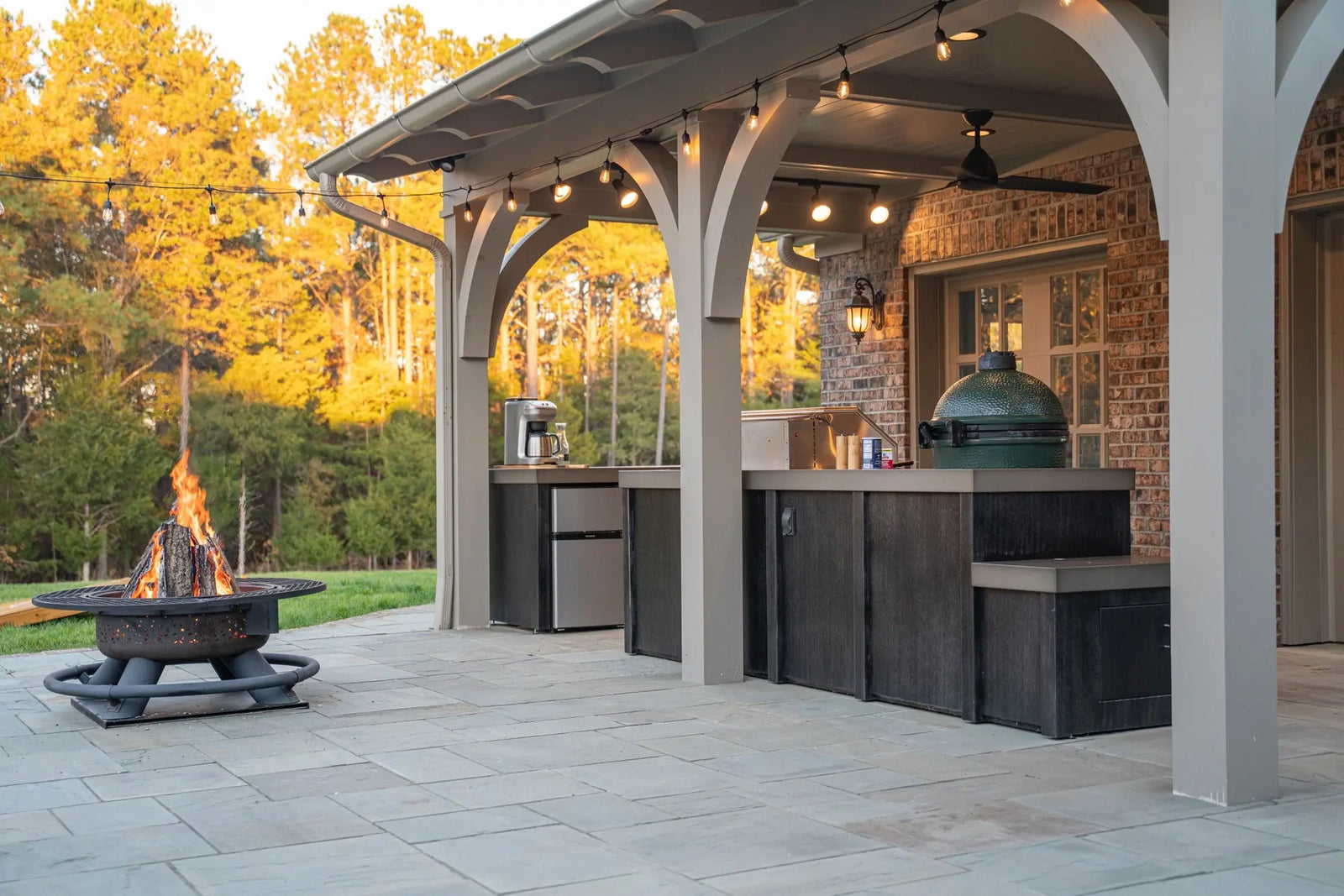
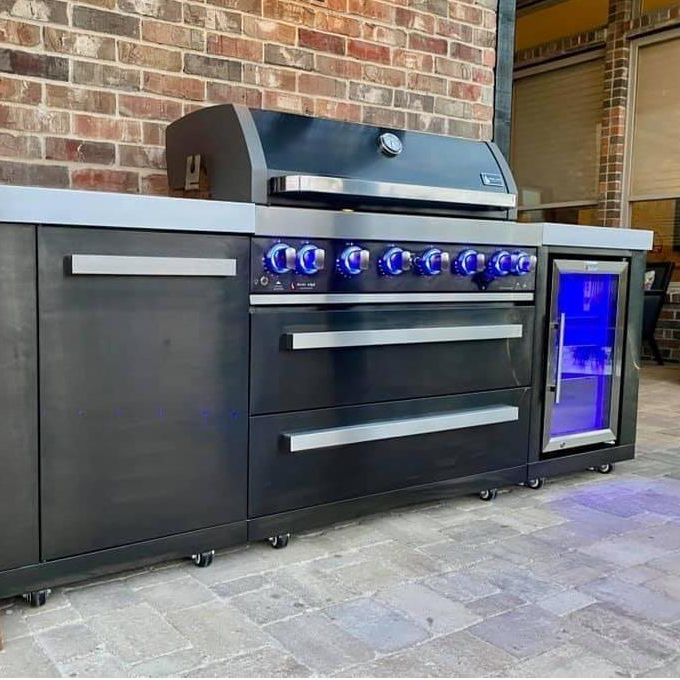
A straight layout lines everything up in a single run. Grill in the center or at one end, counter space on each side, and storage underneath. It is the simplest outdoor kitchen shape and the most budget-friendly.
The trade-off is limited counter space. Everything competes for the same stretch of counter. If you find yourself running out of room to set things down, the next step up is an L-shape.
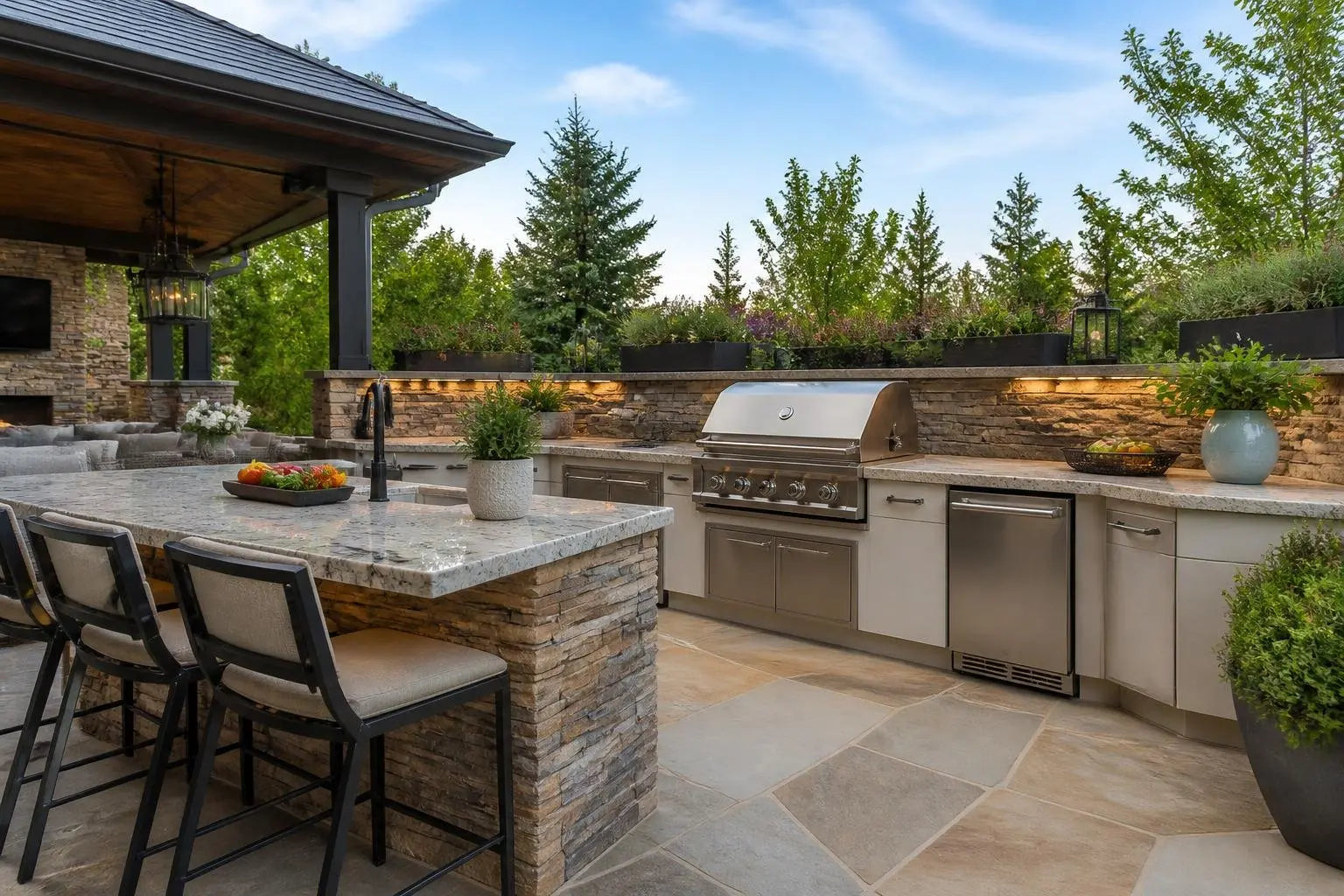
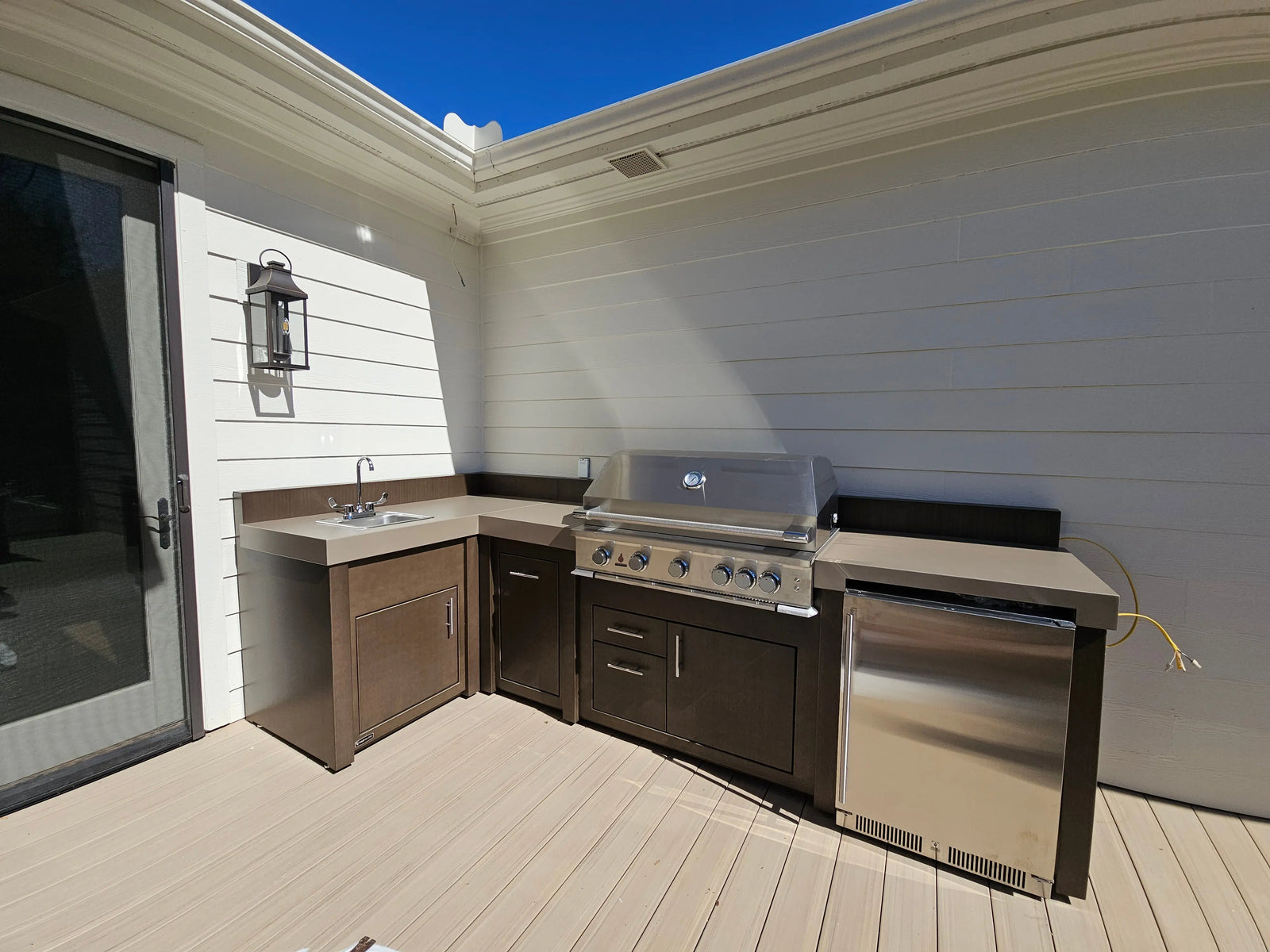
The L-shaped outdoor kitchen is the most popular layout for a reason. It turns one corner and instantly creates two distinct zones: one for cooking and one for prep, serving, or bar seating.
This layout fits naturally into patio corners, along two walls, or as a freestanding unit with one leg facing guests. The second leg adds significant counter space without taking up much more patio area than a straight run.
BetterPatio carries the widest selection of L-shaped outdoor kitchen islands available online, from compact prefab models to fully custom designs with bar seating, built-in refrigeration, and premium grills.
A U-shaped kitchen wraps counter space around the cook on three sides. It is the layout with the most workspace, the most storage capacity, and the most room for multiple appliances.
The trade-off is footprint. You need a larger patio, and the cook is somewhat enclosed, which can feel isolated at casual gatherings unless you add bar seating on the outside of one leg.
BetterPatio builds custom U-shaped configurations. If your space and budget support it, this layout gives you the closest thing to a full indoor kitchen, just outdoors.
An island sits in the open, accessible from all sides. The cook faces outward, guests gather around, and nobody has their back to the party. It is the most social layout.
Islands work well near pools, in the center of open yards, or as standalone stations on a large patio. They are also the easiest to add to an existing space since they do not require building against a wall.
The BetterPatio Mountain Series uses a panelized design so panels can be carried through gates and into backyards. Assembly takes approximately 15 minutes with bolt-together construction.
Record the full width and depth of your patio. Mark obstacles like doors, windows, and utility access points.
A grill-only kitchen can work in a straight run. Add a fridge, sink, and burner and you probably need an L or U shape.
Want to face guests? Island or L-shape with bar. Want a dedicated cooking station? U-shape. Just need the basics? Straight.
BetterPatio offers free design services. See your layout in 3D before you commit to a build.
Yes. Many custom outdoor kitchens combine elements. An L-shape with a detached island for bar seating is a common setup. A U-shape with one open end effectively becomes an L-shape plus a serving counter.
BetterPatio builds custom sizes and layouts that are not limited to standard manufacturer configurations. If your space calls for something non-standard, their design team can build it.
A straight (linear) layout is the best choice for small patios. It keeps everything in a single run along one wall or edge, starting at just 6 feet long. This gives you a grill plus counter space on each side without taking up excessive floor area.
The L-shaped layout is the most popular choice. It maximizes counter space, creates a natural flow between cooking and entertaining, and fits naturally into corners or along two walls. It works for both mid-size and large patios.
An L-shaped outdoor kitchen needs a minimum patio area of about 12 by 12 feet. The L itself usually has two legs of about 8 feet each, giving you separate grilling and prep zones plus optional bar seating along one leg.
Yes, but you need to verify that the deck can support the weight and that the layout leaves adequate walkway space inside the U (36 to 50 inches between counter faces). Non-combustible materials are required, and gas line routing may need professional review.
A straight kitchen sits against a wall or fence, while an island is freestanding with access from all sides. Islands are more social since the cook faces outward, but they require more open space for clearance on every side.
Modular and panelized designs are easier to reconfigure than poured-in-place concrete builds. For example, the BetterPatio Mountain Series uses bolt-together panels that can be carried through gates and assembled in approximately 15 minutes. Fully custom masonry builds are permanent.
Your layout is the foundation of every other decision. It determines how much counter space you have, which appliances fit, and whether the kitchen feels natural or forced.
Measure your space, count your appliances, and think about how you cook and entertain. Then pick the shape that matches. If you are not sure, get a free 3D rendering to see each option in your actual backyard before committing.

As the outdoor living trend continues to thrive, you may be wonder...

How to transform your outdoor space in 5 steps to...