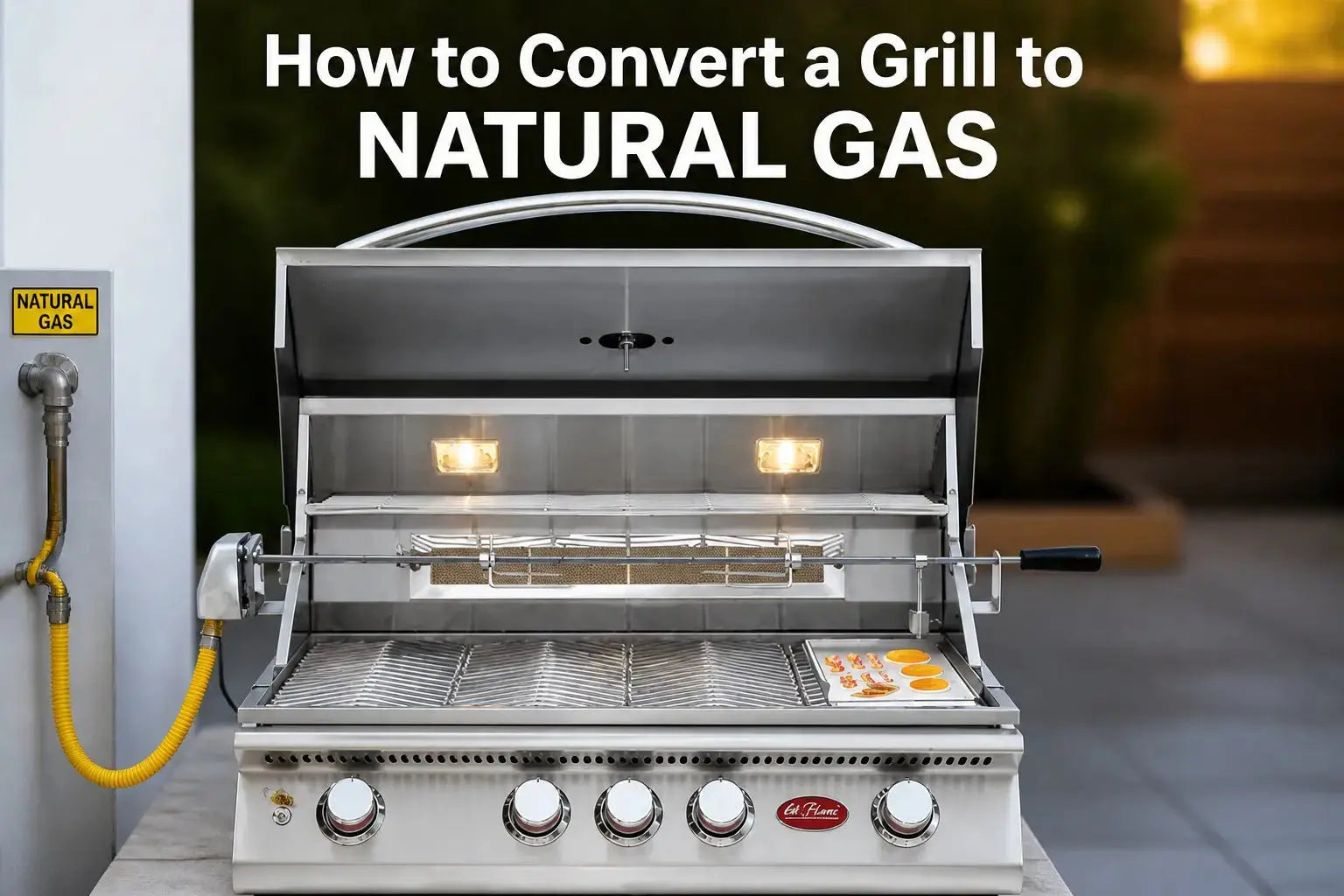
Learning how to convert a grill to natural gas can save you money on fuel and put an end to last-minute propane runs. It's a straightforward process for the right grill, but it's not the right move for every situation.
Before you buy a conversion kit, there are a few things worth knowing — like whether your grill is even compatible and what the process actually involves. This guide walks you through the full conversion process and helps you decide if converting makes sense or if a dedicated natural gas grill is the smarter investment.
Thinking about skipping the conversion altogether? Browse our collection of natural gas grills and find a grill built for natural gas from the ground up.

You need the right gear and a careful look at your situation before converting your grill to natural gas. Confirm your grill is compatible, gather the right parts, and know when to call a pro.
Not all grills are built for conversion. Start by reaching out to your grill manufacturer or the dealer where you bought it. Most big brands have natural gas versions or conversion options, but some models just aren't designed for it.
Always confirm compatibility with your manufacturer before purchasing a conversion kit. Using the wrong parts or converting an incompatible model is a safety risk and will likely void your warranty.
A typical conversion kit includes three main things: a regulator, a natural gas hose, and natural gas orifices for the burners.
Make sure your kit matches your grill model exactly. Generic kits might not have the right orifices or regulator settings. Expect to spend anywhere from $50 to $150, depending on your grill brand. Hang onto the installation instructions — they've got specs specific to your model.
Running a natural gas line from your house to your grill spot? That's a job for a licensed gas fitter — don't try this part yourself.
If you're comfortable working with appliances, you can hook up the grill to an already-installed gas line yourself. But if you smell gas or feel unsure at any point, call your gas pro right away.

To convert your propane grill, you'll replace some key parts and hook it up to your gas line. You'll need to disconnect your propane setup, install the new natural gas parts, and test for leaks before firing it up.
Turn all control knobs to the off position before you start anything. Close the propane tank valve by turning it clockwise until it stops.
Use a wrench to loosen the propane regulator hose from the grill. Set the tank aside somewhere safe, well away from your workspace and any ignition sources.
Open the grill lid and take out the cooking grates, warming racks, and flame tamers. This gives you room to reach the burner assembly underneath. Slide out any carryover tubes and pull out the hitch pins from the burner tubes, then lift the tubes away from the gas valves with a firm tug.
Find the small brass orifices deep in each burner connection. Use the orifice removal tool from your kit or a 1/4 inch socket. If they're stuck, a little penetrating fluid helps. Turn carefully so you don't strip the threads.
Screw in the new natural gas orifices — they're larger than the propane ones since natural gas runs at lower pressure. Hand-tighten first, then use your tool for a gentle snug. Don't overtighten or you'll damage the threads.
Remove the old propane regulator hose with a wrench and install the new natural gas regulator and hose from your kit. Make sure the hose routes safely and won't get pinched or rubbed when the grill is in use.
Hook the natural gas hose to your outdoor gas line valve. Hand-tighten connections first, then finish with a wrench — just a quarter turn more. Put your burner tubes back in, making sure they're seated correctly with portholes facing up.
Mix dish soap and water in a spray bottle. Turn on the gas supply valve and spray all connections, hose fittings, and burner areas. Watch closely for bubbles — those mean a gas leak. If you spot any, shut off the gas immediately, tighten the fitting, and test again.
Only light your grill once every single connection is confirmed leak-free. Turn on one burner at a time and check for a steady blue flame. Uneven or yellow flames can signal a pressure issue or a partially blocked orifice.
Setting up a natural gas line? Add a fire pit while you're at it. Shop our collection of natural gas fire pits and make your backyard a year-round destination.

Switching to natural gas means a steady fuel supply and lower long-term costs. Still, whether it's worth it depends on your grill's age, whether you can get a conversion kit, and if a dedicated natural gas model might work better for you.
| Option | Cost Range | Best For |
|---|---|---|
| Conversion kit | $50 – $200 | Grills under 3 years old in good condition |
| New gas line installation | $200 – $1,000+ | Anyone without an existing outdoor gas hookup |
| New natural gas grill (basic) | From $300 | Budget-conscious buyers wanting a clean start |
| New natural gas grill (premium) | $1,000+ | Frequent grillers wanting top performance |
A new natural gas grill starts at about $300 for a basic model and can go over $1,000 for top-tier options. The price jump looks big, but conversion only makes sense if your grill is in good shape and you can get a compatible kit. Don't forget installation costs — if you need a new gas line run to your grilling area, pro installation can add $200 to $1,000 or more to the total bill.
Let your grill's age and condition guide your decision. Here's a quick way to think about it:
Add up kit cost, gas line installation, and any repairs your grill already needs. If the total exceeds half the price of a new natural gas grill, upgrading is almost always the smarter move.
Grills made for natural gas from the factory tend to outperform converted ones in a few key ways:
Ready to build a permanent outdoor cooking setup around your natural gas line? Explore our custom outdoor kitchens and design a space built to last.
Converting a grill to natural gas is absolutely doable, but it's not always the smartest move. If your grill is older, incompatible, or the conversion costs are adding up, a dedicated natural gas grill is the better investment.
A grill built for natural gas from the ground up will outperform a converted one every time — better heat control, no voided warranty, and no corners cut on safety.
If you're still weighing your options, check out our guide on propane vs natural gas grills to help you make the right call for your outdoor kitchen setup.
People have a lot of questions about converting grills to natural gas — compatibility, cost, safety, you name it. The answers really depend on your grill and your home's gas setup.
Most propane grills can be converted, but only if your manufacturer offers a compatible kit — so always check before buying anything. A typical conversion kit includes a regulator, hose, and natural gas orifices sized for lower pressure operation. Keep in mind that converting often voids warranties and safety certifications, so confirm with your manufacturer before making any changes.
If you already have a natural gas line and grill frequently, converting makes a lot of sense since you'll never run out of fuel mid-cook. Natural gas costs less per BTU than propane in most areas, so fuel savings add up over time. You'll also get steadier pressure and more consistent temperatures since natural gas doesn't drop in pressure the way a propane tank does as it empties.
Running natural gas through an unconverted propane grill is dangerous — propane orifices are too small for natural gas, which operates at lower pressure. You'll get weak yellow flames, incomplete combustion, and potentially carbon monoxide buildup. The grill won't reach its intended BTU output, and raw gas could leak if flames lift off or snuff out entirely.
Yes, you need a new regulator when converting from propane to natural gas. Propane regulators are built for higher pressure and won't work correctly with natural gas, which runs at a much lower pressure. Most conversion kits include the right regulator, but double-check before you buy to make sure it's included and compatible with your grill model.

As the outdoor living trend continues to thrive, you may be wonder...

How to transform your outdoor space in 5 steps to...