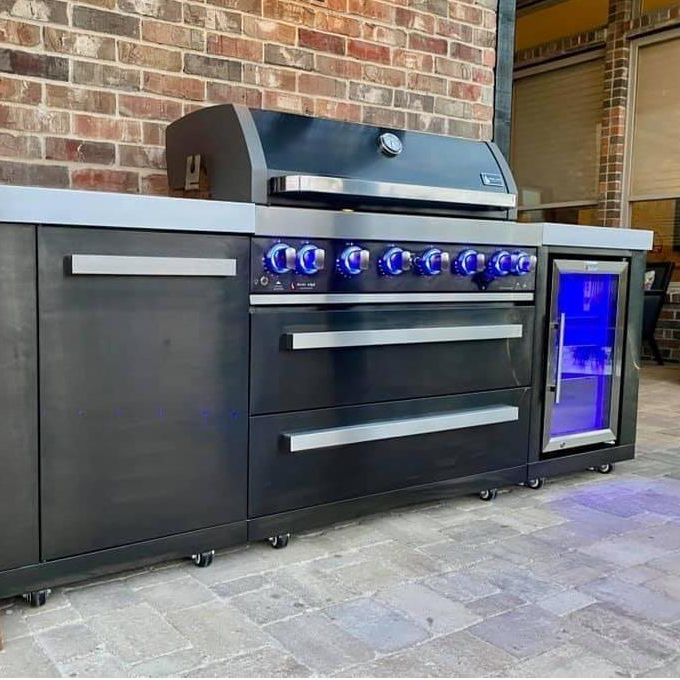
Picking the wrong outdoor kitchen foundation is one of the most costly mistakes you can make in a backyard project.
Get it right and your kitchen stays flat, drains well, and holds up for decades. Get it wrong and you face cracked surfaces, a shifting island, and expensive repairs within a few seasons.
This guide compares the two most common outdoor kitchen foundations: concrete pads and paver bases. Also, it covers what each one costs, how each one performs, and which one fits your build.
Many homeowners skip this step. They spend money on a great grill, nice cabinets, and a stone countertop, then set it all on bare dirt or an existing lawn. Within a season or two, the kitchen starts tilting, the joints crack, and the appliances no longer sit level.
An outdoor kitchen is heavy. A standard prefab BBQ island with a built-in grill, fridge, and stone countertop can weigh 800 to 1,500 pounds or more.
A full custom build with a pizza oven, kegerator, and long countertops can push several thousand pounds. That weight needs to spread evenly into a stable base.
Otherwise the ground will sink unevenly and your kitchen will go with it.
There are three forces every outdoor kitchen foundation has to handle:
Both concrete pads and paver bases deal with these forces, but in different ways. Here's how each one works.

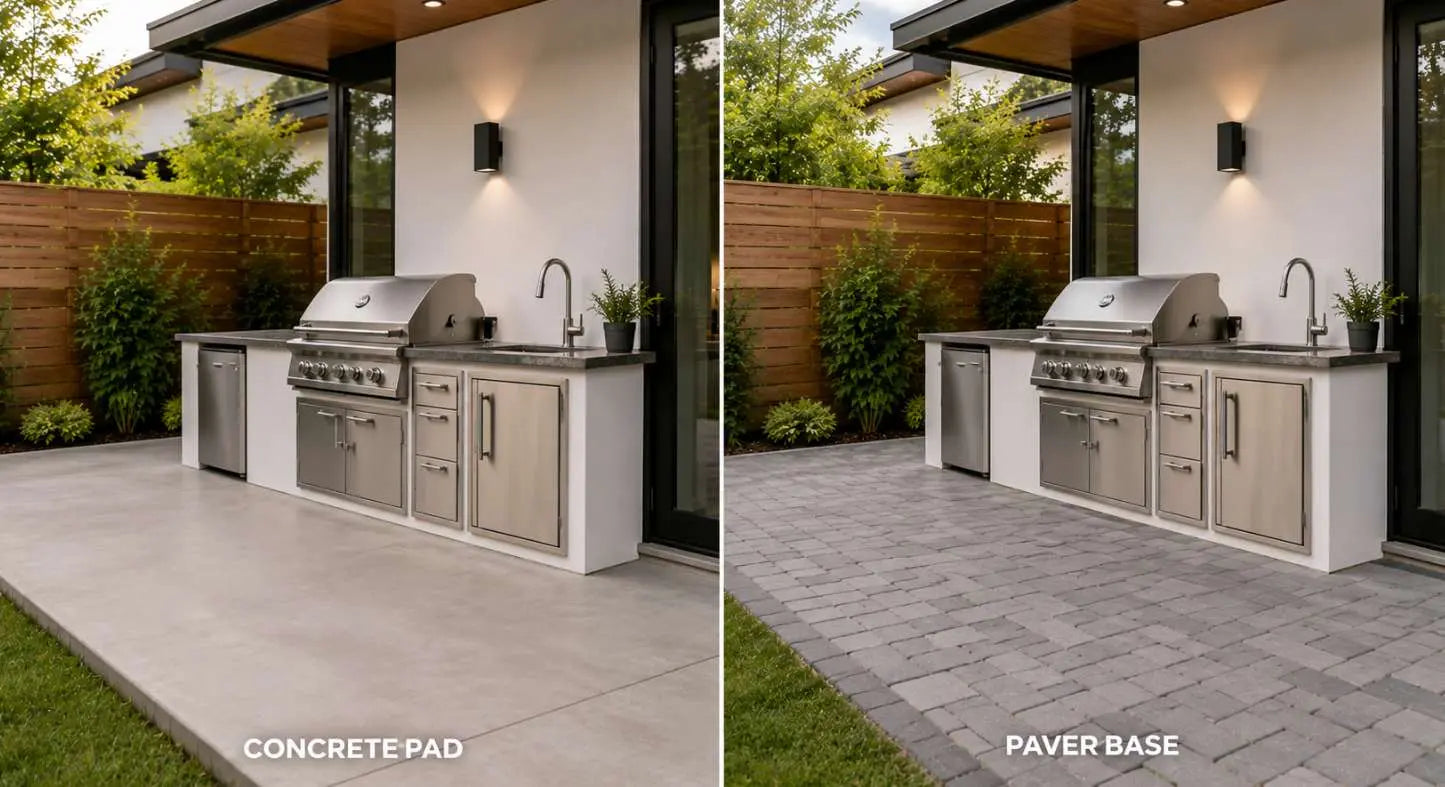
A concrete pad (also called a concrete slab) is a single poured surface made of reinforced concrete. Here's what a proper outdoor kitchen concrete foundation looks like from start to finish:
Dig down 8 to 10 inches below your finished surface height. Remove all topsoil and organic material.
Slope the area slightly (about 1/4 inch per foot) away from the house so water drains outward.
Lay 4 to 6 inches of crushed gravel and compact it in 2-inch layers using a plate compactor.
This layer drains water and keeps the concrete from sitting on soft, unstable soil.
Build wooden frames around the edges to hold the concrete in place while it sets. For an outdoor kitchen, add steel rebar on a 12 to 18-inch grid, or use welded wire mesh.
Rebar is the better choice for heavy loads because it stops cracks from spreading.
Pour the slab to at least 4 inches for small setups, or 6 to 8 inches for full outdoor kitchens or pizza ovens. A textured or broom finish gives better grip underfoot.
Add control joints every 4 to 6 feet; these guide where cracks go if the slab ever moves.
Pour the slab to at least 4 inches for small setups, or 6 to 8 inches for full outdoor kitchens or pizza ovens. A textured or broom finish gives better grip underfoot.
Add control joints every 4 to 6 feet; these guide where cracks go if the slab ever moves.
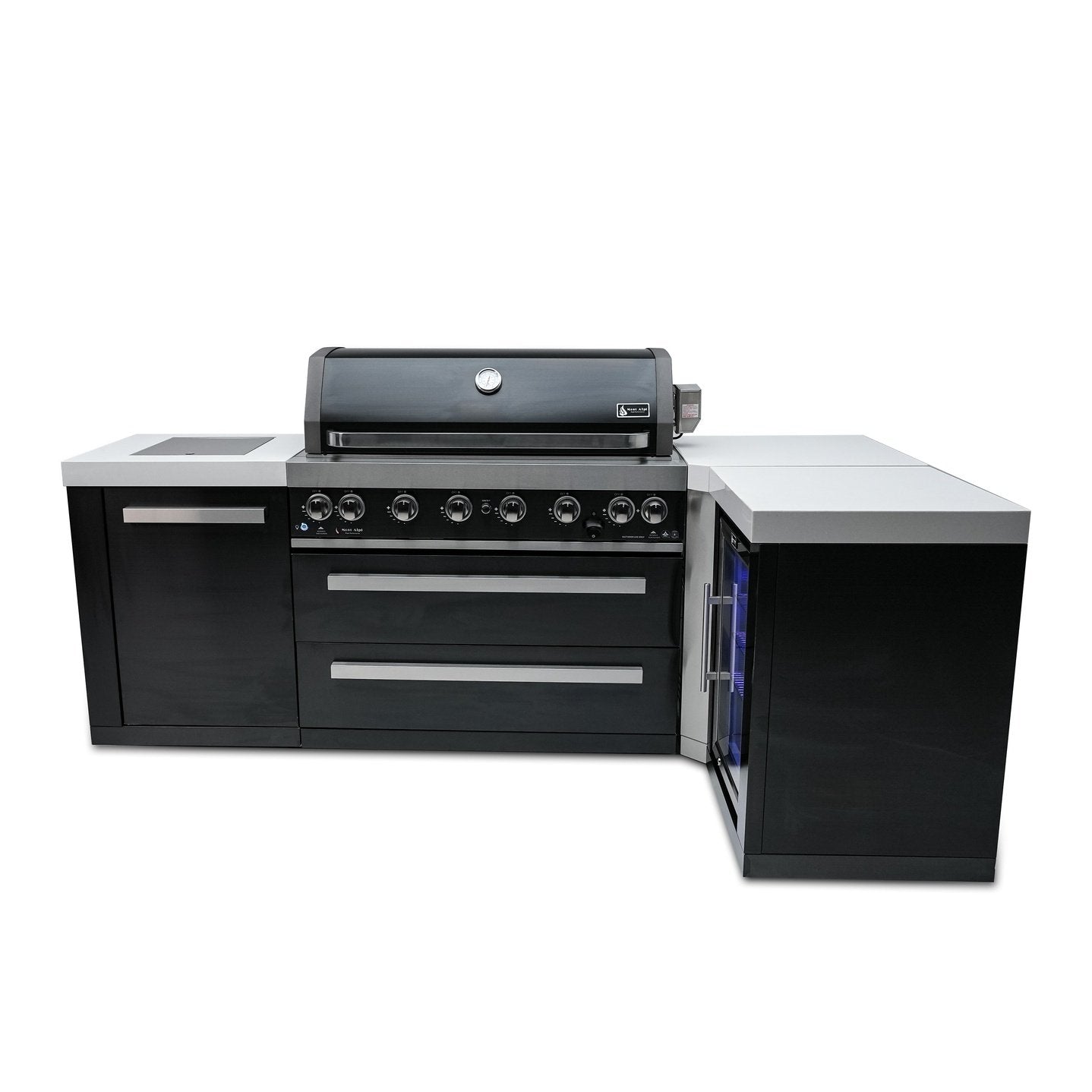

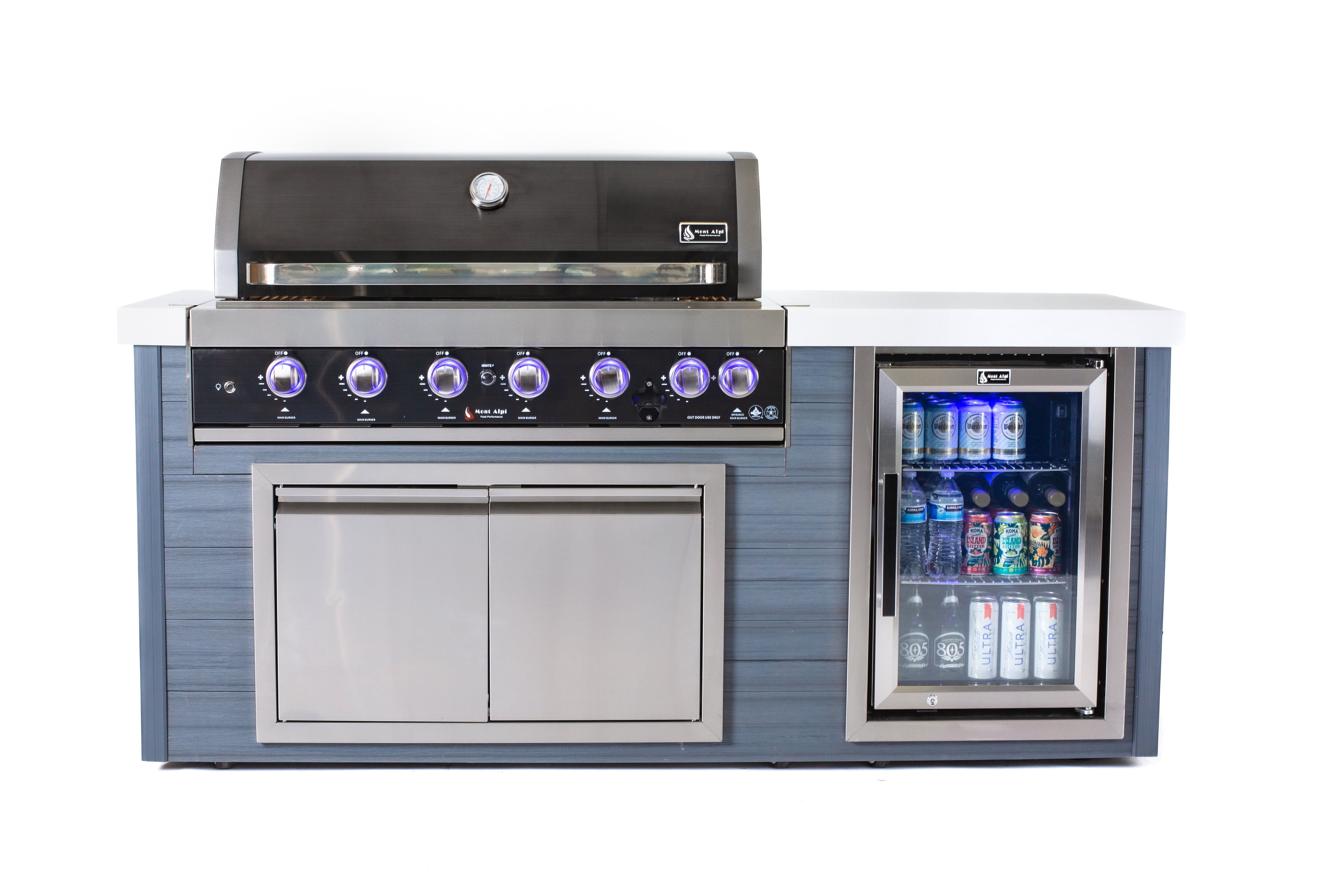

A paver base uses layers of compacted gravel and sand under individual paving stones. The kitchen sits on top of the pavers, which transfer its weight down into the base.
The key is getting those layers right. That's what makes it strong and long-lasting.
Here's what proper installation looks like:
Dig down 8 to 10 inches. Remove all topsoil and loose fill down to firm, undisturbed soil.
If the subsoil feels soft or was recently filled, compact it before putting anything on top.
Add 4 to 6 inches of crushed gravel (3/4-inch minus or Class II base rock) in 2-inch lifts, compacting each lift with a plate compactor to 95% density.
In clay soil or cold climates, lay a layer of geotextile fabric between the soil and gravel to keep the materials separate.
Spread coarse concrete sand (not stone dust) in a 1-inch layer over the gravel. Use metal rails to screed it flat.
This layer gives you a smooth, level surface to set the pavers on and lets you make small adjustments during installation.
Place the pavers in your chosen pattern. Run a plate compactor over the surface to set them firmly into the sand bed.
Install edge restraints around the perimeter to keep the outer pavers from shifting outward over time.
Sweep polymeric sand into the gaps between pavers and wet it to activate. It hardens when dry, locking the pavers together and blocking weeds and insects.
Regular sand also works but needs to be topped up every few years.
Handles freeze-thaw cycles better: Pavers are a flexible system. Individual stones can shift slightly with frost heave without breaking.
Concrete cannot flex, which is why it cracks. In cold climates this is a significant practical advantage.
| Factor | Concrete pad | Paver base | Winner |
|---|---|---|---|
| Upfront cost | $6 to $15 per sq ft installed | $10 to $30 per sq ft installed | Concrete |
| Long-term value Key factor | Higher repair costs over time | Lower maintenance, longer lifespan | Pavers |
| Structural strength | Excellent, best for very heavy loads | Strong, suitable for most kitchen setups | Concrete (slight edge) |
| Drainage | Requires grading, water pools on surface | Natural drainage through joints | Pavers |
| Freeze-thaw performance | Prone to cracking over winter cycles | Flexible, handles heave without breaking | Pavers |
| Repair ease | Difficult, costly, visible patches | Simple, individual stones replaced as needed | Pavers |
| Installation time | 1 day pour, 7-day cure before use | 2 to 3 days, usable same day | Pavers (slight edge) |
| Future flexibility | Permanent, demolition required to change | Stones can be lifted, layout can be adjusted | Pavers |
| Visual appeal | Uniform, can be stamped or colored | Wide variety of patterns, colors, and textures | Pavers |
| Expected lifespan | 20 to 30 years | 50+ years with proper installation | Pavers |
If you go with a concrete pad, thickness matters a lot. Too thin and the slab cracks under load. Too thick and you're wasting money.
Here's what to use based on your kitchen setup:
| Kitchen type | Estimated weight | Recommended slab thickness | Reinforcement |
|---|---|---|---|
| Single prefab BBQ island (4 to 6 ft) | 400 to 900 lbs | 4 inches | Wire mesh sufficient |
| Full prefab / modular outdoor kitchen Most common | 900 to 2,000 lbs | 6 inches | Rebar on 18-inch grid recommended |
| Custom kitchen with pizza oven or built-in smoker | 2,000 to 4,000+ lbs | 6 to 8 inches | Rebar on 12-inch grid required |
| Kitchen with pergola posts attached to slab | Varies, additional point loads | 8 inches with thickened footings at post locations | Rebar with thickened edge beams at posts |
You may be able to place a prefab outdoor kitchen directly on it, but only if the slab is in good condition with no cracking, heaving, or soft spots. A damaged slab will pass its problems straight to your kitchen. Have it checked before you commit.
Here's a direct answer based on the most common situations homeowners face:
Many premium outdoor kitchen builds use both materials together: a concrete structural base under the island footings and pavers as the finished walking surface around the kitchen. This combines the load-bearing strength of concrete with the drainage, flexibility, and good looks of pavers. It is also what most professional outdoor kitchen installers use on high-end projects. BetterPatio's design team can advise on what foundation suits your specific kitchen and climate.
BetterPatio carries prefab BBQ islands, modular outdoor kitchens, and fully custom builds, all delivered free with expert support from start to finish.


No, but it does need a stable, level, load-bearing outdoor kitchen foundation. A properly prepared paver base with 4 to 6 inches of compacted gravel and a 1-inch sand layer is strong enough for most prefab and modular setups. Concrete makes more sense for very heavy custom kitchens, structures with attached pergola posts, or warm climates where freeze-thaw damage isn't a concern.
Use a 4-inch slab for small grilling stations and light prefab islands. For a full outdoor kitchen with a grill, fridge, sink, and stone countertops, use 6 inches. If you're adding a pizza oven, built-in smoker, or pergola posts, go to 6 to 8 inches with rebar on a 12 to 18-inch grid. Always pour over 4 to 6 inches of compacted gravel to prevent the slab from cracking as the soil settles below it.
Yes, and for most setups, it's the better choice. Pavers can handle significant weight when installed on a properly compacted base. The most common mistake is skimping on base depth. When you get it right (4 to 6 inches of compacted gravel plus 1 inch of concrete sand), pavers are actually more durable and flexible long-term than concrete for most outdoor kitchen applications.
In cold climates with regular freeze-thaw cycles, a paver base is the better outdoor kitchen foundation. Concrete is rigid and cracks when frost pushes the ground below it. Pavers are a flexible system: individual stones can shift slightly with frost heave and be re-leveled afterward without replacing the whole surface. Use a deeper gravel base (6 inches or more), geotextile fabric between the soil and gravel, and polymeric sand in the joints to resist weeds and insects through winter.
Yes, if the existing patio is in solid condition. For a concrete patio, make sure the slab is at least 4 inches thick, has no significant cracking or heaving, and drains water away from the structure. For an existing paver patio, check that the base is firm and level with no soft or sunken areas. Fix any problems before placing the kitchen. A prefab island on a weak surface will develop the same issues within a season or two.
The right outdoor kitchen foundation comes down to three things: your climate, how heavy your kitchen is, and how much flexibility you want later on.
For most homeowners installing a prefab or modular outdoor kitchen, a paver base on compacted gravel is the smarter long-term choice: better drainage, easier repairs, and stronger performance in cold weather.
A reinforced concrete pad makes the most sense for very heavy custom builds or any structure with attached pergola framing.
If you're not sure what your build needs, BetterPatio's design team can walk you through it at no charge.

As the outdoor living trend continues to thrive, you may be wonder...

How to transform your outdoor space in 5 steps to...