Knowing how to start a charcoal grill the right and safe way makes the difference between a frustrating experience and a great cook every time. Charcoal grilling takes a little more setup than gas, but the flavor and heat you get in return are hard to beat.
Whether you're lighting your first charcoal grill or looking to sharpen your technique, this guide covers everything from setup and fuel choice to lighting methods and temperature control. You'll also find recommendations on the best charcoal grills available at Better Patio.
Ready to find your perfect charcoal grill? Browse our full collection of charcoal grills and find the right model for your backyard setup.

Prepping your grill isn't just tossing in charcoal and lighting a match. You've got to check your gear, pick the right fuel, and make sure everything's safe before you get started.
First, put your grill on a flat, stable spot well away from your house, garage, or any overhanging branches. Ten feet from anything flammable is a good rule.
The charcoal you pick changes your results. Here's a quick breakdown of your options:

A chimney starter gives you a fast, clean charcoal fire, while natural fire starters are a solid backup when you're missing special tools. Knowing both methods helps you skip the frustration of stubborn charcoal that won't catch.
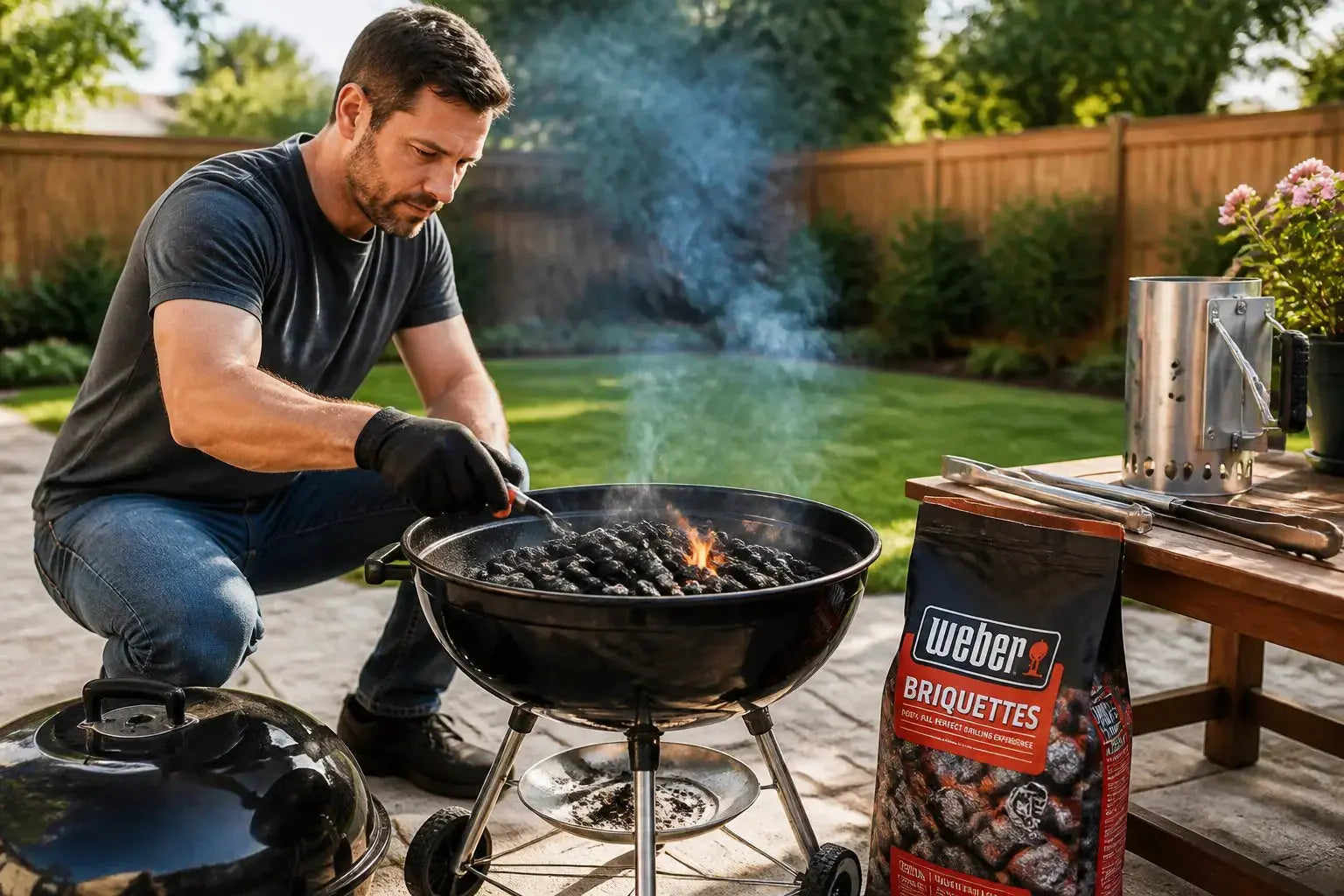
A charcoal chimney starter is your best friend for lighting a grill. It's a metal cylinder where you stuff newspaper or a fire starter cube at the bottom and charcoal on top.
Fill the top of your chimney with your chosen charcoal. Crumple up a couple of sheets of newspaper for the bottom, or drop in a fire starter cube if you want an easier start.
Place the chimney on your charcoal grate and light the paper through the lower holes. Flames heat the charcoal from underneath, and the natural airflow really gets things going fast.
Wait about 10 to 15 minutes. Look for gray ash covering the top coals and flames coming out of the top of the chimney. That's your signal they're ready to pour.
Pour the hot coals onto your grill grate and arrange them for direct or two-zone cooking. The chimney method skips lighter fluid entirely, so there are no chemical flavors or off smells in your food.
It's the fastest, cleanest way to light charcoal without lighter fluid. No chemical taste, no dangerous flare-ups — just hot, ready coals in about 15 minutes.
Put 2 to 3 natural fire starter cubes, wax starters, or wood wool pieces directly on the charcoal grate. These burn long enough to get your charcoal going without any lighter fluid.
Stack your charcoal in a pyramid shape over and around the fire starters, leaving gaps between pieces for airflow. The pyramid shape helps flames spread and light more charcoal at once.
Use a long lighter or match to ignite the fire starters from several different spots around the base. This gets the fire going evenly across the whole pile.
An electric charcoal starter is another easy option. Place the heating element under the charcoal pile and plug it in for 8 to 10 minutes. Once you see flames, pull the starter out and let the coals finish turning ashy on their own.
Shop our full range of kamado grills and find a grill built for grilling, smoking, and everything in between.

Managing heat on a charcoal grill is all about vent control and how you arrange your coals. Keep up with some basic maintenance and your grill will light up quickly and burn clean every time.
Charcoal grills have two vents for temperature control. The bottom vent pulls in oxygen, and the top vent lets heat and smoke out.
A grill thermometer is a game changer. Clip one to your lid vent or use a probe to know exactly what's going on inside. No more guessing and burning dinner because you thought it was hotter or cooler than it actually was.
Place food directly over the hot coals. Perfect for burgers, steaks, hot dogs — anything that cooks fast. The high heat sears the outside and gives you those classic grill marks.
Pile coals on one side and cook food on the other side with no coals underneath. Heat circulates like an oven — great for chicken, ribs, roasts, or anything that needs more time without burning.
Push all coals to one side and leave the other side empty. Sear on the hot side, then move food to the cool side to finish without charring. Super versatile — the best of both worlds for most cooks.
Shop our collection of natural gas grills and find the right fit for your outdoor kitchen.
Starting a charcoal grill the right way comes down to a few simple habits — clean setup, the right fuel, and learning how to manage airflow to hit and hold your cooking temperature.
Once you get comfortable with the chimney starter and vent adjustments, charcoal grilling becomes second nature. The flavor, heat, and control you get from charcoal are hard to replicate with any other method.
Want to see how charcoal stacks up against other grill types? Check out our guide on gas vs charcoal vs pellet grills to find the best fit for your backyard.
People have a lot of questions about starting a charcoal grill — timing, technique, safety, you name it. Here are quick answers to the most common stuff that comes up.
Fill a chimney starter with lump charcoal, place crumpled newspaper or a fire starter cube underneath, and light it from the bottom. Wait 10 to 15 minutes until the coals are covered in white or grey ash, then pour them into the grill and arrange for direct or two-zone heat. Put the cooking grate back on, close the lid for five minutes to preheat, and you're ready to cook.
Give the charcoal 15 to 20 minutes after lighting before you start cooking — you want at least two-thirds of each coal covered in white or grey ash and the heavy smoke gone. Cooking over black, smoky coals makes food taste bitter and cook unevenly. Quick test: hold your hand five inches above the grate — if you can only hold it there for 2 to 3 seconds, you're at the right temperature.
Yes — keep the lid off while lighting and waiting for the coals to ash over so they get maximum airflow, and make sure both vents are wide open during this stage. Once the coals are ready and the grate is back on, close the lid for five minutes to preheat before adjusting the vents for your cooking temperature.
Flames appear when fat drips onto hot coals — if you want more heat, pile on extra charcoal and open the vents wide to push temps to 500°F or higher without relying on flare-ups. Most great grilling happens over glowing coals, not open flames, which deliver steady radiant heat without burning your food. Never pour lighter fluid onto lit or warm coals — it causes dangerous flare-ups and ruins the flavor of your food.

As the outdoor living trend continues to thrive, you may be wonder...

How to transform your outdoor space in 5 steps to...