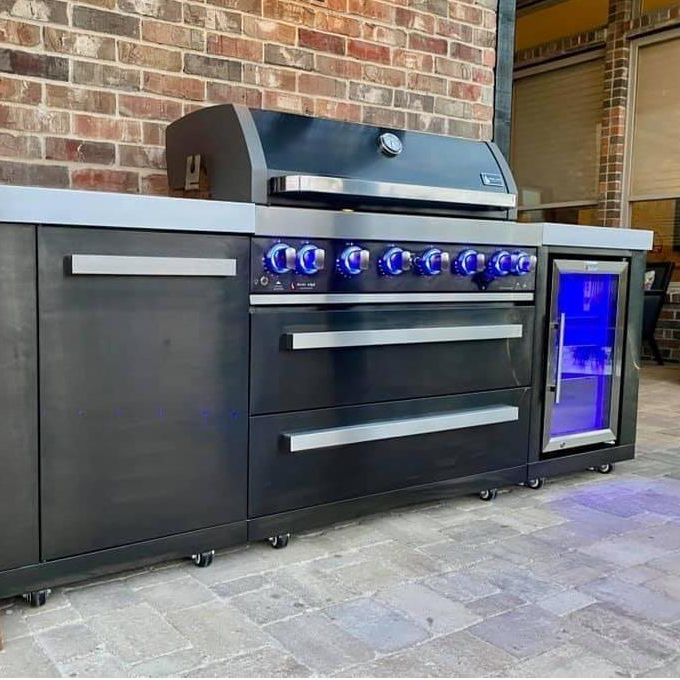
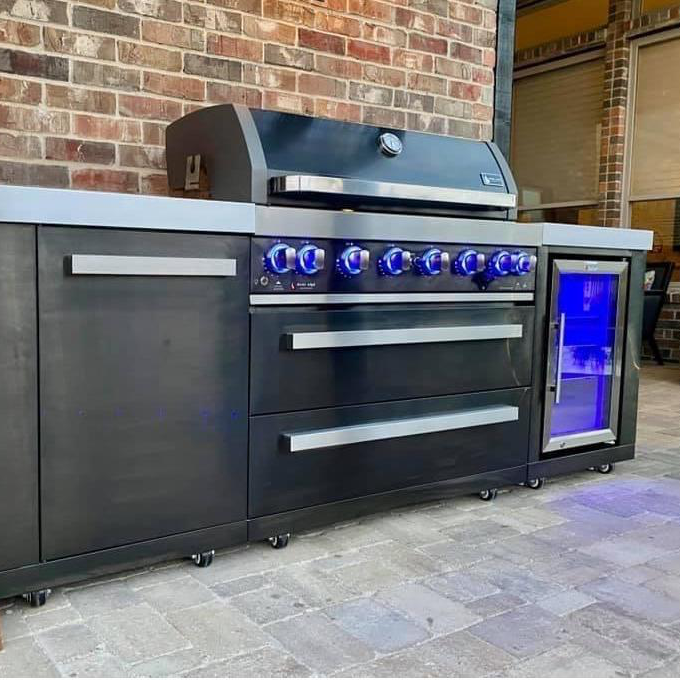
A propane vs natural gas grill decision comes down to three tradeoffs: propane wins on portability and upfront cost, natural gas wins on long-term running cost and never running out mid-cook, and both cook your food essentially the same once the grates are hot.
If you already have a gas line at the house, natural gas usually pays off. If you don't, the install cost changes the whole equation. I've designed and installed dozens of backyard cooking setups, and this is the single most common question I get before anyone picks a grill. So let's settle it with real numbers, not vibes.

Both are gas grills. The difference is the fuel and how it's delivered.
A propane grill (also called liquid propane or LP) runs off a refillable tank, usually a 20-lb tank that bolts to the grill. You hook it up, you cook, and when it's empty, you swap or refill it.
A natural gas grill is connected to your home's natural gas supply via a permanent line, the same utility that feeds your furnace and water heater. There's no tank and no refilling. The fuel just flows.
The mechanical difference matters more than people expect. Propane contains about 2,516 BTUs per cubic foot, while natural gas contains around 1,030 BTUs per cubic foot—over double the energy density.
To compensate, natural gas grills use larger burner orifices to flow more fuel. That's exactly why the two aren't interchangeable without a conversion (more on that below).
Two things have shifted the math recently.
First, natural gas line installations are increasingly common in new builds and outdoor kitchen projects, making natural gas grills far more accessible than they were a decade ago. If you're planning a full outdoor cooking space, running the gas line during construction is dramatically cheaper than retrofitting later.
Second, fuel prices. The per-BTU gap remains real: propane runs about $28-$32 per million BTUs, while natural gas lands between $15-$25 per million BTUs, roughly half the cost per unit of heat. For someone grilling weekly, that difference compounds across a season.
If you're already mapping out a build, your fuel decision should be made before you finalize the layout, as it affects plumbing, placement, and budget. Our guide on how to choose the right outdoor kitchen layout walks through where the grill and gas drops should sit.
Here's the honest answer most articles dance around: once the grill is hot, you will not taste a difference.
The flavor in grilled food comes from the Maillard reaction, fat dripping onto hot surfaces, and your technique, not from whether the flame is fed by propane or methane. Both fuels are clean-burning and odorless once lit.
The measurable difference is in how quickly you reach the temperature. Propane's higher energy density means propane grills tend to preheat faster and recover heat faster after you open the lid.
Propane grills often reach higher temperatures faster, making them ideal for quick searing and achieving a good char on your food.
But this gap is narrowing. Many premium gas grills from top brands still reach 500-550°F, right on par with propane models. A well-engineered natural gas grill with properly sized burners closes most of the difference.
My field take: If you sear ribeyes and want maximum thermal punch from a budget grill, propane has a slight edge. If you're cooking everyday meals on a quality grill, you'll never notice.
For more on matching your grill to your cooking style, see our breakdown of the best built-in grills for outdoor kitchens.

This is where the decision usually gets made. Let's split it into the two costs that actually matter.
| Cost Factor | Propane | Natural Gas |
|---|---|---|
| Grill price | Similar | Similar (often $50-$150 more for NG models) |
| Tank | $30-$50 (20-lb tank) | None |
| Gas line install | None | $200-$1,200+ (avg ~$700) |
| Plumber/permit | None | Often required |
Propane wins the upfront battle decisively. A standard 20-lb propane tank costs $30-$50, and refills run $12-$15, and you're cooking the same day. With natural gas, the setup is more involved.
You'll need a dedicated gas line, which can cost anywhere from $200 to $1,200, depending on distance and installation complexity; most homeowners spend around $700.
Natural gas flips the script. An hour of grilling with propane can cost $0.60-$1.00, while natural gas averages $0.30-$0.70. Over years of regular grilling, natural gas recoups its installation cost and then keeps saving.
The breakeven: If you grill a few times a week, natural gas typically pays back its line install within 2-4 years and saves money after that. If you grill occasionally, propane's lower upfront cost may never be noticed.
Thinking about the full project budget? Our outdoor kitchen cost guide puts the grill fuel decision in context with everything else.
Choosing your fuel is one part of the plan. Call BetterPatio for help designing a custom outdoor kitchen around your grill, patio space, and budget. See your layout and finish choices in a free 3D design before you order.
Propane goes where you go. If you use it to power a gas grill, you'll have more freedom to set up a barbecue anywhere in your yard. Tailgating, camping, moving the grill to the far patio for a party—propane handles all of it.
Natural gas grills are anchored to the line. Once installed, the grill stays put. For a built-in outdoor kitchen, that's a feature, not a bug—but it's a hard limit if you like rearranging.
Natural gas wins here for one reason: you never run out mid-cook. Anyone who's hit an empty propane tank halfway through a burger flip knows the pain. With natural gas, the fuel is effectively unlimited.
Propane requires tracking your tank level and maintaining a backup supply. Not a dealbreaker, but a recurring chore.
Both fuels are safe when handled correctly, but they behave differently in a leak. Propane collects along the floor while natural gas rises to the ceiling of a room as it naturally rises.
This is why propane storage and use in enclosed or below-grade spaces requires extra care, as the gas pools low. Always grill in open, well-ventilated areas and store propane tanks outdoors, upright.
If your grill lives inside a built structure, proper ventilation matters. Our guide on outdoor kitchen vent hoods covers when you need one.
Over the years, I've seen the same errors repeat.
Avoid these:

Use this flowchart process to decide in five minutes:
Do you already have a natural gas line near the grill spot? If yes, natural gas is likely your cheapest long-term option. If no, continue.
Can you afford the line install ($200-$1,200) and do you grill often? If yes, natural gas still wins over a few years. If no, lean propane.
Do you need to move the grill (for tailgating, camping, or rearranging)? If yes, propane is the clear winner without question.
Is this part of a permanent, built-in outdoor kitchen? If yes, natural gas integrates cleanly and never needs refilling. Browse our custom outdoor kitchen configurations to see how the grill fits the build.
Still torn? Default to your line access. If you have a line, choose natural gas. If you don't, choose propane.
If you're building a permanent setup, a modular outdoor grill island can be plumbed for natural gas during install, which is the smartest time to commit to it.
Ready to upgrade your outdoor cooking game? Discover premium Coyote grills designed to deliver superior heating performance, heavy-duty durability, and a clean luxury finish for any custom backyard build.

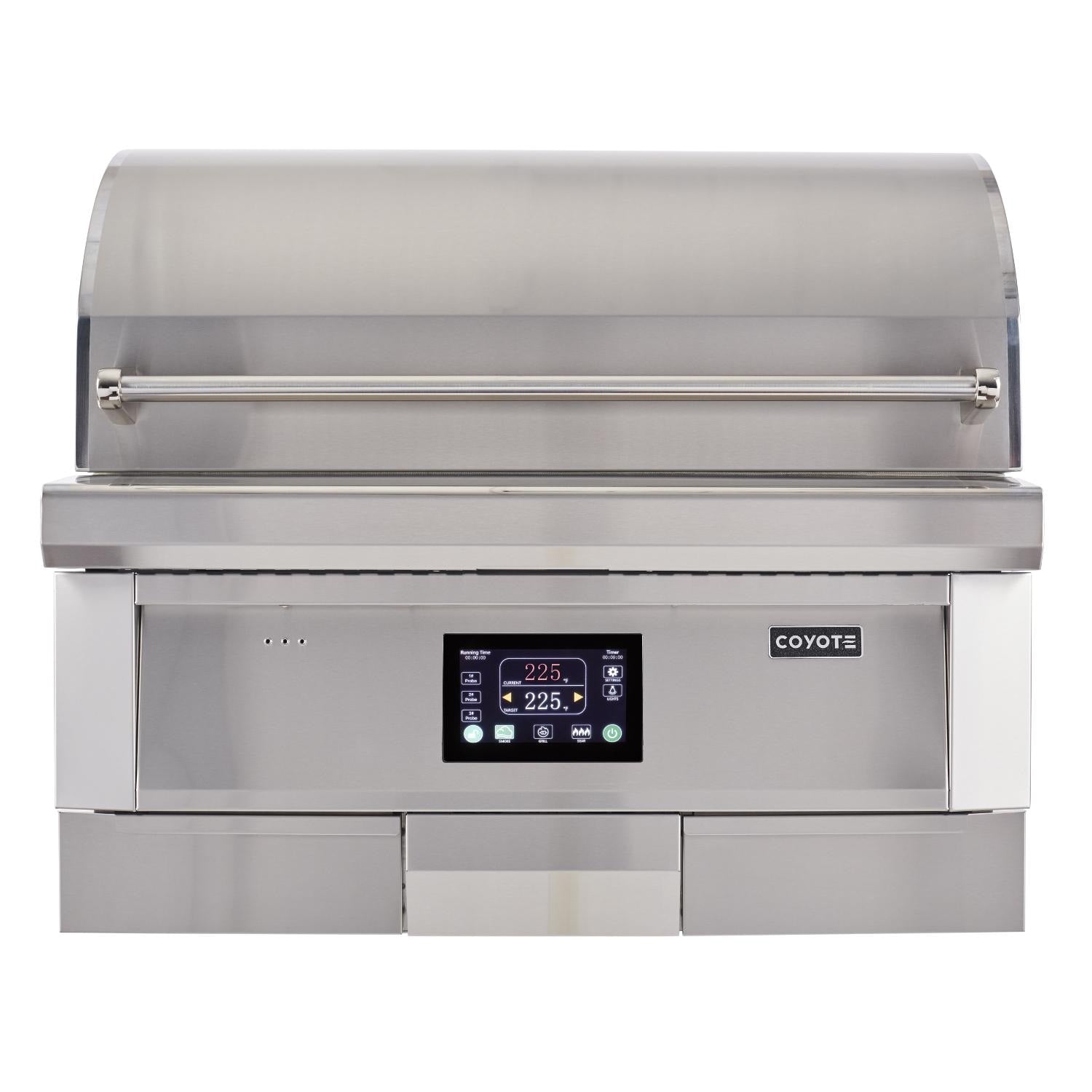
The propane vs natural gas grill decision isn't about which fuel is universally superior—it's about your specific yard, habits, and budget. Propane gives you portability, a low entry cost, and a slight searing edge.
Natural gas offers lower running costs, endless fuel, and a clean integration into permanent outdoor kitchens, at the cost of an upfront line installation.
My rule of thumb after years of installs: if you have gas at the house and grill regularly, run the line and never think about tanks again. If you value flexibility or want to start cheap, propane is a genuinely great choice.

As the outdoor living trend continues to thrive, you may be wonder...

How to transform your outdoor space in 5 steps to...