The floor under your outdoor kitchen has to do more than look good. It needs to support heavy appliances, handle weather, resist grease, and stay safe when guests are walking around with food and drinks.
This guide compares the best outdoor kitchen flooring options, including pavers, concrete, and outdoor-rated tile, so you can choose the right surface for your climate, budget, and backyard layout.
An outdoor kitchen floor works harder than a normal patio surface. It has to support built-in grills, cabinets, outdoor refrigeration, prep counters, bar seating, and foot traffic while dealing with sun, rain, food spills, and temperature changes.
Before you buy appliances or install a kitchen island, decide what type of surface will hold the entire space together. If you are still planning the layout, BetterPatio's Design Your Outdoor Kitchen page can help you think through footprint, finishes, and appliance placement before the build starts.
| Flooring Option | Best For | Main Advantage | Main Drawback | Cost Level |
|---|---|---|---|---|
| Pavers | Rainy areas, cold climates, traditional patios | Excellent drainage and easy repairs | Joints may need weed control or sand refilling | Moderate |
| Concrete | Budget-friendly permanent outdoor kitchens | Strong, clean, affordable surface | Can crack or become slippery without texture | Low to moderate |
| Porcelain Tile | Premium modern outdoor kitchens | Low water absorption and easy cleaning | Needs a solid slab and correct outdoor installation | Moderate to high |
Planning ShortcutIf you are comparing flooring and kitchen layouts at the same time, start with BetterPatio's full outdoor kitchen collection. Seeing straight, L-shaped, prefab, and modular layouts can make it easier to estimate how much flooring you actually need.

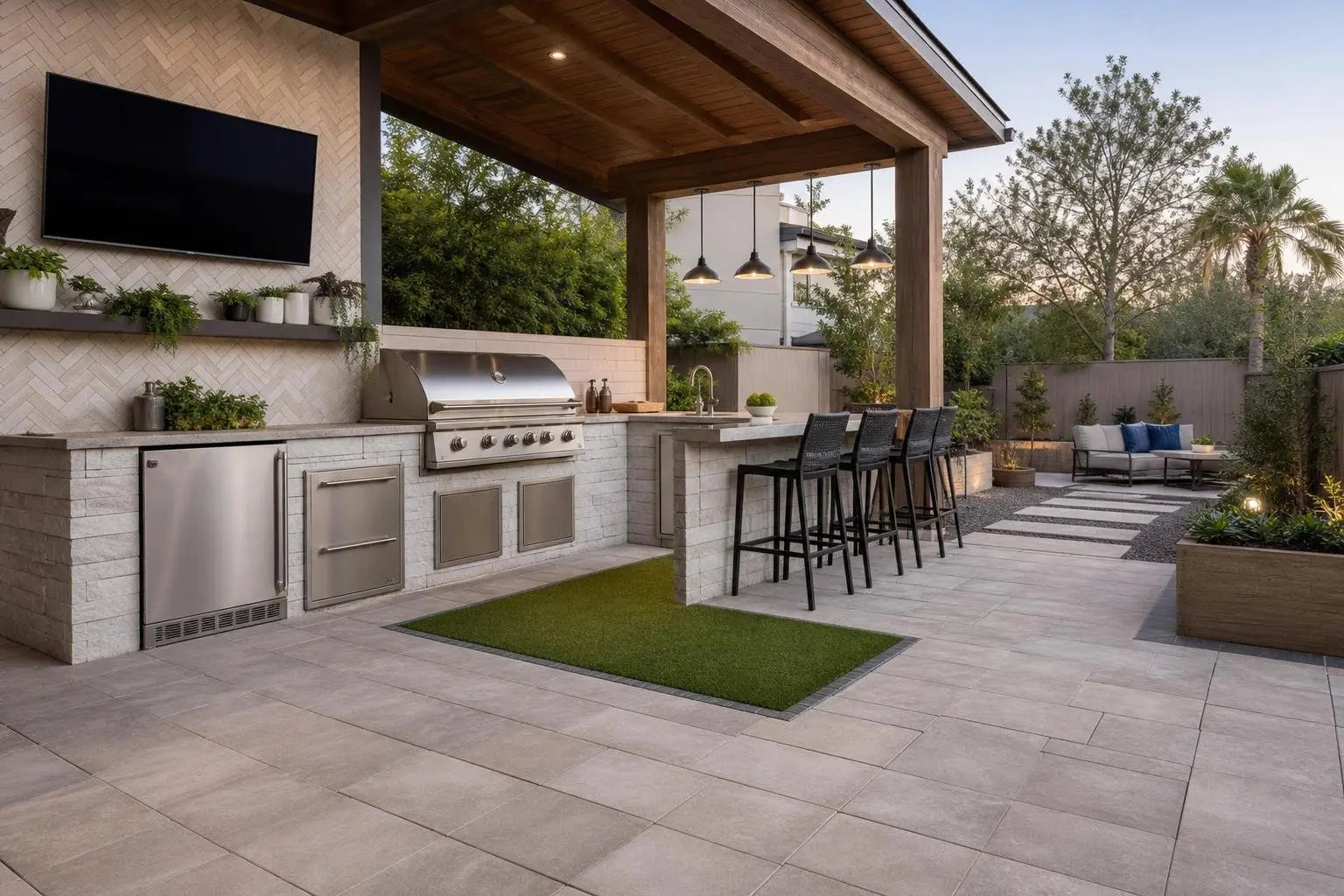
Pavers are one of the most practical outdoor kitchen flooring options because they combine strength, drainage, and repair flexibility. They work well for patios that need a warm, classic, or rustic look while still supporting outdoor kitchen islands and furniture.
Pavers allow water to move through the joints instead of sitting across one large slab. That makes them a strong choice for rainy climates and outdoor kitchens near pool areas or wet entertaining zones.
They are also easier to repair than poured concrete. If one section stains, chips, or shifts, you can usually replace individual pavers without rebuilding the entire patio.
Pavers are especially useful if your outdoor kitchen sits in a rainy area, on a large patio, or in a climate with freeze-thaw movement. They also pair well with larger layouts such as L-shaped outdoor kitchens.
Concrete is one of the most affordable permanent outdoor kitchen flooring options. It creates a clean, stable surface that can support grills, cabinets, counters, refrigeration, and outdoor dining furniture.
Concrete works especially well when you want a modern look or when you plan to install a prebuilt kitchen island on a flat, predictable base.
| Concrete Finish | Best Use | Outdoor Kitchen Note |
|---|---|---|
| Broom Finish | Budget-friendly patios | Adds traction and works well around wet areas. |
| Stamped Concrete | Decorative designs | Can mimic stone or pavers, but should be sealed properly. |
| Stained Concrete | Modern color upgrades | Creates a polished look without changing the slab shape. |
| Exposed Aggregate | Slip resistance | Good texture for areas near sinks, grills, and poolside kitchens. |
Best PairingA level concrete slab is a smart match for prefabricated BBQ islands because the island can sit evenly and securely without complicated base adjustments.
Concrete can crack over time, especially if the base was not prepared correctly or if expansion joints were skipped. Smooth concrete can also become slippery when wet, so outdoor kitchens should use texture, proper slope, and sealing.
If you are planning a connected multi-piece layout, a flat slab also works well with modular outdoor kitchens, but the surface needs to be level before installation.
Tile can create the most polished outdoor kitchen floor, but it must be rated for outdoor use. Indoor tile is not designed to handle temperature changes, moisture, UV exposure, and slippery conditions.
Outdoor-rated porcelain tile is usually the strongest tile choice because it absorbs very little water, cleans easily, and comes in designs that mimic stone, concrete, and wood.
Tile is a strong choice when you want the outdoor kitchen to feel like a finished outdoor room instead of a basic cooking area. It also gives you more control over color, pattern, and visual style.
Tile pairs especially well with premium countertops. If you are choosing the whole surface package together, review BetterPatio's guide to the best materials for outdoor kitchen countertops.
Use outdoor-rated, textured porcelain tile when you want a low-maintenance surface that looks clean, modern, and upscale. Avoid glossy indoor tile around grills, sinks, and wet walking paths.

Your climate should guide your flooring decision. A surface that performs well in a dry, warm climate may not be the best choice for a wet, cold, or freeze-thaw region.
| Climate | Best Flooring Options | What To Avoid |
|---|---|---|
| Hot and sunny | Light concrete, light pavers, textured porcelain tile | Very dark surfaces that absorb too much heat |
| Rainy or humid | Pavers, textured tile, sloped sealed concrete | Glossy tile and flat surfaces with poor drainage |
| Cold freeze-thaw | Concrete pavers, brick pavers, outdoor porcelain pavers | Poorly installed slabs or non-outdoor tile |
| Poolside kitchens | Slip-resistant pavers, textured porcelain, exposed aggregate concrete | Smooth sealed surfaces in wet walking zones |
Safety PriorityFor wet patios, drainage and traction matter more than shine. If you want to define a nearby dining or lounge area, use outdoor rugs away from the grill zone rather than placing soft materials under cooking equipment.
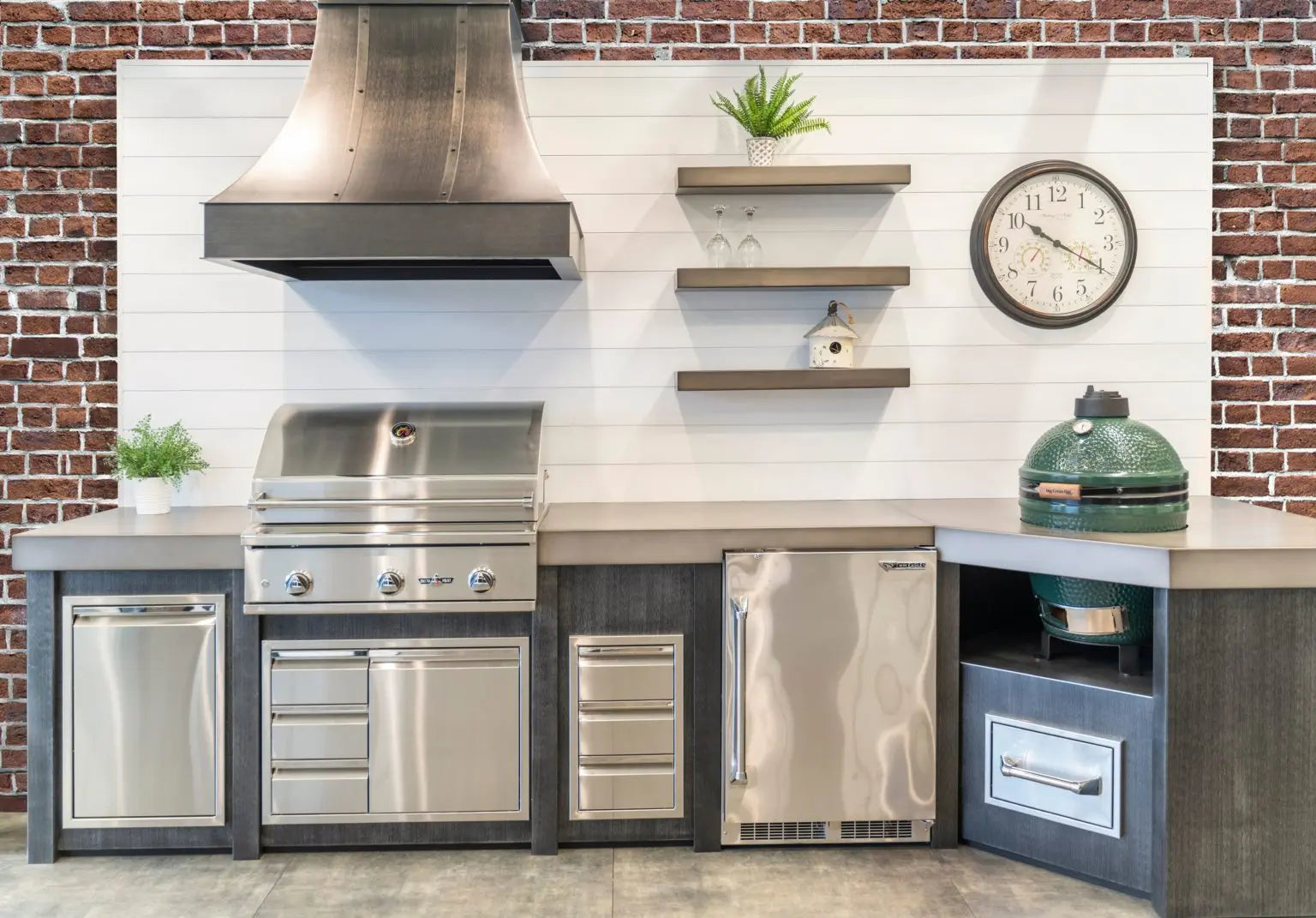
The right flooring also depends on the outdoor kitchen layout you choose. A small straight-line island does not put the same demands on the patio as a large L-shaped or modular outdoor kitchen.
Use a flat concrete slab or a very level paver installation. Prefabricated islands need even support so the grill, doors, drawers, and counters align properly.
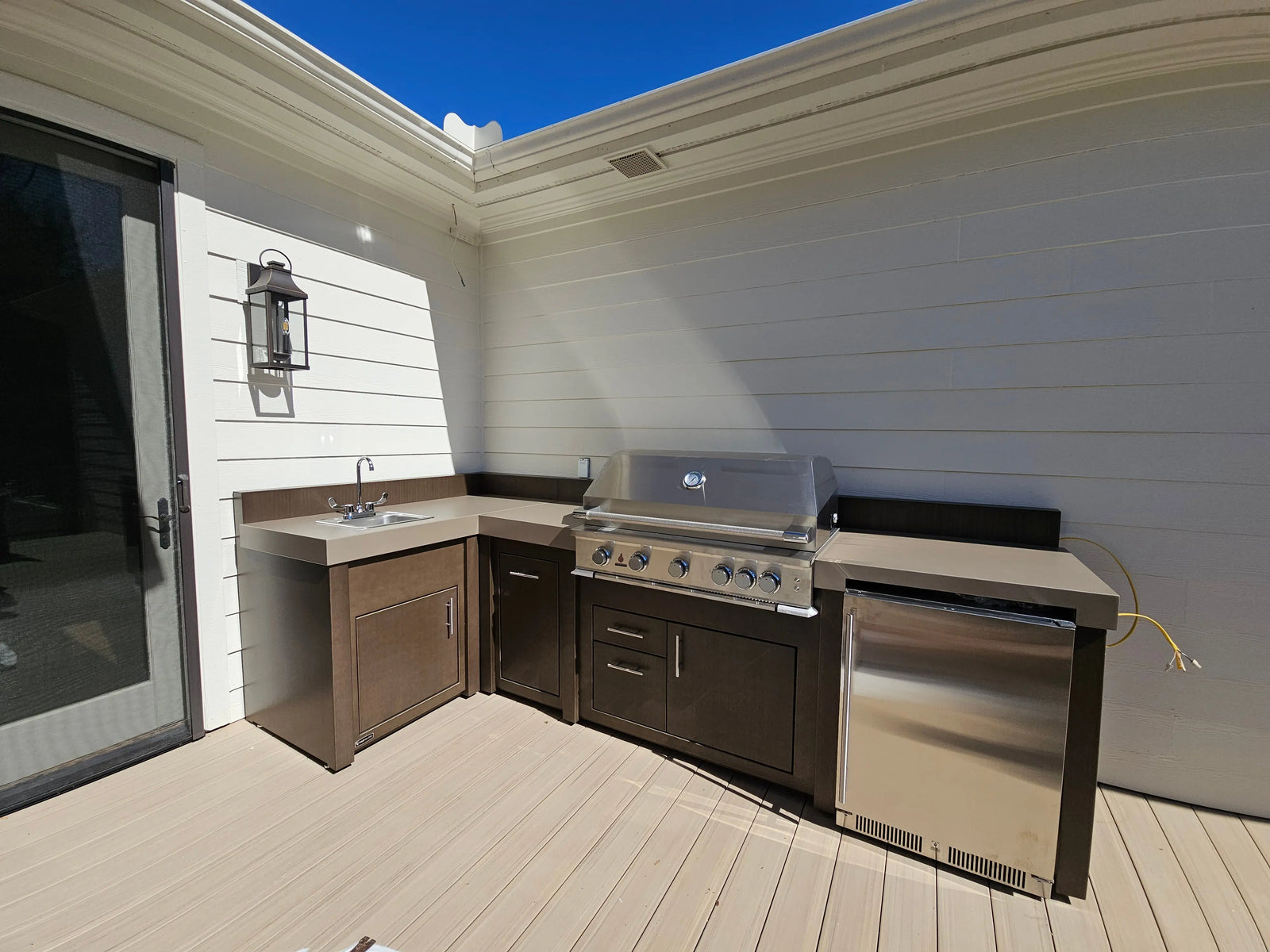
Use pavers, concrete, or tile depending on climate and style. L-shaped layouts need more clear walking space around the cooking, prep, and seating zones.
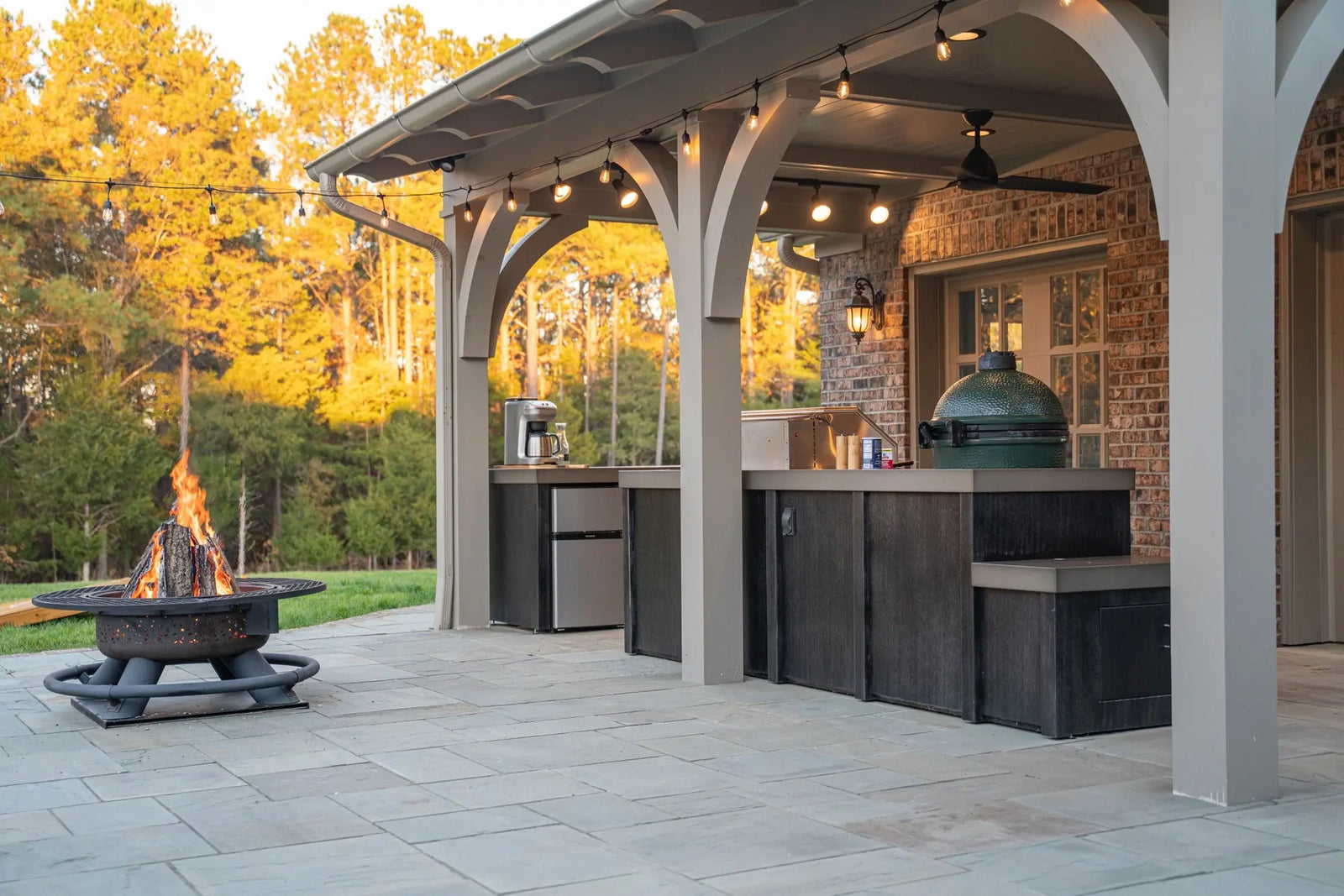
Use a level, stable surface. Modular pieces connect together, so uneven flooring can make cabinets, appliance sections, and counters feel misaligned.
Choose flooring during the design phase. If you are adding sinks, refrigeration, or utility lines, slope and access should be planned before the floor is finished. For cold storage, browse outdoor refrigeration while mapping your appliance zone.
Most outdoor kitchen flooring problems start below the surface. A beautiful floor can still fail if the base is weak, drainage is poor, or the slope sends water toward the house.
BetterPatio's guide to outdoor kitchen design mistakes is a useful next read because many flooring issues are connected to layout, clearances, storage, and appliance placement.
If your island will use a heavy frame or stone finish, also compare stainless steel, stucco, and stone outdoor kitchen frames before finalizing the surface underneath.
Outdoor kitchen flooring lasts longer when you clean spills quickly and match maintenance to the material. Grease, sauce, water, and leaves can all affect traction and appearance over time.
| Floor Type | Maintenance Tasks | Best Habit |
|---|---|---|
| Pavers | Sweep, rinse, remove weeds, refill joint sand when needed | Replace stained or damaged pavers early. |
| Concrete | Clean grease, reseal periodically, monitor cracks | Use texture and sealer to improve stain resistance and safety. |
| Tile | Clean grout, rinse spills, replace cracked tiles quickly | Avoid harsh cleaners that damage grout or outdoor sealants. |
For most homeowners, pavers are the best all-around outdoor kitchen flooring option because they drain well, handle weather movement, and are easy to repair.
Choose concrete if you want the most affordable permanent surface and a clean base for a modern or prefab outdoor kitchen. Choose outdoor-rated porcelain tile if you want the most polished look and are willing to invest in proper installation.
The best outdoor kitchen flooring option is the one that matches your climate, supports your appliances, stays safe underfoot, and works with the way you entertain. Pavers offer the best balance for most backyards. Concrete is the value choice. Outdoor-rated porcelain tile is the premium finish.
Once the flooring plan is clear, build the rest of the space around it. Start with BetterPatio's outdoor kitchen collection, compare layouts, and plan enough clear floor space for cooking, prep, serving, and seating.
Once the floor is planned, choose pieces that sit safely on the surface, match the layout, and complete the cooking and dining zone.
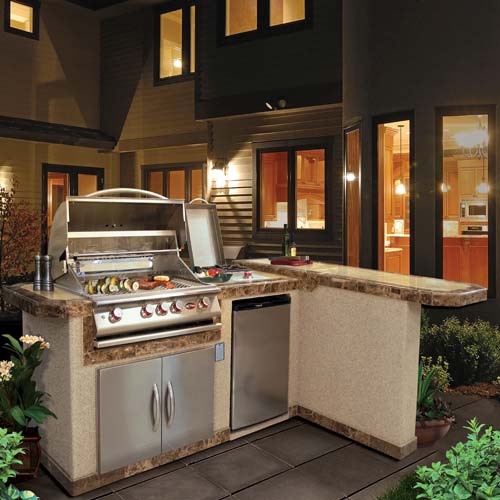
A corner-friendly island for larger patios and stable outdoor kitchen flooring.
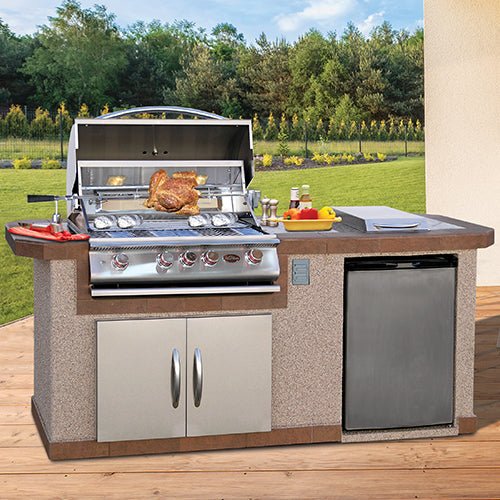
A compact custom island option for level concrete, paver, or tile surfaces.
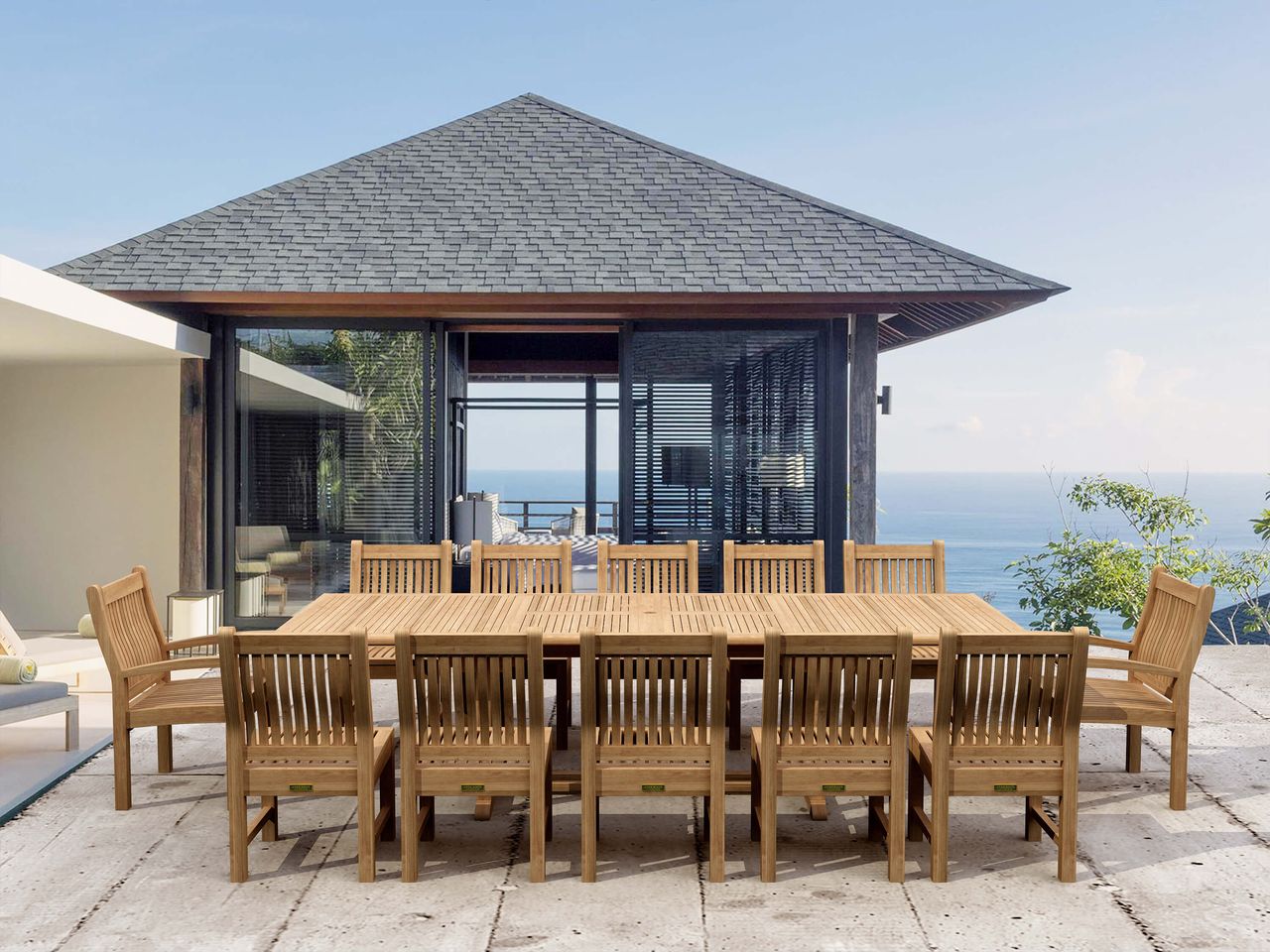
A full dining setup for turning the finished floor into an entertaining space.
The best flooring depends on your climate and layout. Pavers are the best all-around choice for drainage and repairs. Concrete is the most affordable permanent surface. Outdoor-rated porcelain tile is best for a premium, easy-to-clean finish.
A basic broom-finished concrete slab is usually the cheapest permanent outdoor kitchen flooring option. It supports heavy equipment, cleans easily, and works well with prefab or modular outdoor kitchen islands.
Yes, you can put an outdoor kitchen on pavers if the base is compacted, level, and built to support the weight. Heavy islands may require extra base preparation so the surface does not settle or shift.
Yes, outdoor-rated porcelain tile can be excellent for outdoor kitchens because it absorbs very little water and cleans easily. Choose a textured tile rated for exterior floors, and install it over a stable slab with outdoor-rated mortar and grout.
Pavers are better for drainage, easy repairs, and freeze-thaw movement. Concrete is better when budget, a clean modern look, and a flat permanent base are the top priorities.
Outdoor-rated porcelain tile is highly water resistant, but the full system depends on proper installation, grout, slope, and drainage. Sealed concrete and well-installed pavers can also perform well outdoors when water is directed away correctly.
Concrete and natural stone should usually be sealed to help resist moisture, grease, and stains. Some pavers may also benefit from sealing. Porcelain tile usually does not need surface sealing, but grout lines may need protection.
Avoid indoor tile, slippery glossy finishes, untreated wood, loose gravel under heavy appliances, and any material that is not designed for outdoor moisture, UV exposure, heat, and temperature changes.

As the outdoor living trend continues to thrive, you may be wonder...

How to transform your outdoor space in 5 steps to...