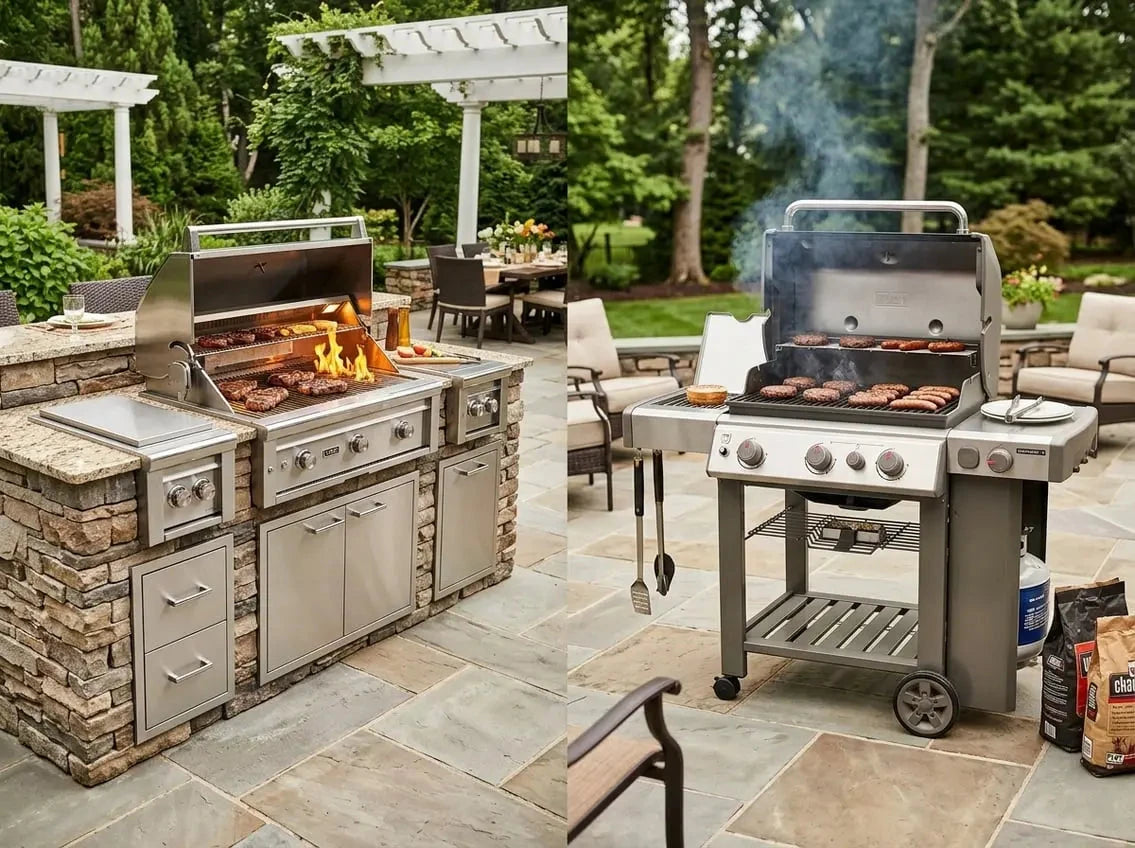
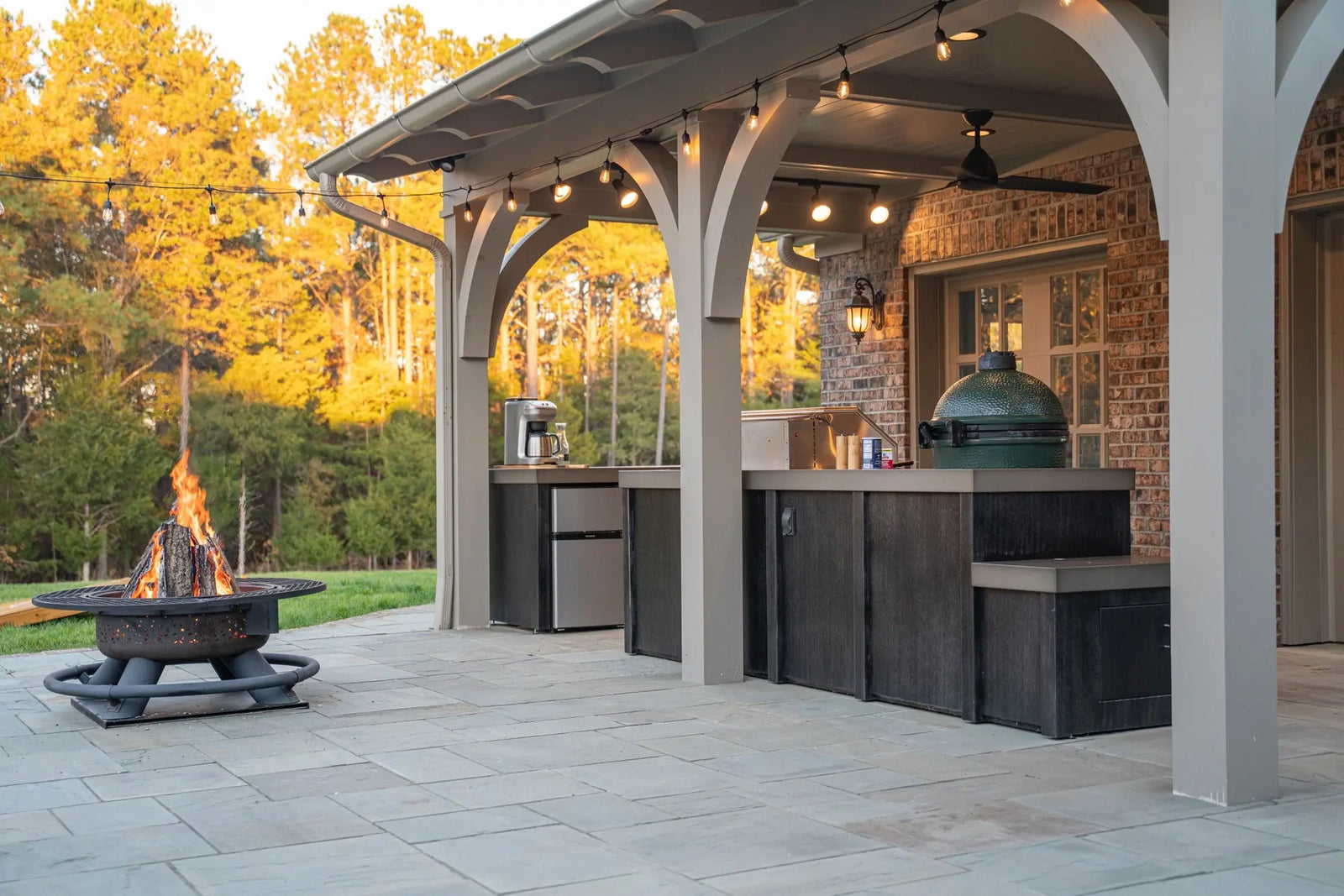
A built-in grill turns your patio into a real outdoor kitchen. A freestanding grill gets you cooking tonight with zero installation.
Neither is the "right" answer on its own. The right pick depends on your budget, how often you actually grill, and whether you want a permanent fixture or something you can move. This guide walks through real grills and appliances at both ends of that decision.
A built-in grill installs into a fixed outdoor kitchen or island. It connects to a fuel source and becomes a permanent part of your patio.
A freestanding grill sits on its own cart or stand. You can place it anywhere, move it whenever you want, and start cooking without any installation at all.

| Feature | Built-In Grill | Freestanding Grill |
|---|---|---|
| Cost | Higher upfront | More affordable |
| Installation | Required | Not required |
| Mobility | Fixed | Portable |
| Lifespan | 10 to 15+ years | 5 to 10 years |
| Design | Premium kitchen look | Standalone unit |
| Best For | Frequent use, hosting | Casual, flexible use |
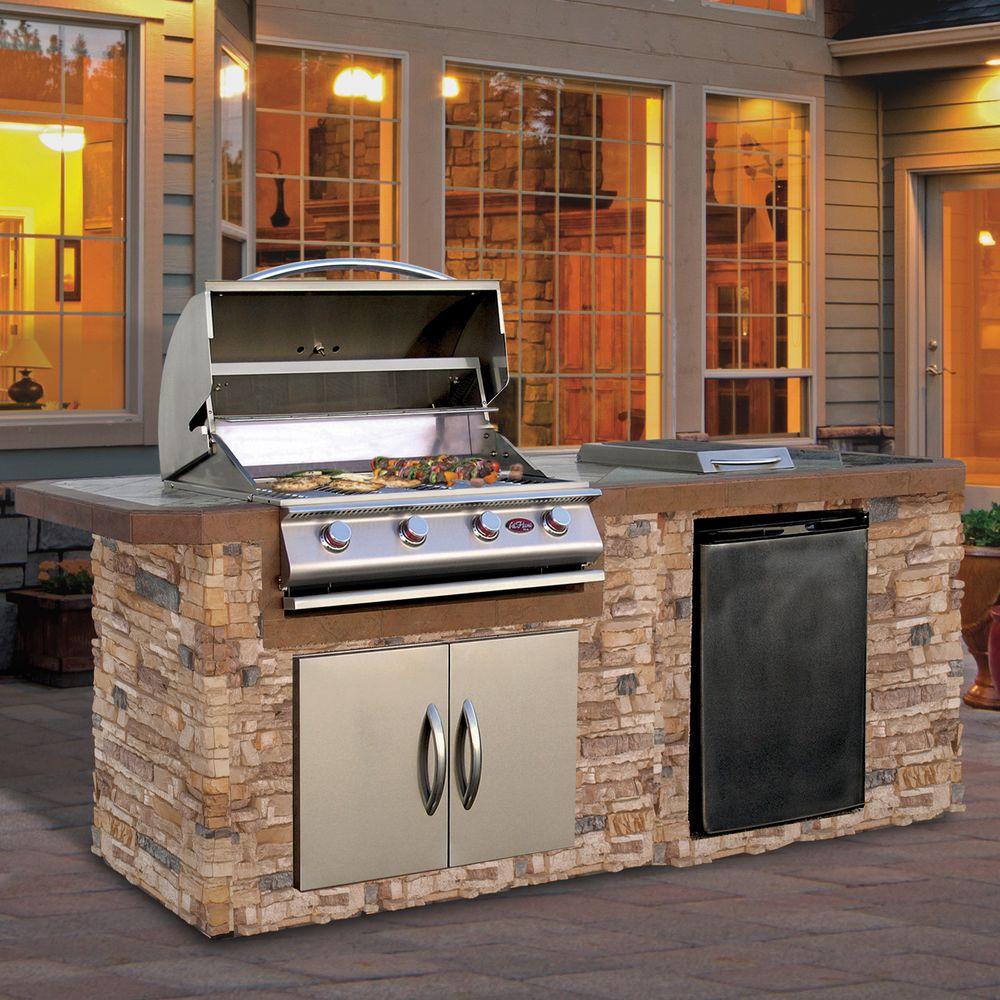
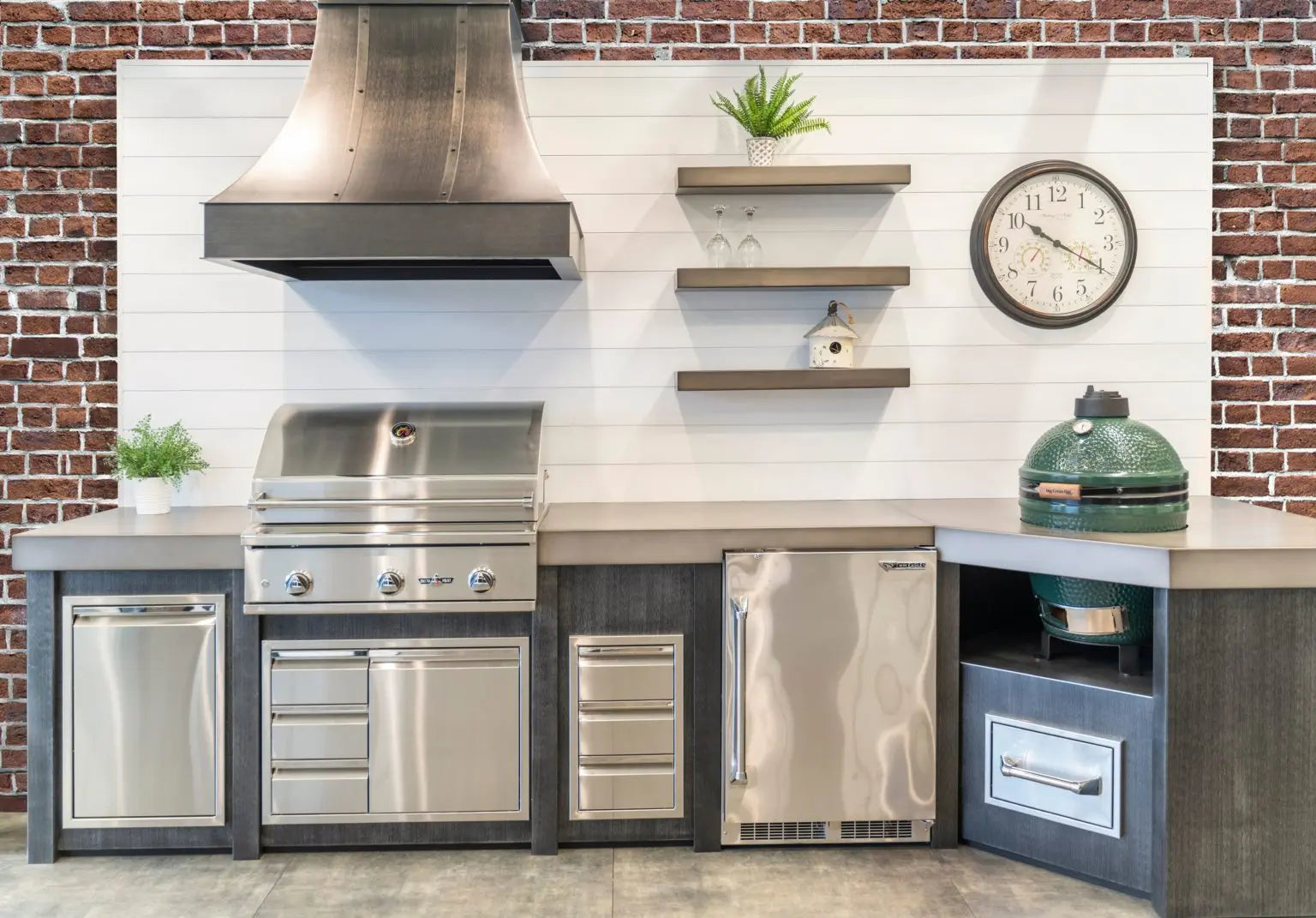
Built-in grills are designed as part of a complete outdoor kitchen. They give you a clean, seamless look and tend to show up in larger backyard setups.
If a full outdoor cooking space is the goal, this is where built-in grills earn their keep. Browse prefabricated BBQ islands if you'd rather buy the grill and the island together as one piece.
Freestanding grills are the most common type found in backyards today. They're simple, flexible, and ready to use right out of the box.
That makes freestanding grills a solid fit for smaller patios, renters, or anyone who wants to start grilling today without committing to a permanent structure.
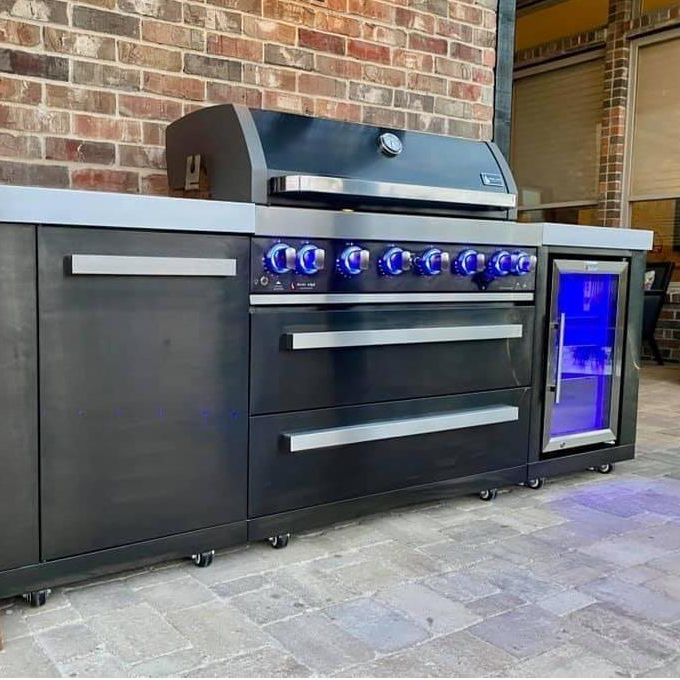
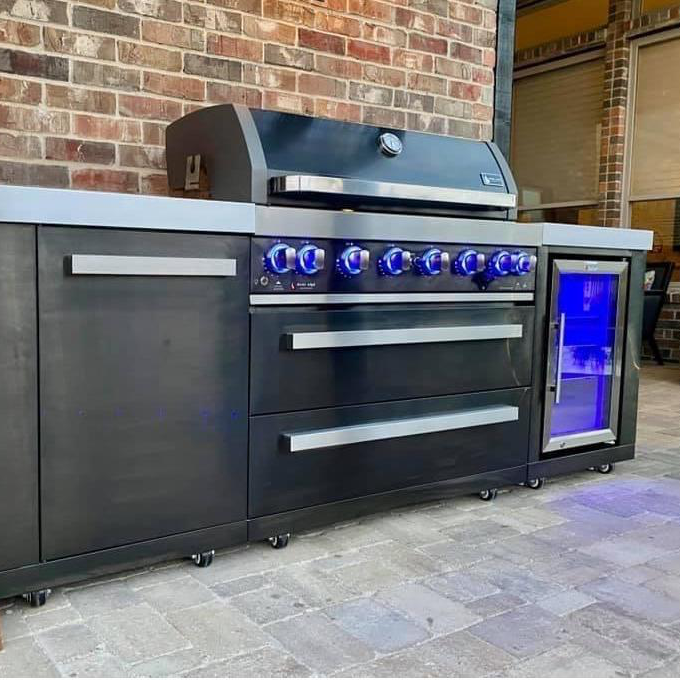
Both of these are real drop-in grill heads designed to install into an island, not portable units repurposed for the job.
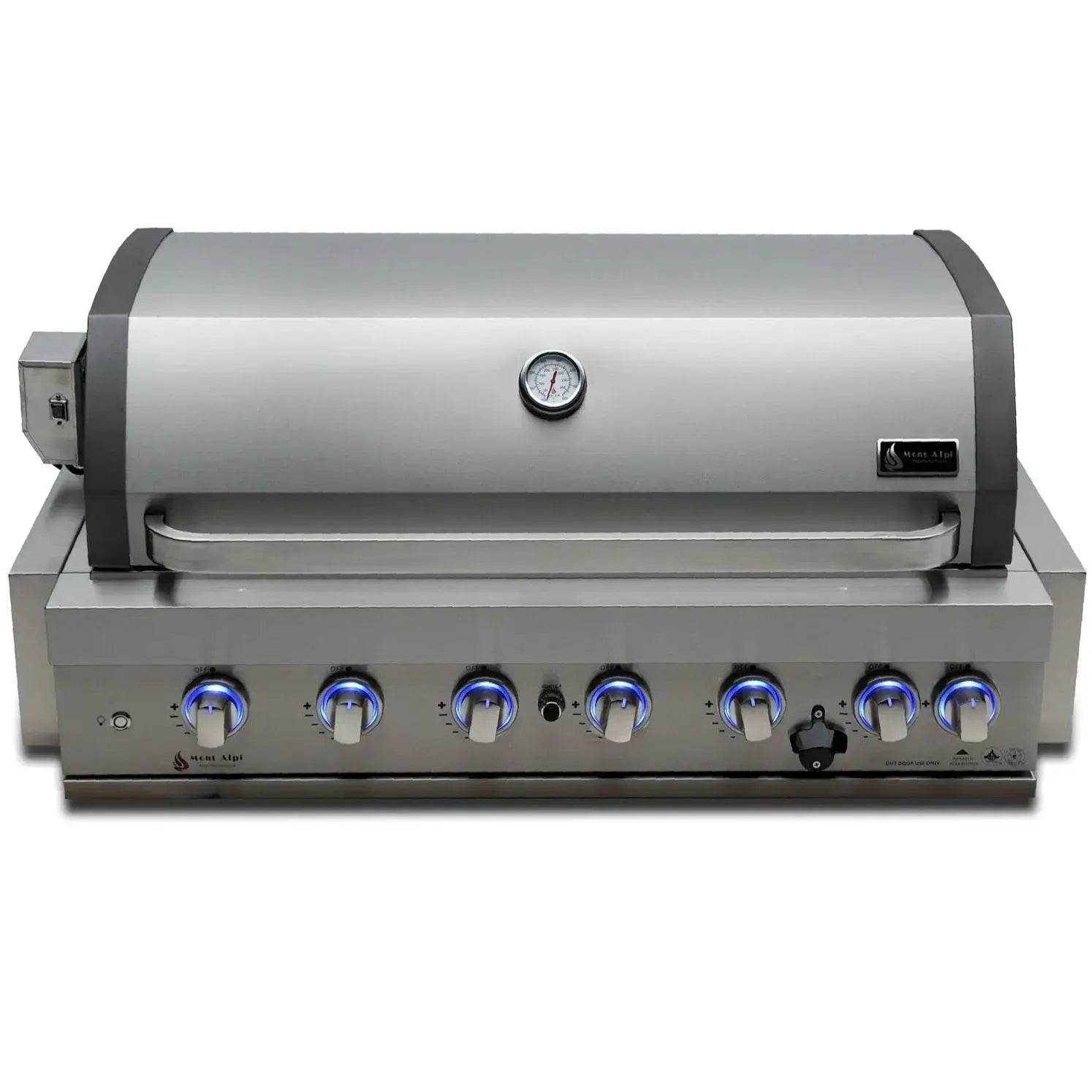
$1,501.80
Six 304 stainless burners, an infrared rear burner, and a rotisserie kit included. Marine-grade stainless throughout.
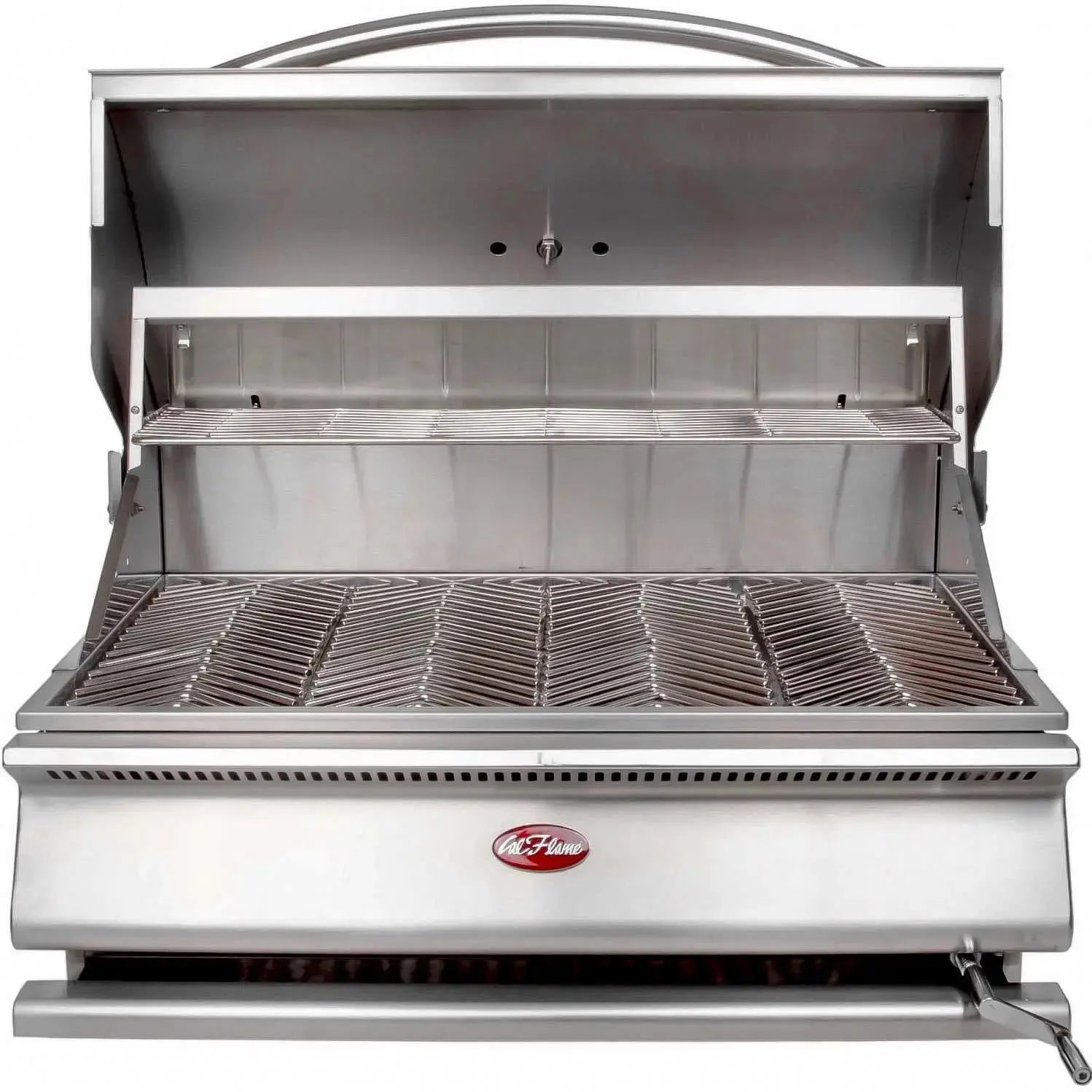
$1,637.00
An 800 square inch charcoal grill built for real smoke flavor, with a height-adjustable tray and V-shaped grates.
Both of these are cart-mounted units ready to cook the day they arrive, no gas line or masonry required.
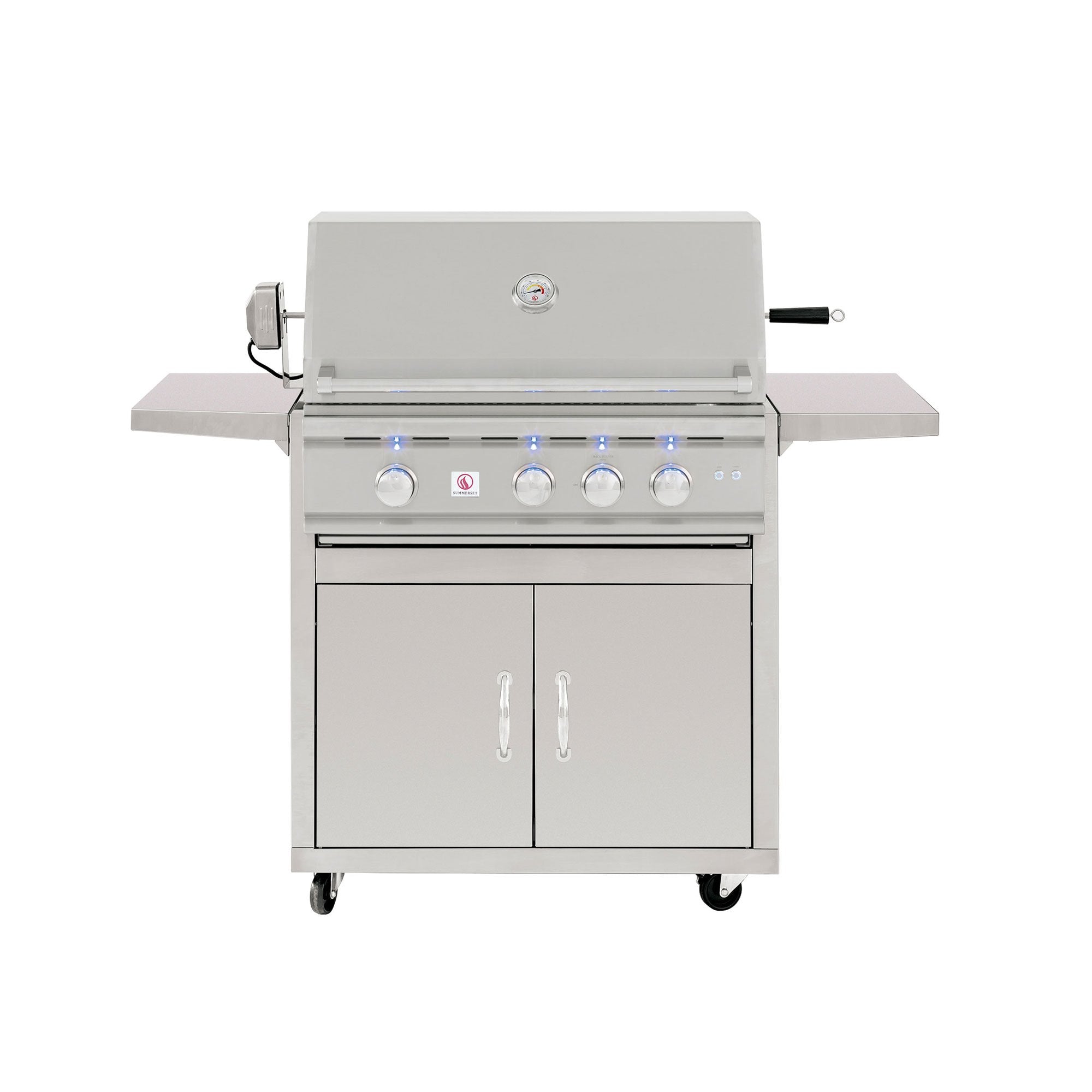
$3,352.00
Commercial-grade 304 stainless with a rear infrared burner, full rotisserie kit, and locking casters for easy repositioning.
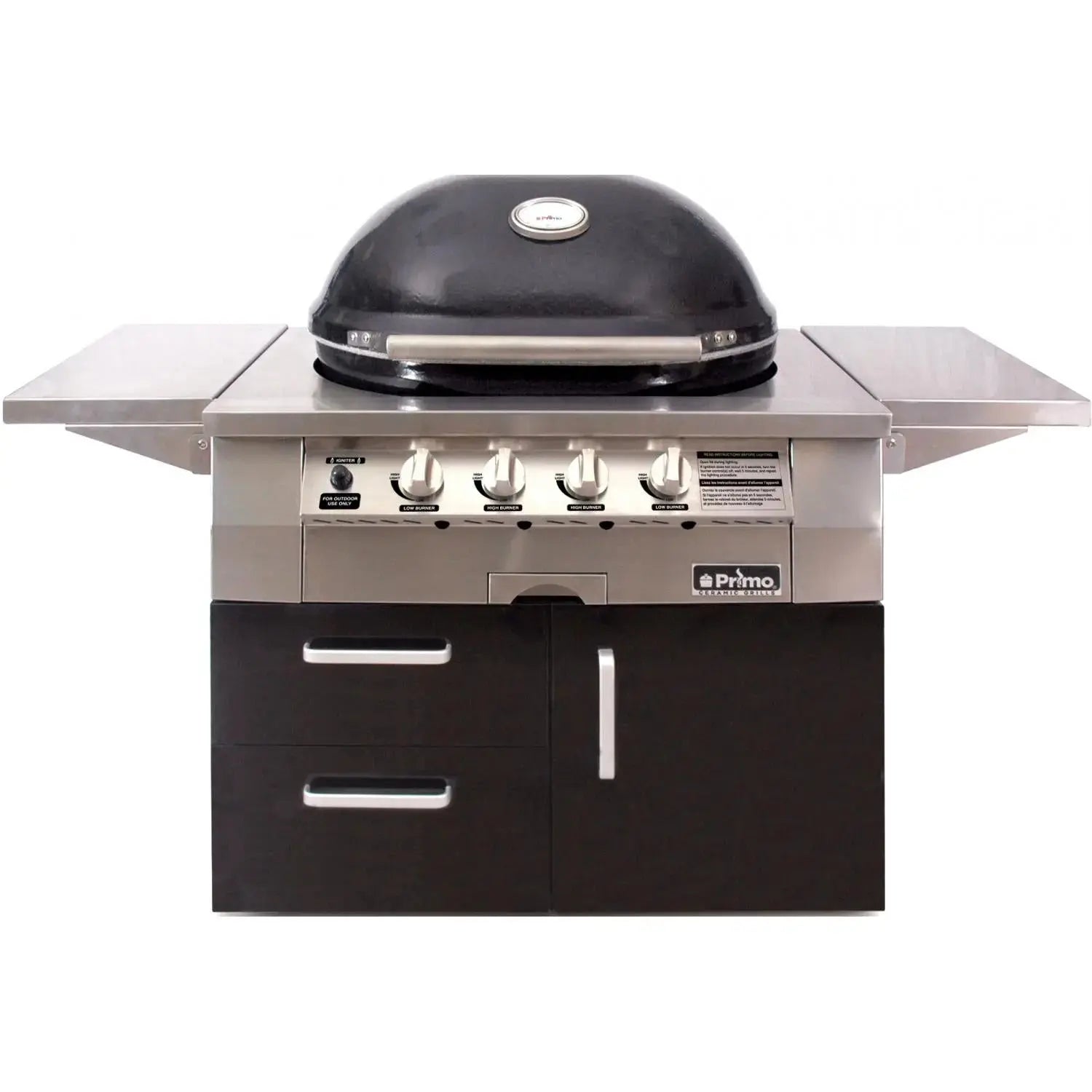
$4,099.00
A ceramic body that retains heat and moisture better than typical gas grills, with a built-in smoker box for wood-fired flavor.
| Pros | Cons |
|---|---|
| Long lifespan with strong materials | Higher cost including installation |
| Clean, high-end outdoor kitchen look | Can't be moved once installed |
| Better for frequent cooking and hosting | Requires planning, space, and setup |
| Pros | Cons |
|---|---|
| Affordable for most budgets | Shorter lifespan than built-in grills |
| Easy to set up and start using | Less visually integrated into the space |
| Portable and flexible | May have fewer advanced features |
| Cost Factor | Built-In Grill | Freestanding Grill |
|---|---|---|
| Initial Price | High | Low to moderate |
| Installation | Required, can be costly | None |
| Maintenance | Moderate | Moderate |
| Replacement | Less frequent | More frequent |

Both types can deliver excellent results. What differs is build quality and fuel type more than the category itself.
Where the grill will actually live matters as much as the grill itself.
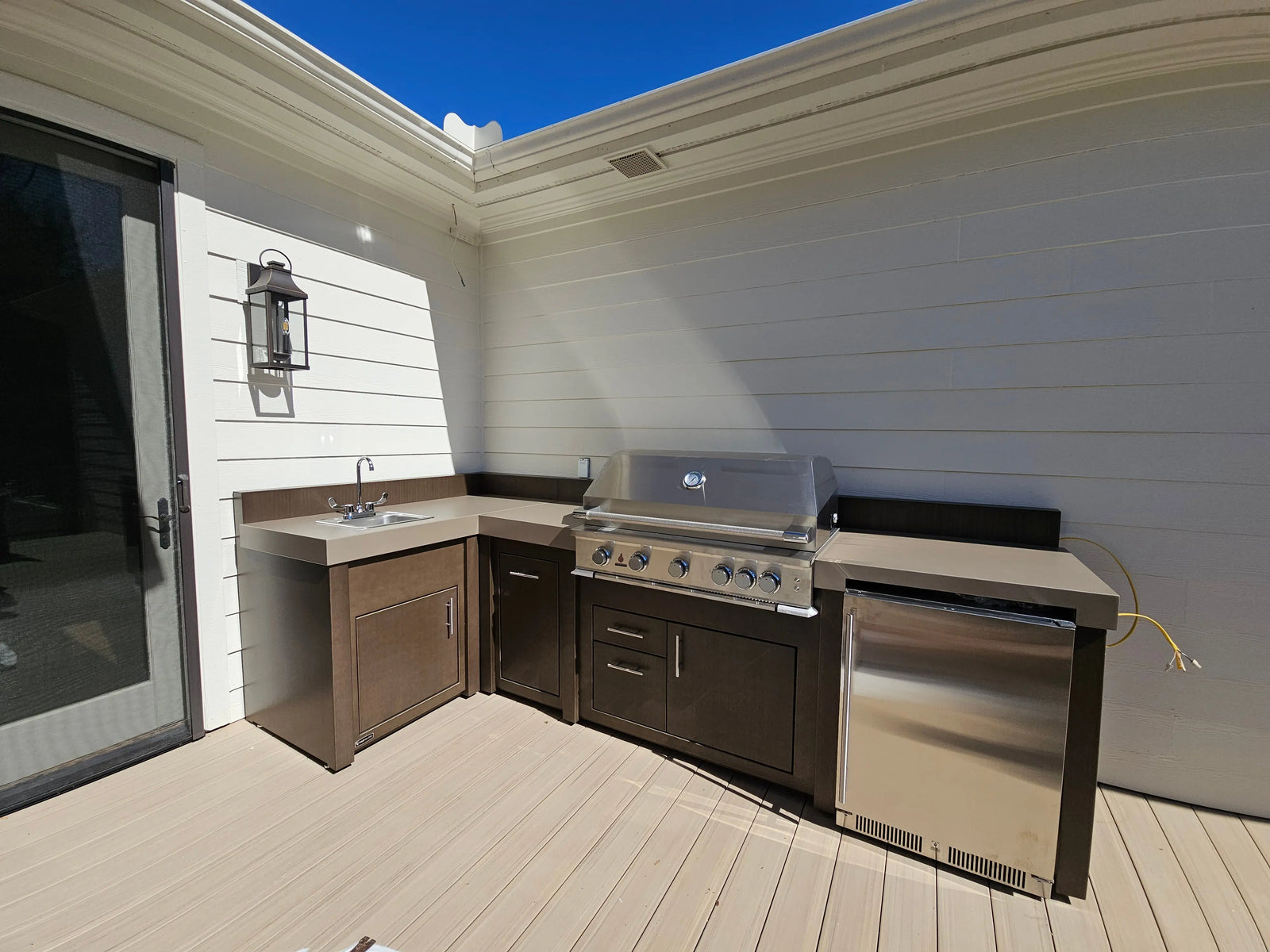
If you'd rather skip individual decisions on grill, storage, and countertop, an outdoor living package bundles the layout together in one order.
If a standalone drop-in grill isn't enough and you want the grill, storage, and refrigeration all in one piece, a prefabricated island covers that in a single delivery.
Choose a built-in grill if you host often, cook large meals regularly, and want a permanent outdoor kitchen as a long-term investment.
Choose a freestanding grill if you grill occasionally, need flexibility or portability, or you're working with a smaller budget or a tighter space.
It comes down to how much you'll actually use it. A built-in grill is worth the investment if you want a high-end setup and plan to grill often. A freestanding grill is the smarter call if you want something simple, affordable, and easy to change your mind about later.
Both built-in and freestanding grills can serve you well, they just serve different needs. Go built-in for a long-term outdoor kitchen with a premium feel. Go freestanding for flexibility, lower cost, and the ability to start cooking today.
Built-in BBQs are better for long-term use and outdoor kitchens because they offer durability and a premium look. Freestanding grills win on flexibility and affordability. The better choice depends on how often you grill and how much space you have.
It's worth it if you grill often and want a permanent outdoor cooking setup. It adds value to your outdoor space and can last many years, but it requires a higher upfront investment and proper installation. Casual users may find a freestanding grill more practical.
Built-in gas grills typically last 10 to 15 years or longer with proper maintenance. Quality materials like 304 stainless steel improve lifespan, and regular cleaning plus covering the grill when it's not in use helps it go the distance.
Yes, built-in grills usually cost more once you factor in both the unit and installation, and you may need to build an outdoor kitchen or island around it. Freestanding grills are more budget-friendly with no setup costs.
Some models can be converted, but not all are designed for it. It usually means removing the cart and making sure ventilation and safety clearances are correct. It's generally safer and simpler to buy a grill built specifically for built-in installation.
They can boost appeal and perceived value, especially as part of a well-designed outdoor kitchen that appeals to buyers who like to entertain. How much value it adds still depends on the overall quality and design of the space.

As the outdoor living trend continues to thrive, you may be wonder...

How to transform your outdoor space in 5 steps to...