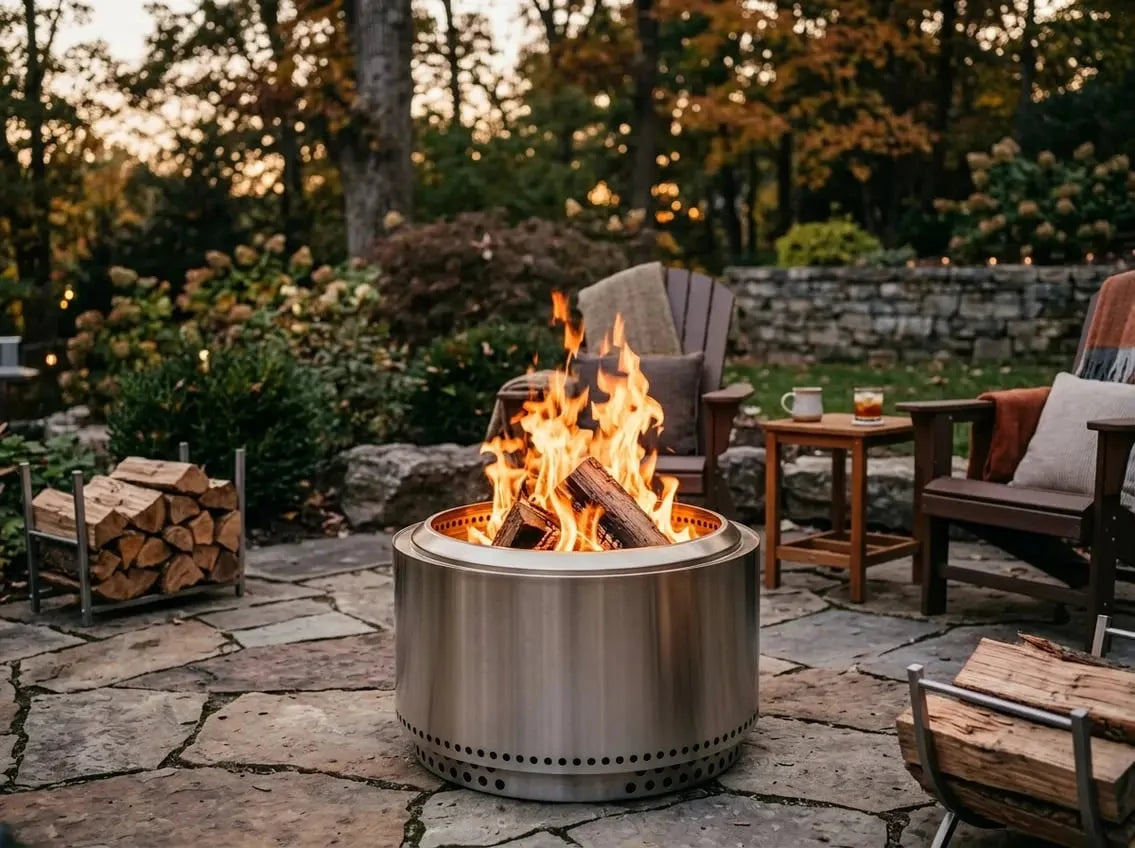
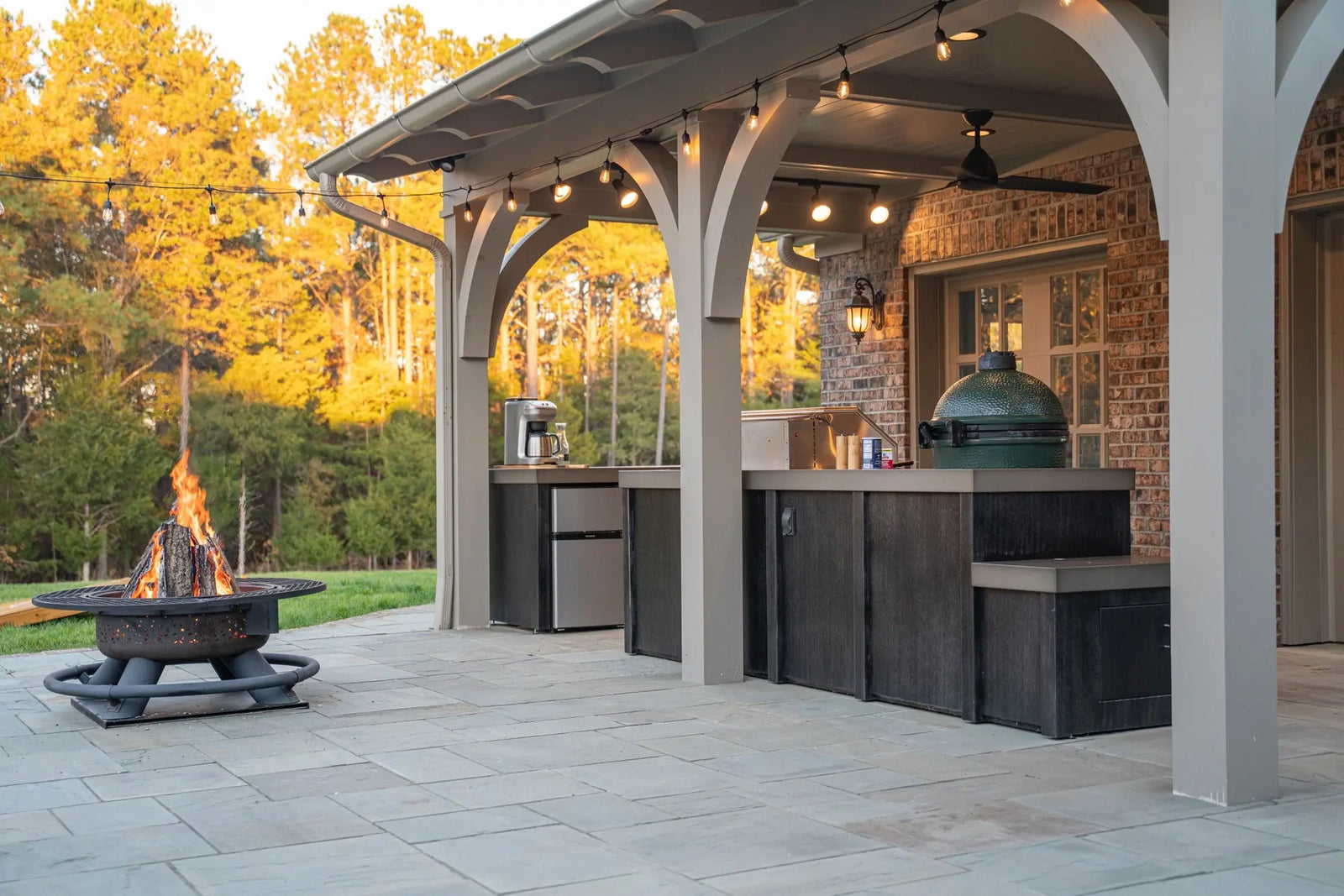
A smokeless fire pit doesn't erase smoke completely, but it cuts it down enough that you can actually sit next to your own fire without your eyes watering.
That difference comes down to airflow, not marketing. This guide breaks down how the "second burn" actually works, what to feed the fire, and which real wood-burning fire pits give you the cleanest result for your backyard.

A smokeless fire pit is built to burn cleaner by improving airflow around the fire. It's not a special fuel or a filter. It's the shape of the fire pit itself doing the work.
"Smokeless" is really shorthand for "much less smoke." Unlike a traditional open ring, these designs pull smoke particles back into the flame and burn them a second time before they reach your eyes or your sweater.
A quick honesty note: most of BetterPatio's fire pit lineup leans toward crafted built-in fire features and premium freestanding steel fire pits rather than portable double-wall camping models. The recommendations below are real BetterPatio products chosen for strong airflow and clean combustion, not the compact travel-style units you'll see elsewhere.
Every smokeless design relies on a double-wall structure to create a second burn. Here's the process broken down simply.
This process is called secondary combustion, and it's the entire reason these fire pits burn cleaner than a basic ring.
Smokeless fire pits work well when you use them correctly, but they're not completely smoke free. Setting the right expectation now saves you frustration later.
You'll still see a bit of smoke when you first light the fire or add a fresh log. Once it's established and burning dry wood, the smoke drops off fast.
| Pros | Cons |
|---|---|
| Noticeably less smoke and odor | Not 100 percent smoke free |
| Cleaner, hotter burn | Higher upfront cost than a basic ring |
| Easy to maintain | Only performs well with dry wood |
A correct setup improves both safety and how well the secondary burn actually works.
If you're building out the whole seating area around it, an outdoor living package is a fast way to get furniture, layout, and the fire feature sorted together instead of piecing it together over several trips.
These two Fire Pit Art models use a heavy 1/4 inch steel body and a rain drain design that keeps the burn chamber dry, both of which help the fire draw air and burn cleaner over time.
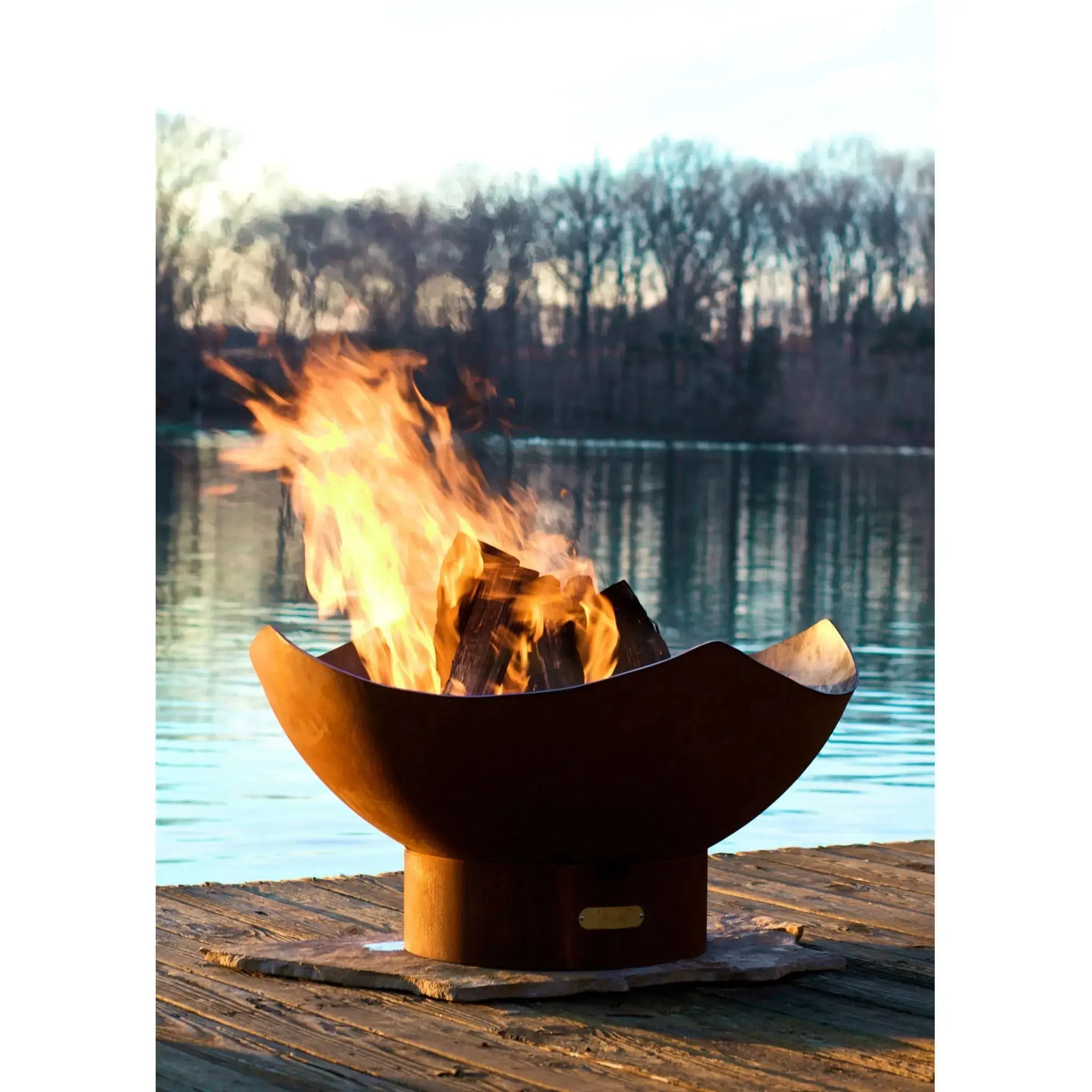
$1,264.00 – $6,100.00
A sculptural steel design with a high-temperature coated inner bowl. Handles larger split logs for a longer, hotter burn.
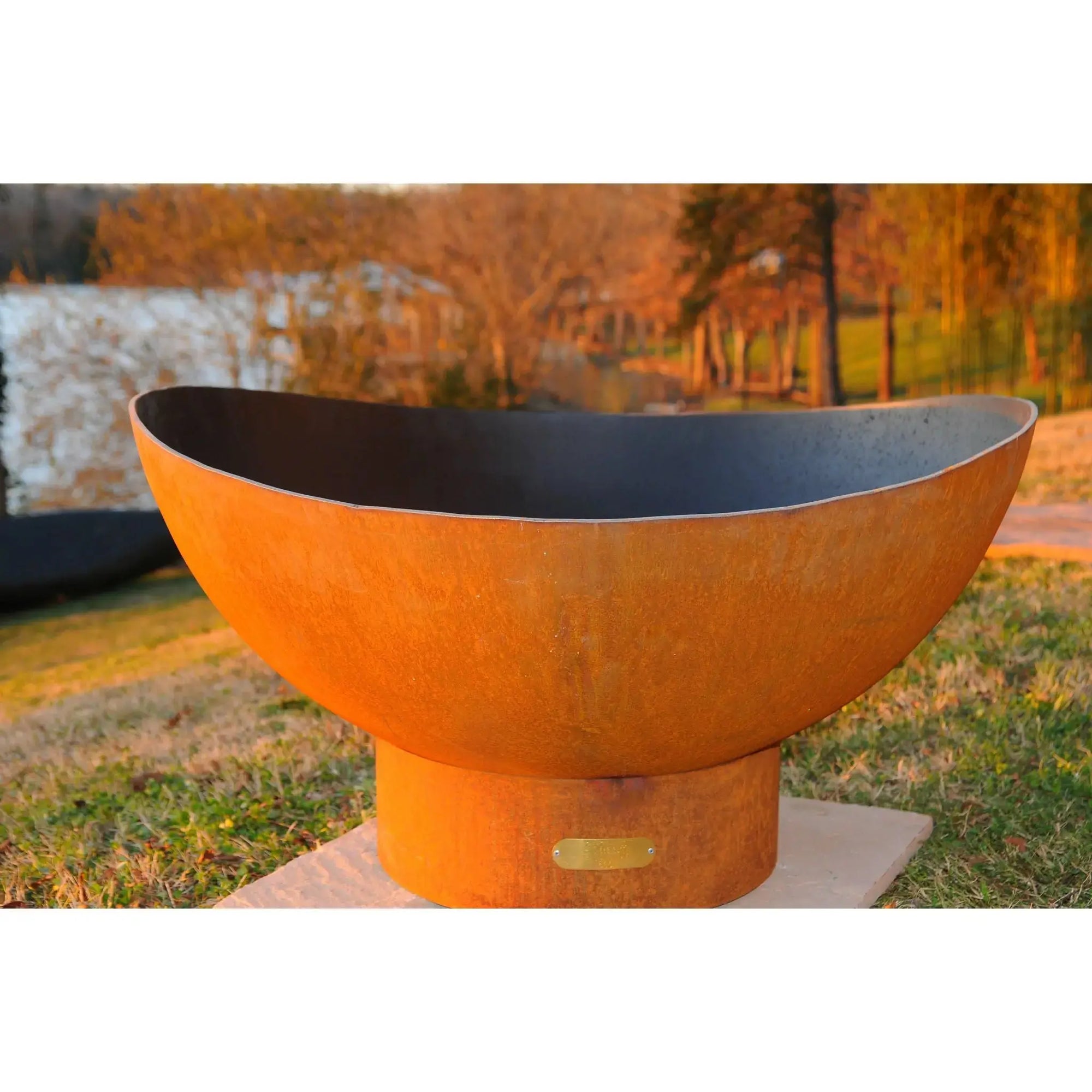
$1,264.00 – $6,100.00
Individually numbered and made to order in Tennessee, with a rain drain and maintenance-free patina finish.

Your fuel choice affects smoke levels more than almost anything else you control.
| Recommended Fuel | Avoid These |
|---|---|
| Dry hardwood (oak, maple, birch) | Wet or green wood |
| Kiln-dried firewood | Treated or painted wood |
| Wood pellets | Trash or debris |
Dry hardwood burns hotter and produces the least smoke of any fuel option, and it's worth sourcing a properly seasoned stack before your first fire.
Fire pits generally fall into three categories, and each one fits a different kind of backyard.
Small, lightweight models built for camping and travel. These are the compact double-wall units you'll typically find at outdoor retailers rather than a specialty patio dealer.
Heavier, standalone fire pits built to live permanently on a patio or in the backyard. This is where BetterPatio's Fire Pit Art lineup fits, with sculptural steel designs meant to be a fixture, not something you fold up and store.
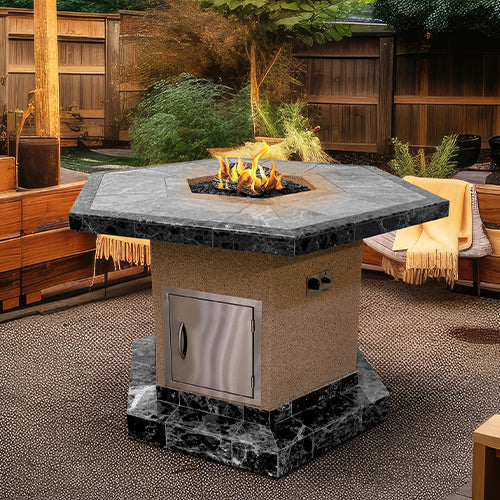
Fully customized fire features designed into a patio or outdoor kitchen layout. If you're planning something permanent, designing your fire feature from scratch lets you match the size, fuel type, and finish to the rest of the space.
| Feature | Why It Matters |
|---|---|
| Size | Affects heat output and how many people can gather around it |
| Material | Heavy-gauge steel lasts far longer than thin sheet metal |
| Portability | Matters if you need to move or store it seasonally |
| Airflow Design | Directly controls how much smoke you actually get |
A well-built fire pit with strong airflow will always outperform a cheaper unit over time, even if the upfront price looks similar.
The best models combine heavy-gauge construction, a proven double-wall airflow design, and a finish built to handle years of weather. Don't choose based on price alone. A cheaper fire pit that smokes constantly or rusts out in two seasons costs more in the long run.
If reduced smoke isn't quite enough and you'd rather skip smoke entirely, a gas fire pit gives you a real flame with none of the wood smoke to manage.
A quality wood-burning fire pit with real airflow engineering, like the Fire Pit Art models above, typically runs $1,264 to $6,100 depending on size and finish. A comparable gas fire pit runs close to $4,800 to $6,000 but trades wood smoke entirely for a gas line hookup.
The value shows up with regular use. If you're out there several nights a week, the reduced smoke, cleaner clothes, and easier cleanup add up fast.
A smokeless fire pit isn't only for warmth. Many people roast marshmallows, cook hot dogs, or use grilling accessories right over the flame. The steadier burn and reduced smoke make cooking over an open fire a lot more pleasant.
Let the fire burn down naturally when you can. If you need to put it out faster, add small amounts of water slowly rather than dousing it all at once, since rapid cooling can damage the metal.
These designs are built to work without filler material. Stick to proper fuel and skip adding rocks or anything else unless the manufacturer specifically recommends it. A clear burn chamber is what keeps the airflow, and the secondary burn, working as intended.
| Problem | Likely Cause | Solution |
|---|---|---|
| Too much smoke | Wet wood | Switch to dry hardwood |
| Weak flames | Poor airflow | Adjust how the wood is stacked |
| Hard to start | Not enough kindling | Add more fire starter material |
Once the fire pit's picked, the seating around it makes or breaks how much you actually use it. Both of these teak pieces are built to handle regular outdoor use.
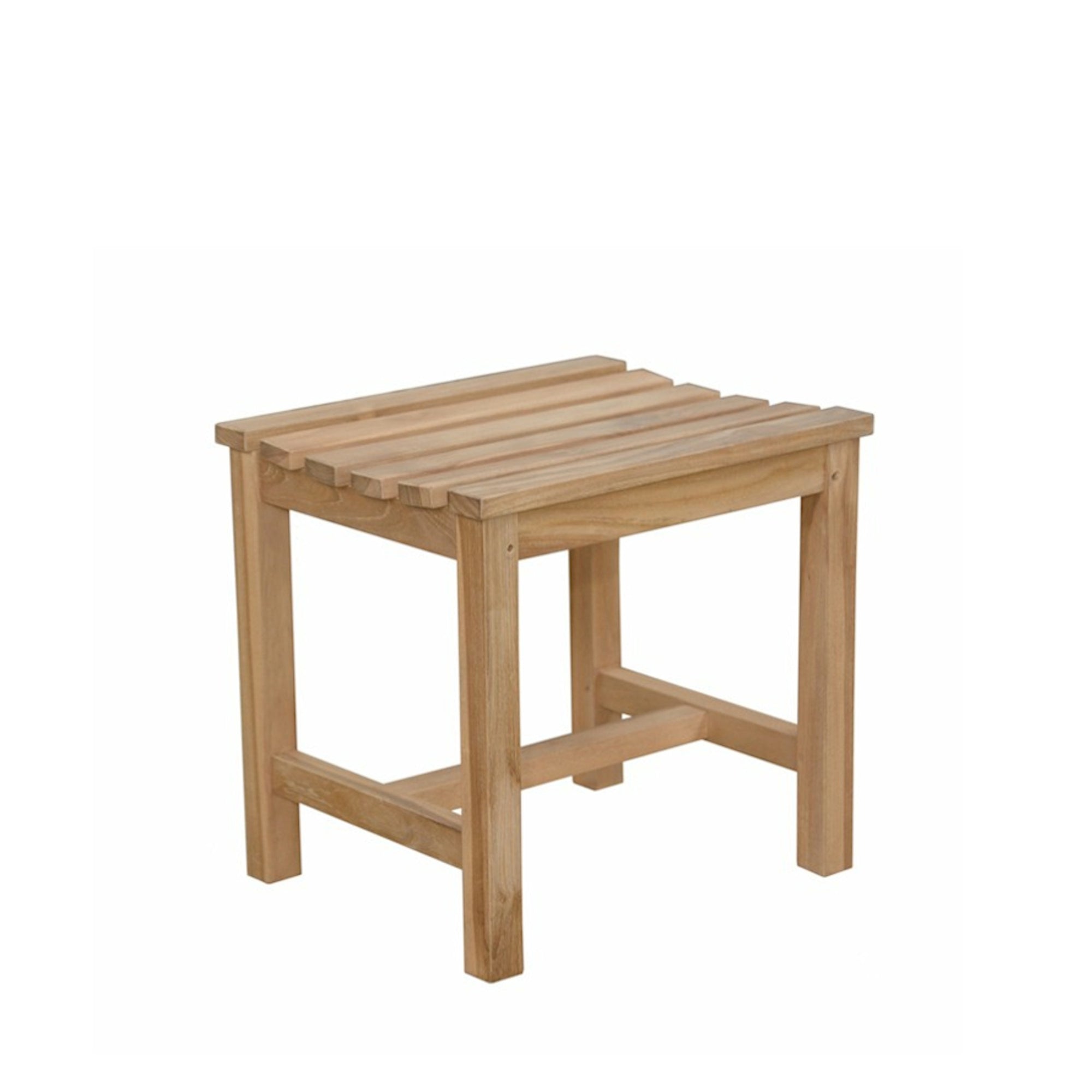
$350
A simple kiln-dried teak stool that's easy to pull closer to the fire and just as easy to wipe down after.
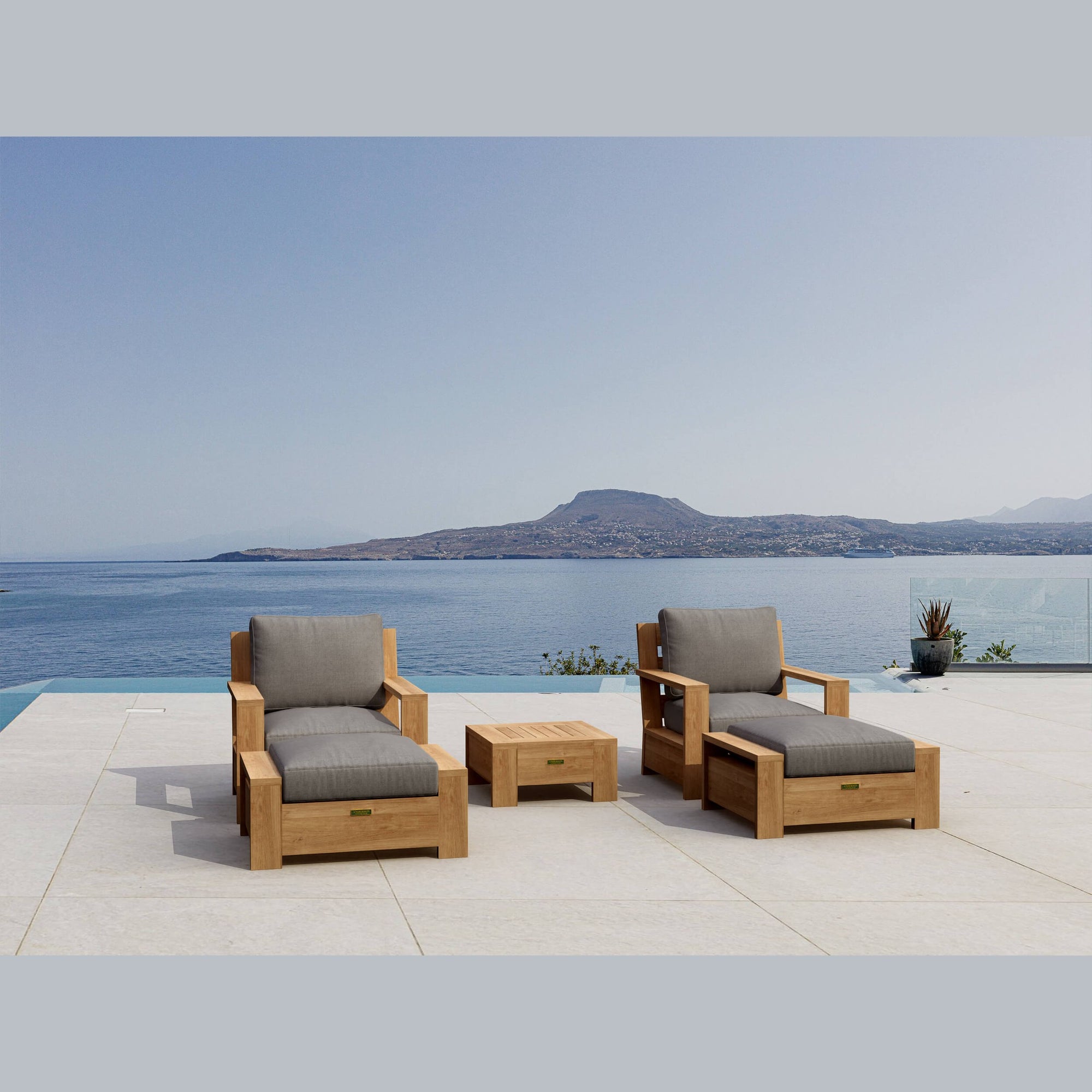
$6,950
Deep seating armchairs and ottomans in kiln-dried teak, built for longer evenings around a bigger fire pit.
Finish the space with an outdoor rug to visually anchor the seating zone around the flame.
A smokeless fire pit is a smart upgrade for almost any backyard. It won't erase smoke entirely, but paired with dry hardwood and a well-built airflow design, it gets you a lot closer than a traditional ring ever will. Pick a heavy-gauge model, feed it properly seasoned wood, and it'll become the spot everyone gathers around for years.
Dry firewood or pellets, a fire starter, and a flat, heat-resistant surface to set it on. A poker helps you manage the fire, and it's smart to keep water or sand nearby as a safety backup.
Dry hardwood like oak, maple, or birch burns hottest with the least smoke. Kiln-dried wood is even better since it starts with very low moisture. Avoid wet or treated wood, since both create more smoke and harmful fumes.
You might notice a light smoke smell, but it's much less than a traditional fire pit. The airflow design burns off most of the smoke before it reaches you, and dry wood cuts the smell down even further.
You can, but do it carefully. Dumping a lot of water at once can damage the metal through rapid cooling. It's better to let the fire burn down naturally, and add small amounts of water slowly if you need to speed things up.
Yes, with the right precautions. Use a heat-resistant surface or fire pit mat, leave enough clearance for airflow and safety, and check both the manufacturer's guidelines and your local fire codes before your first use.
Yes. The efficient burn tends to concentrate heat upward rather than outward, so it feels a bit different from a traditional campfire, but it still puts out plenty of warmth. Size and fuel type both affect how much heat you get.

As the outdoor living trend continues to thrive, you may be wonder...

How to transform your outdoor space in 5 steps to...