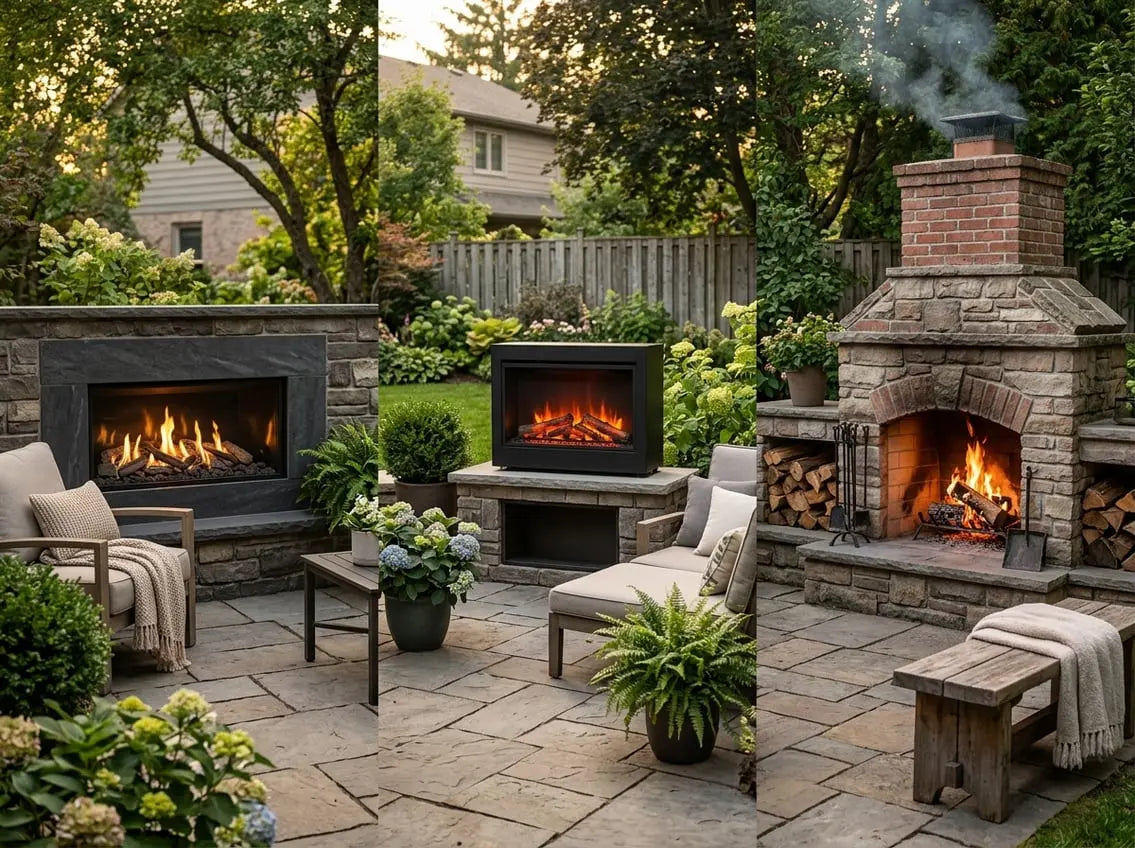
The right outdoor fireplace turns a patio you use twice a summer into the spot everyone ends up at once the sun goes down.
Gas, electric, and wood each solve a different problem, and the fuel type you pick decides how much heat you get, how it's installed, and how much upkeep you're signing up for. This guide walks through prefabricated outdoor fireplaces from a real product lineup so you can see actual sizes, prices, and finishes instead of guessing.
Before you shop, it helps to know what each fuel type actually does differently. Every option trades off heat, convenience, and how much of the "real fire" experience you get.
Gas fireplaces run on natural gas or liquid propane and hit full heat within seconds of pressing a button. Prefab gas units, like the Cal Flame lineup, arrive with the firebox, chimney, and stone or stucco finish built as one factory-engineered piece, so there's no on-site masonry.

True plug-in electric fireplace inserts exist, but they're less common in prefab outdoor lines than most people expect. The closest equivalent most retailers carry, including BetterPatio, is a vent-free linear gas fireplace with an LED control system. It skips the chimney and gives you a clean, contemporary look, but it still runs on natural gas or propane rather than a wall outlet.

Wood-burning fireplaces and fire pits burn real logs for genuine crackle, scent, and flame. Heat output is strong, but you're managing airflow, ash, and the fire itself rather than a switch.

| Feature | Gas Fireplace | Linear/Electric-Style | Wood Fireplace |
|---|---|---|---|
| Heat Output | High | Low to Medium | High |
| Ease of Use | Very Easy | Easiest | Moderate |
| Installation | Moderate to Complex | Simple, needs gas + power | Complex |
| Maintenance | Low | Very Low | High |
| Flame Realism | Real Flame | Real Flame, LED-Lit | Real Flame |
| Best For | Frequent use, convenience | Small or covered patios | Authentic ambiance |
Environmental impact varies too. Wood produces smoke and particulate emissions, gas burns cleaner, and vent-free gas units add no direct emissions of their own beyond the burner itself.
These are three real Cal Flame and RCS models BetterPatio currently carries, covering a small budget-friendly size, a large grand-estate size, and a modern chimney-free linear option.
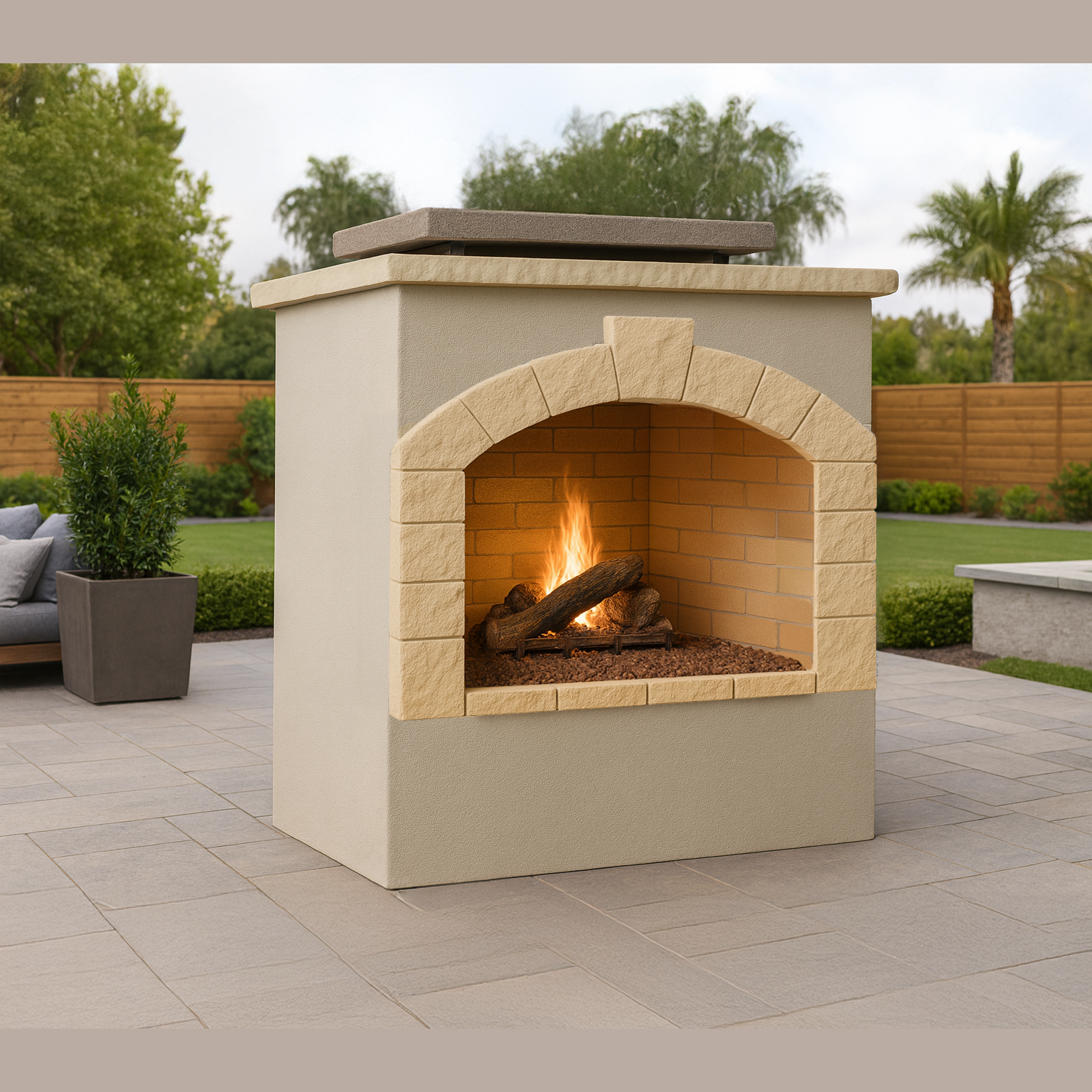
$3,963.00
55,000 BTU stainless burner in a 16-gauge galvanized steel frame. A compact, budget-friendly pick for smaller patios.
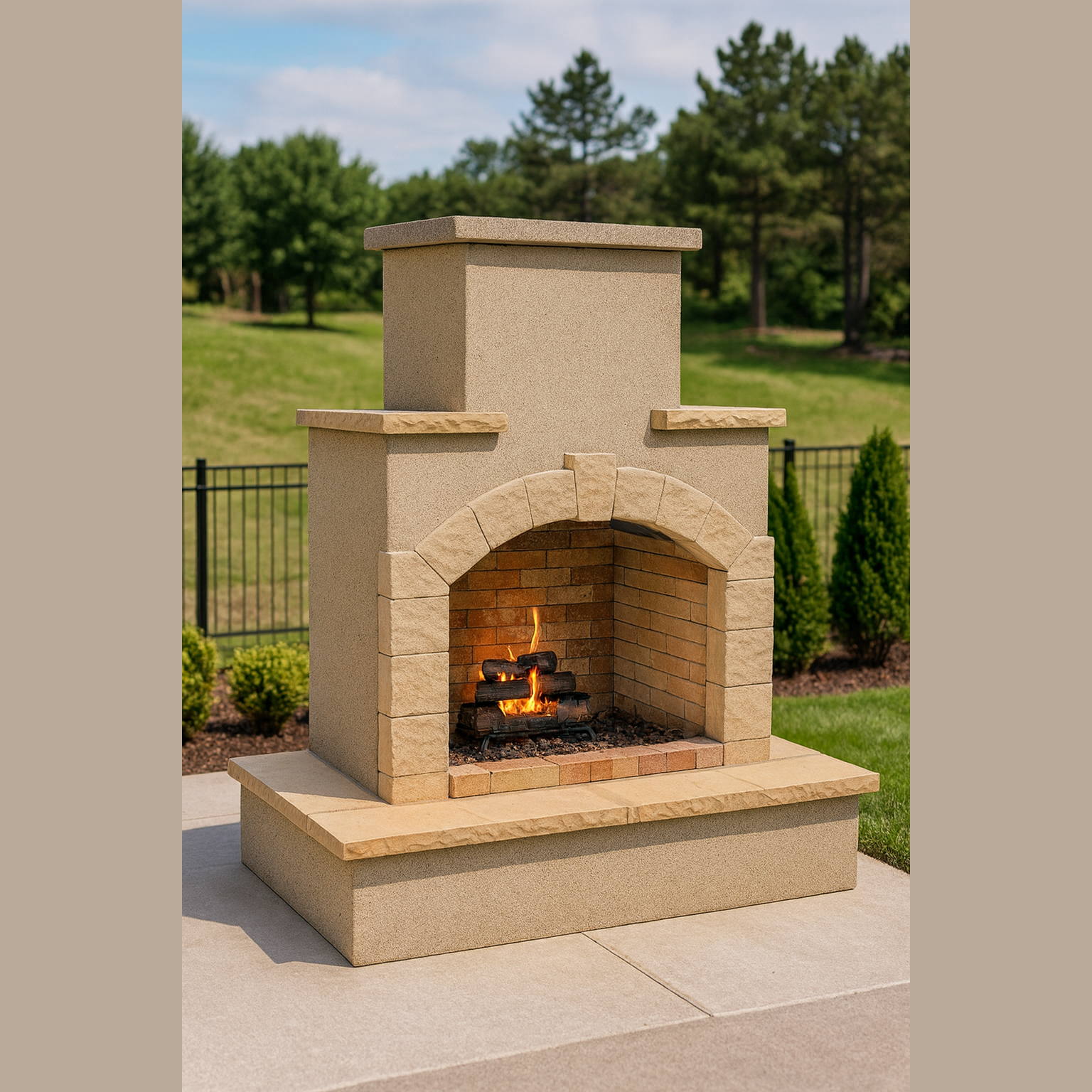
$6,499.00
A wraparound mantle and extended chimney make this the focal point for a large seating group.
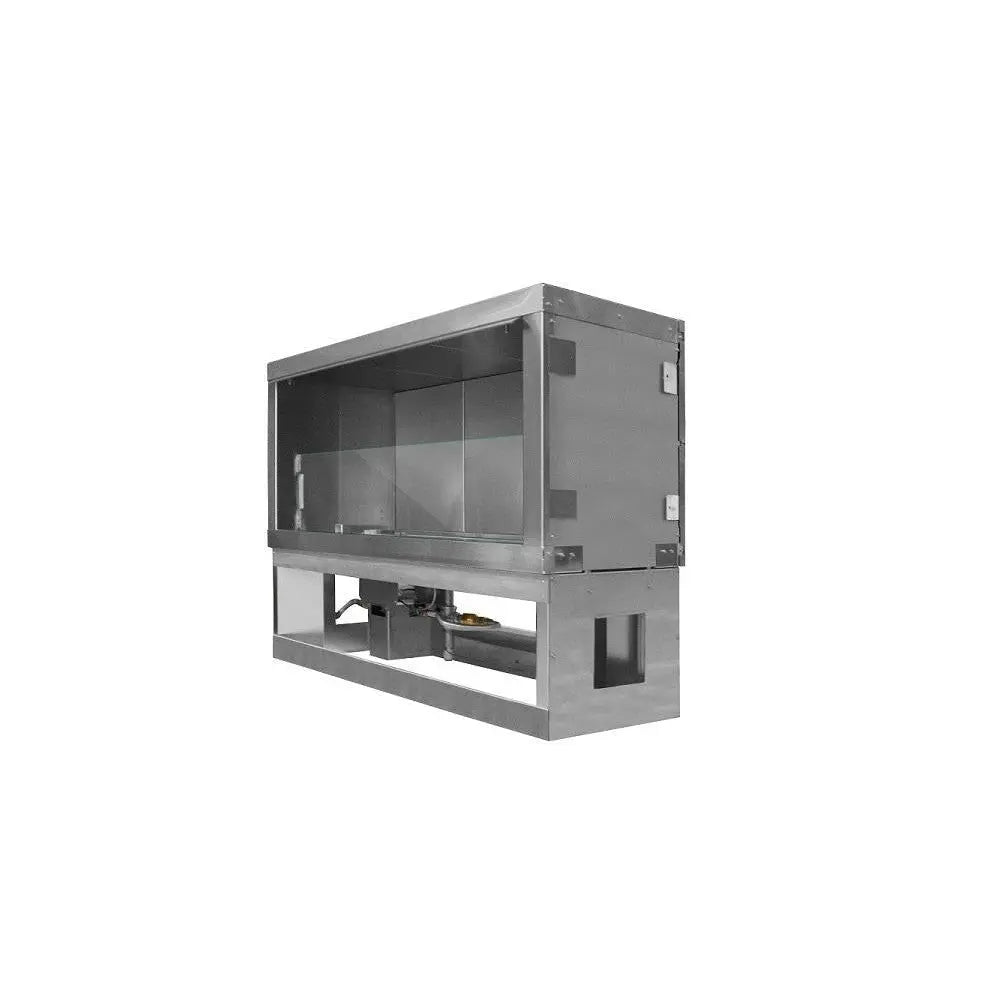
$5,499.00
No chimney or venting required. LED control box with over 16 million colors, built for covered or modern patios.
Gas is the right call if you want strong heat without babysitting a fire. It's also the easiest to fit into a covered patio, since there's no smoke to worry about.
Natural gas is usually cheaper long-term if a gas line already runs to your patio. Propane costs a bit more per use but works anywhere, which makes it the better fit for a detached patio or a build where running a gas line isn't practical.
| Pros | Cons |
|---|---|
| Instant ignition | Higher installation cost |
| Consistent, high heat output | Requires a gas line or LP tank setup |
| Low ongoing maintenance | Less traditional feel than real wood |
If your priority is the simplest possible install, a vent-free linear gas unit is the closest thing to "plug and play" in a prefab outdoor fireplace. It skips the chimney entirely, which matters if your patio is covered or you're short on ceiling clearance.
| Pros | Cons |
|---|---|
| No chimney or venting needed | Still needs a gas line, not truly cordless |
| Customizable LED lighting | Lower BTU output than full-size prefab units |
| Compact footprint | Requires both 120V power and gas hookup |
Browse the full range of vent-free and traditional models in BetterPatio's outdoor heating collection if you want to compare BTU output and finish options side by side.
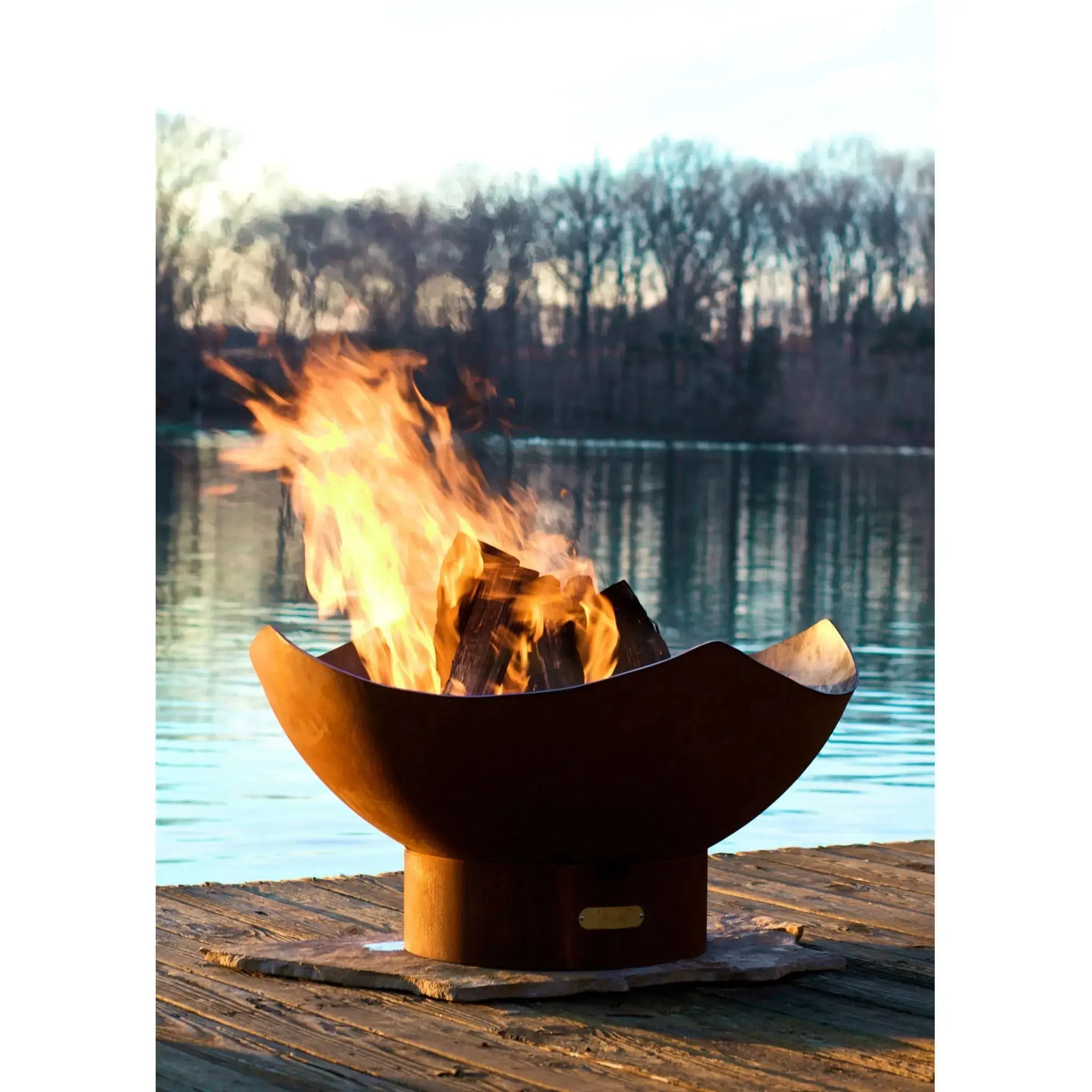
Nothing replaces the smell and crackle of real wood. If that's the experience you're after, a dedicated wood-burning fire pit gives you the most authentic option without the framing and gas lines a prefab fireplace needs.
| Pros | Cons |
|---|---|
| Authentic flame, scent, and sound | Requires regular ash cleanup |
| High heat output | Produces real smoke |
| No gas or electrical hookup needed | Restricted or banned in some regions |
Check your local rules before you buy. Many cities restrict open wood burning during dry months, so it's worth confirming what's allowed before you commit to a wood-burning fire pit for your space.
Real pickThe Fire Pit Art Manta Ray below is one of the few genuine wood-burning options in BetterPatio's current lineup, and it's built to handle daily use for years.
Your layout matters as much as the fuel type. Here's how size typically maps to fuel choice in practice.
A compact 48 to 60-inch gas fireplace or a linear vent-free unit fits balconies and small patios without overwhelming the space.
A 60 to 72-inch gas fireplace gives you enough heat for a seating group of four to six while staying proportional to your furniture.
A 78-inch model with an integrated hearth, or a substantial wood-burning fire feature, anchors a larger backyard as the main gathering point. Pair it with a full outdoor living package if you're building the seating area from scratch, and finish the space with an outdoor rug to define the seating zone around the flame.
| Cost Type | Gas Prefab | Linear Vent-Free | Wood-Burning Fire Pit |
|---|---|---|---|
| Purchase Price | $3,963 – $7,999 | $5,499+ | $1,264 – $6,100 |
| Installation | Moderate to high (gas line, footing) | Moderate (gas line + 120V power) | Low (no utility hookup needed) |
| Monthly Fuel Cost | Medium | Low to Medium | Varies with firewood prices |
| Maintenance | Low | Very Low | High |
Once the fireplace or fire pit is picked, the seating around it does the rest of the work. These two teak pieces hold up well outdoors and work for both small gatherings and larger groups.
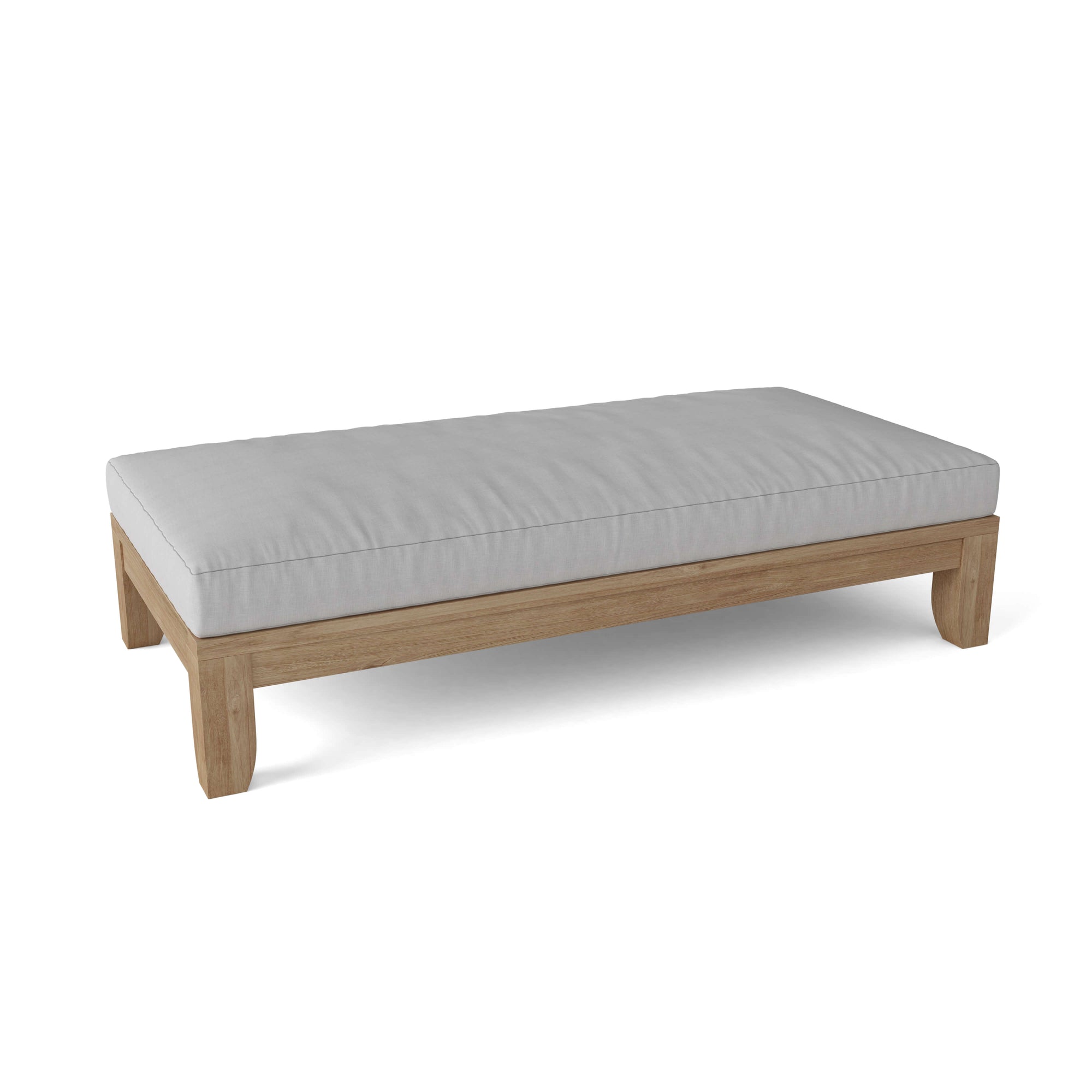
$1,800
Premium A-grade teak with Sunbrella cushions that resist UV fading and mildew. A relaxed spot for one or two by the fire.
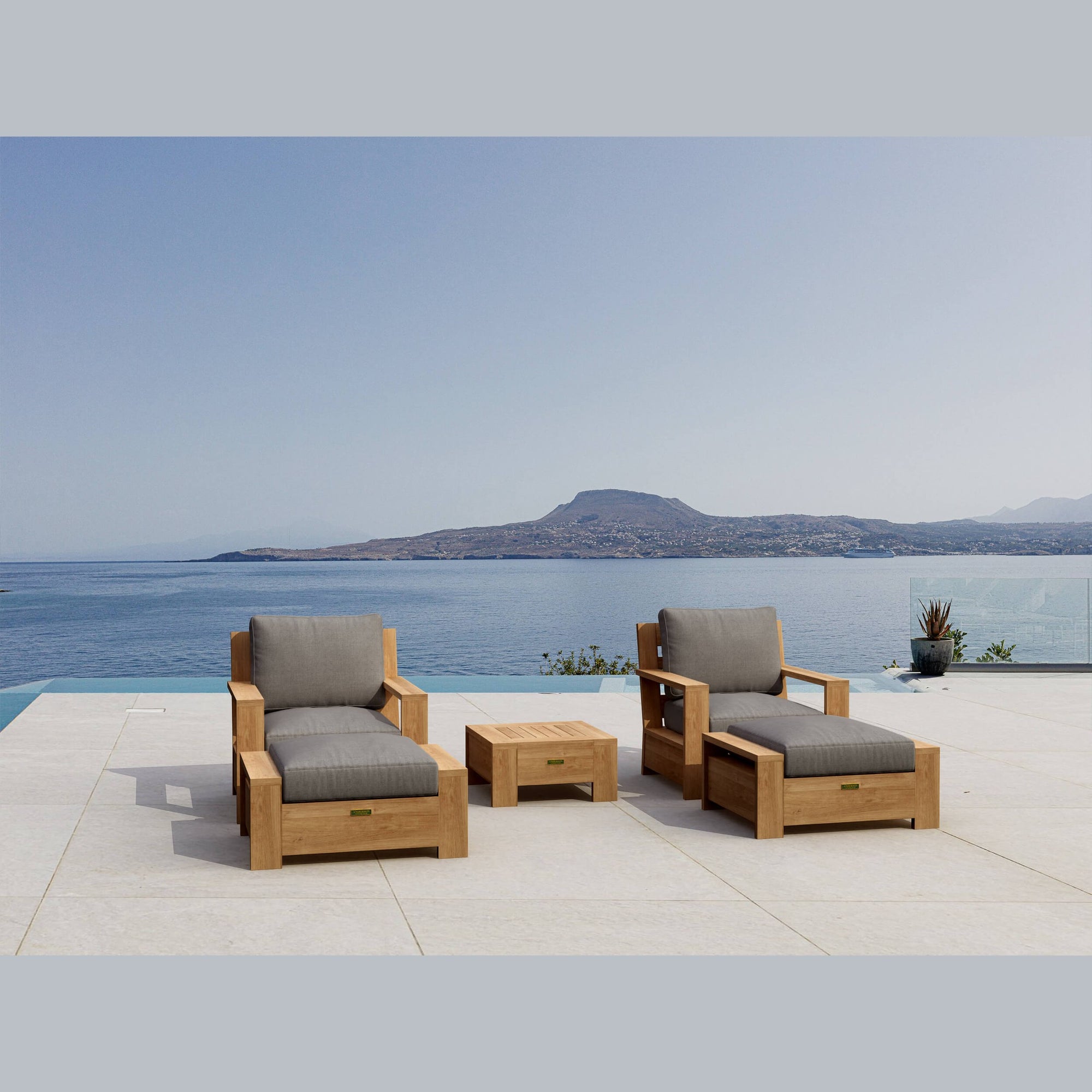
$6,950
Two deep seating armchairs, two ottomans, and a side table in kiln-dried A-Grade teak, built for a larger fireplace seating area.
There isn't a single "best" outdoor fireplace. Gas wins on convenience, linear vent-free models win on a clean modern footprint, and wood wins on authenticity. Match the fuel type to how often you'll actually use it and what your local codes allow, and the rest of the decision gets a lot easier.
It depends on your space and how often you'll use it. Gas is ideal for convenience and strong, frequent heat. A linear vent-free unit suits small or covered patios. Wood offers the most traditional experience if you don't mind the upkeep.
Gas prefab fireplaces put out more heat and work well as the anchor of a larger patio. Linear vent-free units are easier to fit into small or covered spaces but run at lower BTU output, so the better choice depends on how much heat you actually need.
These units still need both a gas line and a 120V power connection, so they aren't truly cordless. Heat output is also lower than a full-size prefab fireplace, which makes them better suited to smaller or covered areas rather than a primary heat source.
Cost depends on your local gas rates and how often you run it, but occasional evening use typically adds a modest amount to a monthly bill. Frequent, all-season use will cost more, similar to running an indoor gas fireplace regularly.
A well-maintained prefab gas fireplace typically lasts 10 to 20 years. Regular burner inspections, weather protection, and quality construction all extend that lifespan.

As the outdoor living trend continues to thrive, you may be wonder...

How to transform your outdoor space in 5 steps to...