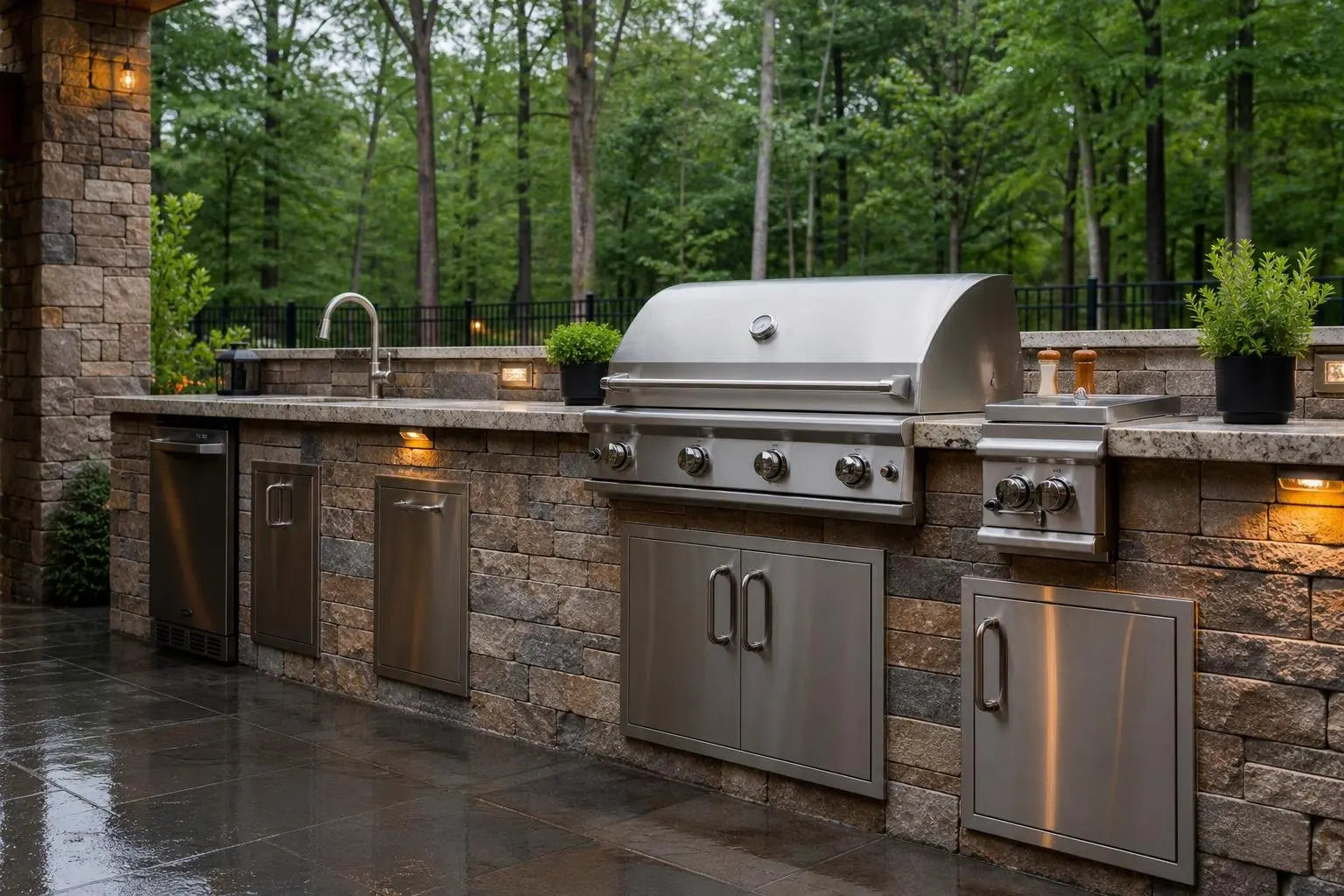
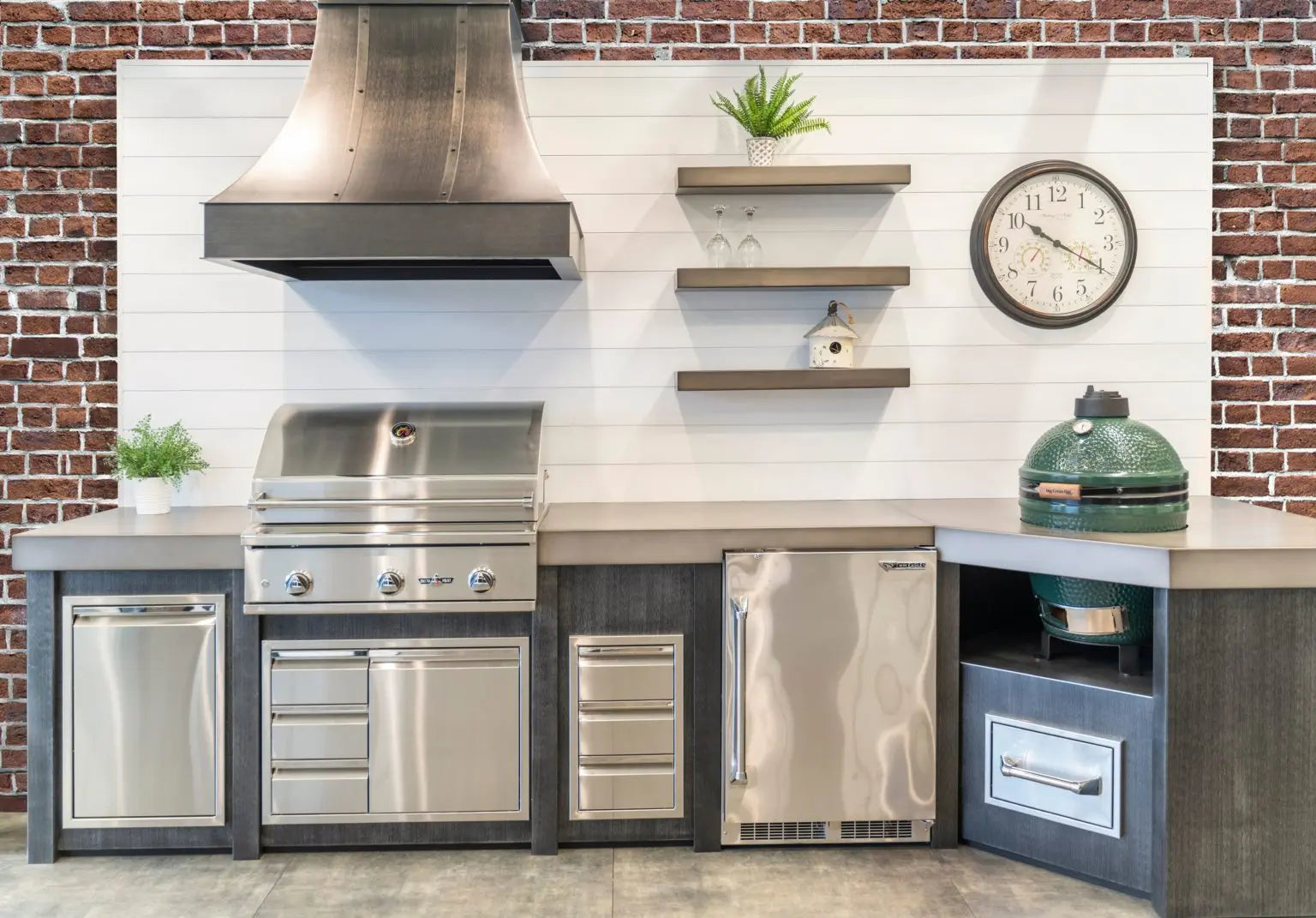
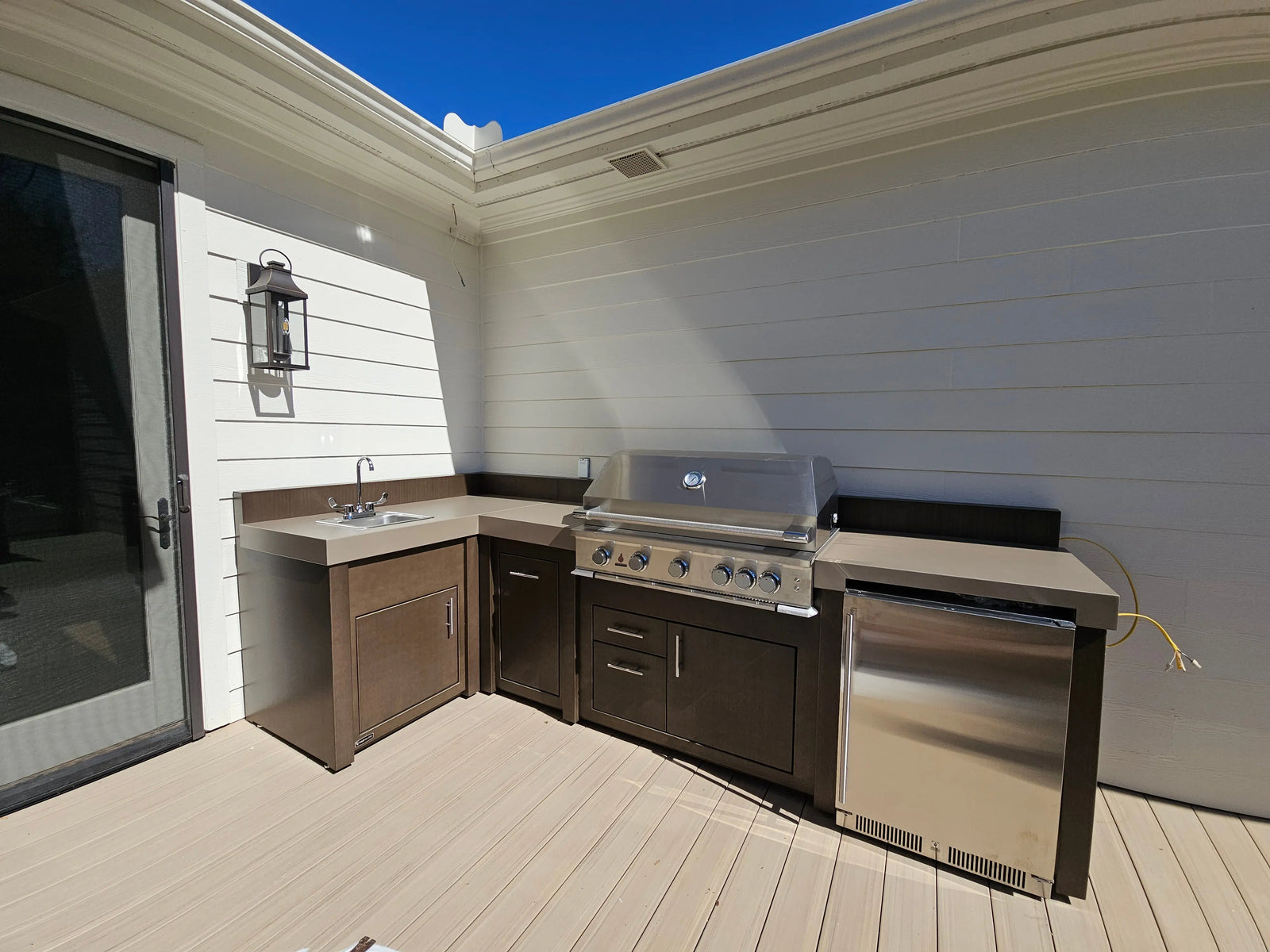
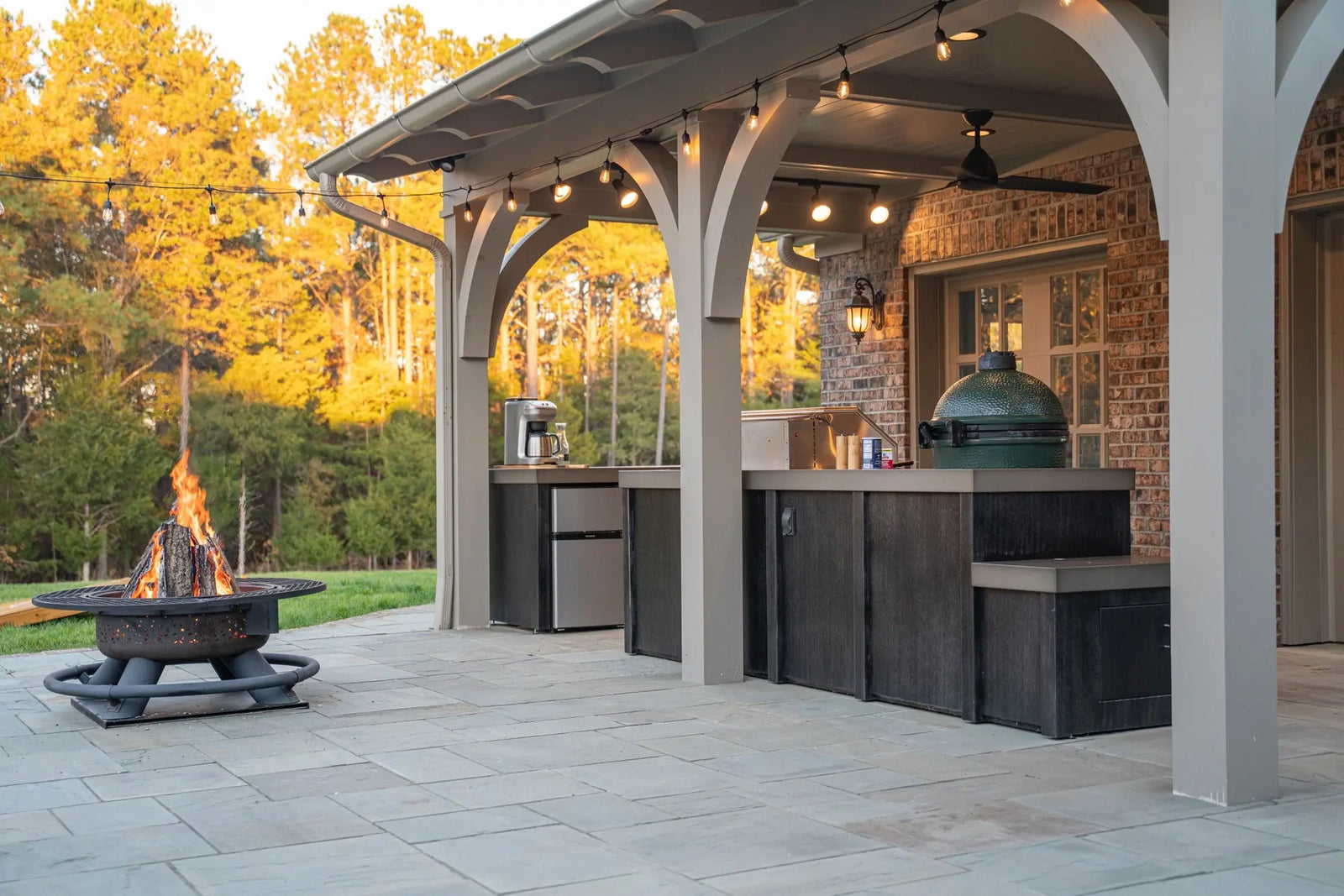
An outdoor kitchen should be ready for real weather, not just perfect weekend afternoons.
Rain, sun, humidity, grease, wind, and freezing temperatures can slowly damage cabinets, counters, appliances, seams, and flooring. Weatherproofing an outdoor kitchen means building in layers of protection before small issues become expensive repairs.
Weatherproofing an outdoor kitchen means protecting every exposed part of the space from moisture, UV rays, heat, wind, and temperature changes. It includes the kitchen frame, cabinets, countertops, appliances, fasteners, joints, flooring, plumbing, electrical runs, and storage areas.
It is not the same as throwing a plastic tarp over the grill. A cover can help, but true weatherproofing uses the right materials, slope, drainage, sealants, ventilation, and maintenance habits.
If you are still choosing the core setup, start with BetterPatio’s full outdoor kitchen collection so your layout, materials, and appliance package are designed for outdoor use from the beginning.

Many homeowners use the terms waterproofing and weatherproofing as if they mean the same thing. For outdoor kitchens, they are related but not identical.
Waterproofing focuses mainly on stopping water from entering surfaces, seams, cabinets, and utility areas. Weatherproofing is broader. It also includes UV resistance, rust prevention, heat tolerance, freeze protection, ventilation, and seasonal care.
| Protection Type | Main Goal | Examples | Why It Matters |
|---|---|---|---|
| Waterproofing | Control water entry | Sealers, caulk, grout protection, sloped surfaces | Prevents stains, swelling, mold, and cracking. |
| Weatherproofing | Protect against all outdoor exposure | Outdoor-rated materials, covers, ventilation, shade, rust prevention | Extends the life of the full outdoor kitchen system. |
| Winterizing | Prepare for freezing temperatures | Drain water lines, cover appliances, inspect stone and seams | Reduces freeze-thaw cracks and plumbing damage. |
A strong outdoor kitchen uses several layers of protection. Each layer solves a different problem, and none of them should be treated as optional if the kitchen is exposed to regular weather.
Choose frames, cabinets, appliances, counters, hardware, and flooring made for exterior exposure. Indoor materials usually fail because they absorb moisture, swell, rust, or delaminate.
Water should move away from the kitchen, not sit under cabinets or appliances. Slope, drains, elevated cabinet bases, and smart layout planning all help.
Stone, concrete, grout, seams, sink edges, and backsplash joints are common water-entry points. Sealing reduces absorption and makes the kitchen easier to clean after storms and cooking spills.
Outdoor kitchens need ventilation around appliances and cabinets. Tight plastic covers and blocked openings can trap moisture, which increases corrosion and mold risk.
Planning shortcutIf you are building from scratch, use BetterPatio’s free outdoor kitchen design service before you finalize materials. It helps you plan the kitchen, appliances, clearances, and weather exposure as one complete system.
The easiest outdoor kitchen to protect is one that starts with the right materials. If the frame, cabinets, counters, or hardware were not made for outdoor use, sealing and covering will only slow the damage.
| Component | Best Weatherproof Materials | Why They Work | Materials To Avoid |
|---|---|---|---|
| Cabinets | 304 or 316 stainless steel, marine-grade polymer, powder-coated aluminum | They resist rust, moisture, warping, and swelling better than indoor materials. | MDF, indoor plywood, unsealed wood, laminate cabinet boxes |
| Frames | Galvanized steel, stainless steel, masonry, cement board systems | They provide non-combustible, stable support for grills and appliances. | Untreated wood frames near heat or water |
| Countertops | Sealed granite, sealed concrete, porcelain, stainless steel, outdoor tile | They handle heat, cleaning, moisture, and UV exposure when installed properly. | Laminate, butcher block, indoor tile, soft unsealed stone |
| Hardware | Stainless steel screws, hinges, handles, and galvanized fasteners | They reduce corrosion, staining, and early hardware failure. | Standard indoor steel hardware |
For frame durability, BetterPatio’s Mountain Series outdoor kitchens are a useful benchmark because they focus on galvanized steel framing, precision-welded structure, ventilation, and ready-to-assemble outdoor construction.
If you are comparing frame systems before you build, the guide to stainless steel vs. stucco vs. stone outdoor kitchen frames is a good next read because it explains how structure, finish, climate, and maintenance connect.
Sealing is one of the most important weatherproofing steps because many outdoor kitchen materials are porous. Stone, concrete, grout, and some masonry surfaces can absorb water, grease, and food stains if left unprotected.
A sealer does not make every surface completely waterproof forever. It creates a protective barrier that reduces absorption, makes cleanup easier, and lowers the risk of cracking, staining, and mold growth.

Countertop noteOutdoor countertop materials behave differently in sun, heat, and rain. BetterPatio’s guide to outdoor kitchen countertop materials compares granite, concrete, porcelain, tile, stainless steel, and natural stone by durability, maintenance, UV resistance, and cost.
Water often enters an outdoor kitchen through small gaps rather than obvious openings. A narrow seam around a sink, backsplash, counter edge, or cabinet joint can let water move into places that are hard to dry.
Use outdoor-rated silicone caulk or sealant that remains flexible as temperatures change. Rigid fillers may crack when the counter, frame, or wall expands and contracts.
Drainage may be the most overlooked part of weatherproofing an outdoor kitchen. Even premium materials can fail if water sits below the island, under appliances, or against cabinet bases after every rainstorm.
The patio should slope gently away from the home and away from the kitchen structure. In heavy rain areas, channel drains or area drains may be needed to move water out of the cooking zone.
| Drainage Problem | What It Can Cause | Better Solution |
|---|---|---|
| Standing water under cabinets | Rust, mold, swelling, stains, and odors | Raise cabinet bases slightly and slope the patio away. |
| Low spot around the grill island | Water pooling, ice buildup, and slippery surfaces | Correct grading before installation or add a drain. |
| Water trapped near appliances | Corrosion, electrical risk, and shorter appliance life | Plan clearances, airflow, and utility access early. |
Drainage also affects how people move around the space. BetterPatio’s guide to outdoor kitchen layout ideas can help you plan straight, L-shaped, U-shaped, or island layouts without creating tight wet corners or blocked walkways.
Rust is one of the biggest threats to outdoor kitchens because metal components are exposed to oxygen, water, humidity, food acids, and cleaning products. Coastal air adds another challenge because salt accelerates corrosion.
Stainless steel is the standard choice for many outdoor kitchen appliances and cabinets, but it still needs maintenance. Grease, salt, chlorine, and abrasive cleaners can damage the protective surface layer.
Appliance planningIf your kitchen includes cooling, choose units intended for exterior use. BetterPatio’s outdoor refrigeration collection is built around outdoor entertaining needs, durability, and premium appliance brands.
Covers are useful, but they can cause problems if they trap moisture. A plastic tarp wrapped tightly around a wet grill or island can hold humidity against metal and increase corrosion risk.
Use breathable, weather-resistant covers that fit the appliance or island properly. Before covering, make sure surfaces are clean and dry. Remove covers periodically so trapped moisture can escape and the kitchen can air out.
Overhead protection helps reduce direct rain, UV exposure, fading, and surface temperature. It also makes the outdoor kitchen more comfortable to use in hot weather or light rain.
Protective structures can include pergolas, roof extensions, covered patios, retractable awnings, or partial shade panels. Even partial coverage helps reduce the amount of water and sun hitting counters, cabinets, and appliances.
Comfort upgradeIf you want shade without fully enclosing the space, a customizable fiberglass pergola can help define the cooking zone while reducing direct sun exposure.
Weatherproofing should also support the areas around the kitchen. If your cooking area connects to a lounge or dining zone, choose outdoor-rated pieces such as custom outdoor furniture so the full backyard setup is built for sun, rain, and regular use.
Weatherproofing is not a one-time project. Seasonal maintenance catches small issues before they become major repairs. Use this checklist at least a few times per year, especially before heavy rain, intense heat, or winter weather.
| Season | What To Check | Why It Matters |
|---|---|---|
| Before Rainy Season | Caulk, drainage, covers, cabinet bases, countertop seams | Prevents pooling water, moisture intrusion, and early rust. |
| Before Winter | Water lines, sinks, sealed stone, appliances, exposed plumbing | Reduces freeze-thaw cracks and burst pipe risk. |
| During Summer | UV fading, grease buildup, ventilation, grill areas, covers | Protects finishes and keeps appliances performing properly. |
| After Storms | Standing water, loose covers, debris, cabinet interiors, electrical areas | Stops hidden moisture problems from spreading. |
Winter weather can be especially hard on outdoor kitchens because water expands when it freezes. If water sits inside plumbing, stone pores, grout lines, or cracks, freeze-thaw cycles can cause damage.
Most outdoor kitchen weather damage happens because one part of the system was skipped. The kitchen may have good appliances but poor drainage, or strong cabinets but unsealed stone.
| Mistake | Why It Hurts | Better Choice |
|---|---|---|
| Using indoor cabinets outdoors | They can swell, warp, delaminate, or grow mold. | Use stainless steel, polymer, aluminum, or masonry systems. |
| Skipping sealer on porous surfaces | Water, grease, and stains absorb faster. | Seal stone, concrete, grout, and edges on schedule. |
| Ignoring slope and drainage | Water collects under cabinets and around appliances. | Grade the patio and add drains where needed. |
| Covering wet appliances tightly | Trapped moisture can increase rust and mildew. | Use breathable covers on clean, dry surfaces. |
| Forgetting utility protection | Water lines, electrical outlets, and gas connections can become safety risks. | Use outdoor-rated components and inspect them seasonally. |
If you are still planning zones for cooking, prep, serving, and dining, BetterPatio’s guide to outdoor kitchen zoning can help you keep wet areas, hot zones, and entertaining space organized from the start.
Your climate should shape your weatherproofing plan. A dry desert patio has different needs from a humid coastal kitchen or a snowy backyard.
| Climate | Main Risk | Best Weatherproofing Priorities |
|---|---|---|
| Rainy Or Humid | Mold, rust, swollen cabinets, slippery surfaces | Drainage, stainless hardware, breathable covers, sealed seams |
| Coastal | Salt corrosion and finish damage | 316 stainless where possible, frequent rinsing, soft cleaning, covers with airflow |
| Hot And Sunny | UV fading, hot surfaces, cracked finishes | Shade, UV-resistant finishes, light surfaces, regular cleaning |
| Cold Or Snowy | Freeze-thaw cracks and burst plumbing | Winterization, drainage, sealed stone, covered appliances |
Weatherproofing an outdoor kitchen works best when you treat it as a complete system. Start with outdoor-rated materials, manage water with slope and drainage, seal porous surfaces, reduce rust risk, use breathable covers, and inspect the kitchen each season.
The goal is not to stop nature completely. The goal is to build and maintain the kitchen so rain, sun, humidity, and freezing temperatures do not shorten its life. With the right planning, your outdoor kitchen can stay functional, attractive, and ready for everyday cooking and entertaining.
Use these product ideas to protect your grill, choose durable components, and add more overhead protection to the outdoor kitchen zone.

A weather-resistant cover designed to protect the stainless steel finish and extend grill life.

A durable 304 stainless outdoor kitchen island with storage, granite surfaces, and included cover.

A complete covered outdoor kitchen concept with grill, bar sink, refrigerator, seating, and pergola.
Seal stone, concrete, grout, countertop edges, and sink areas with outdoor-rated products. Use flexible exterior caulk around seams, make sure the patio slopes away from the kitchen, and choose weather-resistant cabinets, hardware, and appliances.
Choose stainless steel or corrosion-resistant materials, clean metal with mild soap and water, dry surfaces after heavy rain, avoid abrasive cleaners, and maintain airflow around appliances and cabinets. Coastal areas may need more frequent cleaning and higher-grade stainless steel.
Yes, an outdoor kitchen can get rained on if it is built with outdoor-rated materials, sealed surfaces, proper drainage, and weather-resistant appliances. However, repeated exposure without maintenance can still cause rust, stains, and surface damage over time.
Turn off and drain water lines, clean and dry all surfaces, remove items that can freeze or absorb moisture, inspect seals, reseal stone if needed, and cover appliances with breathable covers before freezing temperatures arrive.
Good choices include 304 or 316 stainless steel, galvanized steel frames, marine-grade polymer, powder-coated aluminum, sealed granite, sealed concrete, porcelain, and outdoor-rated tile. Avoid MDF, untreated wood, laminate, and indoor-grade hardware.
Yes, covers can help protect grills and appliances from rain, dust, and debris. Use breathable covers, avoid tight plastic tarps, and only cover surfaces after they are clean, cool, and dry.
Many outdoor countertops need sealing, especially concrete, granite, natural stone, grout, and tile edges. Porcelain and stainless steel usually need less sealing, but joints, seams, and surrounding materials still need inspection.
The biggest mistake is focusing only on covers while ignoring materials, drainage, sealing, ventilation, and seasonal maintenance. A durable outdoor kitchen needs all of these layers working together.

As the outdoor living trend continues to thrive, you may be wonder...

How to transform your outdoor space in 5 steps to...