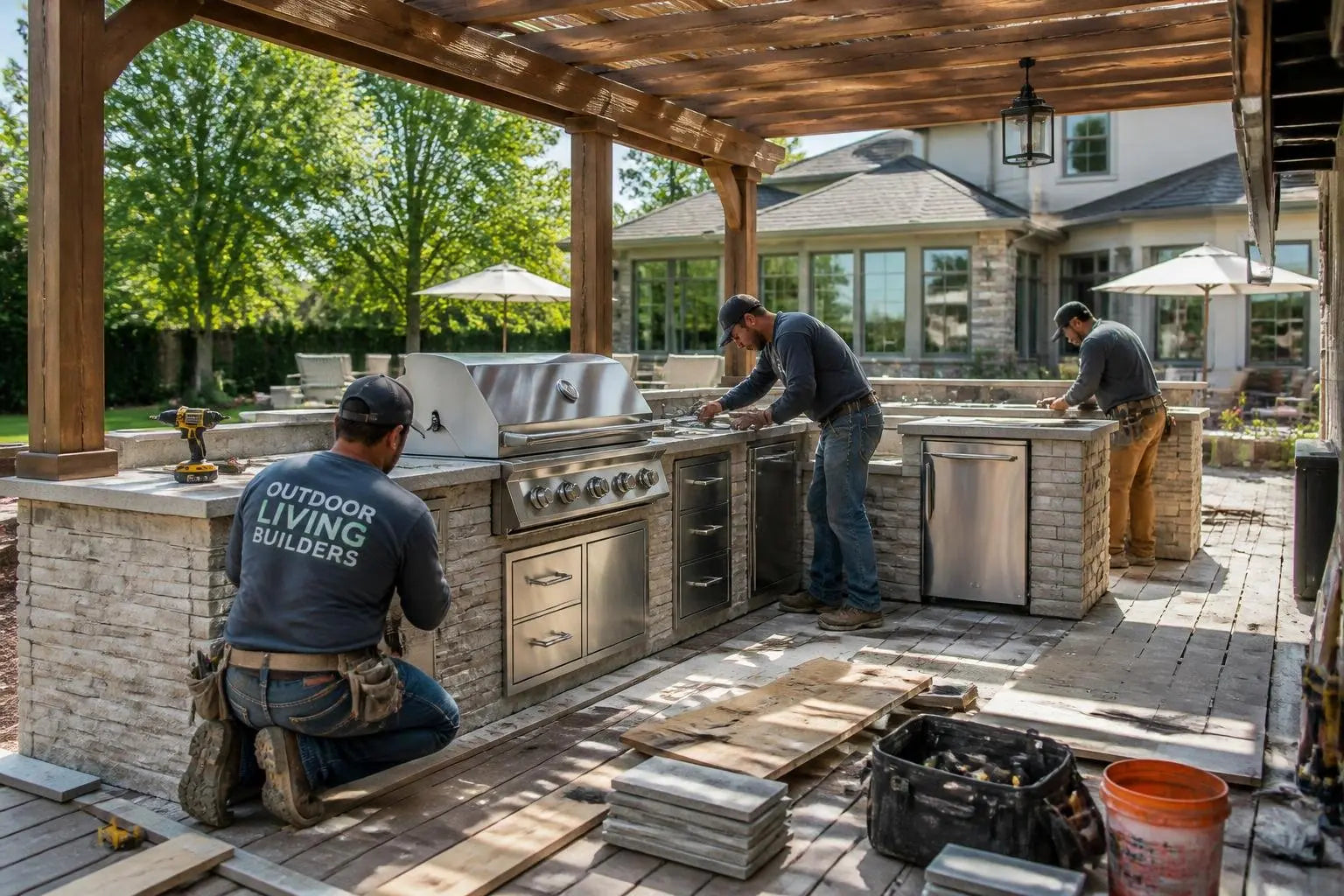
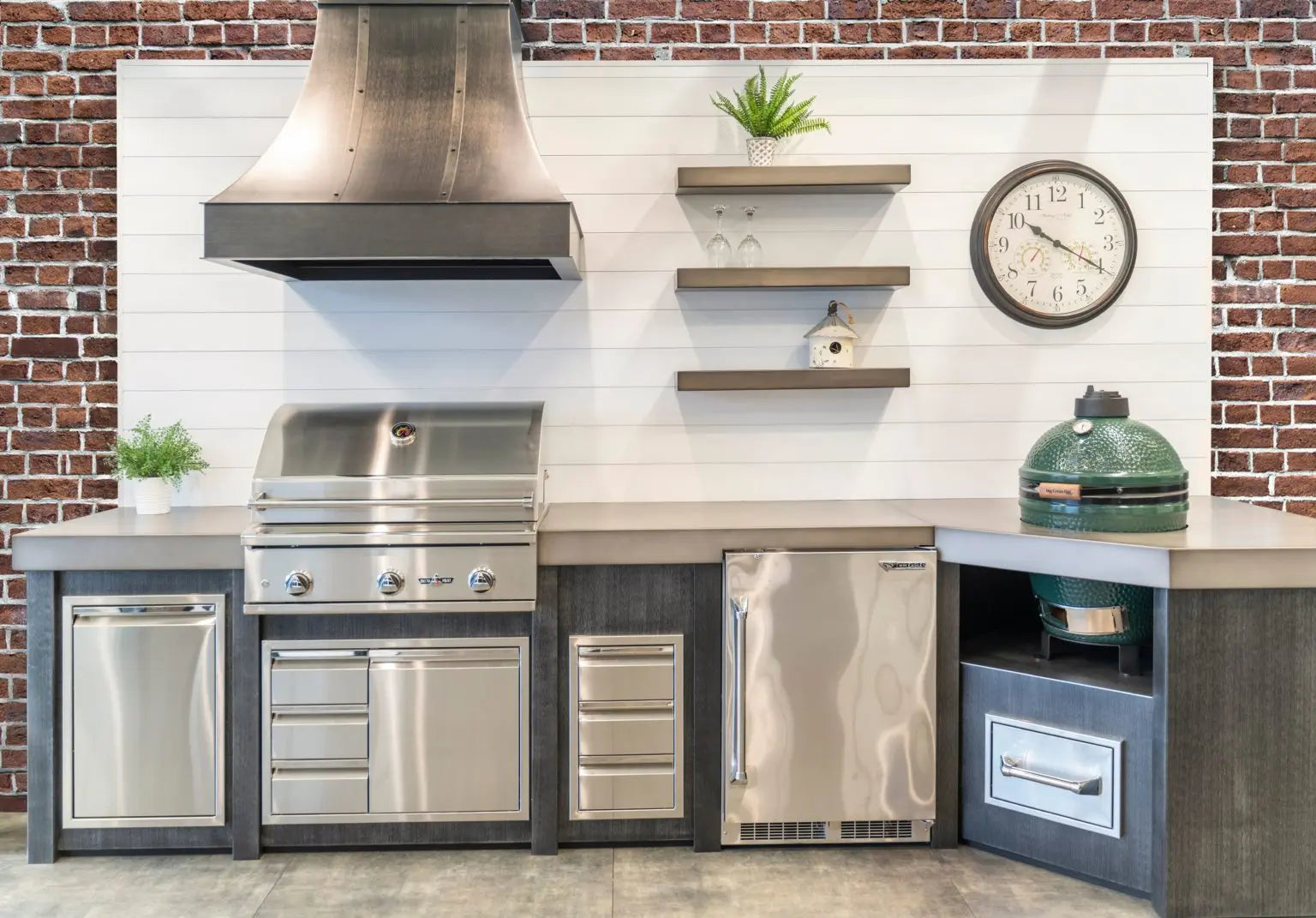
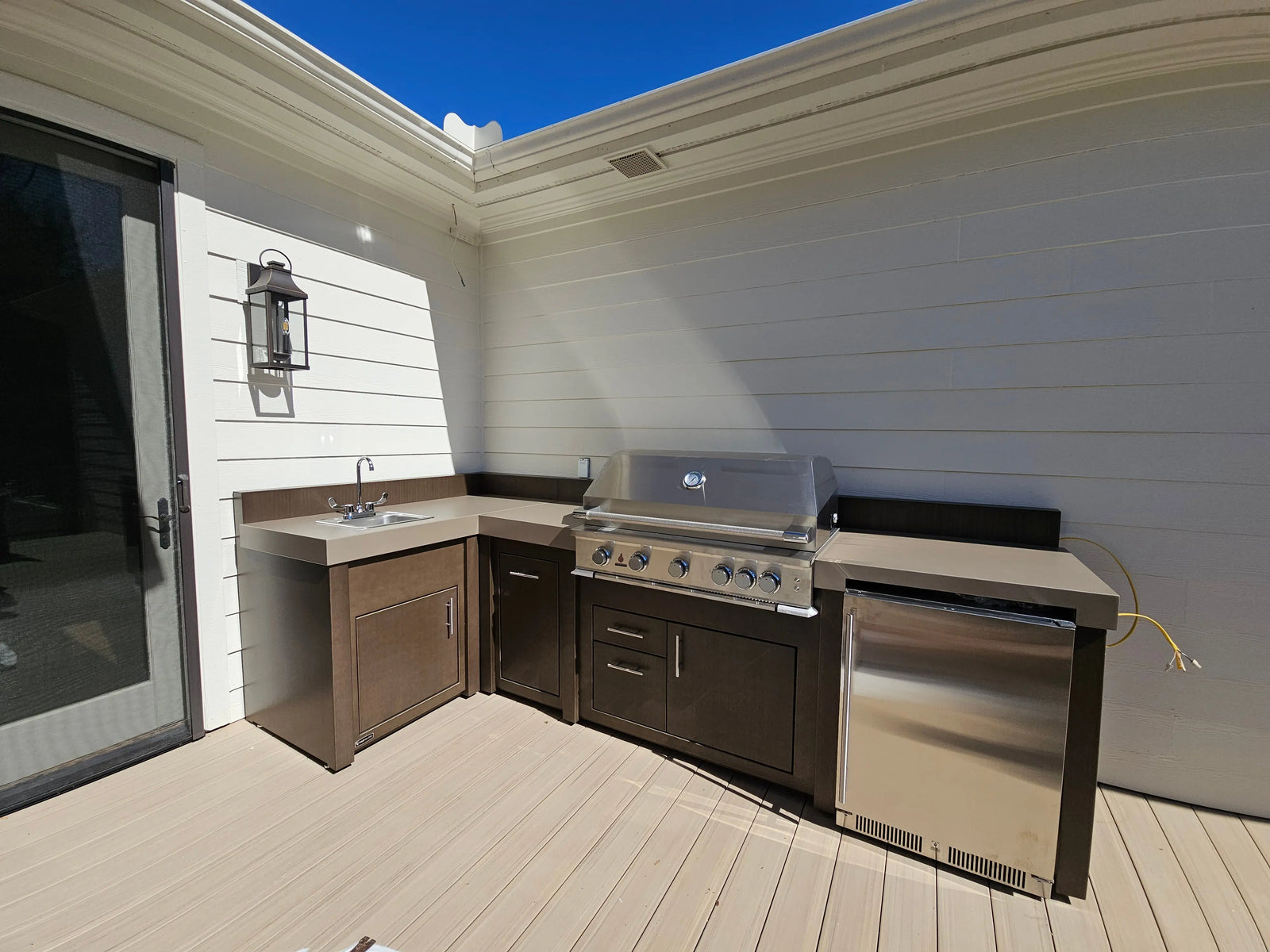
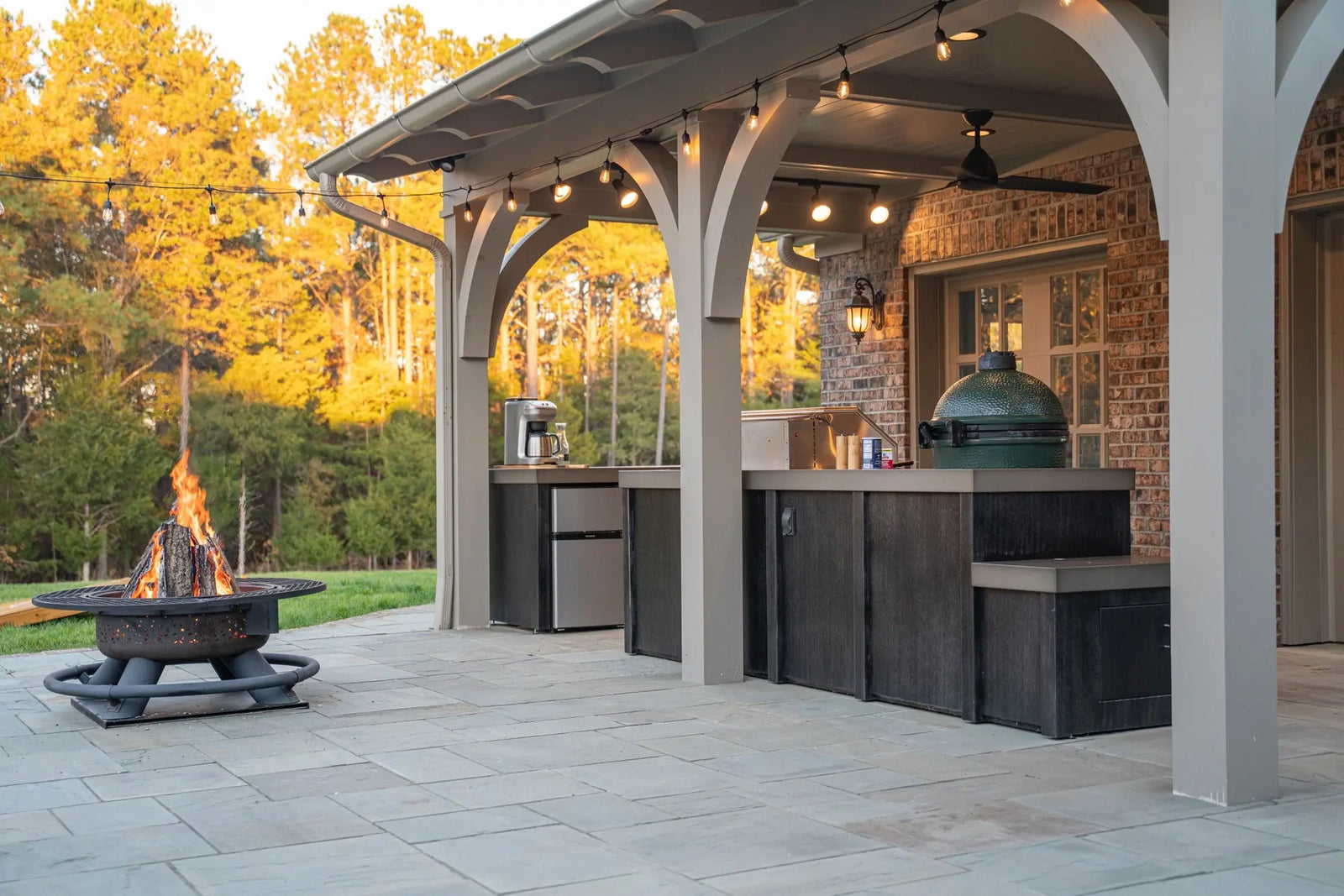
Building a custom outdoor kitchen takes longer than most people expect — and the timeline varies more than the cost does. The size of your kitchen, the materials you choose, the trades you need, and whether you're DIYing or hiring a contractor all push that number up or down.
Most custom builds run 6 to 12 weeks from first plan to final inspection. Some come in faster. Others drag on for months. Knowing what drives the timeline — and where delays actually come from — helps you plan a realistic schedule and avoid the mistakes that stall projects before they're finished.
Browse our outdoor kitchens for setups that skip the longest parts of the timeline.

Your outdoor kitchen's timeline comes down to a few practical things. Project complexity, material lead times, local rules, and your contractor's calendar all play big roles in how soon you'll be flipping burgers outside.
If you want a basic kitchen — just a grill, counter, and some storage — it might only take 2-4 weeks. These straightforward designs need less specialized labor and don't usually require major changes to your yard.
But if you're dreaming about a luxury kitchen with multiple cooking zones, built-in appliances, pizza ovens, and custom cabinetry, you're looking at 6-12 weeks or more. Add in things like outdoor fridges, sinks, gas lines, electrical work, or a covered roof, and the timeline stretches even further.
Layout matters a lot. A straight-line design along a wall goes up faster than an L-shape or an island. Fancy stuff like curves or multi-level setups adds weeks because they need extra fabrication and careful installation.
Basic materials — simple stone veneer, concrete counters, stock cabinets — are usually ready in 1-2 weeks, so you can keep things moving quickly with those.
Go high-end, and you'll wait longer. Custom granite or quartzite counters might take 4-6 weeks to fabricate and ship. Specialty tiles, imported stone, or custom metalwork? Sometimes you'll wait 8-12 weeks. If you want stainless steel components made to order, plan for 6-10 weeks.
Appliance timelines are all over the place. Standard grills can ship in days, but built-in pro gear could take 4-8 weeks. Supply chain hiccups or custom orders push things out even further.
You'll probably need permits for electrical, plumbing, and gas work. Local building departments usually take 2-6 weeks to review and approve. Some places are quick, others… not so much.
Inspections happen at different points. There's usually one after the rough-in and another at the end. Each inspection can add 3-7 days, depending on how busy the inspector is. Fail an inspection? You'll need to fix things and wait for a re-check, which tacks on another week or more.
Contractor schedules can push your start date out. Experienced outdoor kitchen builders often book up 4-12 weeks ahead in spring and summer. If you're okay with building in fall or winter, you might get started sooner.
Your project needs several trades — masons, plumbers, electricians, gas fitters — to work in a certain order. If one falls behind or misses their slot, everyone else gets delayed. Plus, weather, sick days, or missing materials can easily push things back by days or even weeks.
Start planning the rest of your outdoor space. Shop our patio furniture to build out the full setup.

Building a custom outdoor kitchen usually takes 6 to 12 weeks from design to final inspection, depending on your project's size, design details, and the weather.
This is where everything starts. You'll work with a designer or contractor to nail down the layout, pick appliances, and choose materials.
During this phase, you'll decide on things like a built-in grill, pizza oven, or outdoor fridge. Your contractor draws up the construction docs with measurements, utility hookups, and structural notes. You'll need approvals before any digging starts.
More complicated designs take longer to plan. If you just want a simple grill island, planning flies by. If you want multiple cooking stations and a pizza oven, expect a longer process. You'll also need to get permits signed off during this time.
Try to meet with your designer regularly so things don't stall. The more decisions you make now — on materials, appliances, layout — the smoother construction goes later.
Once your plans and permits are in hand, the contractor marks out the area, clears landscaping or hardscaping, and starts digging if needed.
The foundation is crucial. Most projects need a concrete slab that sticks out a few inches past the kitchen's footprint. The concrete has to cure before anything else happens.
Workers run gas, electric, and water lines during this phase. Weather can slow things down, especially if it's too wet for concrete work.
This is when your kitchen starts to look real. The contractor builds the frame — usually with concrete blocks, steel studs, or wood. That frame supports counters and holds appliances.
They finish up utility hookups. Gas lines go to the grill and other gear. Electric outlets go in for the fridge and lights. If you're adding a sink, plumbing gets finished here too.
Appliances get installed once the frame is ready. The grill, pizza oven, fridge — they all get set in place and hooked up. Countertops are measured, made, and installed around them.
Delays often pop up here, especially if you're waiting on custom counters or specialty appliances.
This phase is all about the details. Contractors install backsplashes, seal counters, and add decorative touches. Cabinet doors and drawers go on and get adjusted.
Everything gets tested — gas, electric, water. The building department does a final inspection to check code compliance, safety, and structure. Once you pass and do a final walk with your contractor, you're good to go.
If you hire a contractor, your outdoor kitchen could be done in 2-6 weeks from breaking ground to final inspection. DIY? Plan on 3-6 months of weekends and evenings. The gap comes down to experience, hours you can put in, and having the right tools.
With a contractor, the whole process runs 4-8 weeks from first call to finish. Design takes 1-2 weeks. Permits add 1-3 weeks, depending on your local office.
Once permits are in, construction moves fast. Simple builds with basic appliances can wrap in 5-10 days. More complex jobs — think custom stonework, fireplaces, or lots of utilities — might need 2-3 weeks.
Your contractor handles all the scheduling and inspections. They juggle plumbers, electricians, and gas fitters to keep things moving. Most pros build several outdoor kitchens a year, so they know how long each part really takes. Weather can still throw a wrench in things, especially with concrete work.
DIY outdoor kitchens usually stretch to 3-6 months if you're working weekends and evenings. You'll spend 2-4 weeks planning and designing before you even start. Permits take the same 1-3 weeks as with a contractor.
The actual build drags out because you're working in small chunks. A foundation that a pro pours in a day might eat up two weekends for you. Installing utilities, building structures, and finishing touches all take longer.
You'll need extra time to learn as you go. Watching how-to videos, making extra hardware store runs, fixing mistakes — it all adds up. First-timers usually underestimate things like tile work and concrete by a lot. If you do the specialized stuff yourself — like gas or electric — it'll take even longer, since you have to learn the codes and work carefully.
| Delay Cause | Prevention Strategy |
|---|---|
| Material shortages | Order appliances and custom stuff 6-8 weeks early |
| Weather | Plan concrete work for dry spells; keep indoor tasks for rain |
| Permit issues | Submit complete applications; call dept first to confirm requirements |
| Mid-build changes | Lock in appliances, materials, and layout before you start |
| Trade scheduling | Book trades early; confirm dates a week before |
Browse our dining sets to finish the space off right.

As the outdoor living trend continues to thrive, you may be wonder...

How to transform your outdoor space in 5 steps to...