Cleaning and maintaining an outdoor kitchen isn't complicated, but it does require consistency. Grease builds up fast, weather does its damage quietly, and small issues become expensive repairs if you ignore them long enough.
Most of the work takes minutes after each use. The bigger tasks — sealing countertops, checking gas connections, winterizing — come up a few times a year. This guide covers everything you need to keep your outdoor kitchen clean, protected, and running well for the long haul.
Browse our outdoor kitchens for setups built to handle the elements with less upkeep.

Stay on top of cleaning if you want your outdoor kitchen to last. The right tools and a little know-how for each surface go a long way to prevent damage while getting rid of grease, food, and whatever the weather leaves behind.
Start by wiping your stainless steel appliances with warm water and a microfiber cloth to clear off loose dirt. Spray stainless steel cleaner (made for outdoor use) onto the cloth, not straight onto the appliance.
Wipe along the grain — it really helps avoid scratches. Going against the grain just leaves marks and dulls the finish.
If you're fighting grease, grab a degreaser that's safe for stainless steel. Let it sit for a couple minutes, wipe it off, rinse with clean water, then dry with a fresh cloth to keep water spots away.
Polish your stainless steel appliances about once a month. It keeps them shiny and adds a bit of protection against fingerprints and moisture.
Wipe your countertops daily with mild dish soap and water. Stick to a soft cloth or sponge — no need to get aggressive and risk scratches.
If you've got granite or other stone, skip acidic cleaners like vinegar or lemon juice. Those will etch and dull the surface. Use pH-neutral cleaners made for stone instead.
Tough stains? Mix up some baking soda and water into a paste, dab it on, let it sit for about 15 minutes, then gently scrub and rinse. Concrete and tile can take a little more scrubbing than polished stone, but don't go overboard.
Seal stone and concrete once a year to help prevent stains and fight off weather damage.
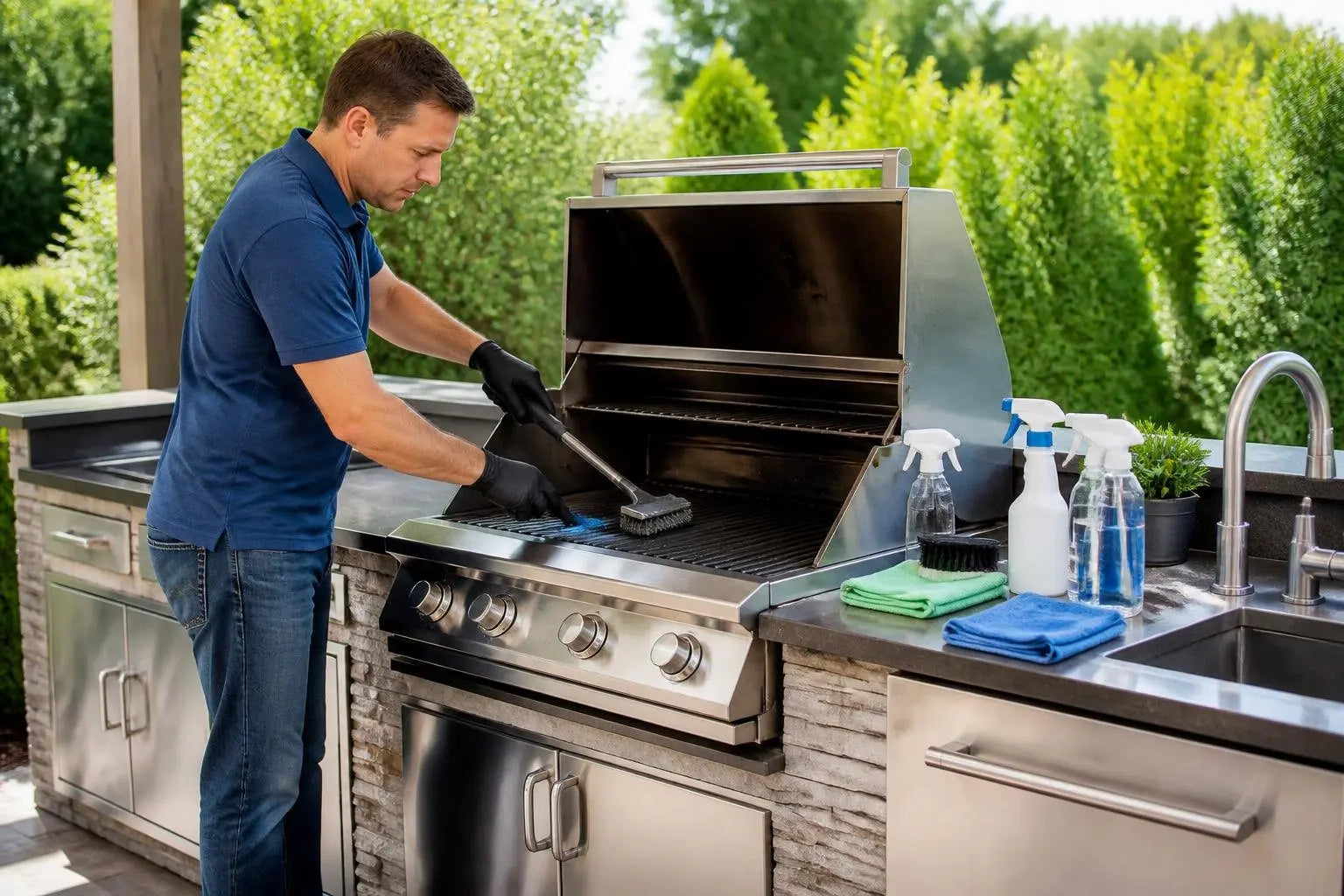
Fire up your grill on high for 10-15 minutes to burn off stuck-on food. Shut it down and let it cool until it's warm but safe to handle.
Scrub the grates with a grill brush, working between the bars to bust up carbon buildup. If you run into stubborn bits, use a degreaser made for grill grates. Pull out the grates and wash them with warm soapy water, rinse, and dry well.
Empty the grease tray every few uses to avoid fires and nasty smells. Check burner ports for clogs — uneven flames are a giveaway. Clear any blocked ports with a thin wire or pipe cleaner.
Wipe down the outside with the right cleaner for your grill's material. Keeping your grill clean really does make it last longer and food just tastes better.
Take everything out of your cabinets and sweep out crumbs or debris. Clean inside with warm soapy water and dry it all the way to stop mold.
For stainless steel or metal cabinets, clean them like you do your appliances. Wood or composite? Use gentle cleaners made for those materials. Wipe up spills right away — moisture will mess up wood and cause metal to rust.
Don't forget the cabinet doors, inside and out. Handles and hinges collect grease, so hit those spots with a degreaser if needed.
Check door seals and hinges for wear and tear. Replace bad seals to keep pests and moisture out of your storage areas.
Stay on top of upkeep to protect your outdoor kitchen from the elements and keep it working. Stone needs sealing, appliances need rust prevention, and gas lines have to stay leak-free for safety.
Stone countertops — granite, concrete, quartzite — need sealing at least once a year. If you skip this, stone will soak up grease, stains, and water, leading to lasting damage.
Test if you need to reseal by splashing water on the surface. If it soaks in instead of beading, it's time. Clean with a pH-neutral cleaner before sealing.
Apply stone sealer with a clean cloth, working in small sections. Let it soak for however long the label says, usually 5-15 minutes. Wipe off extra and let it cure for a day before using the kitchen again.
Grout between tiles needs attention too. It's porous and traps moisture, food, and bacteria if you don't seal it. Use grout sealer with a small brush or applicator once or twice a year.
Even stainless steel grills and appliances need regular care. Wipe down all metal surfaces weekly with a microfiber cloth and mild soap. Don't let grease or food sit — they trap moisture and invite rust.
After cleaning, rub a thin layer of high smoke point oil — such as vegetable or canola oil — on grill grates. It helps prevent rust between uses. Always empty grease trays after you cook to avoid corrosion from trapped grease and water.
Use weatherproof covers when you're not cooking. Good covers block UV, rain, and debris. But if the weather's dry, take the covers off now and then so moisture doesn't get trapped underneath.
Check for rust spots on stainless steel every month. If you spot any, use a baking soda and water paste to scrub them away gently, rinse, and dry.
Inspect gas lines and connections every couple of months for leaks or damage. Mix dish soap and water in a spray bottle and spray it on connections and hoses while the gas supply is on but all appliances and burners are off. Bubbles mean there's a leak — fix it right away.
Look over propane tanks for dents, rust, or damage. Swap out any tanks that look rough or are past their certification date. Keep spares upright and in the shade, away from your kitchen setup.
Check electrical outlets and connections for exposed wires, corrosion, or loose parts. Test GFCI outlets monthly — press the test button and make sure power cuts off. Always turn off the breaker before you inspect or clean anything electrical.
Tighten loose gas fittings with the right wrench. Replace any cracked or brittle hoses as soon as you see them.
Drain all water lines before the first freeze to avoid busted pipes. Shut off water valves and open faucets to let the last bit of water out. If you live where it gets really cold, blow out the lines with compressed air.
Remove propane tanks and store them upright outdoors in a well-ventilated area, away from heat sources and direct sunlight. Never stash propane inside or anywhere enclosed. Disconnect and cap all gas lines.
Clean and oil grill grates, then cover your grill with something weatherproof. Take out batteries from electronic igniters so they don't corrode. Store removable parts like burner covers and warming racks indoors where it's dry.
Cover countertops and cabinets with tarps or fitted covers. Give stone surfaces an extra coat of sealer for winter. Clear out cushions, utensils, and anything else that could blow away or soak up moisture.
Shop our outdoor kitchen storage to find options built for outdoor conditions.

Keeping a regular cleaning schedule helps your outdoor kitchen stand up to the weather and stay in good shape. Breaking it down into daily, monthly, and yearly tasks makes it way less overwhelming.
Browse our tables to complete your outdoor setup.

As the outdoor living trend continues to thrive, you may be wonder...

How to transform your outdoor space in 5 steps to...