Use this outdoor refrigerator buying guide before you spend a dime, because most of the regret around outdoor fridges comes from skipping the spec sheet.
An indoor fridge in the garage seems like a smart shortcut, until it freezes up in winter, dies in summer, or voids its warranty. A real outdoor-rated fridge handles heat, humidity, freezing temps, and rain without breaking down.

Indoor fridges are designed for stable indoor climates (around 65 to 78°F). They are not built to handle the intense conditions of your patio:
A true outdoor refrigerator has reinforced insulation, weather-rated electrical components, sealed gaskets, and a corrosion-resistant exterior. A well-built outdoor unit lasts 10 to 15 years in the same spot.
This is where buyers get fooled most often. Some fridges are marketed as "weather-resistant" without real certification. Only three terms actually matter:
UL Outdoor Rating (Underwriters Laboratories): The gold standard. UL specifically tests for outdoor use, including weather exposure, electrical safety, and operating temperature range.
ETL Listed for Outdoor Use: Equivalent to UL, issued by Intertek. Just as legitimate.
CSA Outdoor Listed: The Canadian equivalent, also accepted in the US.
If a fridge does not have one of these three certifications listed in writing on the spec sheet or label, it is not truly outdoor-rated. Marketing words like "patio fridge" or "outdoor kitchen ready" mean nothing without a real certification.
Listed on the product page or spec sheet. If you cannot find it, do not buy it.
304 stainless is standard. 316 marine-grade is required within 5-10 miles of saltwater. Avoid "stainless look" finishes.
Look for an operating range covering 50°F to 110°F. Cold-winter climates need a model rated for sub-freezing operation.
Standard widths: 15" (slim), 20" (mid-range), 24" (standard). Build around the cutout size, not the fridge body.
Choose between solid stainless (best insulation), glass doors (aesthetic), or drawer styles for easy bar access. Always consider locking doors.
Make sure you can swap the side the door opens from to fit your specific kitchen layout.
Requires a dedicated 120V GFCI outlet. No extension cords ever. Most units draw a light load of 1 to 3 amps.
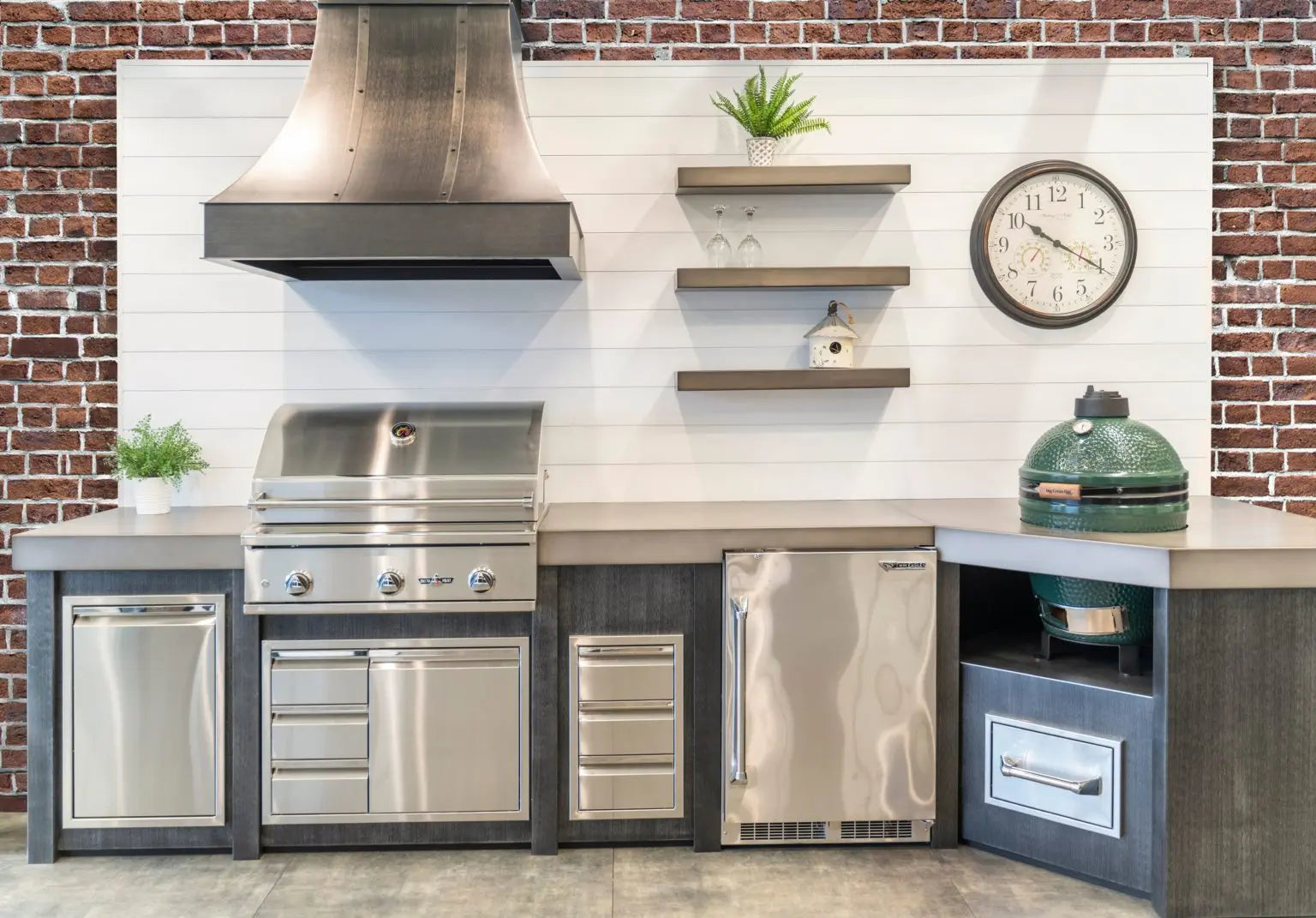
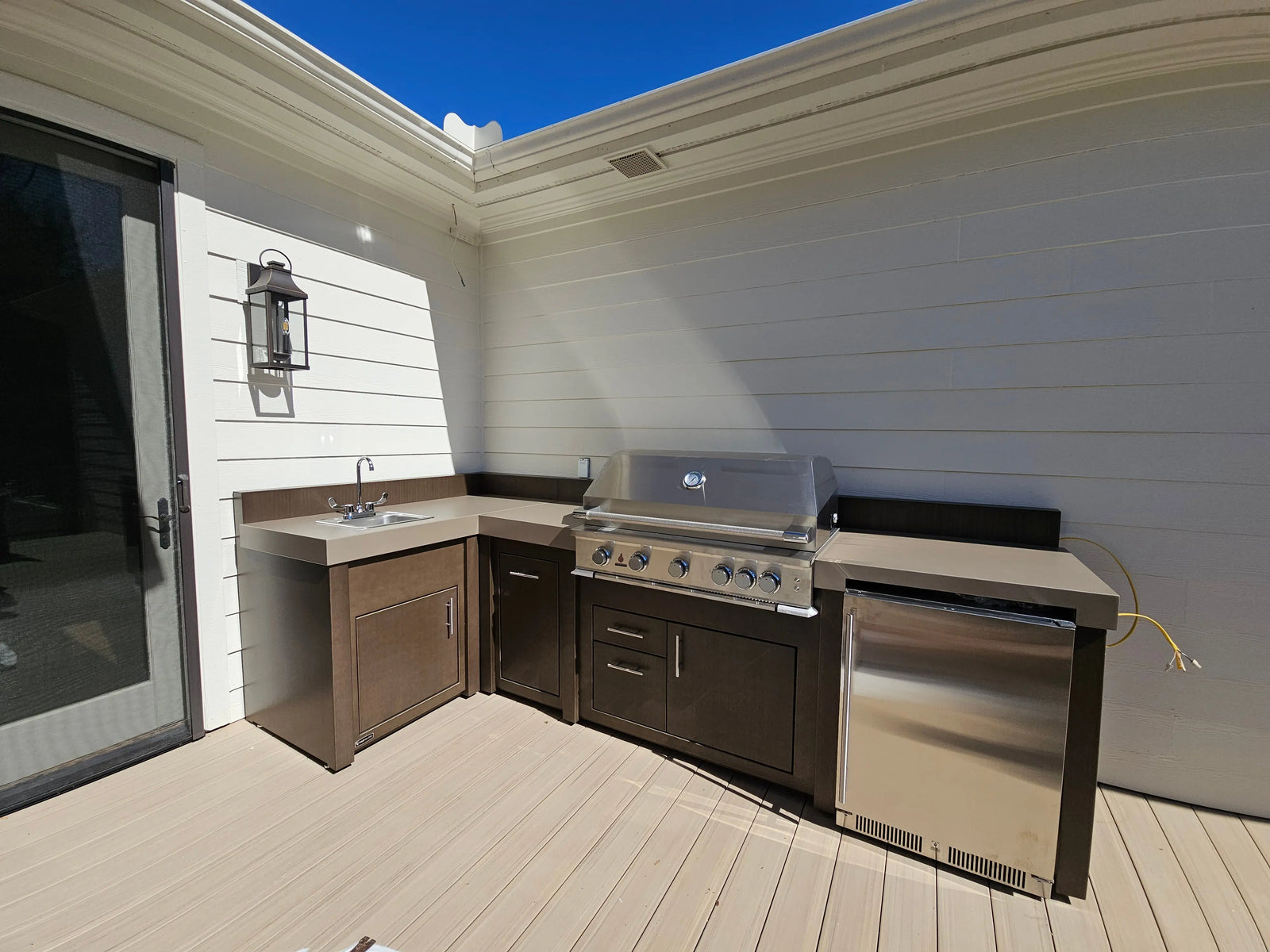
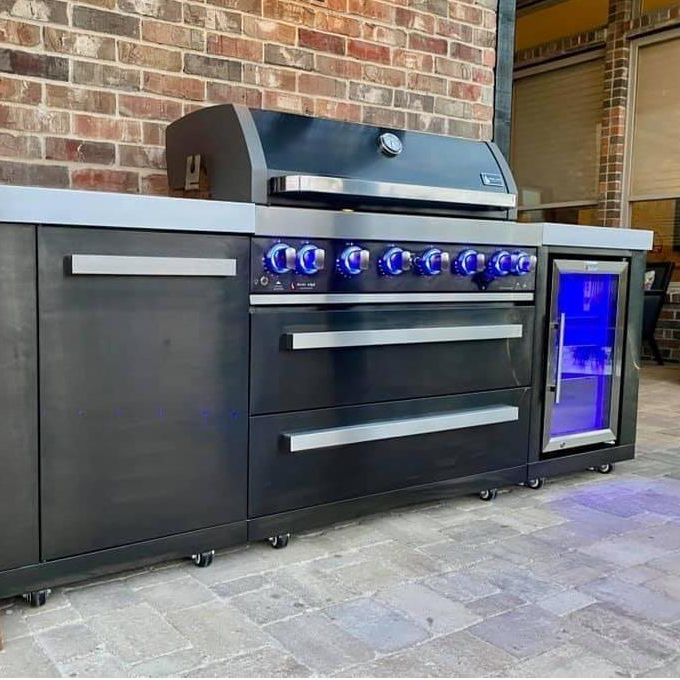
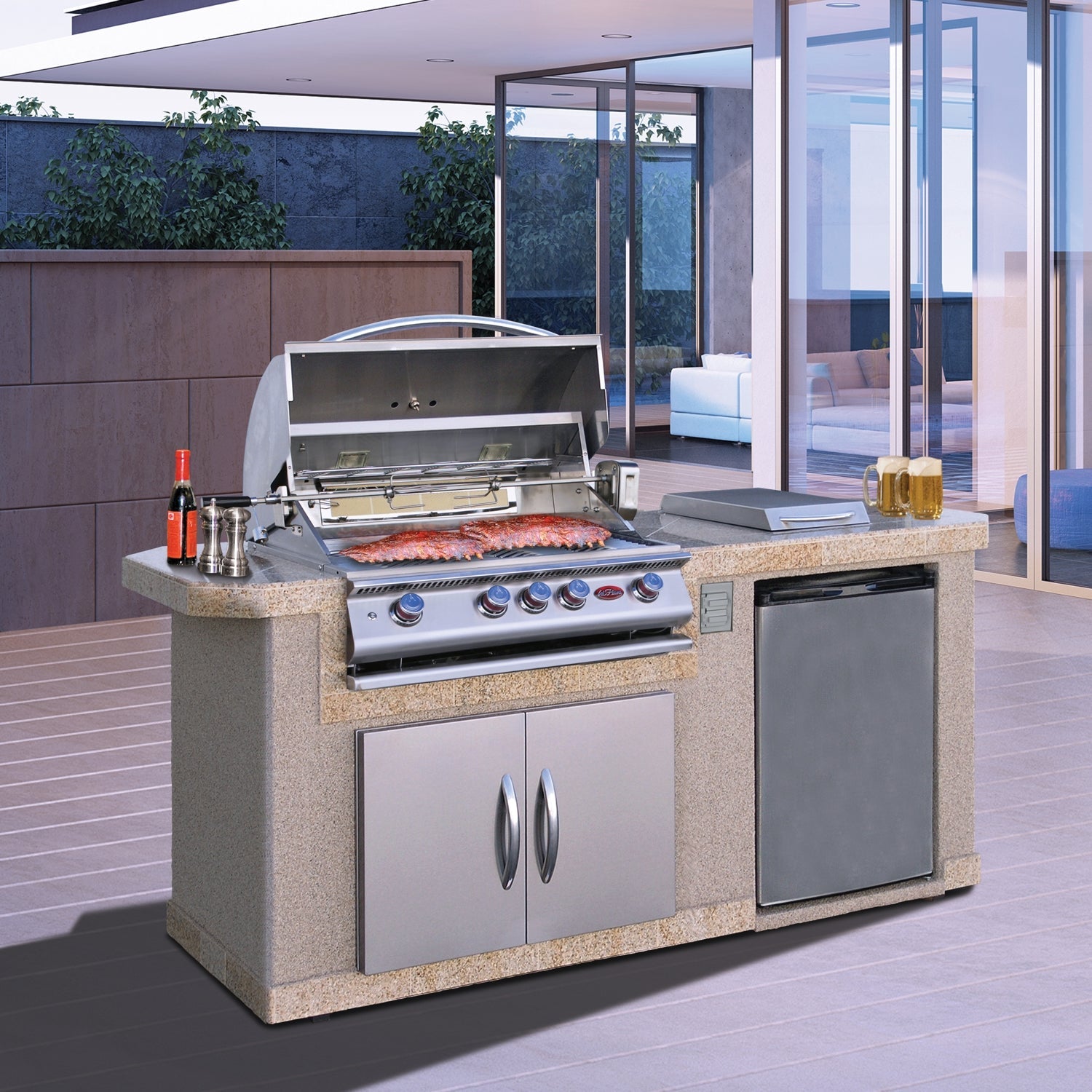
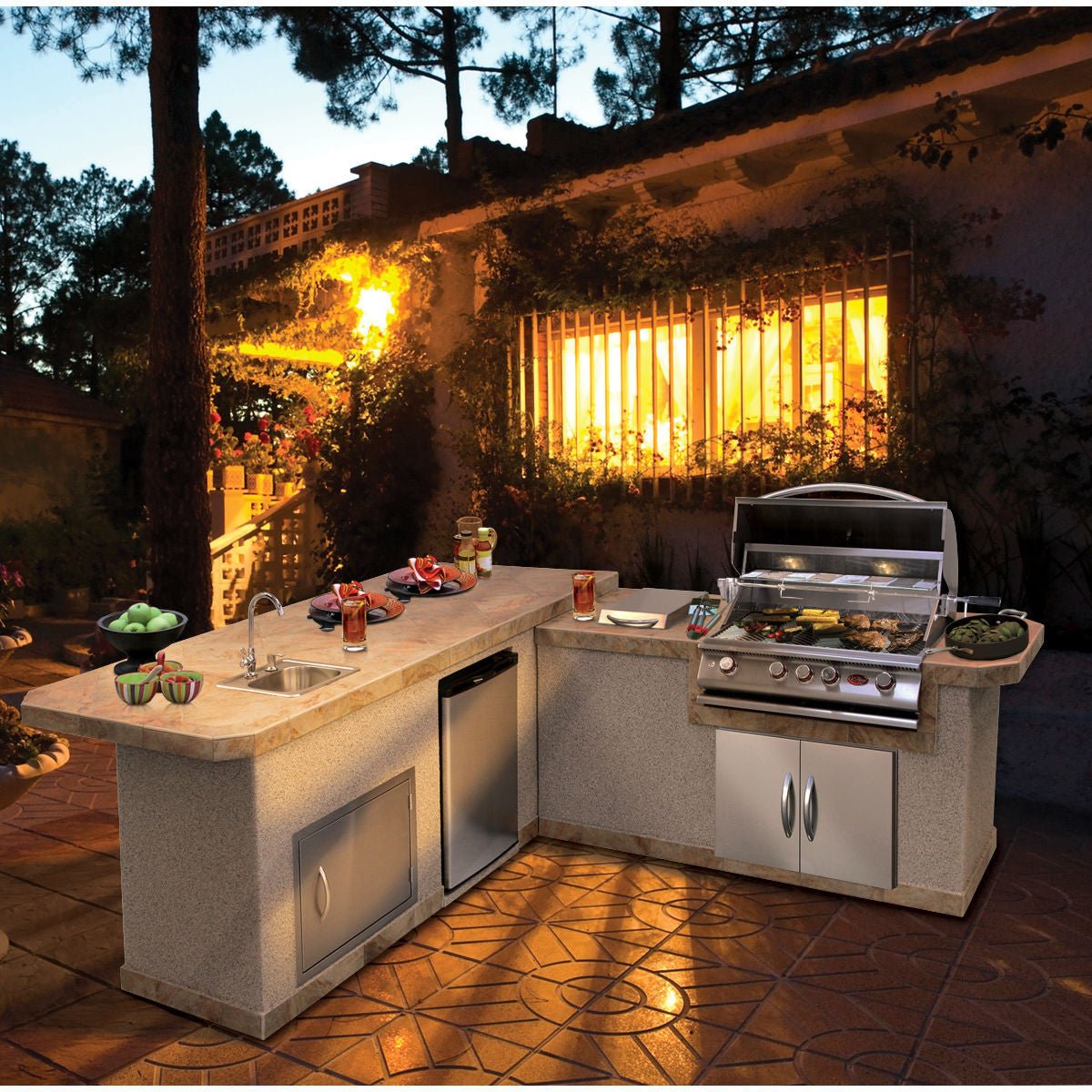
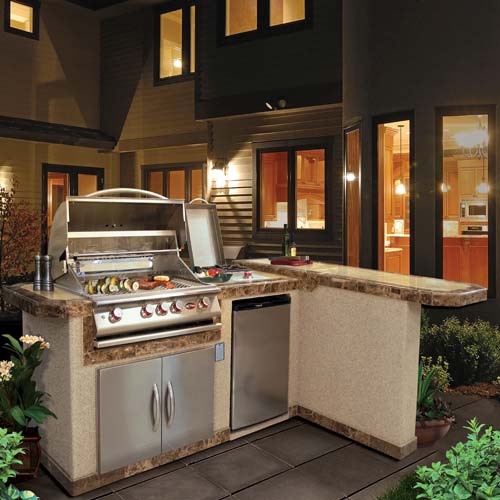
Looking for a complete solution? These prefabricated islands come integrated with outdoor-rated refrigeration and professional grills.

| Width | Capacity | Holds About | Best For | Typical Cutout |
|---|---|---|---|---|
| 15 inches | 3.0 to 3.5 cu ft | 70 to 80 cans | Small bar setups | 15"W x 24"D x 33"H |
| 20 inches | 4.0 to 4.5 cu ft | 100 to 130 cans | Mid-size kitchens | 20"W x 24"D x 33"H |
| 24 inches | 5.0 to 5.6 cu ft | 140 to 160 cans | Most built-ins | 24"W x 24"D x 33"H |
| Double drawer 24" | 5.0 to 5.1 cu ft | 150+ cans | Bar islands, easy access | 24"W x 24"D x 32"H |
Most built-in outdoor fridges vent from the front bottom. This means they can be installed flush in cabinetry as long as the front grille stays clear. Blocking the vent is one of the fastest ways to kill an outdoor fridge.
| Mistake | Why It Hurts | The Fix |
|---|---|---|
| Using an Indoor Fridge | Voids warranty, fails in 1-2 seasons | Only buy UL/ETL outdoor-rated units |
| Skipping GFCI Outlet | Electrical hazard, possible fire | Install dedicated GFCI outlet |
| Wrong Cutout Size | Fridge does not fit the cabinet | Verify dimensions before building |
| Placing Next to Grill | Compressor overheats | Maintain at least 18" gap |
| Ignoring Winter | Compressor freezes | Choose cold-rated units or drain/unplug |
Look for UL, ETL, or CSA outdoor certification, 304-grade stainless construction, a compressor rated for your temperature range, the right cutout size, and at least a 1-year warranty (3-5 years preferred).
No. Indoor fridges are designed for stable indoor temps (65-78°F). Outdoors, they face compressor failure, frost buildup, and voided warranties.
For most kitchens, a 24-inch wide fridge with 5 to 5.6 cu ft capacity is right. Use 15-inch slim units for small patios or dedicated beverage zones.
Yes, they must use a dedicated, weather-rated GFCI outlet to prevent shock and fire hazards. Indoor outlets and extension cords are not safe for outdoor use.
A quality unit lasts 10 to 15 years with proper care. High-end brands can last up to 20 years, while indoor fridges used outside fail within 1 to 3 years.
The right outdoor refrigerator buying decision comes down to four things: pick a real outdoor-rated unit, choose 304 stainless steel, match the size to your cutout, and install it properly on a dedicated GFCI outlet. Get those four right and your fridge runs reliably for a decade or more.
Skip the cheap garage fridge hack. A $400 garage fridge that dies in 18 months costs you food spoilage and frustration. A $1,500 properly built outdoor unit lasts 10+ years and integrates cleanly into your kitchen.
For most homeowners, the Blaze 24" Outdoor Refrigerator hits the right balance. The RCS REFR2 is the value pick with a 5-year warranty, while the Blaze Double Drawer is the right call for bar setups.

As the outdoor living trend continues to thrive, you may be wonder...

How to transform your outdoor space in 5 steps to...