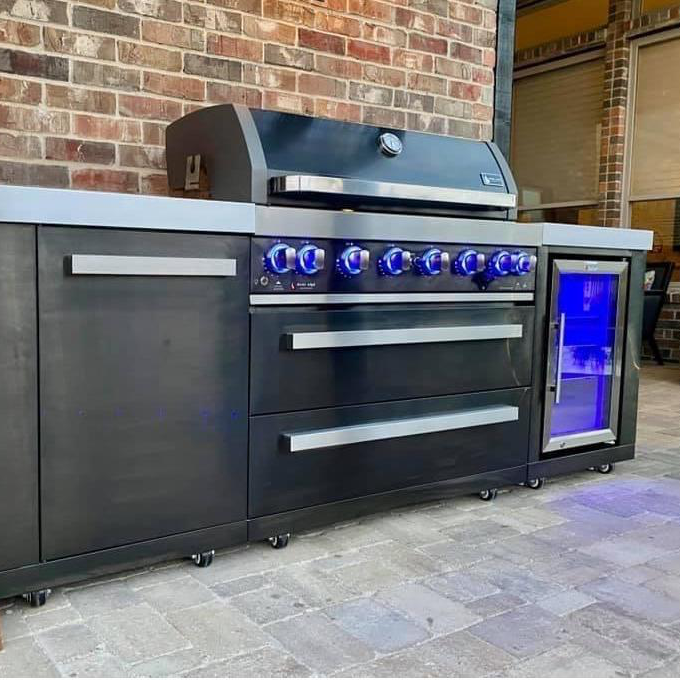
The backsplash in an outdoor kitchen works harder than almost any other surface in the yard. It takes the heat, the grease, and the weather, all at once.
The right material protects your walls and pulls the whole space together. Here's how to pick one that holds up, plus how it plays out on real outdoor kitchen islands.
A good backsplash does more than look nice. It protects your outdoor kitchen from grease, heat, and moisture while adding real visual character.
The best designs balance style with real weather performance, including UV exposure and seasonal temperature swings, not just how they photograph on day one.

Outdoor conditions call for materials that can handle sun, rain, and temperature changes without cracking or fading. Freeze-thaw resistance matters most in colder climates, where materials expand and contract with the seasons.
| Material | Heat Resistance | Weather Resistance | Maintenance |
|---|---|---|---|
| Porcelain Tile | High | Excellent | Low |
| Natural Stone (granite, quartzite) | High | Excellent | Low to moderate, needs sealing |
| Ceramic Tile | Moderate | Fair, best under cover | Low |
| Brick | High | Good with sealing | Moderate |
| Stainless Steel | Very High | Excellent | Very low |
Porcelain tile is the most reliable low-maintenance option for most outdoor kitchens, thanks to its durability and very low water absorption.
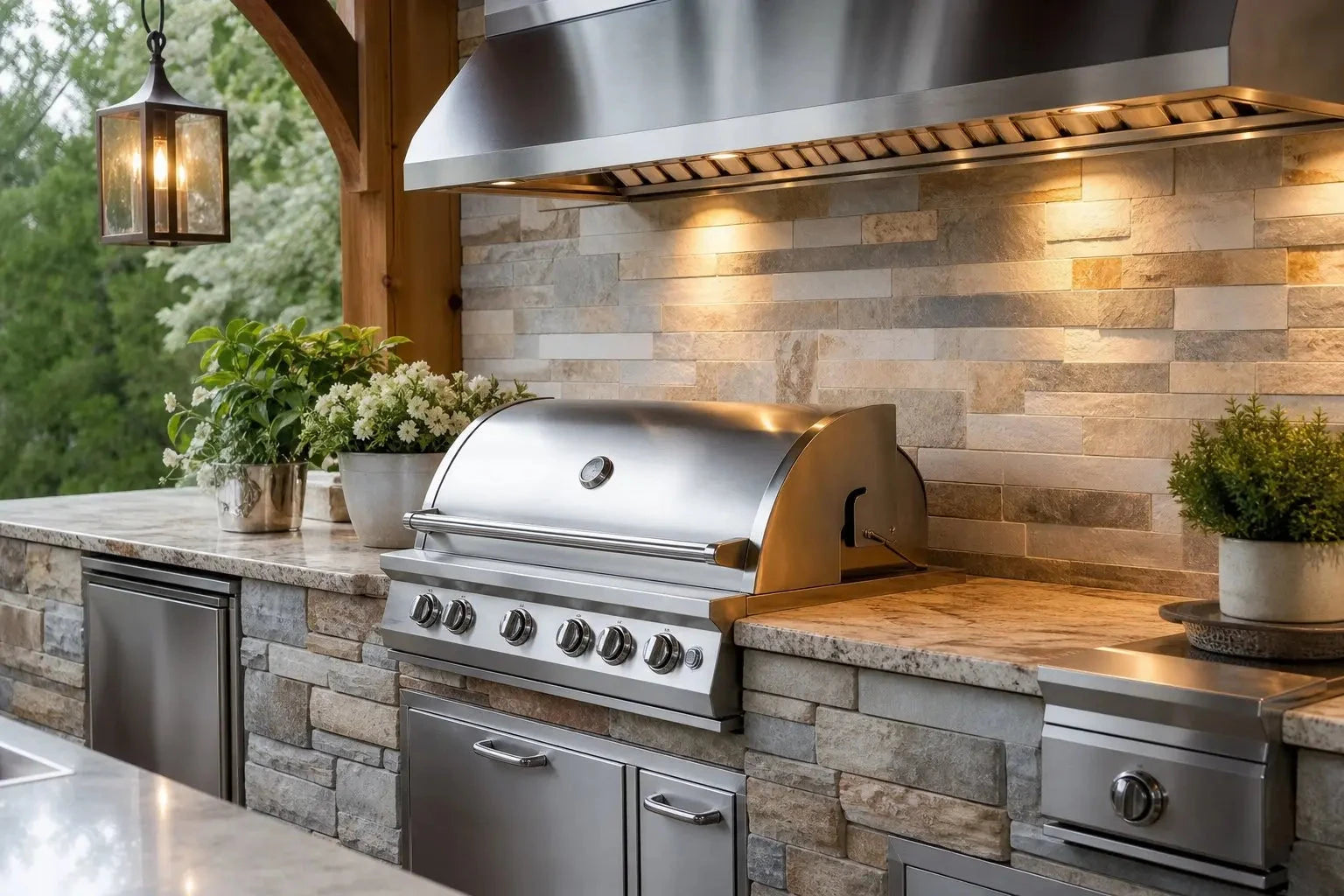
Stone works especially well in luxury outdoor kitchens where a natural, high-end finish is the goal.
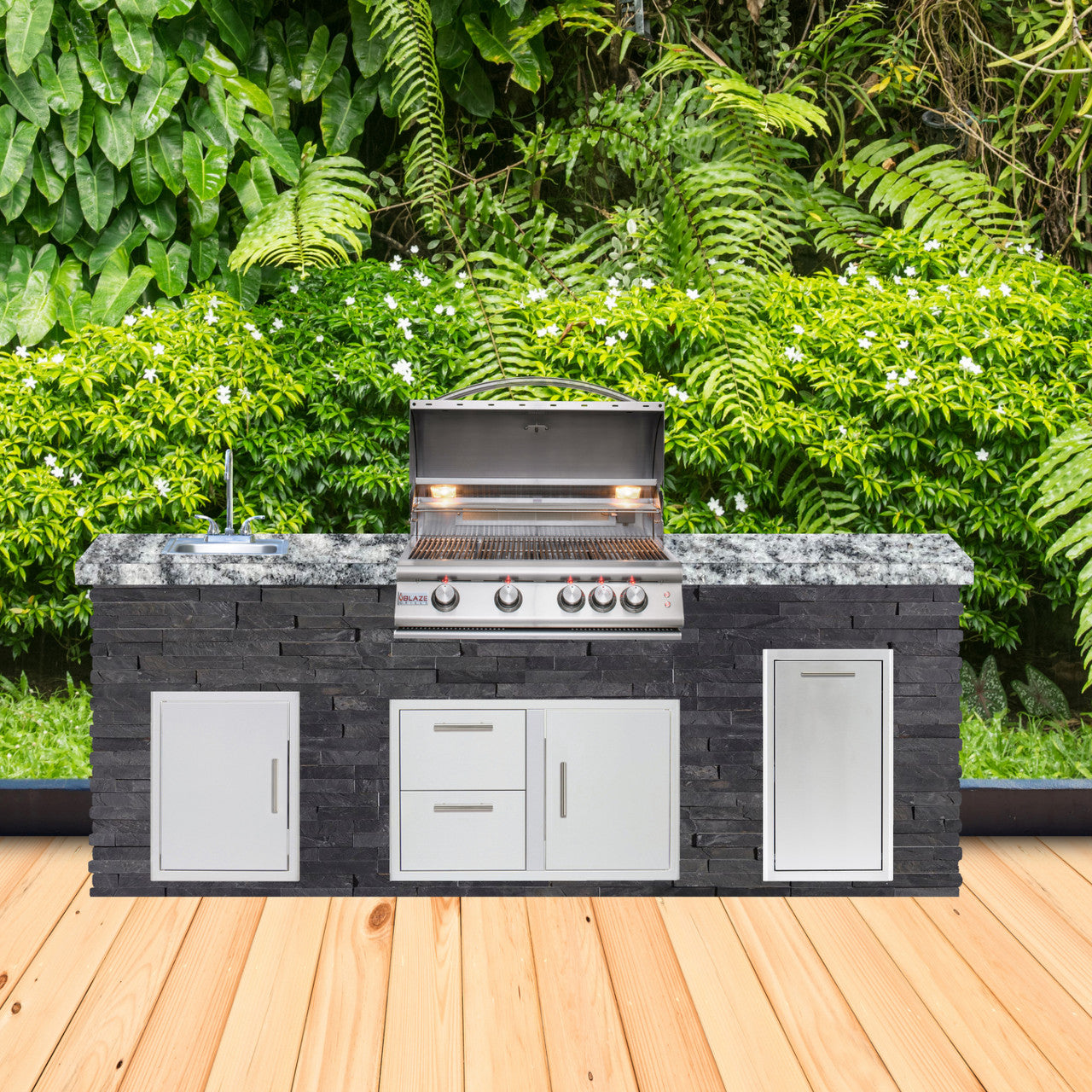
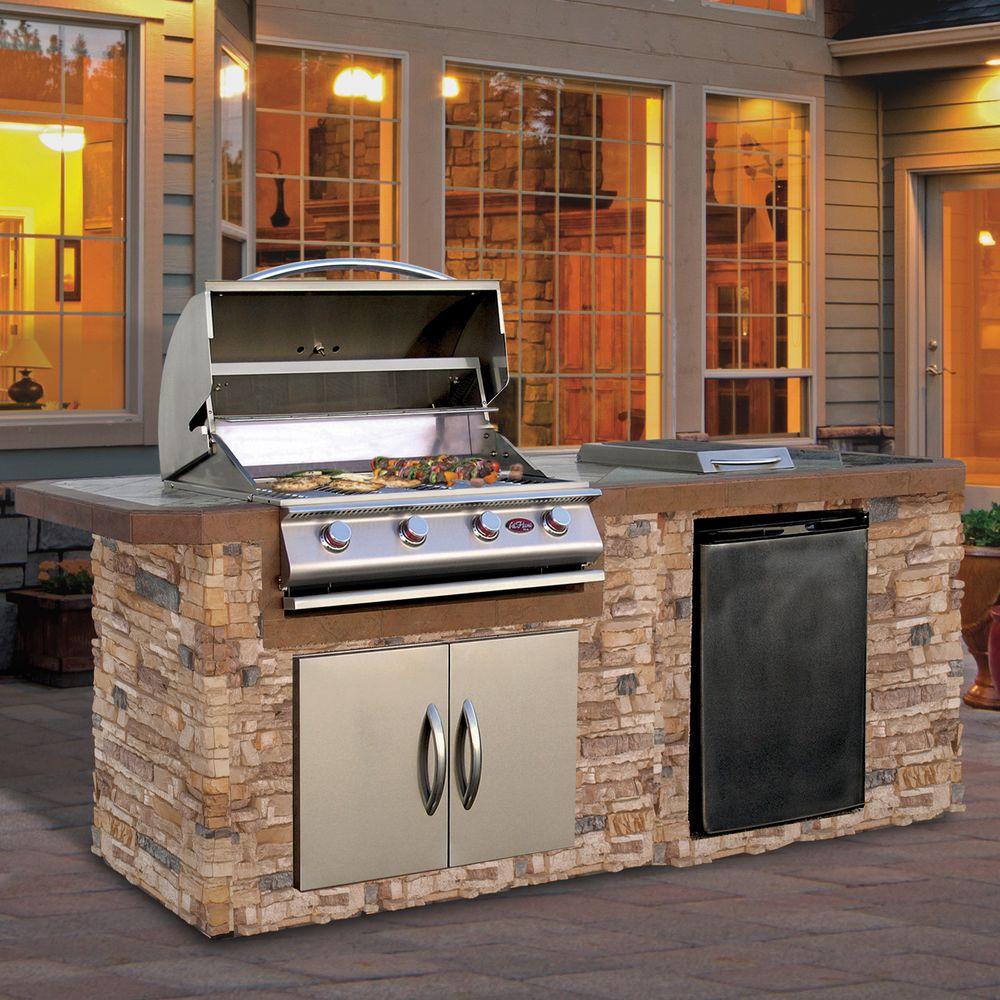
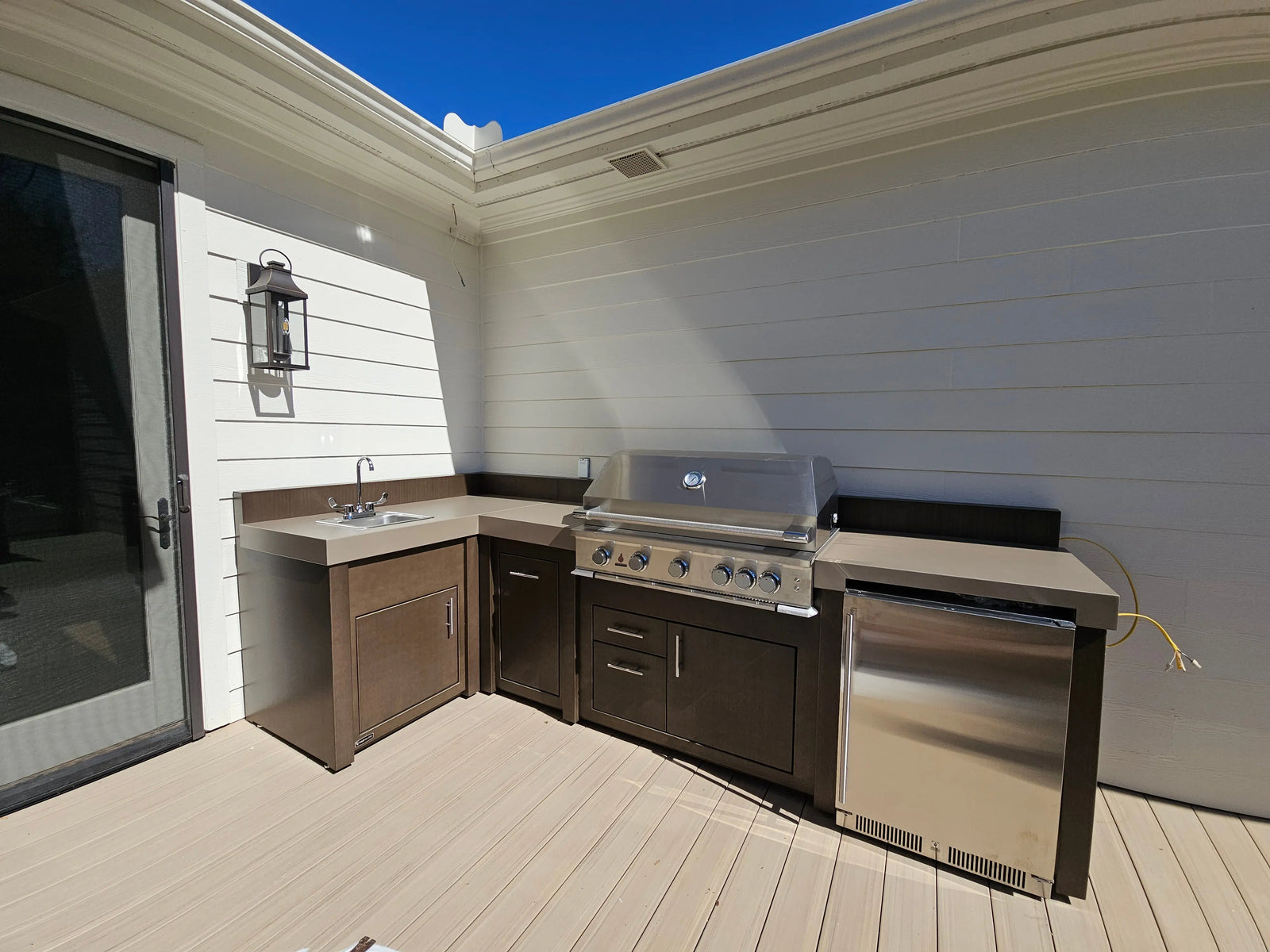
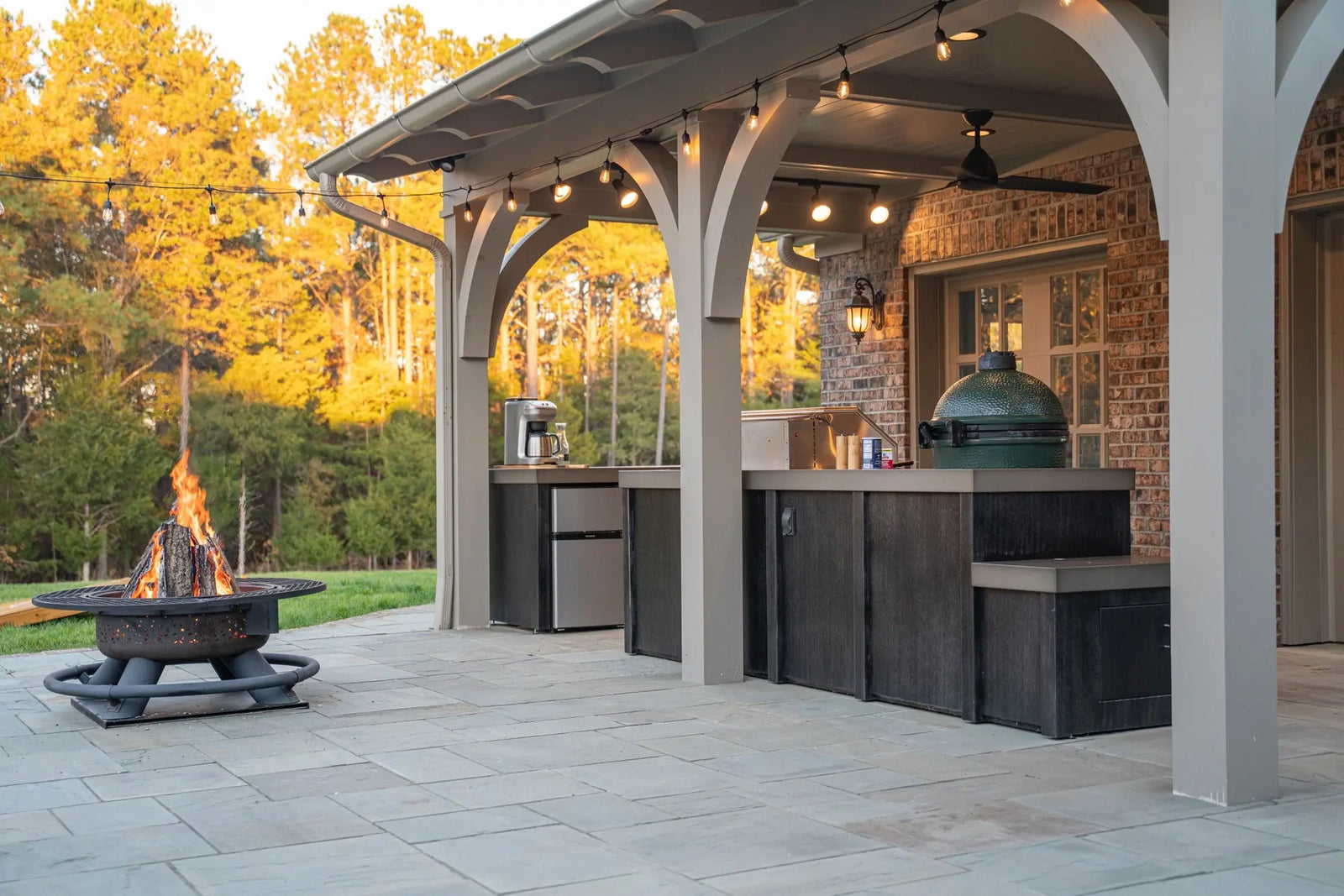
These material choices aren't just theoretical. BetterPatio's outdoor kitchen islands come with the same stone, tile, and stucco finish options discussed above, applied to the base and countertop as one complete build.
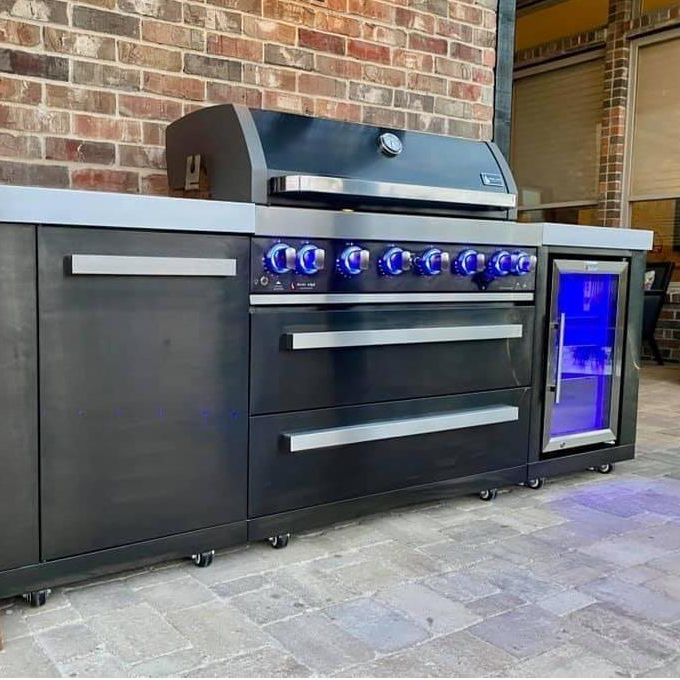
For more finish combinations in real backyards, browse photos of finished Cal Flame islands to see how different stone and tile pairings actually look once installed.
Your backsplash should match the overall feel of your outdoor space so the whole design reads as intentional rather than assembled piece by piece.
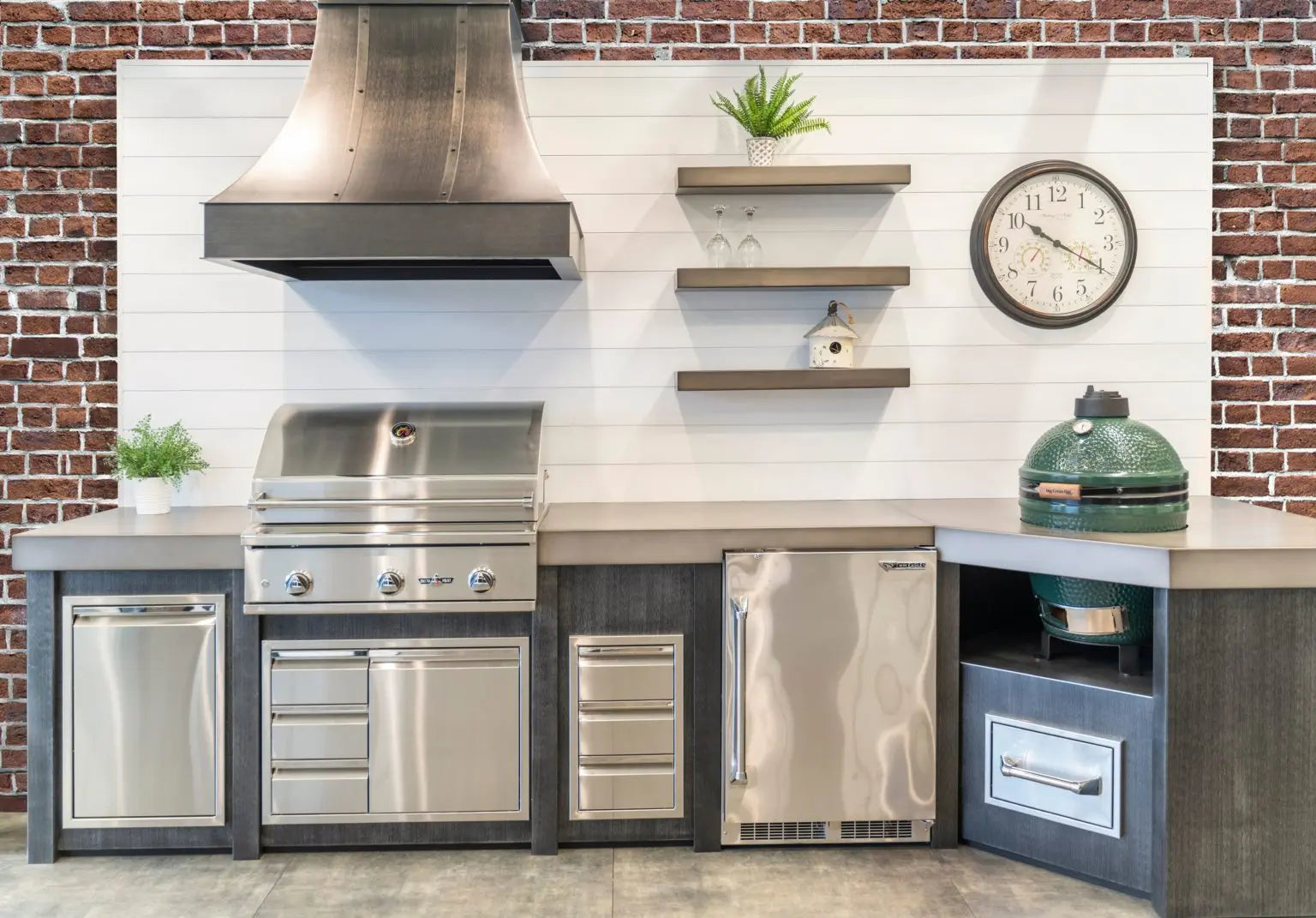
Clean lines, large format tiles or slabs, and neutral tones like gray, white, or black.
Natural stone or brick, earthy colors, rough textures, and a natural pairing with wood and greenery.
Patterned tiles, warm tones, and textured finishes for a bright, welcoming feel.
Simple designs, smooth surfaces, and a focus on function over visual clutter.

Spending a little more upfront on the right material for your climate typically saves money on repairs down the line.
Expansion joints matter in outdoor tile installations specifically, since they prevent cracking as temperatures shift through the seasons.
An outdoor kitchen backsplash is about combining style, durability, and smart material choices. Whether you land on natural stone, porcelain tile, or stainless steel, picking a material rated for your climate and sealing it properly is what makes the design last for years, not just look good on install day.
It isn't strictly required, but it's highly recommended. A backsplash protects walls from grease, heat, and water damage, especially near grills and sinks, and it makes cleaning noticeably easier. Even a small accent area can make a real difference.
Granite and quartzite are usually the top choices since they're strong and weather resistant, handling heat, rain, and daily use without damage. Slate is a good option if you want more texture. The best pick ultimately depends on your style and climate.
Avoid materials that are too porous or not rated for outdoor use, including exposed ceramic tile in harsh climates, untreated wood, and low-quality materials in general. These tend to crack, stain, or absorb moisture quickly. Stick to materials specifically made for outdoor conditions.
Common mistakes include using indoor materials, skipping proper sealing, and not planning for weather exposure. Poor layout choices can also make cooking less convenient. Balancing style with durability, rather than choosing one over the other, tends to hold up best long-term.
Large, seamless surfaces and natural textures are leading right now, along with earthy colors and simpler designs. Many homeowners are mixing materials for a more unique look. The overall goal tends to be a clean, modern style that still feels warm and inviting.

As the outdoor living trend continues to thrive, you may be wonder...

How to transform your outdoor space in 5 steps to...