If you're wondering why won't my gas grill ignite, you're not alone. It's one of the most common frustrations for backyard cooks, and it usually comes down to a handful of fixable issues.
The good news is most ignition problems don't require a repair technician. A little troubleshooting goes a long way. This guide walks you through the most common causes, how to fix them, and when it might be time to stop patching an old grill and invest in something better.
Still dealing with ignition headaches on an old grill? Browse our collection of gas BBQ grills and find a reliable upgrade for your backyard setup.

If your gas grill refuses to light, you're usually dealing with one of three things: a clicking igniter that won't spark a flame, an ignition system that does nothing at all, or burners that just won't catch even though you've got gas. Each one points to a different culprit.
You hear that familiar click when you press the igniter, but nothing lights up. The ignition system's trying, but something's blocking the gas from catching fire.
If you press the igniter and get total silence — no click, no spark — your ignition system's dead for now. This happens a lot.
If you're in a pinch, grab a long lighter or match to get things going until you fix the ignition system properly.
Your igniter's sparking, but some burners just won't light. That usually means something's blocking gas from getting where it needs to go.

Most ignition problems boil down to three things: an empty or faulty propane tank, a busted igniter, or blocked burner tubes. Here's how to tackle each one.
Check your propane tank for gas by looking at the gauge. No gauge? Pour warm water down the side, then feel for a cool spot — that's where the propane sits.
Shut off the gas, disconnect the regulator, wait five minutes, then hook everything back up. Open the tank valve slowly, just a little at first. This resets the safety device and restores proper gas flow.
If you hear hissing or smell gas when you open the valve, you've got a leak. Brush soapy water on all connections — bubbles mean there's a leak to fix before you do anything else.
Some tanks have an overfill prevention device that sticks. If gas won't flow, close the valve completely, then reopen it very slowly to free it up.
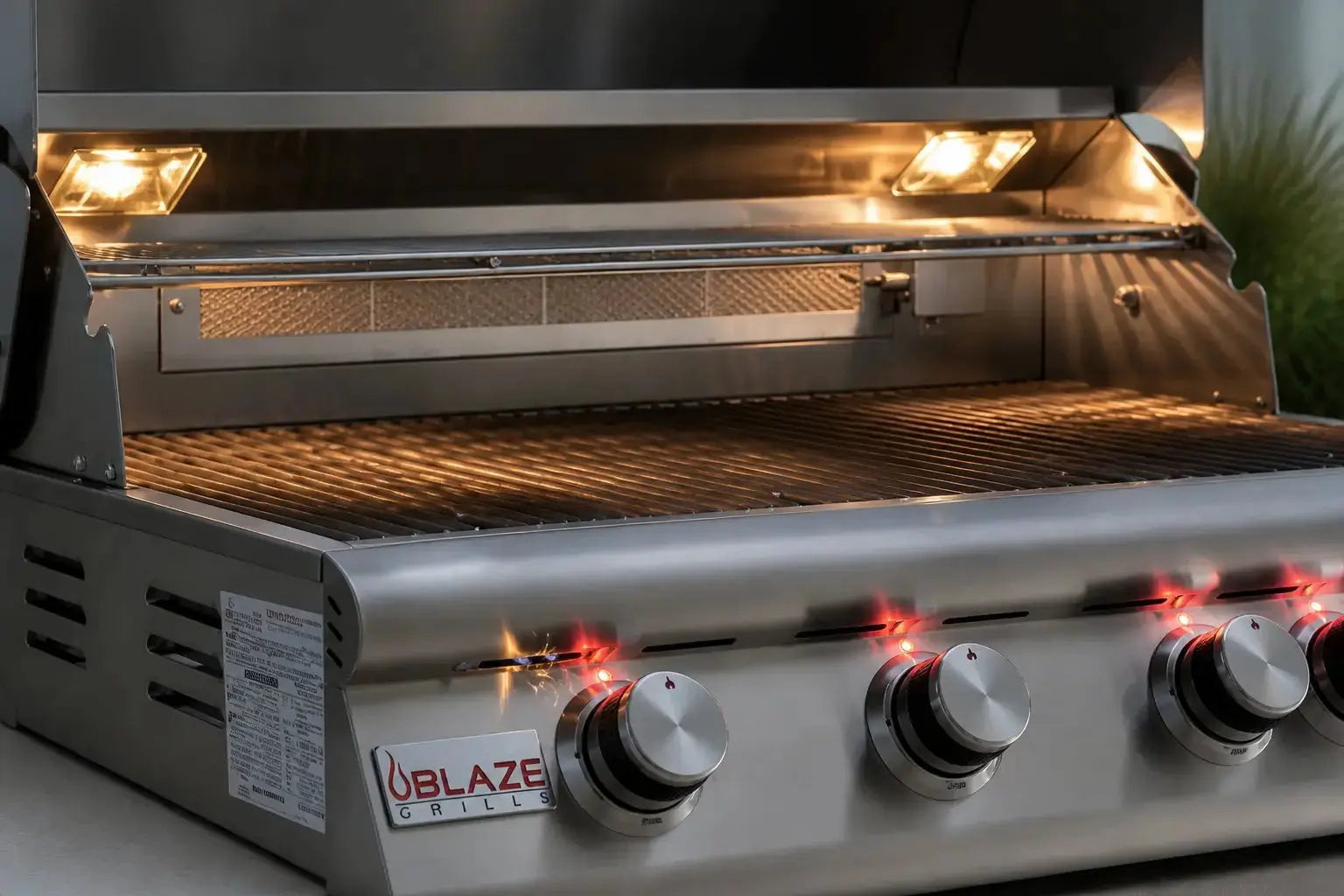
Your grill might use a piezo igniter (no battery) or a battery-powered ignition module. Press the button and look for a blue spark near the burner. You should also hear a click.
No spark? If it's an electronic igniter, check the batteries first and swap in fresh AAs. Clean the electrode tip with a wire brush or steel wool to remove grease and rust. The gap between the electrode and burner should be about as wide as a dime.
Make sure the wire from the igniter to the electrode isn't loose or damaged. If it's cracked or broken, you'll need a new igniter. Most replacements run $15–$30 and snap in easily.
Turn off the gas completely, then pull out the cooking grates and heat deflectors to reach the burner tubes underneath.
Check the small holes (ports) along each tube. Grease, rust, or spider webs can block them. Scrub the outside with a wire brush, then poke through each port with a straightened paperclip or small wire.
For a thorough clean, remove the burner tubes completely. Shine a flashlight inside and use a bottle brush or flexible wire to clear out debris. Shake them to get rid of any loose bits before reinstalling.
Spiders love to nest in burner tubes during winter storage. Always check and clear burner tubes before your first spring cookout to avoid blockages and flare-ups.
Bull grills are built to last and light up every time. Explore our full range of Bull outdoor grills and see why they're a favorite for serious backyard cooks.

At some point, repairs just aren't worth it — especially if your grill's old or the main parts are shot. You can keep it limping along with manual lighting, but sometimes it's smarter to just upgrade.
Open the grill lid fully to let any built-up gas escape before attempting to light it manually. Never try to light a closed grill — gas can accumulate and cause a dangerous flare-up.
Turn on the gas at the tank and set one burner knob to low or light. Wait just a few seconds — you don't want gas building up while you get the lighter ready.
Hold a long-reach lighter through the grates near the burner holes and press the button. Once the first burner catches, turn on the others — the flame will spread naturally.
Always keep a long lighter in your grill toolkit, even after you fix the igniter. Manual ignition works as a backup, but if you're doing it every time, it's a sign your grill needs attention — or replacing.
When the grill's main parts are damaged, repairs can cost more than buying new. Watch for these warning signs:
Add up repair costs before buying parts. If they're more than half the price of a new grill, just replace it. Grills over 10 years old with multiple problems rarely make sense to fix — other parts are likely to fail soon anyway.
Measure your space first, then decide: propane tank or natural gas? Propane's portable, but natural gas means no more tank refills if you've got a line already.
| Feature | Best For |
|---|---|
| Multiple burners | Cooking different foods at varied temperatures |
| Side burners | Preparing sauces and sides outdoors |
| Built-in thermometers | Monitoring heat without lifting the lid |
| Stainless steel construction | Durability in wet climates |
Your budget should fit how often you grill. If you're just grilling on weekends, you'll find solid choices in the $300–$600 range. If you grill all the time, those $800+ models with better heat control and long warranties are worth it.
Check reviews — especially for ignition reliability and burner performance. Brands that sell replacement parts easily are a smart pick, since even the best grills need a little upkeep over time.
Ready to stop fussing with a freestanding grill? Shop our selection of built-in grills and build a permanent outdoor cooking setup that performs every time.
Most gas grill ignition problems come down to a few simple culprits: low gas, a worn igniter, or clogged burners. Work through the checks in this guide and you'll have your grill firing up again in no time.
That said, if you're constantly troubleshooting an old grill, it might be time to upgrade to something more reliable.
For more help keeping your outdoor cooking setup in top shape, check out our guide on common outdoor kitchen repairs and learn how to handle the most frequent issues before they become bigger problems.
Grill ignition problems tend to spark the same questions. Here's what most folks want to know about lighting issues, backup cooking methods, and manual ignition.
Start by checking if your propane tank has gas, then inspect the igniter button and electrode for clicks, dead batteries, or corrosion. Clean the burner ports with a wire brush or paperclip to clear out any debris, spider webs, or food buildup. Finally, brush soapy water on every connection between the tank and grill and watch for bubbles — which means gas is escaping and needs to be fixed before you light up.
Most of the time, a gas grill won't start because the propane tank is empty or running low — check the gauge first and swap it out if needed. If the tank is fine, the igniter may have dead batteries, damaged electrodes, or a loose connection worth inspecting. Also check that both the tank valve and grill valve are fully open, since restricted flow is a common and easy fix.
Open the lid fully before attempting to light anything, then turn both the propane tank valve and grill valve to open. Hold a lit long match or long-reach lighter near the burner before turning any knobs. Turn the first burner knob to high while keeping the flame close, and once it catches, use it to light the remaining burners.

As the outdoor living trend continues to thrive, you may be wonder...

How to transform your outdoor space in 5 steps to...