Learning how to season a flat top griddle for the first time is one of the most important steps you can take before cooking on it.
Skipping this process means food will stick, rust can set in, and your griddle won't last as long as it should. Seasoning creates a protective, non-stick coating by bonding oil to the metal surface through heat — and it's easier than most people think.
Browse our collection of flat top griddles and find the perfect griddle for your backyard setup.

The oil you use for the first seasoning really affects how tough and non-stick your griddle will be. You want something with a high smoke point that can handle the heat and polymerize properly.
Avocado oil is the top choice for most people. With a smoke point around 520°F, it stands up to the heat and forms a hard, durable layer without leaving weird flavors behind.
Flaxseed oil is also a strong contender if you want a super-tough finish. It's pricier, and if you lay it on too thick it can flake off — but it creates a genuinely hard surface.
Grapeseed oil is another solid pick, with a smoke point near 420°F. It's easy to find and gives you a reliable seasoning layer.
| Oil | Smoke Point | Best For | Notes |
|---|---|---|---|
| Avocado Oil Top Pick | ~520°F | All-purpose seasoning | Hard, durable, no flavor transfer |
| Flaxseed Oil | ~225°F | Hardest finish | Can flake if applied too thick |
| Grapeseed Oil | ~420°F | Everyday seasoning | Easy to find, reliable results |
| Olive Oil | ~375°F | ❌ Not recommended | Smoke point too low for seasoning |
| Butter | ~300°F | ❌ Not recommended | Save for cooking, not seasoning |

Having the right gear makes seasoning a flat top griddle easier and helps you get a better non-stick finish. Most of this stuff is already in your kitchen or easy to grab at a hardware store.
A well-seasoned griddle needs a solid surface to live on. Explore our outdoor kitchen countertops built to handle heat, weather, and years of outdoor cooking.

Before you whip up your first meal, you've got to prep that new griddle. The initial cleaning gets rid of factory residue, and the oiling process builds up layers that make cooking way easier.
New griddles come with a protective coating from the factory — you have to get rid of this before you start seasoning.
Mix warm water with a splash of dish soap and wipe down the surface with a soft cloth. This is the one and only time you should use soap on your griddle.
Rinse off all the soap with clean water. Any leftover soap will interfere with the seasoning process and prevent proper bonding.
Dry the griddle well with paper towels or a clean cloth. Turn the burners to low for a few minutes to evaporate any lingering moisture. The surface must be totally dry before seasoning begins.
Crank all burners to high and let the griddle heat up for 10–15 minutes. You'll see the surface start to darken — totally normal and a good sign the metal is ready for oil.
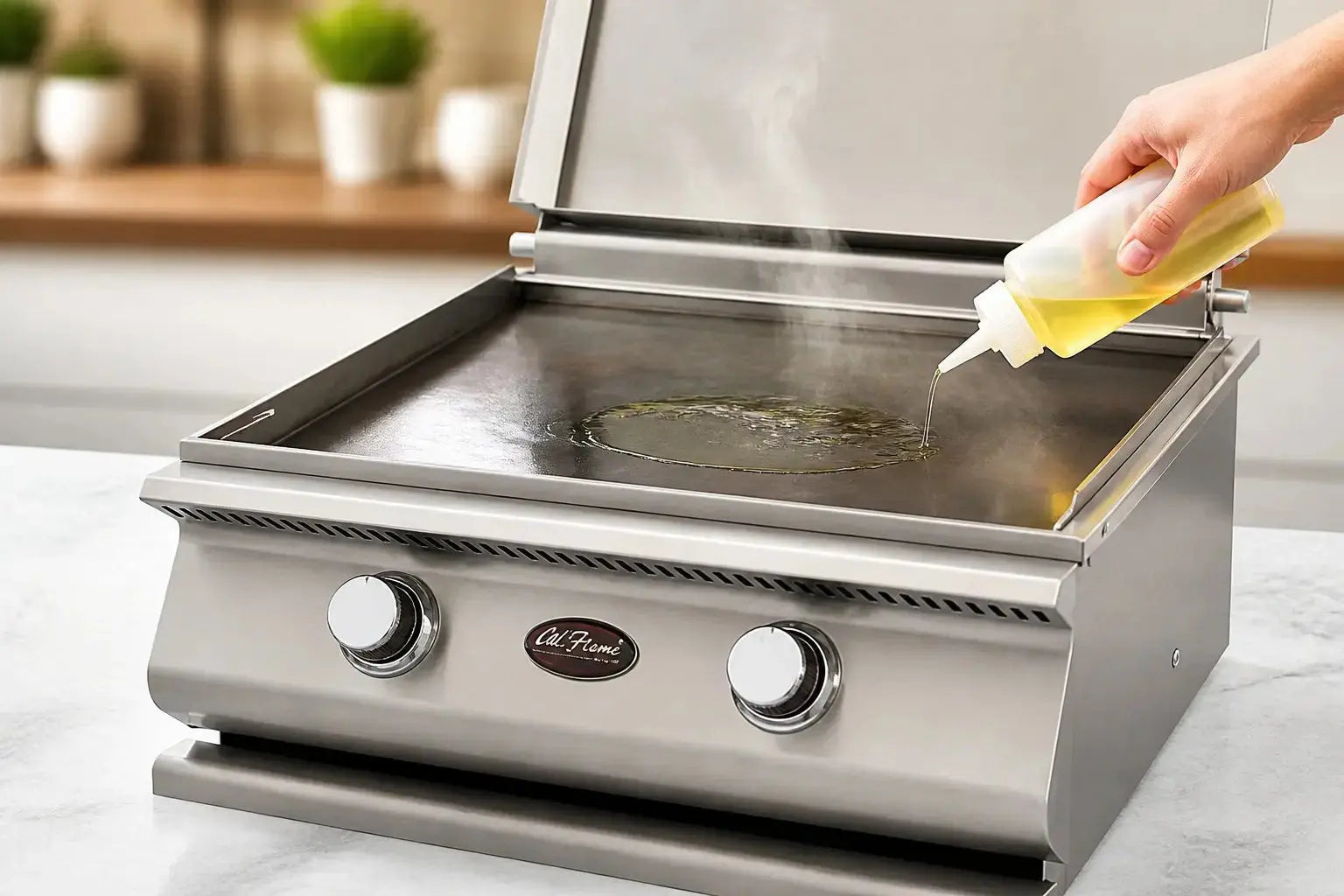
Use paper towels held in tongs or gloves to spread a very thin layer of oil across the entire surface. Spread it almost like you're wiping it off — if you leave puddles, you'll get sticky spots that can chip off later.
The griddle will smoke for about 10–15 minutes as the oil bonds to the metal. Once the smoke stops, that layer is done. Turn off the burners and let the surface cool slightly before the next coat.
One layer isn't enough. Repeat the oiling and heating process 3–4 times during your first session. Each coat makes the surface darker and more non-stick. When finished, the surface should look deep brown or black.
After the last layer, wipe on a thin coat of oil once the griddle is cool. This helps prevent rust while it's sitting unused. Every meal you cook going forward will keep improving the seasoning naturally.
To keep your flat top grill's seasoned surface in top shape, you've got to clean it right and re-season as needed. Do this, and your griddle will last for years.
Clean the griddle while it's still warm after cooking. Scrape off food bits with a metal spatula or scraper, then pour a little water on the surface to help loosen anything stuck on.
If you start noticing food sticking or rust spots popping up, it's time to re-season. The surface
If you start noticing food sticking or rust spots popping up, it's time to re-season. The surface might look dull or patchy instead of glossy and dark.
Use a metal scraper to remove any loose rust or flaking seasoning. For stubborn spots, try a grill stone or steel wool to get back to a clean surface.
Heat the griddle on high for 15 minutes to burn off any leftover gunk. This preps the surface to accept new layers of oil properly.
Follow your original seasoning steps: thin coats of high smoke point oil, letting each one smoke off before adding the next. Repeat 3–4 times until the surface is dark and shiny again.
The edges and corners usually lose their seasoning first. Pay extra attention to these areas when re-seasoning to keep full coverage across the entire cooking surface.
Looking to add a flat top griddle to your outdoor setup? Shop our full lineup of outdoor kitchen appliances and find everything you need to cook outside like a pro.
Seasoning a flat top griddle for the first time doesn't have to be complicated. A few thin coats of oil, some patience with the heat, and you'll have a surface that cooks better with every use.
Keep up with basic maintenance after each cook and re-season when needed. The more you use your griddle, the better the seasoning gets.
Ready to get more out of your outdoor cooking setup? Check out our guide on outdoor kitchen entertaining for ideas on how to make the most of your backyard space.
Seasoning a flat top griddle means heating thin coats of oil until they turn into a non-stick layer. The best oils have high smoke points — think avocado or flaxseed — and you'll want 3–4 coats for the first seasoning.
Turn all burners to high and heat the griddle for 10–15 minutes to burn off any factory residue. Once the smoke dies down, let it cool until warm, then wipe on a thin layer of oil with a paper towel held in tongs. Turn the heat back up and let the oil smoke out completely — about 10–15 minutes — then repeat this process 3–4 times until the surface looks dark and slightly glossy.
Yes, you really do. Cold-rolled steel griddles are porous and will rust if left unprotected, and seasoning fills those pores with polymerized oil to stop rust and prevent sticking. Most griddles aren't truly pre-seasoned from the factory, so it's worth doing a full season yourself regardless.
Avocado oil is the top choice for most people thanks to its high smoke point and clean polymerization. Flaxseed oil creates the hardest coating but can flake if applied too heavily. Skip olive oil entirely — the low smoke point and flavor transfer make it a poor fit for seasoning.
Grab a high-heat cooking oil, paper towels, and heat-resistant tongs or a seasoning pad. Spread the oil in the thinnest layer possible — barely visible — since going too heavy leaves a sticky, uneven coating. Crank the heat after each coat and wait for the smoke to fully die down before adding the next layer.

As the outdoor living trend continues to thrive, you may be wonder...

How to transform your outdoor space in 5 steps to...