The Best Outdoor Kitchen Cabinet Materials Compared 2026

 The Best Outdoor Kitchen Cabinet Materials Compared 2026
Expert Guide · 2026 Edition

Picking the right outdoor kitchen cabinet materials matters more than most homeowners realize. The cabinets are the structural backbone of your outdoor kitchen.

They hold up the countertop, protect appliances, and face every season of weather for years on end. The wrong material rusts, warps, swells, fades, or rots within a couple of summers. The right material lasts 20+ years with almost no upkeep.

This guide breaks down the six main options, what each is actually made of, and which one fits your patio, climate, and budget, so you make the call once and never need to revisit it.

Key Takeaways
  • 304 stainless steel is the gold standard: strong, rust-resistant, and professional.
  • 316 marine-grade stainless is the mandatory upgrade for coastal homes.
  • HDPE (High-Density Polyethylene) is the maintenance-free polymer choice that won't fade.
  • Powder-coated aluminum is a lightweight, corrosion-proof alternative to stainless.
  • Masonry (block, brick, stone) is the most permanent but most expensive option.
  • Avoid wood cabinets entirely—even cedar and teak eventually warp, rot, or split outdoors.
  • Visible finishes matter, but the hidden structural frame (galvanized steel or aluminum) is what carries the load.

What Outdoor Kitchen Cabinet Materials Actually Need to Do

Before comparing materials, here is what your cabinets need to handle. The right material checks every box:

  • Weather: Rain, snow, hail, humidity, and freeze-thaw cycles.
  • UV Exposure: Direct sunlight breaks down most plastics, paints, and finishes.
  • Heat: Cabinets sit right next to a 500°F+ grill and must tolerate radiant heat.
  • Salt and Pollutants: Coastal homes deal with salt air; city homes face acid rain.
  • Pests: Termites, ants, and rodents shouldn't be able to chew through the structure.
  • Daily Use: The structure must support the massive weight of countertops while doors and drawers function smoothly.

The 6 Main Outdoor Kitchen Cabinet Materials

1
Stainless Steel (304 and 316 grades)

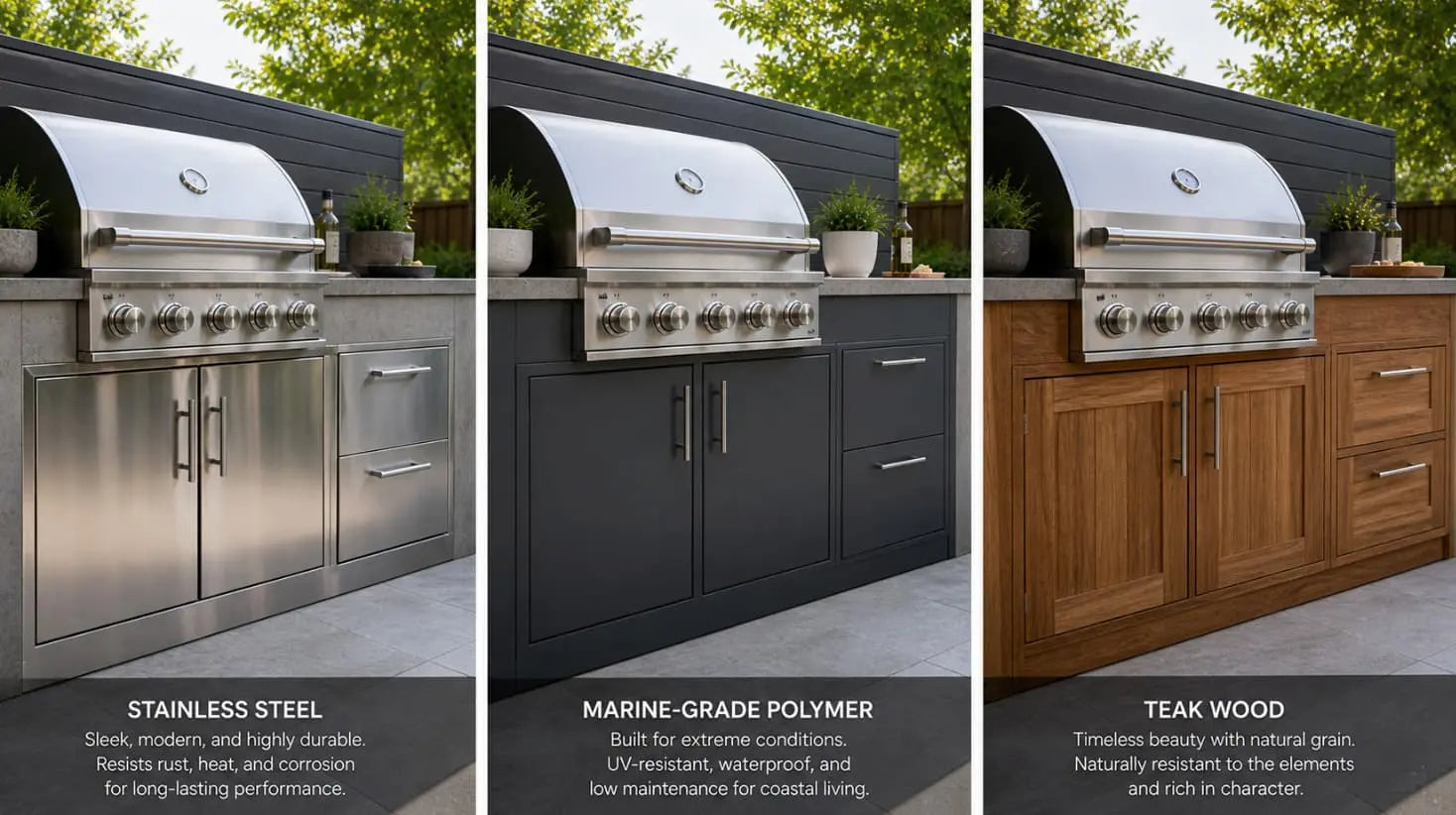
Steel alloyed with chromium and nickel for corrosion resistance. 304 is standard; 316 has added molybdenum (2 to 3 percent) for salt-air resistance.

Stainless Steel (304 and 316 grades) outdoor cabinets

  • Pros: Excellent corrosion resistance, handles intense heat, strong and durable, professional look, 20-30 year life.
  • Cons: Heats up in direct sun, shows fingerprints, high cost ($300 to $600+ per linear foot).

Best for: Most outdoor kitchens, especially in moderate climates and shaded patios.

2
Powder-Coated Aluminum

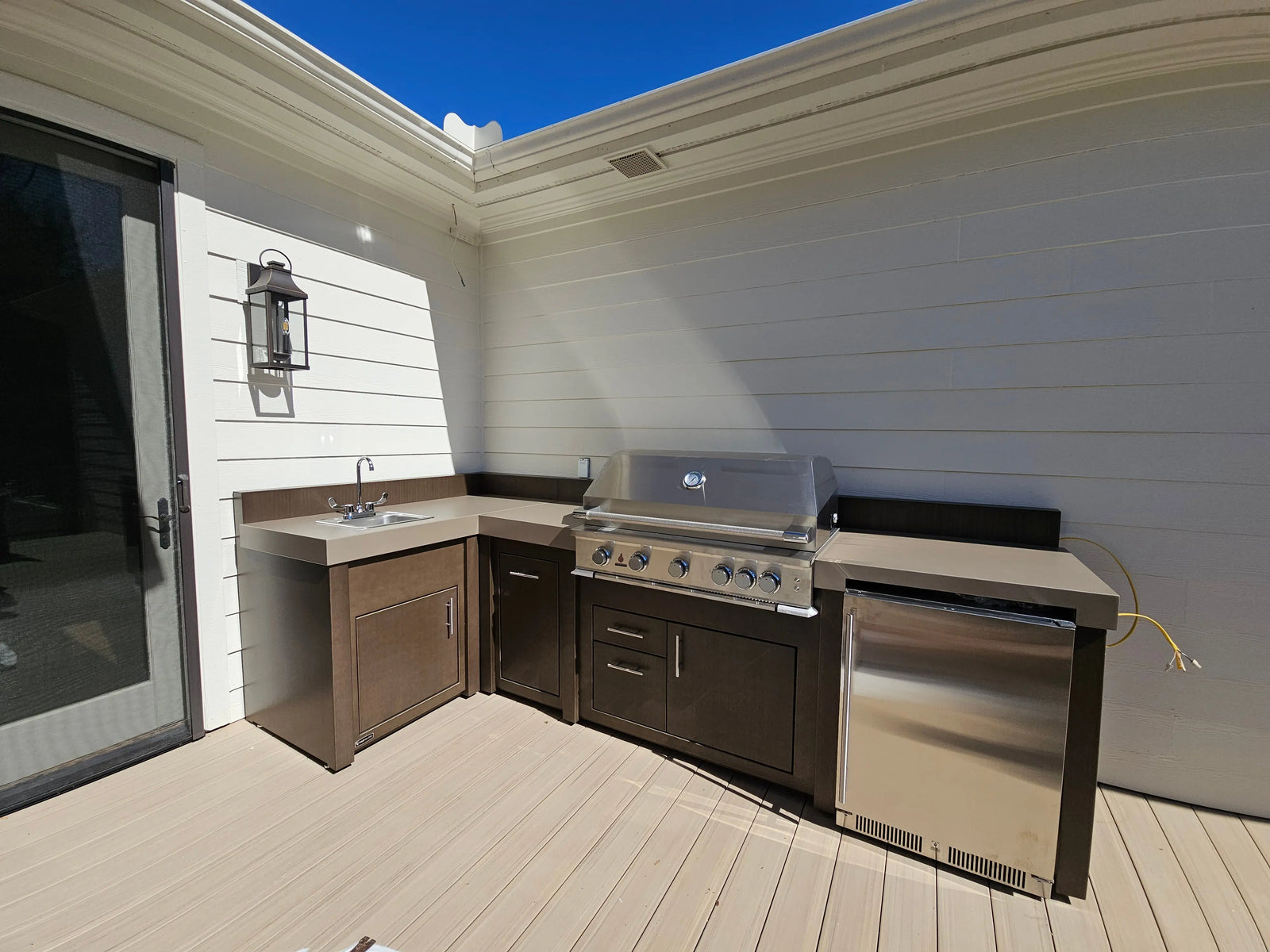
Aluminum sheet metal coated with a baked-on polymer powder for color and weather protection.

Powder-Coated Aluminum Kitchen Cabinets

  • Pros: 100% corrosion-proof (never rusts), lighter and cheaper than stainless ($200 to $400 per linear foot), wide color range.
  • Cons: Dents easier than steel, powder coat can chip over years, less premium look than polished stainless.

Best for: Mid-range builds where you want the corrosion resistance of metal at lower cost.

3
HDPE (High-Density Polyethylene)
HDPE (High-Density Polyethylene

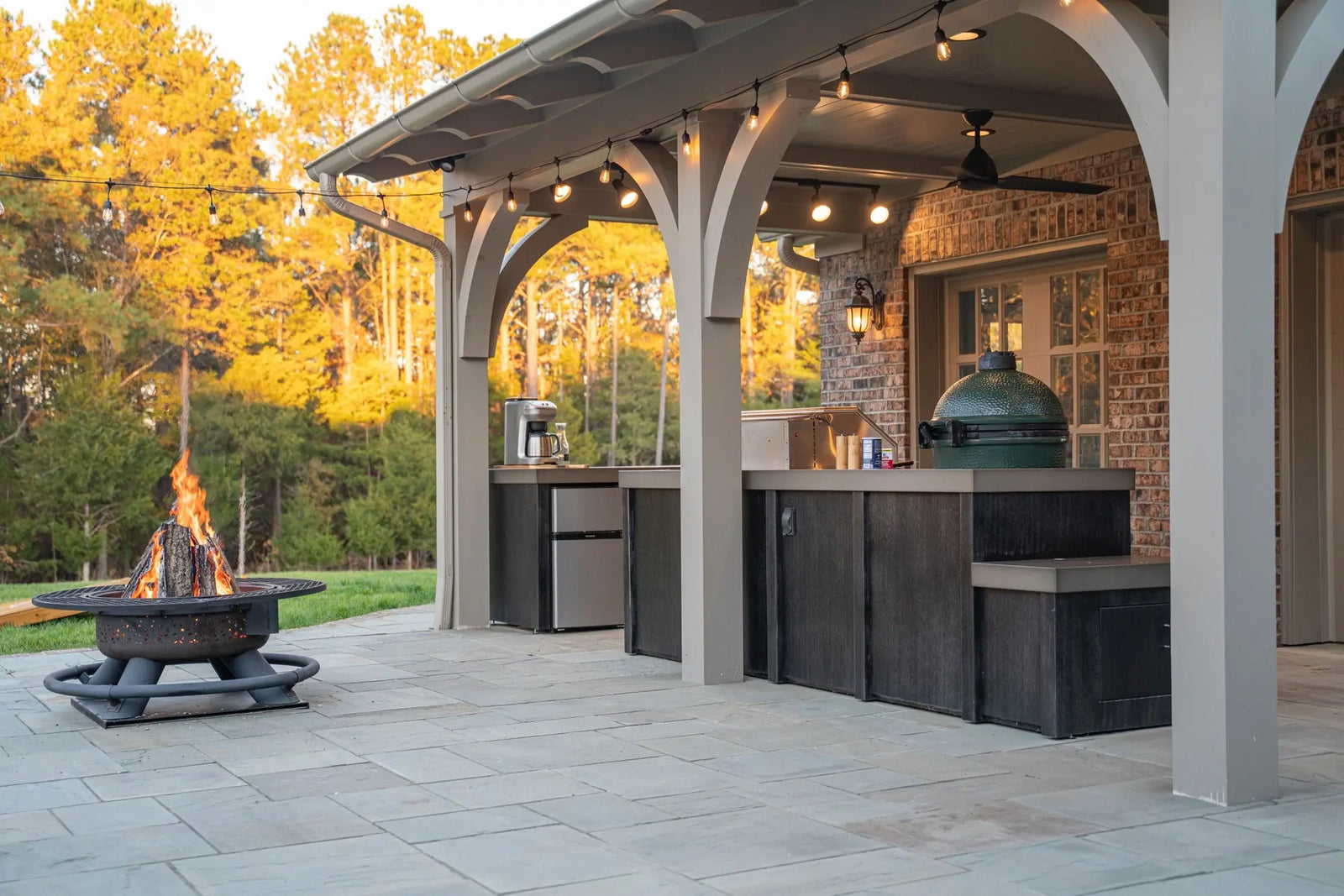
A dense polymer used in marine docks. Typically 3/4 inch thick with color throughout the material.

  • Pros: Completely waterproof, UV-stable, no sealing required, resists insects, 20-30 year life.
  • Cons: Can warp from extreme heat (requires insulated grill jackets), more expensive than PVC.

Best for: Homeowners who want a maintenance-free, weatherproof option that looks good for decades.

4
Masonry (Block, Brick, Stone)

Built from concrete blocks often finished in stucco, tile, or stone veneer. The traditional method.

  • Pros: Most permanent (50+ years), fire-resistant, thermal mass holds heat, strongest base for heavy stone counters.
  • Cons: Most expensive ($5,000 to $15,000+), permanent (cannot be moved), long install time (2-4 weeks).

Best for: Forever-homes and luxury traditional designs.

5
PVC (Polyvinyl Chloride)
Modern PVC Outdoor Kitchen

A rigid plastic polymer often used as a budget-friendly alternative to HDPE.

  • Pros: Cheapest outdoor option ($150 to $300 per linear foot), waterproof, easy to clean.
  • Cons: Less UV-stable (can fade), can warp from heat, shorter life span (8-15 years), not eco-friendly.

Best for: Budget builds or kitchens under permanent overhead cover.

6
Treated Wood (Cedar, Teak, Ipe)
Treated Wood Cabinets

Hardwood or pressure-treated softwood designed to resist rot. Natural look but high maintenance.

  • Pros: Natural look, renewable material, easy for DIY builds.
  • Cons: Susceptible to insects, eventually warps or rot, shortest life (5-12 years), combustible.

Best for: Almost no outdoor kitchen. Choose HDPE or aluminum wood-grain finishes instead.

How Climate Affects Your Decision

Climate Top Pick Second Choice Avoid
Hot, sunny (AZ, TX, FL) HDPE or Aluminum 304 Stainless Wood, dark stainless
Cold winter (Northeast, MW) 304 Stainless Masonry PVC, wood
Coastal (within 5 mi) 316 Marine Stainless Marine HDPE 304 stainless, regular aluminum
Humid (South, Gulf) HDPE or 316 Stainless Aluminum Wood, untreated metal
Dry/arid (Mountain West) 304 Stainless HDPE Wood
Mild (PNW, Mid-Atlantic) 304 Stainless or HDPE Aluminum Wood without cover
💡
Expert Tip The biggest factor is salt air. Coastal homes within 5 to 10 miles of salt water need 316 marine-grade stainless or marine HDPE. Regular 304 stainless will develop "tea staining" (cosmetic rust spots) near salt.

What About Cabinet Doors and Drawer Slides?

The cabinet body is only half the story. Hardware needs to be just as outdoor-rated:

  • Drawer Slides: Use 304 stainless ball-bearing slides. Avoid standard steel or zinc plated slides that rust in one season.
  • Hinges: 304 stainless concealed hinges are standard. Use solid brass for coastal homes. Avoid plain steel.
  • Handles: Choose stainless steel, brass, or powder-coated zinc. Avoid chrome-plated steel.

What Most Prefab Kitchens Use

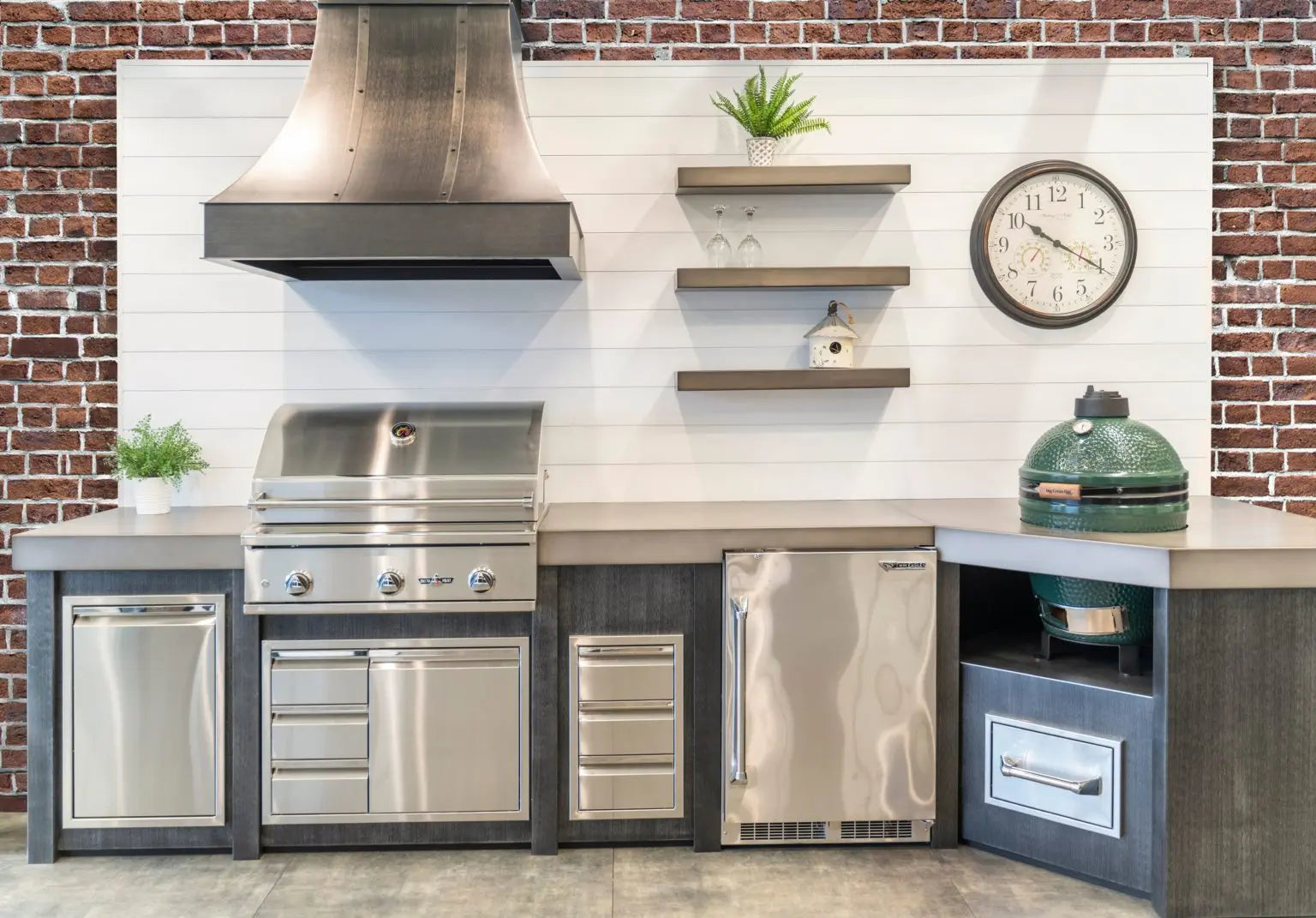
In a prefab kitchen, the visible "cabinet" is often a finish (stucco, stone veneer) over a hidden structural frame. The frame carries the load.

  • Galvanized Steel Tube: Strong, rust-resistant, used in Mountain Series kitchens.
  • Aluminum Framework: Used in Designer Series; lighter, modular, and 100% corrosion-proof.
  • Concrete-board over Steel: Common in mid-range prefab BBQ islands.

Knowing this helps when you compare options. Two kitchens that look the same on the outside can have very different frames inside. Always ask the manufacturer what the actual structural material is, not just the finish.

💡
Expert Tip For a comparison of how different prefab kitchens are built, the Prefab BBQ Islands collection on BetterPatio shows the full range of construction methods at different price points.

What to Look For When Comparing Materials

When you are shopping, check these specific specs:

  • Rated for outdoor use: Verify it is not an indoor cabinet labeled as "patio."
  • Material thickness: HDPE should be 3/4 inch; Stainless should be at least 18 gauge.
  • Warranty: Look for at least 5 years; best brands offer 10 years to lifetime.
  • Fire rating: Check required clearance and if an insulated jacket is needed for the grill.

Frequently Asked Questions

What is the best material for outdoor kitchen cabinets?

The best material for outdoor kitchen cabinets for most homeowners is 304 stainless steel. It handles heat, weather, and UV exposure with no fading or rust under normal conditions, holds heavy countertops, and lasts 20 to 30 years with minimal maintenance. For coastal homes within 5 to 10 miles of saltwater, upgrade to 316 marine-grade stainless. For homeowners who want zero maintenance and a wider color range, HDPE marine-grade polymer is the runner-up. Powder-coated aluminum is the best mid-range choice. Avoid pure wood cabinets in any outdoor kitchen, even cedar or teak.

Can you use indoor cabinets for an outdoor kitchen?

No, you cannot use standard indoor cabinets for an outdoor kitchen. Indoor cabinets are typically made from particleboard, MDF, or untreated wood that swells, warps, or rots within a single rainy season outdoors. Even the moisture-resistant indoor cabinets sold for bathrooms are not built for direct rain, snow, freeze-thaw cycles, or UV exposure. Outdoor kitchens require cabinets specifically rated for outdoor use, made from stainless steel, marine-grade HDPE, powder-coated aluminum, masonry, or marine-grade PVC. Using indoor cabinets outside is the most common mistake we see and almost always leads to expensive replacement within 1 to 2 years.

Is HDPE or stainless steel better for outdoor kitchens?

HDPE and stainless steel are both excellent choices for outdoor kitchens but suit different needs. Stainless steel (304 or 316 grade) is stronger, holds very heavy countertops better, has the most premium professional look, and handles heat near grills without issue. HDPE marine-grade polymer is completely maintenance-free, will not rust, comes in more colors, weighs less, and never needs sealing or refinishing. Stainless is the better pick for high-end builds, kitchens with stone countertops, and traditional designs. HDPE is the better pick for low-maintenance setups, homes near saltwater, and homeowners who want a wide range of color or wood-grain finishes.

How long do outdoor kitchen cabinets last?

Outdoor kitchen cabinets last anywhere from 5 to 50+ years depending on the material. Treated wood cabinets typically last 5 to 12 years before needing replacement, even with regular sealing. PVC cabinets last 8 to 15 years before fading or warping. Powder-coated aluminum runs 15 to 25 years. HDPE marine-grade polymer lasts 20 to 30 years with no maintenance. 304 stainless steel lasts 20 to 30 years, with 316 marine-grade hitting 25 to 35 years. Masonry cabinets (concrete block, stone, brick) can last 50+ years with no replacement, only occasional sealing. Annual cleaning and proper covering between seasons extends life for any material.

Do outdoor kitchen cabinets need to be sealed?

It depends on the material. Stainless steel, HDPE, PVC, and powder-coated aluminum cabinets do not need to be sealed. They only need occasional cleaning with mild soap and water. Masonry cabinets (concrete block, stone, brick) benefit from sealing every 1 to 3 years to prevent water absorption and freeze-thaw damage. Wood cabinets (even cedar or teak) need full sealing or refinishing every 1 to 3 years to prevent rot, warping, and graying. The hardware (hinges and drawer slides) on any outdoor cabinet should be 304 stainless or better, and a light wipe-down with stainless cleaner once or twice a year keeps it running smoothly.
Wrapping up

Choosing the right outdoor kitchen cabinet material saves you time, money, and frustration. For most homes, 304 stainless steel is the safest all-around choice because it holds up well against heat and weather. HDPE is a solid upgrade if you want zero maintenance and more color options, while powder-coated aluminum works if you’re on a tighter budget.

Masonry is the long-term, built-to-last option. It’s best to avoid wood and cheap PVC unless your setup is fully covered.

Most problems come from focusing on looks instead of specs, using indoor cabinets outdoors, or overlooking hardware quality. Even a good cabinet won’t last if the hinges and fittings are low-grade.

If you’re unsure, go with the more durable option. The price difference is small over time, but the reliability makes a big difference.


Keep reading