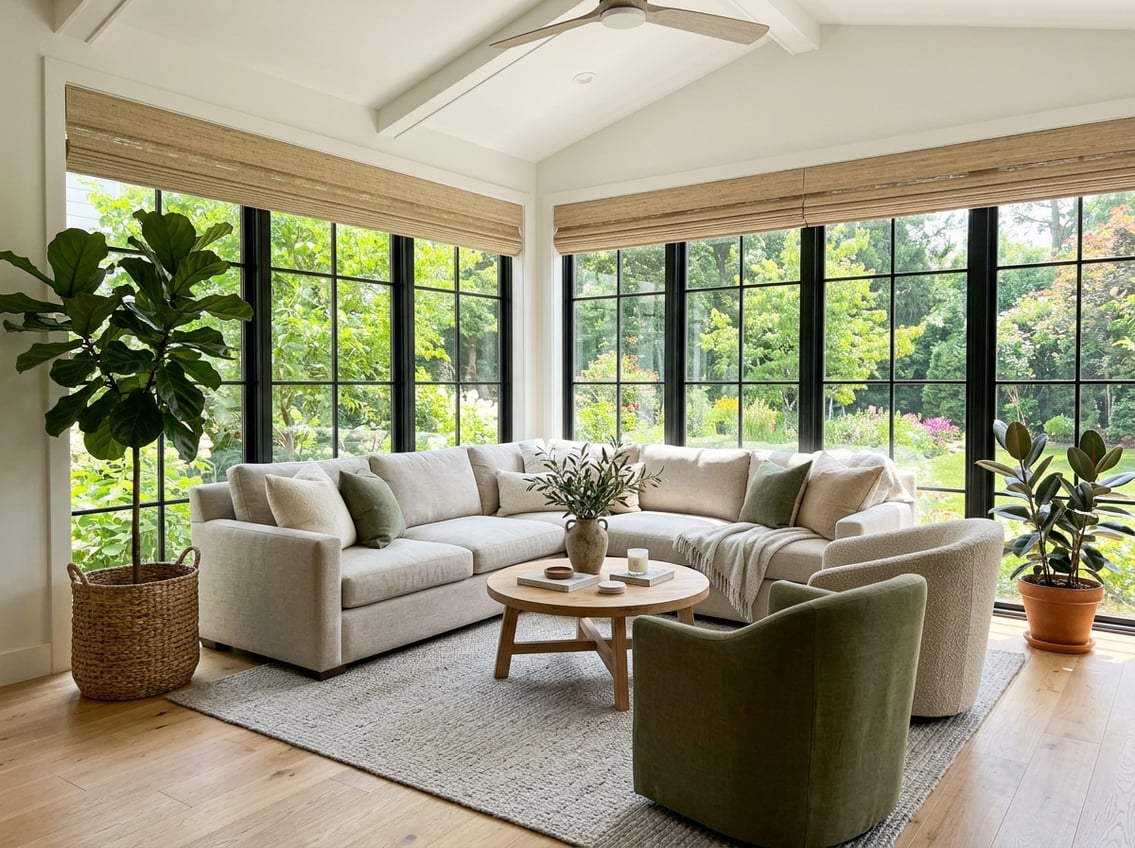
Learning how to layout sunroom furniture for maximum comfort starts with understanding how your space actually works — where the light falls, how people move through the room, and what you want the space to do.
Most sunrooms get cluttered fast when furniture is placed without a plan. Too much in a small space feels cramped. Too little in a large one feels cold and unfinished. This guide walks you through how to measure, zone, and arrange your sunroom furniture so every seat gets the light, the view, and the comfort it deserves — no matter the size or shape of your space.

Before you haul in any furniture, grab a tape measure and get a sense of how light moves through the space during the day. Breaking the room into zones for different activities helps you use every bit of it.
First, measure the length and width of your sunroom and jot down the numbers. Note where doors, big windows, and any built-ins are — they'll all affect where furniture can go.
Check the height of your windows so you know what can fit underneath without blocking sunlight. Leave at least 30–36 inches between pieces for walking room. Sketch a simple floor plan with these measurements before you buy or move anything around.
Lay down painter's tape to mark out big pieces like sofas or tables. It's a quick way to see what fits and tweak things before moving heavy furniture.
The windows are the star of the show, so set up your furniture to take in the views and soak up the light — just don't create glare or hot spots. Put your favorite morning chair near east-facing windows to catch sunrise. Skip tall or bulky furniture that blocks the glass or throws big shadows.
Sheer curtains or solar shades let you control the light as the day changes. These filter harsh sun without making the room feel gloomy. Solar shades, especially, keep things cooler without shutting out the daylight.
Split your sunroom into spots for what you actually do there. A reading nook needs a comfy chair and good light; a dining area needs a table and space for chairs to pull out.
In small sunrooms, pick furniture that does double duty. Storage ottomans hold blankets and work as seats. A console behind the sofa gives you a place for drinks or plants without eating up floor space.
Lay out each zone based on your daily routines. Keep main walkways open and put quieter activities away from the entry. Each area should feel separate but still flow together — nobody wants to dodge around barriers just to cross the room.

The shape of your sunroom really decides how the furniture should flow. Narrow rooms need furniture that hugs the walls, while bigger spaces let you create zones with more flexibility.
In tight sunrooms, push furniture against the walls to keep the middle open for walking. It just feels less cramped that way.
Try a daybed along one wall for lounging without blocking the path. A drop-leaf table nearby folds down when you don't need it. Built-in seating under the windows uses every inch and adds a spot to stash cushions or books.
Keep things low so you don't cut off the view. A bistro table with a couple of chairs tucked in a corner is perfect for coffee. Skip oversized sofas or chunky tables — they'll just make the room feel smaller.
Only bring in pieces that really earn their keep. In small rooms, less is more. Furniture with legs (not skirts) helps the space look airier, too.
Big sunrooms need different areas or else they feel empty. Split the room into zones for whatever you do most, instead of lining everything up along the walls.
Float a sofa and lounge chairs in the center for conversation. Use a rug to pull this area together. Set up a bistro table by the windows for meals or working — now you've got two spots without building walls.
Position daybeds parallel to the windows so you face the view while lying down and keep both ends open for walking. Add a side table close by for books or drinks.
Leave about three feet between groups so people can move around. Round tables work well in big sunrooms — they soften the look and make it easier to get by. A drop-leaf table is handy for guests but stays small when you don't need it.
L-shaped sunrooms have corners that are perfect for built-in seating or a sectional. Wrap a bench around two walls and put a table in front — it's cozy and leaves the rest of the space open.
Angle lounge chairs in the corners for a softer, more inviting nook. Drop a side table between two chairs to share. A daybed fits nicely in the short leg of an L-shape, giving you a little retreat that's still part of the room.
Use a corner for a bistro table set so you catch light from both sides. Just don't wedge big furniture into corners where it blocks windows or makes the space hard to reach.
Looking for the perfect accent chair to complete your layout? Explore our sunroom lounge and occasional chairs for styles that work in any sunroom setup.
The furniture you pick makes or breaks the sunroom — it's got to look good, feel good, and stand up to the conditions. Aim for pieces that balance durability with your style and how you actually use the space.
Seating sets the vibe for the whole room. Wicker and rattan are great — they handle humidity and temperature swings and add a natural, relaxed texture. Rattan chairs are easy to move if you need to chase the shade or make space for guests.
Performance fabrics resist fading and moisture better than regular upholstery. If your sunroom gets hot or lots of sun, go for these on cushions and pillows. Deep sofas with big, soft cushions are just inviting — you'll want to hang out longer.
Storage ottomans are a win — they're footrests, extra seats, and stash spots all in one. Nesting tables don't take up space until you actually need them for snacks or drinks.
| Furniture Type | Best For | Key Feature |
|---|---|---|
| Wicker / Rattan Chairs | Humidity & heat | Lightweight, movable |
| Deep Sofa | Lounging & comfort | Performance fabric cushions |
| Storage Ottoman | Small spaces | Footrest, seat & storage |
| Nesting Tables | Flexible use | Space-saving when not in use |
| Daybed | Narrow or corner spots | Lounging with a view |
The coffee table ties your seating together, but make sure it fits the space and leaves room to walk. Keep it within easy reach of each seat. Pick materials that can handle sun and a bit of moisture — plants and drinks happen.
Side tables should be about level with your sofa arms so you can grab a book or set down a mug. Wood brings warmth, while metal or stone are tough against the elements. If your sunroom doubles as a plant spot or reading corner, look for tables with built-in storage.
Layered rugs help define where you sit and add a soft feel underfoot. Natural fiber rugs take a beating, and outdoor rugs shrug off moisture and dirt. Make sure the rug is big enough so at least the front legs of your furniture sit on it.
Mix up your lighting — floor lamps for reading, sconces for general light, and maybe some string lights if you want a laid-back vibe for evenings.
Decorate with intention. Hang plants to save floor space and bring in some green. Floating shelves show off little collections without blocking windows. Don't overdo the accessories — the view outside is the main attraction, after all.
Want a cohesive look without the guesswork? Shop the Panama Jack Sanibel Collection for a complete sunroom style that ties everything together effortlessly.
A well-planned sunroom layout makes the difference between a room you actually use every day and one that just collects clutter. Get the measurements right, define your zones, and choose furniture that fits the light and the way you live.
Start with your largest piece, work outward, and leave enough space to move comfortably between zones.
The layout is just the beginning. For more inspiration on how to furnish and style your sunroom from the ground up, check out our full guide on sunroom furniture ideas and find the look that works for your space.
Here are some quick answers to layout questions — from combining sunrooms with living spaces to making big rooms feel useful.
Face your main seating toward the sunroom so both spaces feel connected and the light flows through naturally. Use a similar color scheme and furniture style to create a smooth visual transition between rooms. A console table or low shelf between the two areas defines each space without blocking the light.
Break a large sunroom into zones based on how you use the space — a sofa and chairs around a coffee table in one area, a dining spot with seating for four to six in another. Leave at least 36 inches between furniture groups so people can move comfortably. Rugs under each zone anchor the layout and keep the space from feeling scattered.
Choose weather-resistant furniture with wicker, rattan, or aluminum frames and performance fabric cushions that handle sun and temperature swings. Add plants along the windows and layer in throws, area rugs, and light curtains to control glare and add comfort. Use the space for activities that benefit from natural light — reading, morning coffee, or working from home.
Choose furniture that does more than one thing — storage ottomans, lift-top coffee tables, and benches with hidden compartments keep clutter down in smaller spaces. Leave at least 24 to 30 inches of walking clearance between pieces and avoid pushing everything against the walls. Add a floor lamp or table lamp so the space stays usable after the sun goes down.

As the outdoor living trend continues to thrive, you may be wonder...

How to transform your outdoor space in 5 steps to...