Sunrooms thrive when the right furniture balances comfort, durability, and natural light. The best sunroom furniture ideas combine weather-resistant materials with inviting designs that make the space feel like a natural extension of the home.
Whether a sunroom serves as a reading nook, casual dining area, plant sanctuary, or year-round living space, the furniture choices inside it define how well the room functions. Too often, homeowners treat sunrooms as afterthoughts, tossing in mismatched pieces from other rooms and wondering why the space never feels quite right. This article covers the most effective approaches to furnishing a sunroom, from material selection to layout strategies, so that every square foot earns its place.
Sunrooms occupy a unique position in the home. They receive more direct sunlight than standard rooms, often experience greater temperature swings, and sometimes have higher humidity levels, particularly in three-season designs. These conditions place specific demands on furniture that most standard living room pieces simply are not built to handle.
Prolonged UV exposure can fade upholstery, warp wood, and degrade foam cushions faster than most homeowners expect. A fabric sofa that looks perfect in a dim living room can show significant color loss within a single summer if placed near unfiltered south-facing glass. Similarly, solid wood pieces may crack or warp if the room heats up significantly during summer afternoons.
The practical solution is to choose furniture materials designed for high-light and variable-temperature environments. This does not mean the space has to look utilitarian. Today's market offers a wide range of indoor sunroom furniture that delivers the comfort and aesthetics of a traditional living room while holding up to the conditions a sunroom creates.
Key material considerations include:

A sunroom used primarily for morning coffee looks very different from one designed for evening entertaining or year-round plant cultivation. Defining the primary function of the space before purchasing a single piece of furniture prevents the common mistake of choosing items that look good individually but fail to serve the room as a whole.
Relaxation and Reading Rooms
For sunrooms focused on quiet leisure, comfort takes priority. Deep-seated lounge chairs, chaise lounges, and small loveseats with thick cushions create an inviting atmosphere. A side table or two keeps books, drinks, and reading glasses within reach. If the room is on the smaller side, investing in small sunroom furniture designed specifically for compact layouts can prevent the space from feeling cramped while still delivering a cozy feel.
Casual Dining and Entertaining
A bistro-style table with two to four chairs transforms a sunroom into a breakfast nook or casual dining area. Round or oval tables work especially well because they encourage conversation and take up less visual space than rectangular designs. Bench seating along one wall can increase capacity without cluttering the floor plan.
Year-Round Living Space Extensions
When a sunroom functions as a true extension of the main living area, a sectional sofa or a three-piece seating arrangement with a coffee table anchors the space like a second family room. These layouts benefit from an area rug that defines the seating zone and adds warmth underfoot, particularly in rooms with tile or concrete floors.
Plant Rooms and Greenhouses
When plants are a significant part of the sunroom's identity, furniture takes a supporting role. Waterproof or moisture-resistant materials become essential. Metal plant stands, stone or tile-topped tables, and slatted benches that allow water drainage are smart choices. Seating should be movable so it can shift as the plant collection grows or changes with the seasons.
| Material | Durability in Sunrooms | Best Style Match | Price Range | Fade Resistance |
|---|---|---|---|---|
| Resin Wicker | High | Coastal, Traditional | $$ | Good |
| Natural Wicker/Rattan | Medium | Bohemian, Casual | $ | Moderate |
| Teak Hardwood | Very High | Classic, Transitional | $$$ | Excellent |
| Aluminum Frame | Very High | Modern, Industrial | $$ | Excellent |
| Powder-Coated Steel | High | Modern, Farmhouse | $$ | Good |
| Upholstered (Solution-Dyed) | Medium-High | Traditional, Transitional | $$-$$$ | Good |
| Plastic/Resin | High | Casual, Utility | $ | Moderate |
Layout decisions determine how comfortable and functional a sunroom actually feels on a daily basis. Even with excellent furniture, a poor arrangement can block natural light, create awkward traffic flow, or make the room feel smaller than it is.
Start with the focal point. Every well-arranged room has a focal point, whether that is a garden view, a fireplace, or a television. In most sunrooms, the view outside the glass is the primary draw. Arrange the main seating so it faces or angles toward that view rather than turning away from it.
Maintain clear pathways. A minimum of 30 to 36 inches of walking space between furniture pieces keeps the room from feeling cluttered and allows easy movement. In sunrooms with glass doors leading to a patio, keeping those pathways clear is especially important.
Float furniture away from walls. Pushing all furniture against the perimeter is a common layout mistake. Pulling pieces toward the center of the room creates a more intimate conversation area and actually makes the space feel larger.
Use an area rug as an anchor. A rug defines the seating zone and prevents the arrangement from feeling like it is floating aimlessly in the room. In sunrooms with tile or stone floors, a rug also adds warmth both visually and physically.
Consider the sun's path. South-facing sunrooms receive intense afternoon light that can cause glare on screens or discomfort during certain hours. Positioning seating slightly to the side of the direct light path rather than directly in it improves daily comfort significantly.

The aesthetic direction of a sunroom's furniture tells visitors something about the homeowner's broader design preferences. Three styles dominate most American sunrooms: traditional wicker, modern minimalist, and transitional casual.
Traditional Wicker
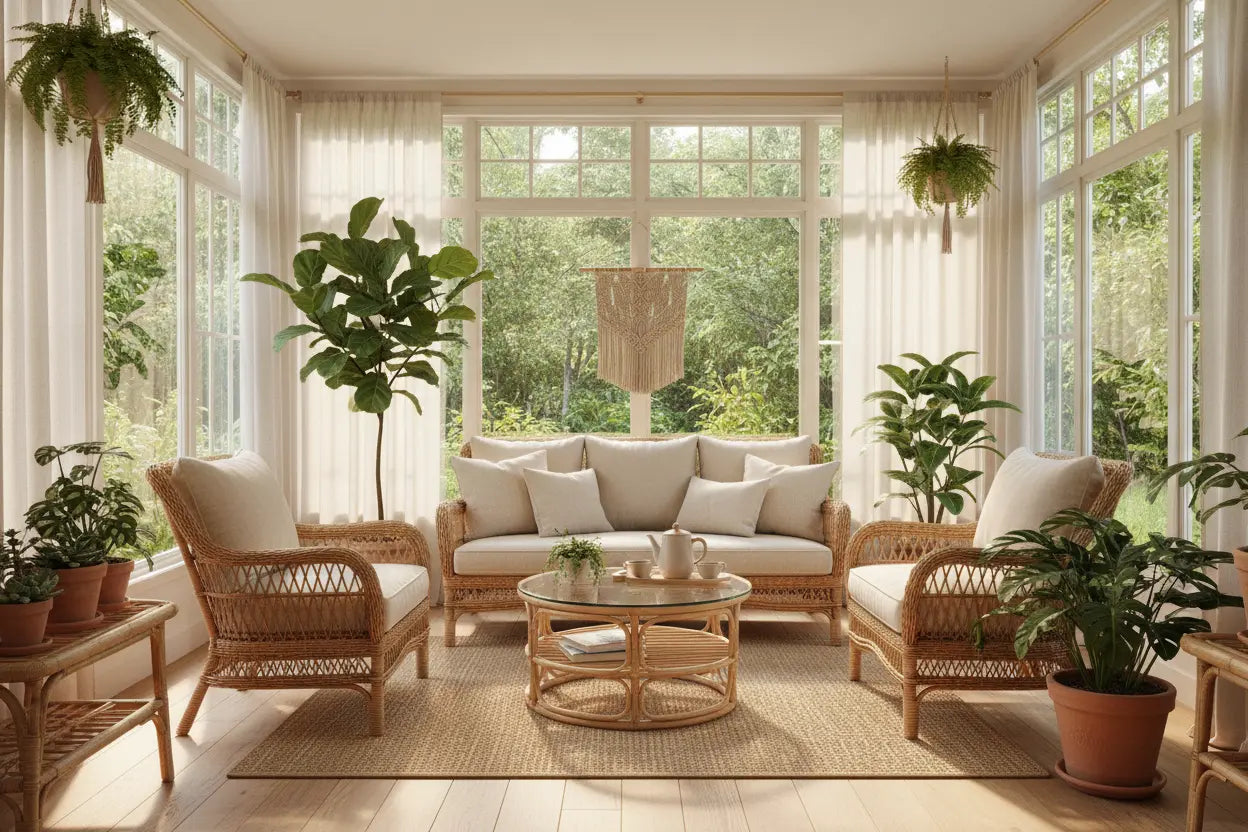
Wicker has been associated with sunrooms for decades, and for good reason. The material is lightweight, naturally textured, and visually connected to the outdoor environment. Wicker sunroom furniture remains one of the most searched and purchased categories in the sunroom furniture market because it delivers a classic look that feels appropriate in virtually any home style, from craftsman bungalows to colonial revivals.
Modern Minimalist
Clean lines, neutral palettes, and materials like brushed aluminum or powder-coated steel define the modern sunroom aesthetic. Modern sunroom furniture pairs well with homes that feature contemporary architecture, large geometric glass panels, or minimalist landscaping. Cushions in solid colors or subtle geometric patterns keep the look cohesive without adding visual noise.
Transitional Casual
This style blends elements from both traditional and modern aesthetics, making it the most flexible. Upholstered seating in performance fabrics, natural wood accents, and layered textiles create a sunroom that feels warm but not overly ornate. Most homeowners shopping for everyday-use sunrooms tend to gravitate toward transitional designs because they pair naturally with existing home decor without requiring a full redesign of adjacent rooms.

Furniture alone does not complete a sunroom. The accessories and finishing elements determine whether the space feels polished or unfinished.
Textiles and Cushions
Outdoor-rated or performance-fabric cushions are the standard choice for sunrooms because they resist moisture, mildew, and UV fading. However, layering these functional fabrics with indoor-style throw pillows and blankets adds softness and visual depth. Rotating cushion covers seasonally is a low-cost way to refresh the entire room's look.
Lighting
Natural light defines the sunroom experience during the day, but evening lighting determines how usable the space is after sunset. Pendant lights, floor lamps, and string lights all complement sunroom aesthetics. Dimmable options allow the same space to function as a bright reading room in the afternoon and a relaxed social setting at night.
Plants and Greenery
Plants are arguably the most natural accessory for a sunroom. Tropical varieties like bird of paradise, fiddle-leaf figs, and pothos thrive in the high-light environment. Grouping plants at varying heights, using a mix of floor planters and hanging baskets, creates visual layering that draws the eye upward and connects the interior space to the garden outside.
Storage Solutions
Ottomans with hidden storage, side tables with shelving, and narrow console tables along walls solve the common problem of sunroom clutter without consuming valuable floor space. In smaller sunrooms especially, multi-functional furniture pieces earn every inch of the room.

Effective sunroom furniture ideas are rooted in understanding the space's unique conditions and the household's specific needs. The combination of durable, UV-resistant materials with a clear aesthetic direction, whether coastal wicker, contemporary modern, or transitional casual, produces a sunroom that is both beautiful and built to last.
The next step is to evaluate the sunroom's current setup with fresh eyes. Identify the primary function, note which materials are already working, and replace or supplement with pieces that align with both the room's conditions and the desired design direction. A single coordinated furniture collection can transform an underused sunroom into one of the most valued rooms in the home.
The best furniture for a sunroom combines UV-resistant materials, moisture-tolerant construction, and comfortable seating suited to the room's primary purpose. Wicker, aluminum, teak, and resin are among the most reliable material choices. Upholstered pieces should use outdoor-rated or solution-dyed fabrics to prevent premature fading. The specific pieces, whether sofas, lounge chairs, or dining sets, depend on how the room is primarily used.
Arrange sunroom furniture by orienting seating toward the main view, maintaining 30 to 36 inches of walkway clearance, and using an area rug to anchor the grouping. Avoid pushing all pieces against the walls, as this common mistake makes rooms feel smaller and less inviting. Floating furniture toward the center of the room creates a more cohesive and functional layout.
The best sunroom furniture depends on the room's conditions and style goals, but teak and powder-coated aluminum frames paired with solution-dyed acrylic cushions consistently perform well in high-light environments. For a classic look, wicker seating sets remain a top choice. For modern interiors, aluminum-framed sectionals with clean lines offer durability alongside contemporary aesthetics.
Regular indoor furniture can work in a sunroom if the space is climate-controlled year-round and receives filtered rather than direct sunlight. However, most standard living room furniture will fade, warp, or deteriorate faster in a sunroom than it would in a typical interior room. Homeowners choosing standard furniture should use UV-blocking window film and keep pieces away from direct sun exposure to extend their lifespan.
Layering textures, incorporating plants, using cohesive colors, and adding proper lighting are the most effective ways to elevate a sunroom's appearance. A defined seating arrangement anchored by a rug, complemented by greenery and warm lighting, creates a finished look. Replacing mismatched pieces with a coordinated furniture set makes the single biggest visual improvement most sunrooms need.

As the outdoor living trend continues to thrive, you may be wonder...

How to transform your outdoor space in 5 steps to...