Outdoor kitchen cost is one of the first things people want to nail down before they start building — and one of the hardest to pin down without knowing what you're actually comparing. A basic DIY setup and a fully custom contractor build can sit worlds apart in price, even if they look similar on the surface.
The gap between those two options comes down to materials, labor, appliances, and how much of the work you're willing and able to take on yourself. This guide breaks down what each approach actually costs, where the money goes, and how to get the most out of your budget either way.
Whether you're working with $5,000 or $25,000, there's a setup that fits. Browse our outdoor kitchens to compare sizes, styles, and price points before you commit to a design.

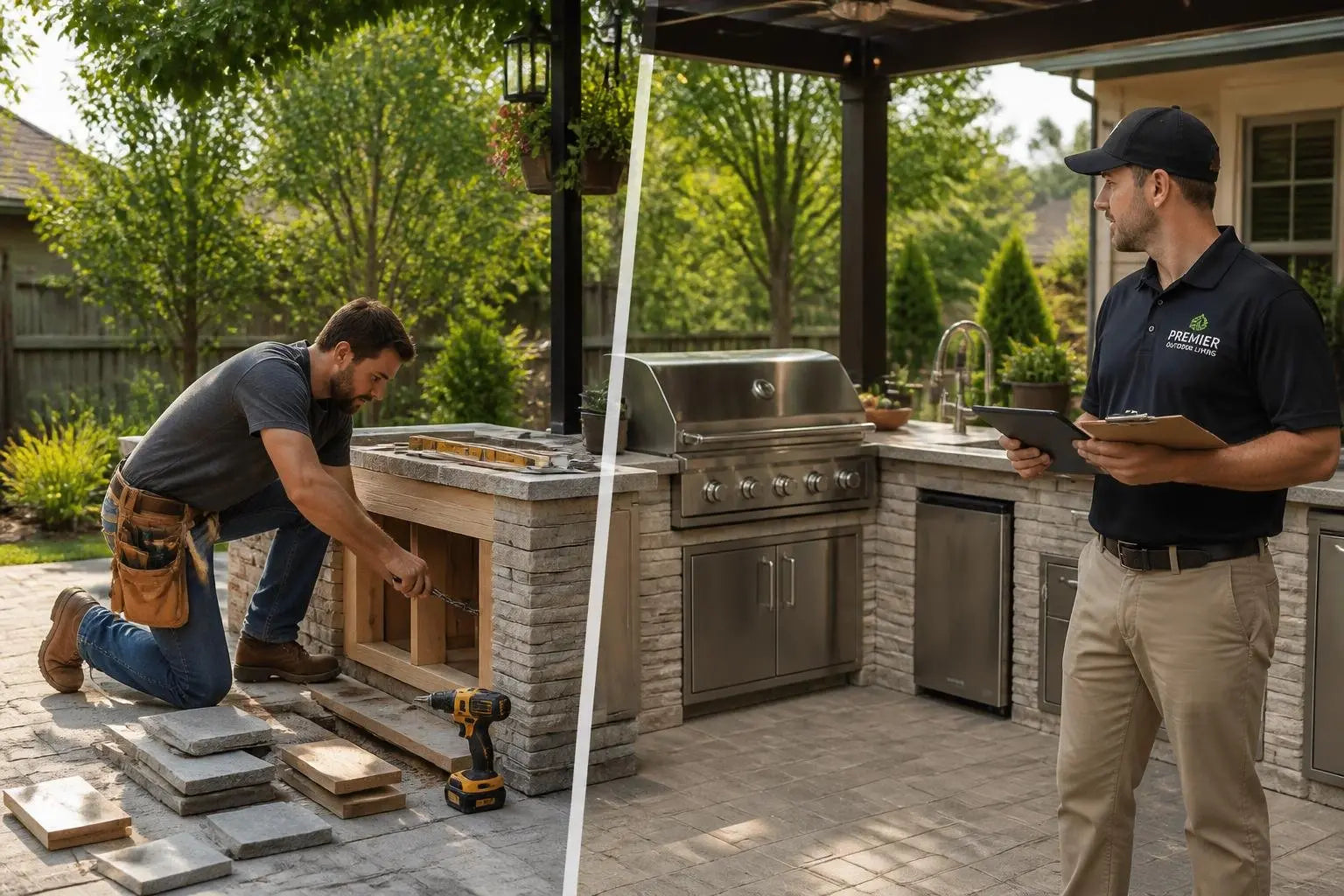
Before you start, you need a real sense of what you'll spend — DIY or not. DIY kitchens usually run $3,000 to $10,000 for basic setups. Contractor-built kitchens average $6,285 to $27,160, but high-end builds can blow past $60,000.
DIY costs really depend on what you want. A basic setup with a built-in grill, simple countertops, and minimal storage falls in the $3,000 to $5,000 range. If you add a side burner, outdoor sink, and some cabinets, you're looking at $5,000 to $10,000.
You'll buy things like concrete blocks or stone veneer for the frame, countertop materials, and all your appliances. Want an outdoor refrigerator ($500–$2,000) or a pizza oven ($1,500–$5,000)? That'll bump up your total.
DIY saves 30% to 50% on labor, but you'll spend a lot of time and need to know what you're doing. Permits ($200–$2,000) and code compliance are on you. Any mistakes could mean expensive fixes or safety risks.
Professional installs usually cost $6,285 to $27,160. Go custom with premium stuff and lots of appliances, and you'll pay $20,000 to $50,000. Luxury outdoor kitchens with all the bells and whistles can push past $60,000.
Labor eats up 30% to 50% of your budget.
Contractors deal with permits, inspections, and warranties. They make sure utilities are installed right and everything's up to code, so you don't have to worry about future headaches.
Lots of things affect your costs, not just the DIY vs. contractor call. Size matters — a small grill island might be $4,000 to $10,000, but a big kitchen with multiple zones could go $20,000 to $50,000 or more.
| Material | Budget Option | Premium Option |
|---|---|---|
| Countertops | Laminate $15–$40/sq ft | Granite $50–$100/sq ft |
| Cabinetry | Prefab stainless $2,000–$4,000 | Custom wood $5,000–$8,000 |
| Flooring | Paver patio $10–$25/sq ft | Stamped concrete $15–$30/sq ft |
| Finishes | Stucco $6–$9/sq ft | Natural stone $20–$40/sq ft |
Appliances can really swing your budget. A basic grill might run $1,500 to $3,000, while pro models can be $5,000 to $7,500. Add-ons like pizza ovens or beverage centers easily tack on another $800 to $5,000 each.
Your location affects everything too. Urban areas mean higher contractor fees, but remote spots might get hit with delivery surcharges. If your site needs demo, grading, or utility work, add $500 to $3,000 to prep costs.

DIY can save you 40% to 60%, but only if you pick the right projects and know your limits. Some jobs are beginner-friendly, while others are risky or expensive to fix if you mess up.
Most folks can build basic frames from pressure-treated wood or steel studs with cement board. Materials usually cost $300 to $800, and you'll need basic carpentry skills.
Pre-assembled modular islands are another option — set them on a level surface and hook up utilities. Concrete countertops aren't as scary as they sound — follow a good tutorial and you'll spend $400 to $700 on materials, plus a weekend of your time.
Simple outdoor kitchen carts are good for beginners. Build a frame, add wheels, slap on a countertop, and put in some shelves. Materials run $400 to $1,000. Setting up a standalone propane grill is easy — just set it in place and connect the tank.
Labor is 40% to 55% of pro kitchen costs. If you do it yourself, you keep that cash.
A contractor-built kitchen that costs $15,000 might only run you $6,000 to $8,000 if you DIY — assuming you already own tools and can dedicate weekends for 6 to 10 weeks.
Gas line work? Don't even try it yourself. Licensed pros are required, and DIY mistakes can mean leaks, code fines, or worse. Fixing botched gas lines costs $2,000 to $5,000, plus the original fee to do it right.
Using indoor materials outdoors seems like a bargain, but they'll fail in a year or two. Cabinets warp, cheap grills rust, and you end up paying twice when you have to replace stuff.
You'll want a circular saw, drill, level, tape measure, and square for basic framing. If you don't have them, budget $200 to $400. Rent a concrete mixer for about $50 a day if you're pouring counters.
Essential skills:
Plan on 40 to 80 hours for a basic build, and over 100 for something complex. Most people underestimate the time commitment — sometimes by half.
Shop our prebuilt BBQ islands for options that ship ready to set up.
Contractors bring skills and handle tough jobs like gas lines and permits, but their expertise comes at a price. Understanding what they actually do, how they bill, and what to ask upfront can save you from surprises and help you get the quality you want.
Pros tackle things most homeowners just shouldn't touch. Licensed contractors run natural gas lines from the meter, test for leaks, and get the right permits and inspections. Only licensed folks can pull those permits.
They also handle electrical work — dedicated circuits, outdoor-rated outlets, and making sure everything meets code. Contractors do masonry, concrete, and deck reinforcement that can affect your home's structural integrity and safety.
Plumbing for sinks means hooking up to your sewer or adding drainage solutions. Contractors schedule inspections and make sure the project passes final sign-off. They carry liability insurance, so if something goes wrong, you're covered.
Labor is usually 40% to 60% of your total cost. Contractors might charge hourly — $50 to $150 depending on trade and location. General contractors running the project charge $75 to $125 per hour.
| Trade | Hourly Rate | Project Cost |
|---|---|---|
| General contractor | $75–$125/hr | Project management |
| Plumber | $80–$150/hr | $500–$2,500 |
| Electrician | $75–$130/hr | $800–$3,000 |
| Gas fitter | $90–$140/hr | Varies |
| Mason | $100–$200/hr | Custom stonework |
Most outdoor kitchens go with fixed-price contracts. That price includes their markup on materials, often 15% to 25% above retail. Fixed prices mean fewer surprises, but you'll pay more for materials than if you buy them yourself.
Permits sneak up on people. Building permits for permanent kitchens cost $200 to $800. Electrical permits: $100 to $300. Gas line permits: $150 to $400. Contractors handle the paperwork, but you pay the fees.
Some projects need engineering stamps, especially for decks or upper levels. Engineering plans run $500 to $2,000. Utility companies sometimes charge $300 to $800 for new gas connections.
Site prep can blow past your estimate. Contractors might find drainage problems, buried utilities, or need extra concrete. Set aside 10% to 15% more than the quote for these surprises. Most contractors ask for a 25% to 50% deposit before starting.
Browse our designer outdoor kitchens first — you might not need a contractor at all.

Smart spending means putting your money where it matters — invest in quality for the essentials, and cut costs on things that don't impact performance or durability. Prefab options can really stretch your dollars, phased construction keeps spending in check, and knowing which parts deserve your budget helps you build a kitchen that actually lasts.
Your grill should get the biggest chunk of your budget. Go for 304 stainless steel instead of 430 — 430 rusts faster, and you'll regret it. A good grill runs $2,000 to $5,000, but with a little care, it'll last for decades.
Countertops are worth the splurge too. Granite runs $50 to $100 per square foot installed, and concrete sits in the $75 to $150 range — both hold up to heat, stains, and weather far better than cheaper alternatives.
Decorative touches? That's where you can save. Stucco finishes cost significantly less than natural stone veneer and still deliver a clean, polished look. Skip the outdoor dishwasher unless you really need it — that $800 to $2,000 price tag rarely pays off.
If you already have a patio, just use it. Save $3 to $35 per square foot. And if you're choosing between propane and running a gas line, propane's much cheaper — cuts $15 to $20 per linear foot off utility costs.
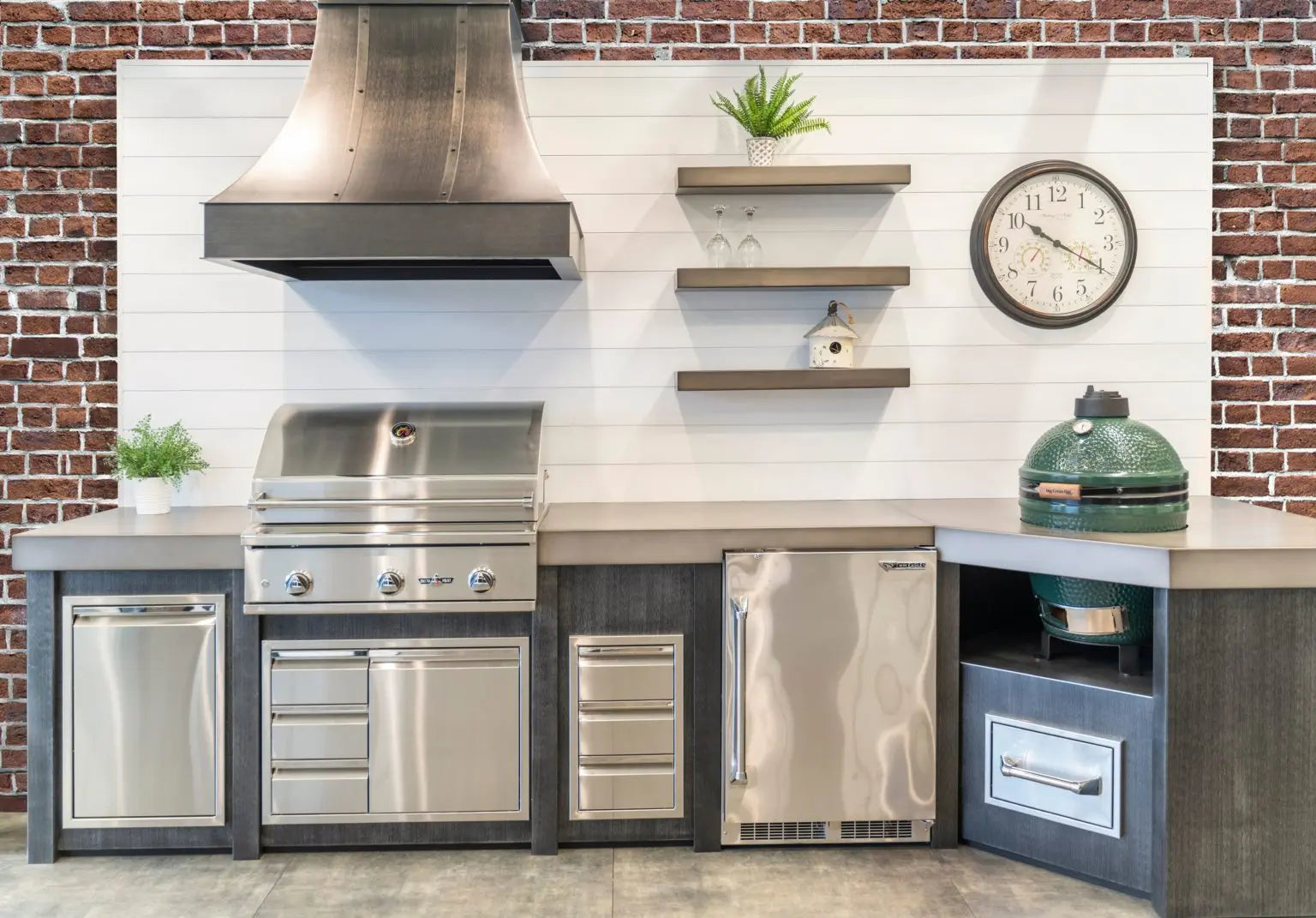
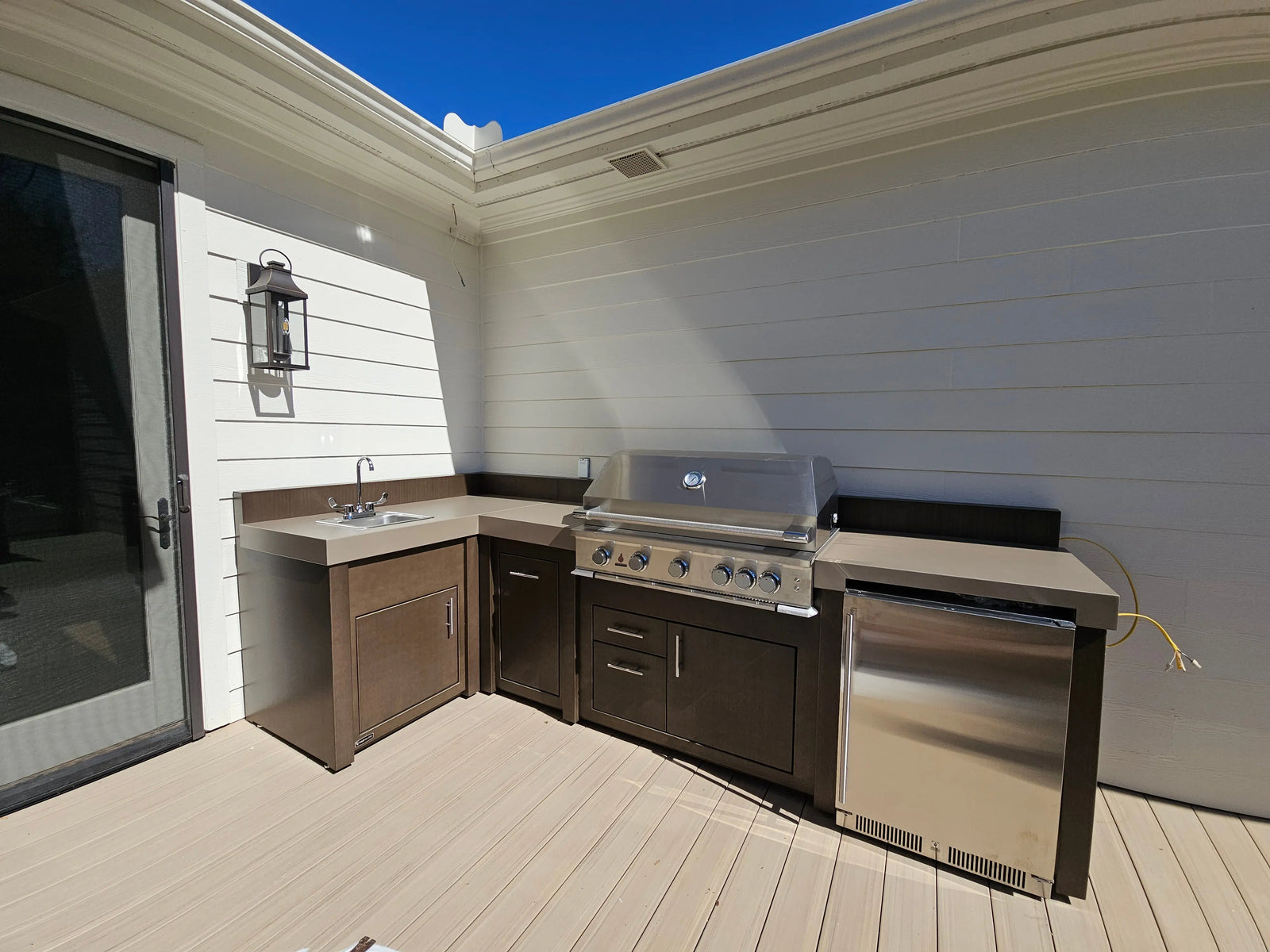
Modular outdoor kitchens cost about $4,000 to $10,000 and arrive ready to go. You dodge the $1,200 to $2,000 per linear foot that custom builds demand.
These kits usually include the frame, counters, and storage all together. Set one up in a weekend — not weeks like a custom job. Labor costs drop a lot when you can do it yourself.
If you're near the coast, look for powder-coated steel frames and marine-grade hardware. Concrete-based systems handle freeze-thaw cycles better than basic steel. Outdoor kitchen islands work well in smaller yards — you get a full cooking station without going all-in on a massive built-in.
| Type | Price Range | Best For |
|---|---|---|
| Modular stainless steel | $4,000+ | DIY installs, coastal areas |
| Concrete-based RTA | $7,000–$20,000 | Premium finishes, freeze-thaw climates |
| Mid-range kits ($8K–$12K) | $8,000–$12,000 | Best value — fridge, side burners, storage |
| Kits under $2,000 | $1,500–$2,000 | Skip — thin materials don't last outdoors |
Always check the steel grade — 304 stainless is significantly more corrosion-resistant than 430, especially in humid climates or coastal areas.
A solid grill and some counter space. You'll be cooking right away and can test the setup before adding more.
Weatherproof cabinets and a compact outdoor fridge. Once you start using the space, you'll know what you actually need more of.
Portable pizza oven ($800–$1,500) now, or invest in a built-in model ($2,000–$5,000) later. Spreading purchases over time lets you grab off-season deals and dodge financing fees.
This phased approach lets you test out your setup before making anything permanent. You might find you need more prep space or want to move things around after using it for a while.

As the outdoor living trend continues to thrive, you may be wonder...

How to transform your outdoor space in 5 steps to...