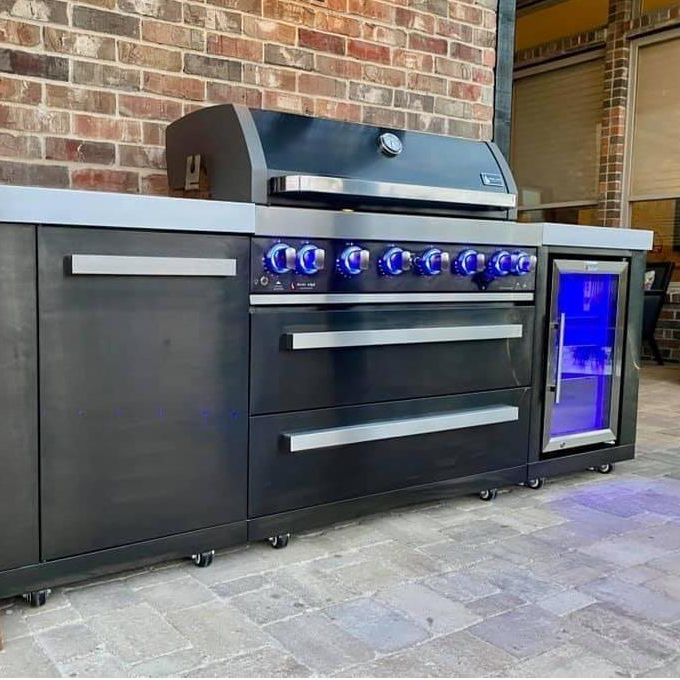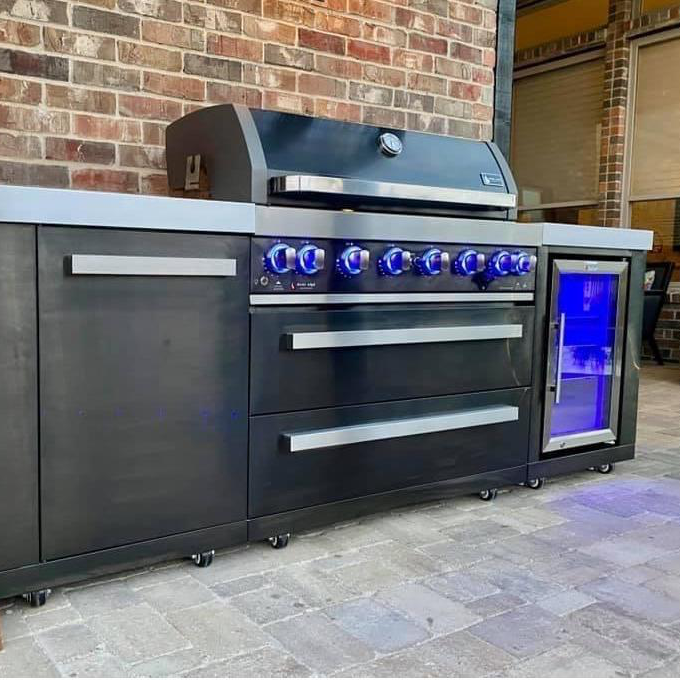

Coyote Outdoor 28 inch Pellet Grill, Built In or Freestanding
A built-in pellet grill option. Review power, ventilation, cutout dimensions, and required installation components for this model.
View Cooker and Specifications
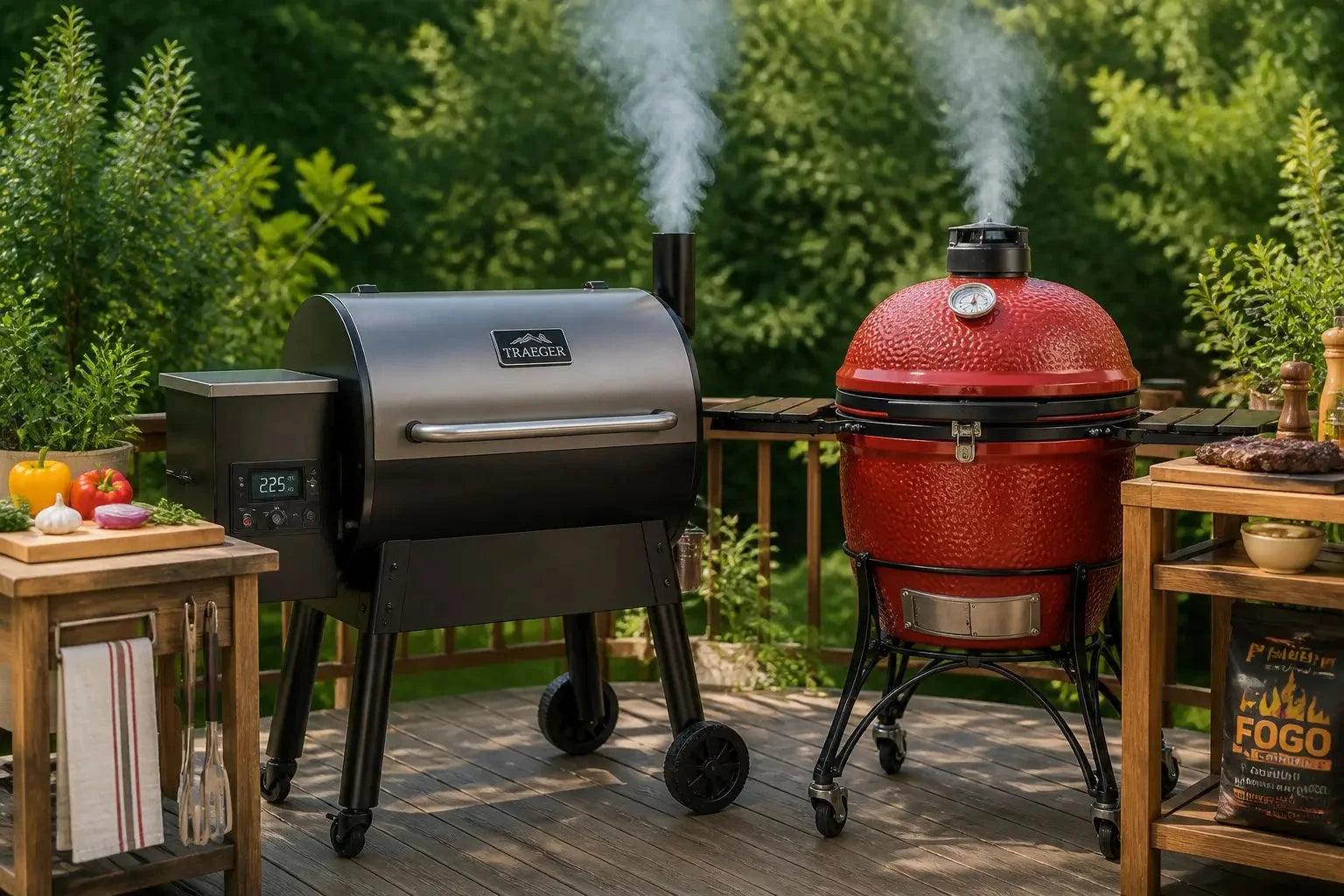
Pellet smokers and kamado grills both cook low-and-slow, but they get there in completely different ways — and that difference matters when you're building one into an outdoor kitchen.
A pellet smoker runs on electricity and wood pellets with set-it-and-forget-it temperature control. A kamado grill uses lump charcoal and airflow vents for hands-on fire management and a deeper smoke flavor. This guide compares both for homeowners planning a built-in outdoor kitchen, covering flavor, heat control, fuel costs, installation requirements, and which one fits a permanent BBQ island setup better.
A pellet smoker uses an electric auger to feed compressed wood pellets from a hopper into a fire pot. A fan circulates the heated air and smoke around the cooking chamber, maintaining the temperature you set on a digital controller. You load the hopper, set the temp, and the smoker does the rest.
This makes pellet smokers the most convenient option for long smokes. Brisket, pulled pork, ribs, and turkey can run for 8 to 16 hours without you adjusting anything beyond the occasional pellet refill.

A kamado grill is a thick-walled ceramic or refractory cooker fueled by lump charcoal. You control temperature by adjusting top and bottom air vents — more air means more heat, less air lowers the temperature. The heavy ceramic walls retain heat exceptionally well, which means a kamado uses less fuel than a standard charcoal grill and holds temperature with surprising stability once dialed in.
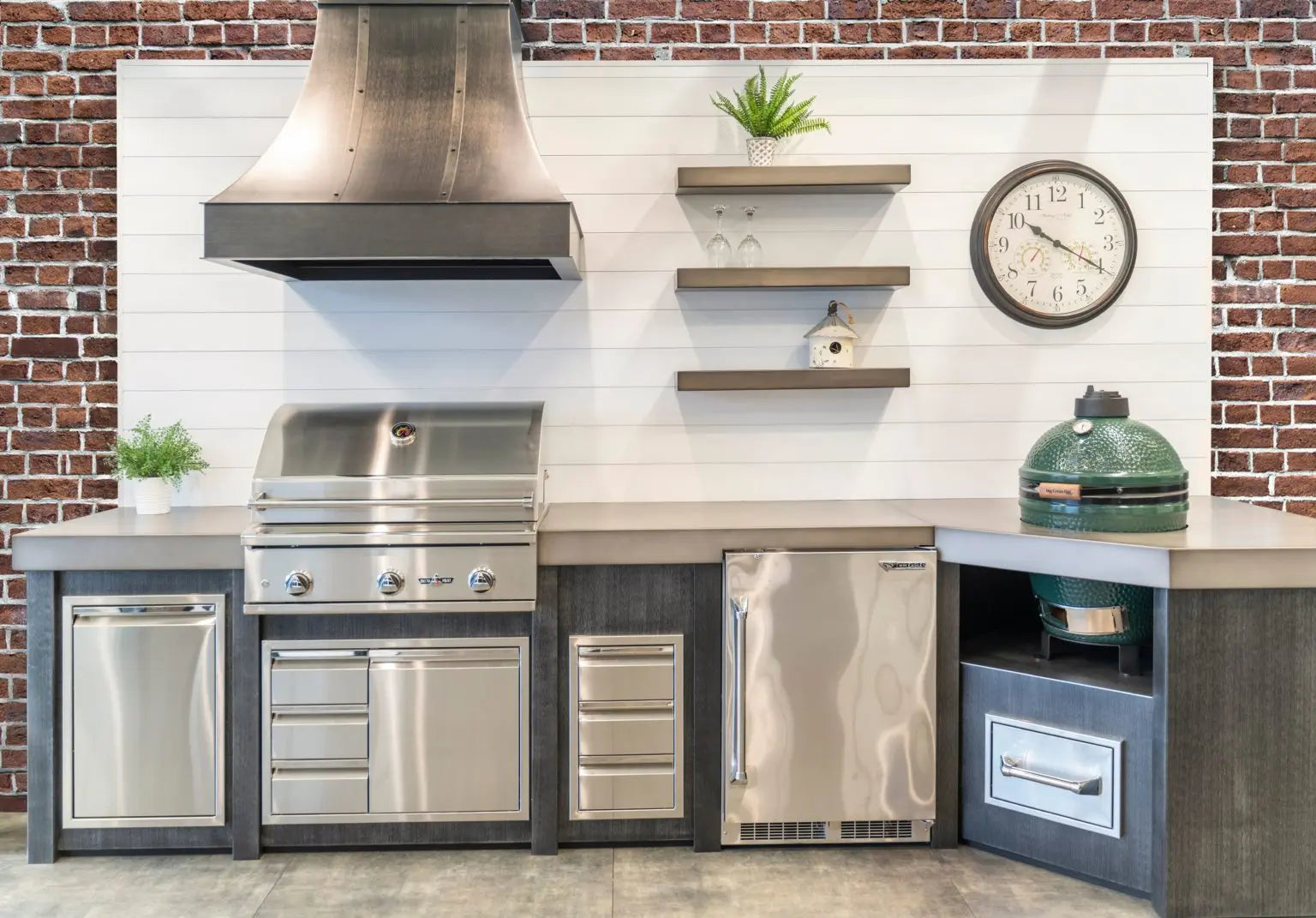
Kamado grills are also the most versatile single cooker available. The same unit can smoke low-and-slow at 225°F, grill steaks at 700°F+, bake pizza, and roast whole chickens. That range makes them a strong fit as a secondary cooker in an outdoor kitchen alongside a built-in gas grill.

| Feature | Pellet Smoker | Kamado Grill |
|---|---|---|
| Fuel | Wood pellets + electricity | Lump charcoal |
| Temp Control | Automated digital controller | Manual air vent adjustment |
| Flavor Profile | Mild, clean wood smoke | Deep charcoal smoke, more intense |
| Temp Range | ~180°F – 500°F | ~200°F – 750°F+ |
| Versatility | Smoke, roast, bake | Smoke, grill, sear, bake, roast, pizza |
| Ease of Use | Set and forget | Hands-on fire management |
| Installation | Needs 120V outlet + ventilation | No utilities needed |
| Fuel Cost | ~$1/lb for pellets + electricity | ~$1–2/lb for lump charcoal |
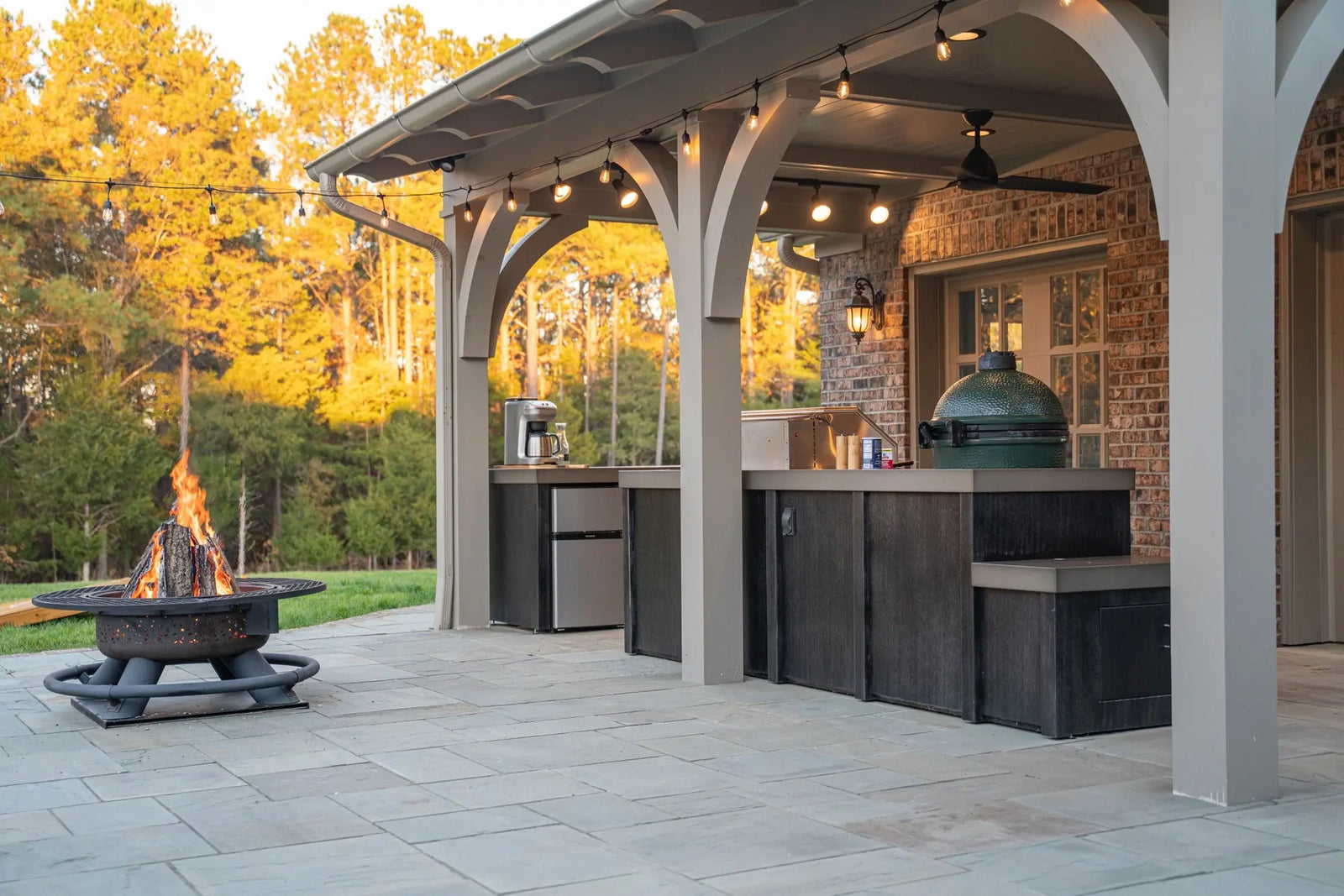
From an installation standpoint, a kamado grill is simpler to build into an outdoor kitchen island because it doesn't require electricity or a gas line. You just need a properly reinforced countertop opening with enough clearance for the ceramic body and lid swing.
A pellet smoker requires a 120V electrical outlet nearby, adequate ventilation for the exhaust, and enough space for the hopper and auger system. These aren't deal-breakers, but they add complexity and cost to the island build, especially if your patio doesn't already have electrical access.
Before committing to either, review the full guide on hidden costs of building an outdoor kitchen to account for utility runs, permits, and site prep that affect the final budget.
If smoke flavor is the priority, kamado wins. The direct contact between lump charcoal and food produces a deeper, more complex smoke profile than pellet smokers, which burn processed wood at a distance from the food. Pellet smokers produce a cleaner, milder smoke that many people prefer for poultry, fish, and lighter meats.
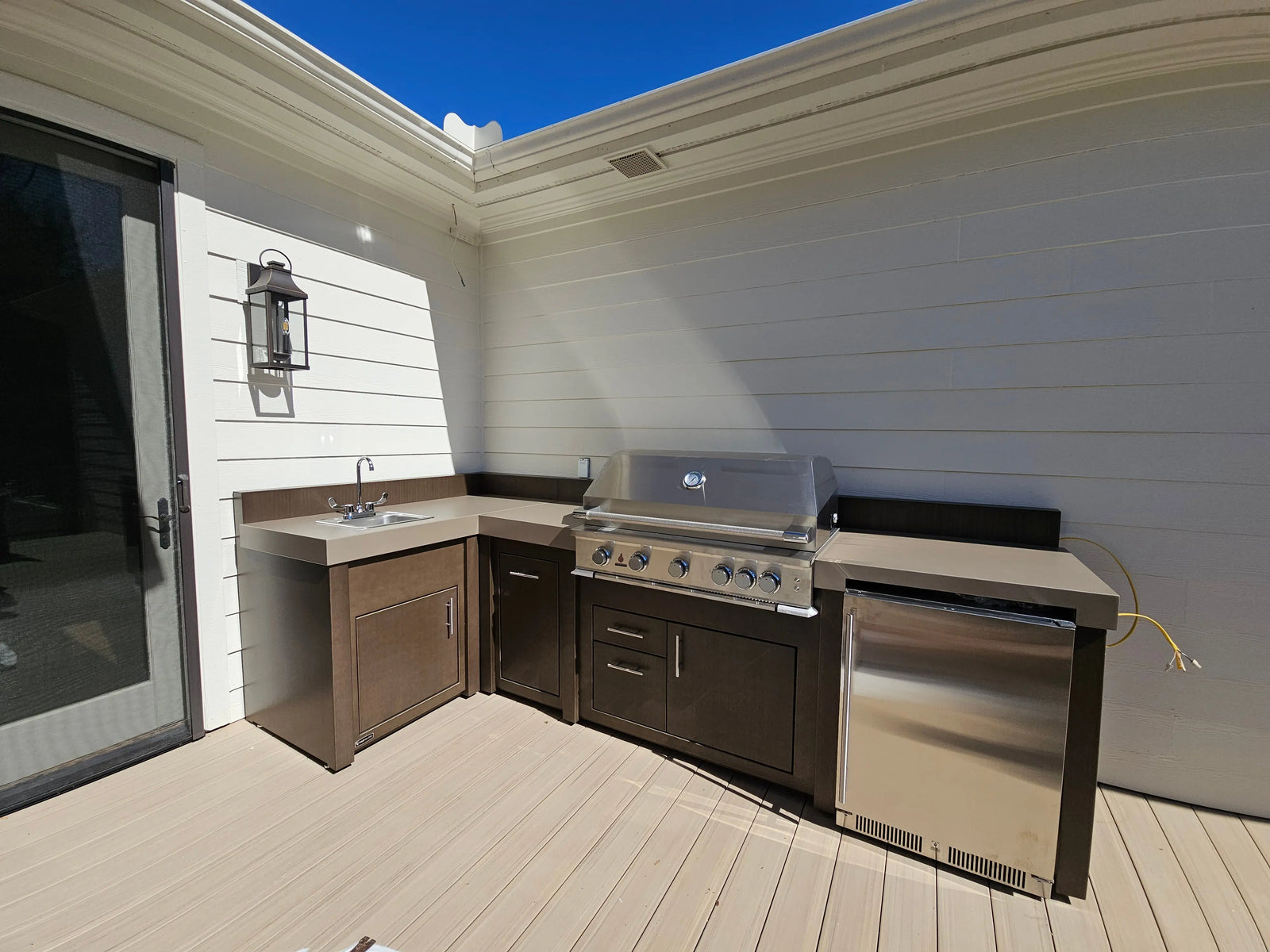
Most homeowners don't use a pellet smoker or kamado as their only cooker. The most practical outdoor kitchen layout pairs one of these with a standard gas grill for everyday grilling, plus outdoor refrigeration and storage to keep ingredients and tools close.

An L-shaped outdoor kitchen works especially well when you have two cooking appliances, since the second leg of the L can house the smoker or kamado with its own counter space and storage, separated from the main grill zone.
If you're planning the full space from scratch, BetterPatio's custom outdoor kitchen design service can help you lay out the island around both cookers with a free 3D rendering.
| Requirement | Pellet Smoker | Kamado Grill |
|---|---|---|
| Electrical | 120V outlet required | None |
| Gas Line | None | None |
| Ventilation | Exhaust clearance needed | Lid clearance needed |
| Weight Support | Moderate (~100–150 lbs) | Heavy (~150–250 lbs for ceramic) |
| Countertop Cutout | Varies by model | Circular or cradle-style mount |
For frame and structural guidance, see BetterPatio's article on how to build an outdoor kitchen frame.
Pellet smokers and kamado grills serve different cooking philosophies. Choose a pellet smoker for convenience, consistent temperature, and hands-off long smokes. Choose a kamado grill for deeper flavor, wider temperature range, and simpler installation. The best outdoor kitchens often include one of these alongside a standard gas grill, giving you the flexibility to cook anything your backyard demands.
A built-in pellet grill option. Review power, ventilation, cutout dimensions, and required installation components for this model.
View Cooker and Specifications
A charcoal kamado package with its own support setup. Compare a separate cooking station with an integrated island plan.
View Cooker and Specifications
A ceramic charcoal cooker option. Confirm the required support, accessories, and clearances before planning its position.
View Cooker and SpecificationsYes, but it requires a 120V electrical outlet nearby, adequate exhaust ventilation, and a countertop cutout sized to the specific model. Plan the electrical run during the island build to avoid costly retrofitting later.
Yes. Ceramic kamado grills are heavy (150–250 lbs), but their insulation makes them extremely fuel-efficient and versatile. The island frame needs to support the weight, so confirm the structural capacity with your builder or use a heavy-gauge steel frame.
Kamado grills produce a deeper, more complex smoke flavor because lump charcoal burns closer to the food and creates a richer smoke profile. Pellet smokers produce a cleaner, milder smoke that many people prefer, especially for poultry and fish.
Not necessarily, but most outdoor kitchen owners end up wanting both. A gas grill handles quick weeknight cooking while a smoker or kamado handles low-and-slow weekend cooks. Having both gives you the most cooking flexibility.
Operating costs are similar. Wood pellets run about $1 per pound plus electricity, while lump charcoal costs $1–2 per pound with no electricity needed. A kamado's fuel efficiency means you use less charcoal per cook than a standard charcoal grill.

As the outdoor living trend continues to thrive, you may be wonder...

How to transform your outdoor space in 5 steps to...