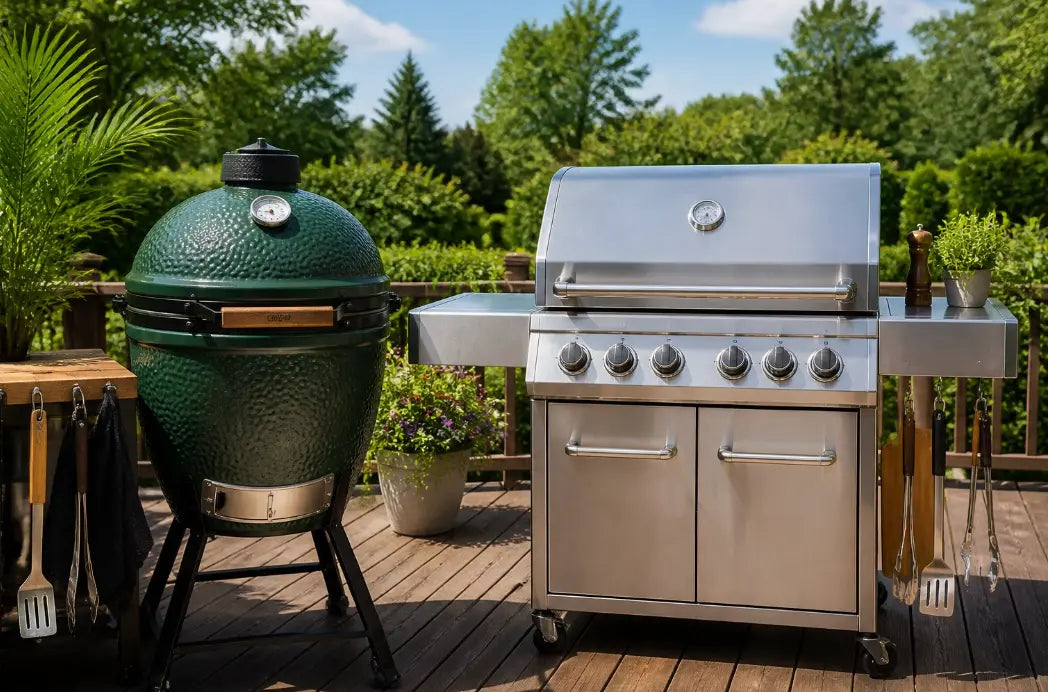
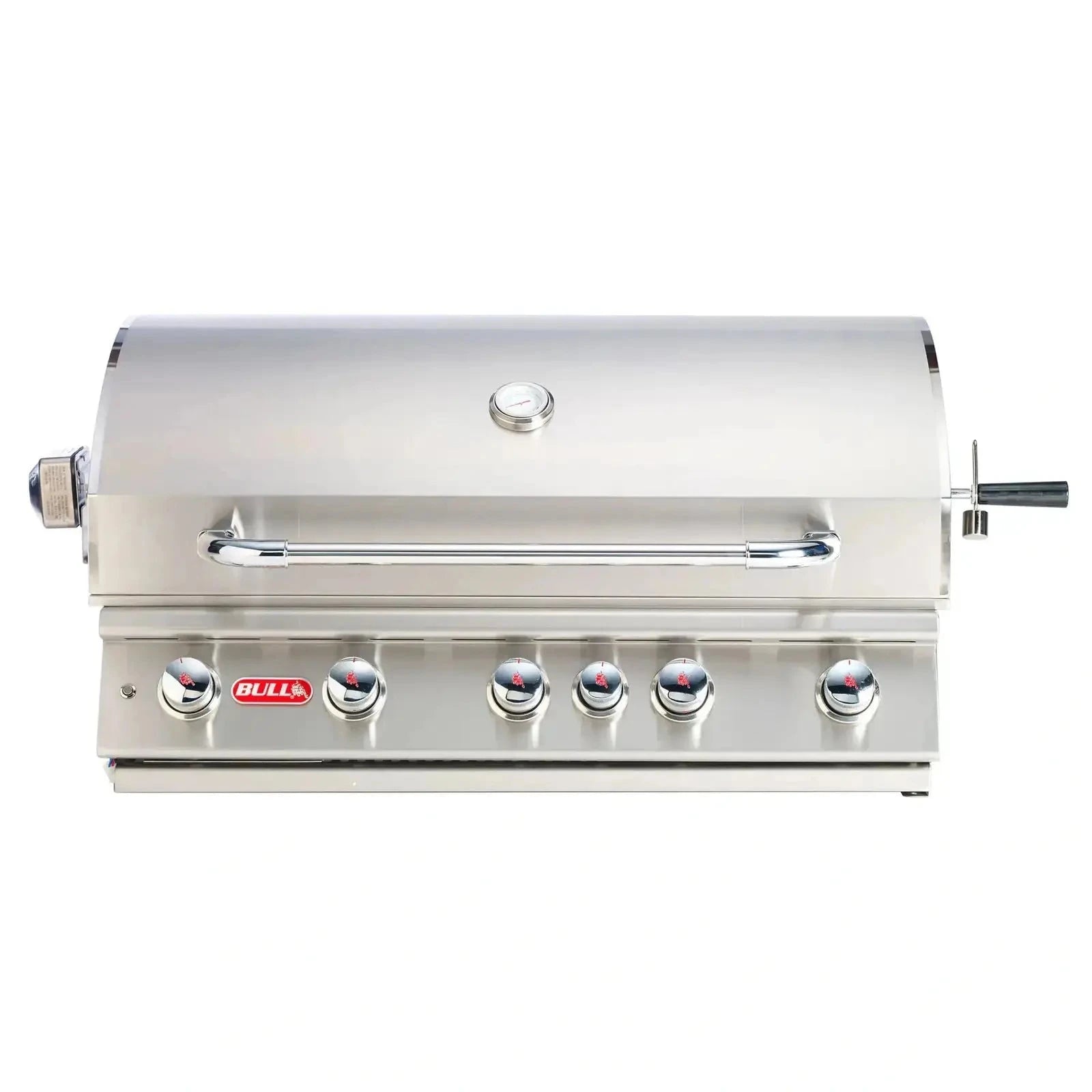
Choosing between a kamado grill and a gas grill changes everything about how you cook outdoors — from the flavor of your food to how much time you spend tending the fire.
These two grill types work in fundamentally different ways. One uses thick ceramic walls and charcoal for deep, smoky flavor. The other uses propane or natural gas burners for fast, predictable heat. Both have a place in a serious outdoor kitchen — this guide breaks down which one fits your cooking style, your patio, and your budget.
- Gas grills win on speed and convenience. Push a button, wait ten minutes, start cooking. They are the right choice for weeknight meals and cooks who value getting dinner on the table fast.
- Kamados win on flavor, fuel efficiency, and versatility. Thick ceramic walls let you smoke at 225°F for 18 hours on a single load of charcoal, then sear at 700°F+ the next day. One grill replaces a smoker, pizza oven, and traditional grill.
- Climate and cooking frequency matter more than price. If you grill three nights a week and want speed, get gas. If you cook on weekends and care about smoke flavor, get a kamado. Many serious outdoor kitchens have both.
- Long-term costs favor kamados. A quality ceramic kamado lasts 20 to 30 years. A typical gas grill lasts 5 to 15. Kamados use less fuel per cook, though charcoal costs more per pound than propane.
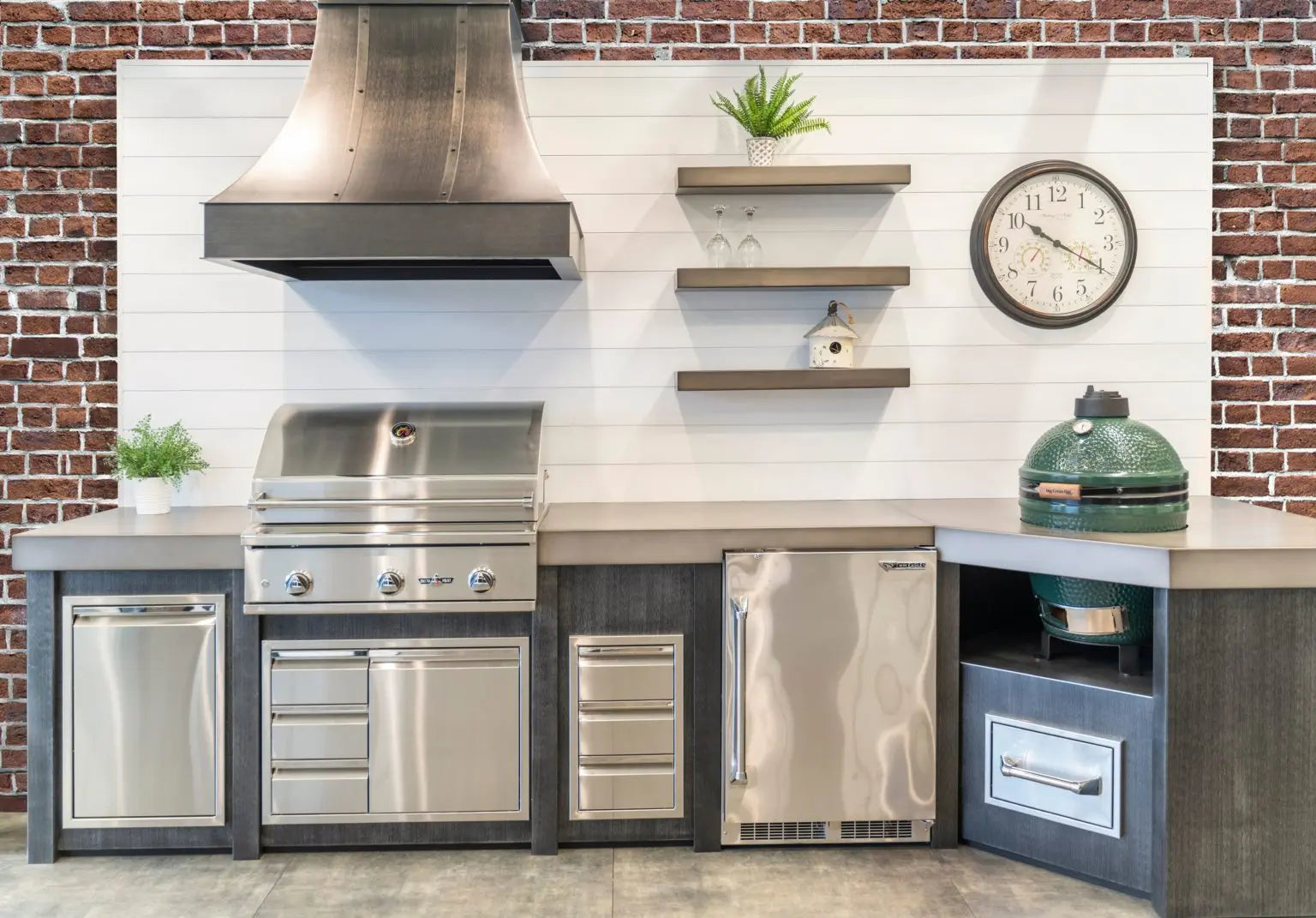
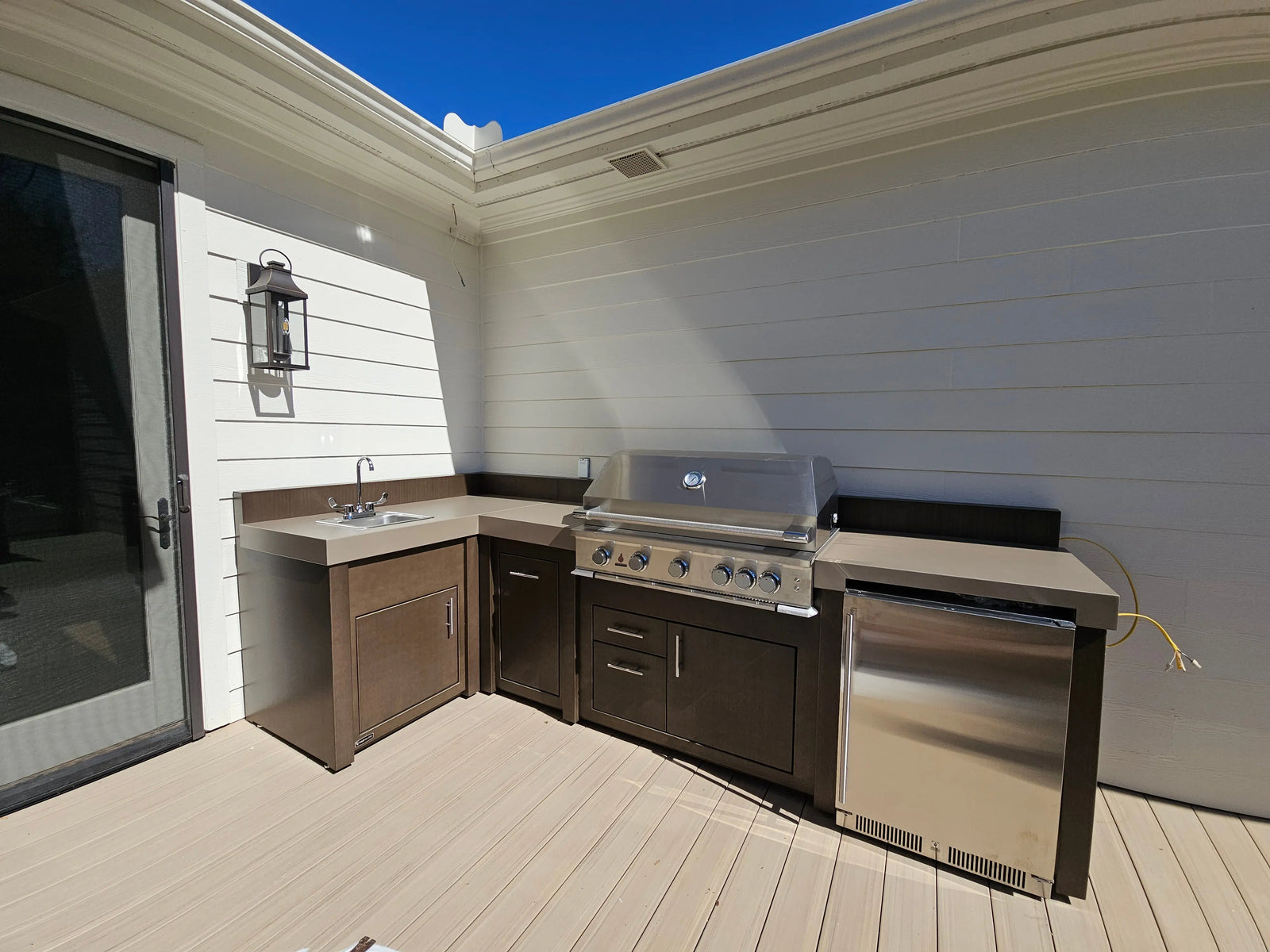
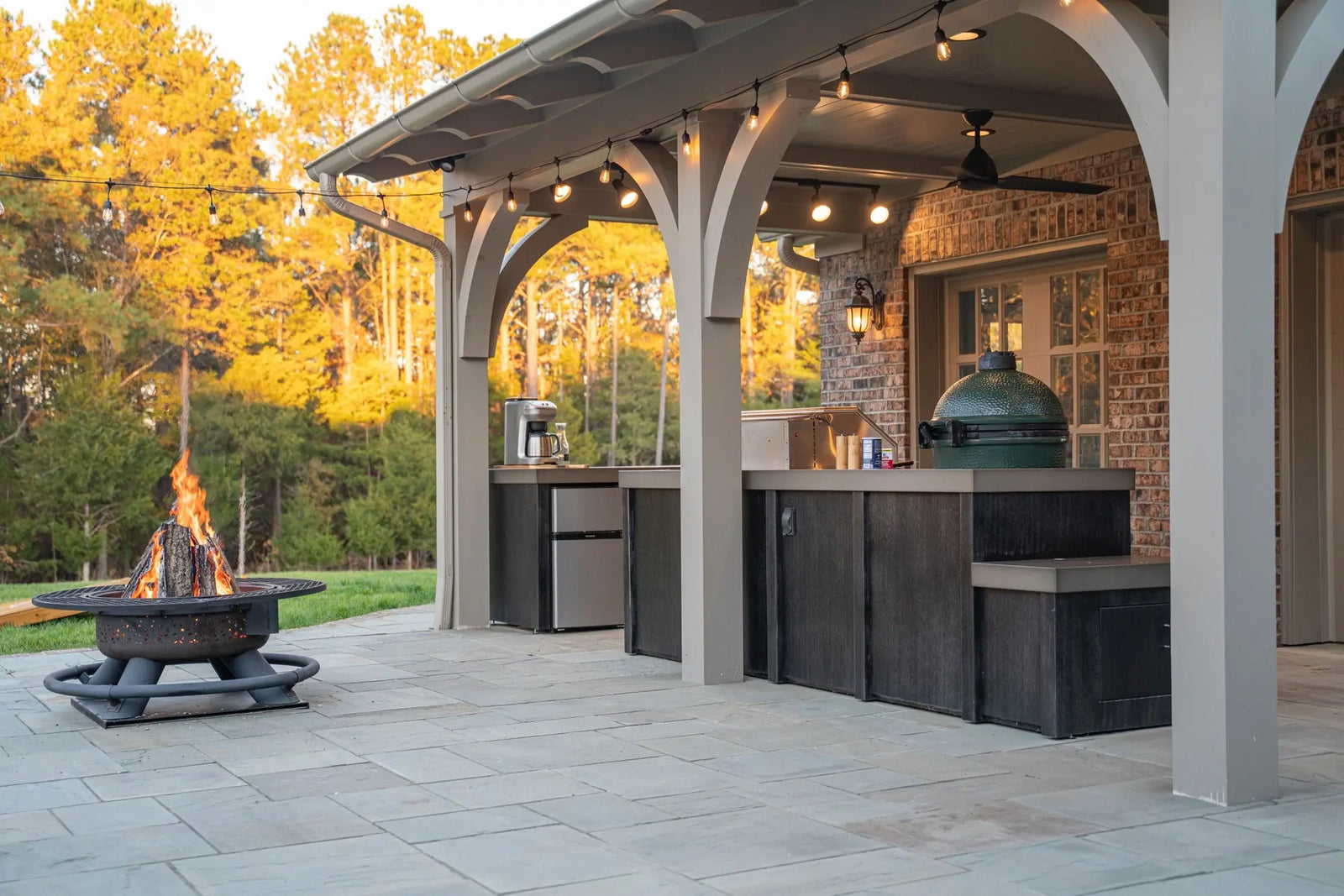
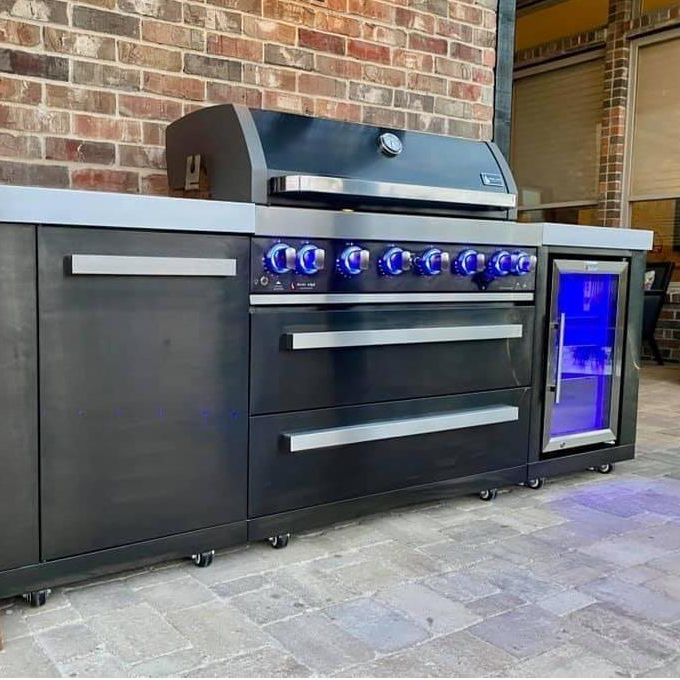
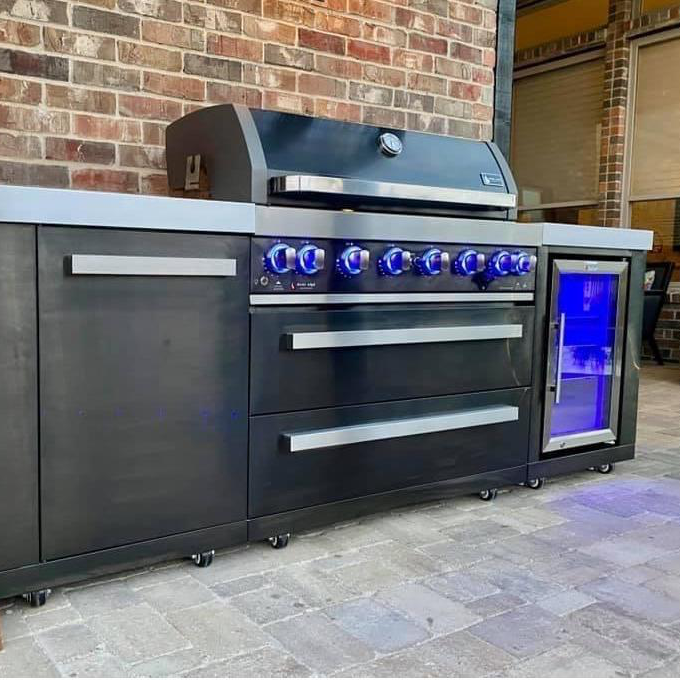
- Built-in installation works for both. Gas grills drop straight into a countertop cutout. Kamados need a custom sleeve or recess because their egg shape sits taller than a built-in gas grill.
Core differences in design and function
Kamado grills and gas grills are built from different materials, run on different fuels, and behave differently from the moment you light them. These differences affect everything — how fast you can start cooking, how well each grill holds heat, and what you can actually cook well on each one.
Construction and weight
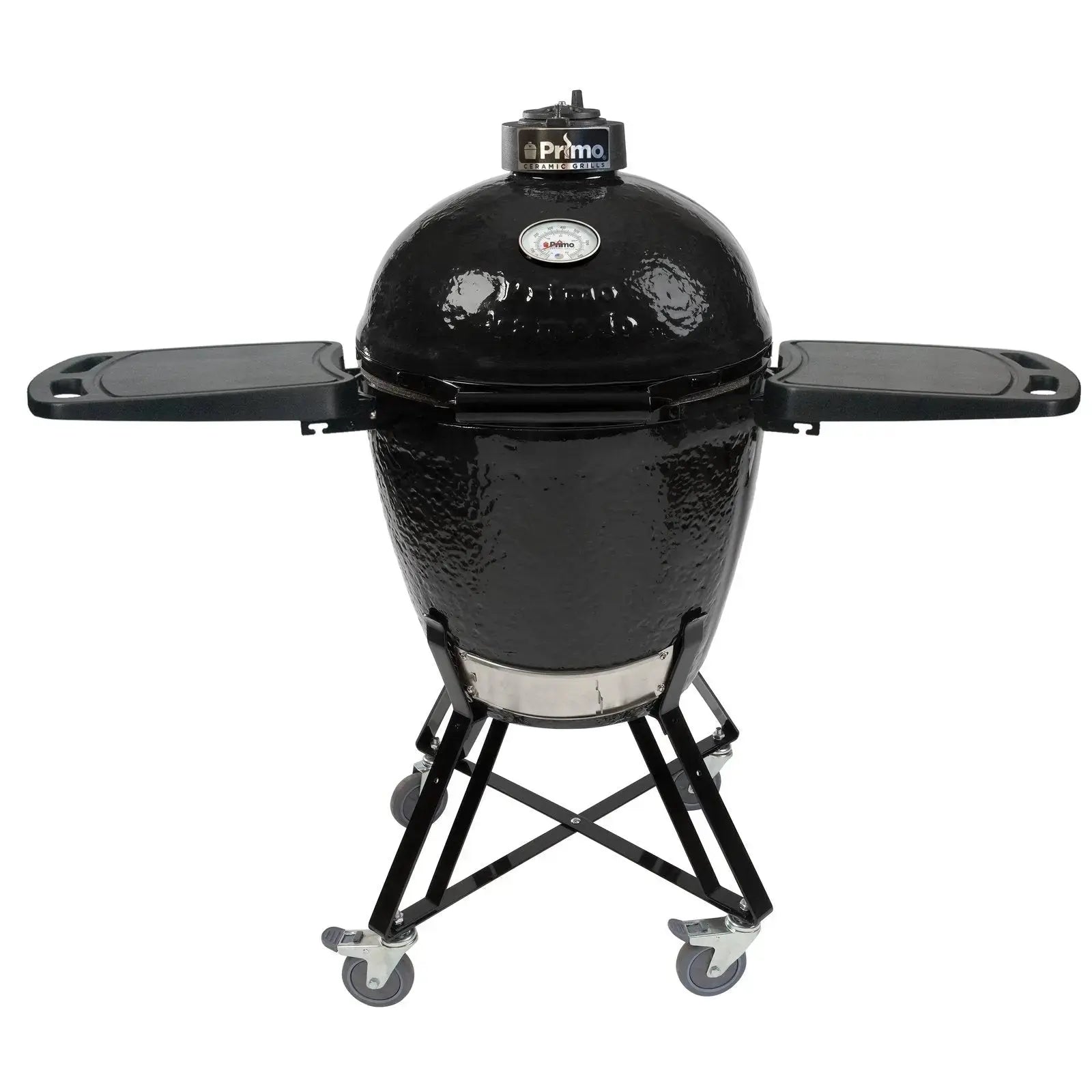
Kamado grills use thick ceramic walls — often one to two inches thick — that act like a thermal battery. The egg-shaped design traces back to ancient Japanese and Chinese clay cooking vessels, and the modern ceramic version inherits its core advantage: heat retention that no thin metal grill can match. The trade-off is weight. A 20-inch ceramic kamado typically weighs 200 to 300 pounds. A comparable 24-inch model can hit 400 pounds.
Gas grills use 304 stainless steel, powder-coated steel, or cast aluminum. They are dramatically lighter — most freestanding gas grills weigh 100 to 150 pounds. That weight difference matters when you need to move the grill or place it on a deck with weight limits. Built-in gas grills can be heavier because of the thicker construction premium brands like Blaze and Coyote use, but they still come in well under most kamados.
Fuel and efficiency
Kamados burn lump charcoal (or briquettes, if you prefer). The thick ceramic walls trap so much heat that a single load of charcoal — about three to five pounds — can run a low-and-slow smoke for 12 to 18 hours. That fuel efficiency is one of the biggest reasons kamado owners stay loyal to the format.
Gas grills run on propane (a 20-pound tank lasts roughly 20 to 25 hours of cooking) or natural gas (an unlimited supply once you run a line to your patio). Gas costs less per hour of cooking than charcoal, but the convenience is the real selling point — you do not have to light anything, wait for coals to ash over, or manage airflow.
Temperature control
Kamados use two vents — one at the bottom, one at the top — to control airflow and temperature. Small vent adjustments produce big temperature changes, but the thick ceramic walls keep temperatures rock-steady once you dial them in. You can hold 225°F for a 14-hour brisket cook or crank the same grill to 700°F for pizza two hours later.
Gas grills give you instant temperature control through burner knobs. Turn a knob, the heat responds in seconds. That makes it easy to create different heat zones across the cooking surface — sear on one side, hold warm on the other — without any waiting. Most gas grills top out around 500 to 600°F, which is plenty for everything except true high-heat searing or pizza.
A kamado is a more versatile cooker and lasts longer, but demands more attention. A gas grill is faster, simpler, and easier to live with day to day. Neither is objectively better — they are tools for different cooking styles.
Cooking performance and flavor
Beyond the mechanical differences, the two grill types produce noticeably different food. This is where the choice actually starts to matter.
Smoke and aroma
Charcoal in a kamado produces a distinctive smoky flavor that gas grills cannot replicate. The sealed ceramic chamber traps smoke around the food longer than any open grill, which deepens the flavor. Add a few wood chunks (hickory, apple, cherry, mesquite) and you get layered smoke profiles that turn ordinary ribs into something memorable.
Gas grills produce very little smoke. The propane burns clean, which some cooks prefer for fish and vegetables that get overwhelmed by heavy smoke. You can add a smoker box with wood chips on a gas grill, but the smoke output is mild compared to real charcoal.
Moisture retention
The tight ceramic seal on a kamado traps humidity inside the cooking chamber. Meat stays juicy even during 12-hour cooks because moisture cannot escape. Gas grills, by design, vent more air through the cooking chamber, which can dry food out on longer cooks. For weeknight burgers and chicken breasts, the difference is small. For brisket and pulled pork, it is significant.
Direct, indirect, and high-heat searing
Both grill types handle direct and indirect heat, but the methods differ. On a kamado, you use a ceramic heat deflector (plate setter) to block direct flames for smoking, baking, and roasting. Pull the deflector out, open the vents, and you have direct-fire high-heat cooking — the same grill, two completely different cooking modes.
Gas grills switch between direct and indirect heat by turning burners on or off. Burners on the left only, food on the right — you have an indirect zone. This is faster and more flexible for weeknight cooking, but tops out around 500 to 600°F on most models, which is below what a kamado can reach for true steakhouse searing or pizza.
Head-to-head: kamado vs. gas grill
| Factor | Kamado grill | Gas grill | Winner |
|---|---|---|---|
| Time to cooking temp | 15 to 20 minutes | 5 to 10 minutes | Gas |
| Temperature range | 225°F to 750°F+ | 250°F to 600°F | Kamado |
| Flavor Key factor | Strong smoky character from charcoal and wood | Clean, neutral flavor | Kamado |
| Fuel efficiency | 12 to 18 hours per charcoal load at low temp | Constant fuel flow required | Kamado |
| Daily convenience | Requires more attention during startup | Push-button start, instant heat control | Gas |
| Cleanup | Ash removal every 3 to 5 cooks | Grease tray and grates after each use | Tie |
| Lifespan | 20 to 30 years (ceramic) | 5 to 15 years | Kamado |
| Versatility | Smoker, oven, grill, pizza oven in one | Primarily grilling, some side burner options | Kamado |
| Upfront cost | $500 to $2,000+ for quality models | $400 to $3,000+ depending on tier | Gas (slight edge) |
| Built-in installation | Requires custom sleeve, taller cutout | Drops into standard island cutout | Gas |
Daily use and ownership over time
Setup and cleanup
A gas grill is ready to cook within 10 minutes of pressing the ignition. Turn a knob, light the burners, wait for the grates to come up to temperature. Cleanup takes another 15 minutes — brush the grates, empty the drip tray, wipe the surfaces.
A kamado takes 15 to 20 minutes to reach cooking temperature. You light the charcoal, adjust both vents, watch the thermometer. The learning curve is real — for the first few cooks, you will overshoot temperatures and have to wait for the grill to cool back down. After a month of use, the vent adjustments become muscle memory and the grill reaches your target temp consistently.
Longevity
Ceramic kamados last 20 to 30 years or more with basic care. The ceramic does not rust, does not crack from weather, and does not degrade from heat cycling. You will replace gaskets every 3 to 5 years and grates every 5 to 10 years, but the main body outlives most outdoor furniture.
Gas grills typically last 5 to 15 years depending on construction quality. Stainless steel models from premium brands like Blaze and Coyote sit at the longer end of that range. Burners, igniters, and flame tamers need replacement every 3 to 7 years even on quality grills.
The total cost picture
A $1,500 ceramic kamado that lasts 25 years works out to $60 per year of ownership. A $500 gas grill that lasts 8 years runs about $63 per year. Add fuel costs (charcoal runs more per pound than propane, but kamados use far less) and the long-term cost is roughly comparable — though kamados require a bigger upfront commitment.
Which one fits your cooking
- Buy a gas grill if you grill three or more nights a week, prioritize speed, and mostly cook standard fare like burgers, chicken breasts, and vegetables. The convenience matters more than the flavor difference for everyday cooking.
- Buy a kamado if you love smoking ribs, brisket, or pulled pork, want to make pizza on the same grill at 700°F, and do not mind spending an extra 10 minutes on startup. The smoke flavor and versatility justify the upfront investment.
- Buy both if you are building a serious outdoor kitchen. About a third of finished outdoor kitchens include a second grill, and a kamado is the most common second grill paired with a built-in gas unit. Gas handles weeknights, kamado handles weekends.
- Stick with gas if your patio is small or you cannot move 300 pounds of ceramic. Mobility and weight rule out a kamado for some setups, especially upper-floor balconies and decks.
- Lean kamado if you cook in extreme weather. The ceramic insulation holds temperature in cold, wind, and rain far better than a gas grill, which loses heat through its thin metal hood.
If you are building a permanent outdoor kitchen, gas grills drop into a standard countertop cutout — most islands are sized for a 32- or 36-inch built-in. Kamados require a custom sleeve or recessed cabinet because their egg shape sits taller than a built-in gas grill, and their bottom air vents need clear access for temperature control. BetterPatio's design team can plan the island around either configuration.
Shop kamado and gas grills at BetterPatio
BetterPatio carries premium ceramic kamados from Primo and built-in gas grills from Blaze, Bull, and Coyote — all with free US shipping, no sales tax outside California, and a price match guarantee.


Keep reading
Explore BetterPatio outdoor kitchens
Frequently asked questions
Is a kamado grill better than a gas grill?
Neither is objectively better — they are tools for different cooking styles. A kamado produces stronger smoke flavor, holds temperatures more stably, and lasts longer, but takes 15 to 20 minutes to reach cooking temperature. A gas grill is ready in 10 minutes and offers instant heat control, making it better for weeknight cooking. Many serious outdoor kitchens include both.
How much does a quality kamado grill cost?
Entry-level kamados start around $300 to $500, mid-range ceramic models run $700 to $1,500, and premium kamados from brands like Primo can exceed $2,000. The investment pays back through fuel efficiency and longevity — quality ceramic kamados last 20 to 30 years with proper care.
Can I build a kamado grill into an outdoor kitchen?
Yes, but kamados require a different installation than built-in gas grills. The egg shape sits taller than a typical built-in, so the grill needs to be recessed in the island so the cooking grate is level with the counter. The bottom air vents also need to remain accessible for temperature control, which means the kamado cannot sit in a fully enclosed cabinet. BetterPatio's design team can plan the recessed cutout as part of a free outdoor kitchen consultation.
Do kamado grills use less fuel than gas grills?
Yes, by a wide margin. A kamado can run a 12 to 18-hour low-and-slow cook on three to five pounds of charcoal because the ceramic walls hold heat so efficiently. A gas grill needs constant fuel supply to maintain temperature. Charcoal costs more per pound than propane, but you use so much less of it on a kamado that the per-cook fuel cost is comparable or lower.
How long do gas grills typically last?
Most gas grills last 5 to 15 years depending on construction quality. Premium built-in gas grills from brands like Blaze, Bull, and Coyote — built from 304 stainless steel with cast burners — sit at the longer end of that range. Lower-quality grills with painted steel and tube burners typically need replacement within 5 to 8 years.
Can a gas grill produce smoky flavor?
Mildly. You can add a smoker box loaded with wood chips to a gas grill, but the open hood design vents most of the smoke before it can flavor the food. A kamado's sealed ceramic chamber traps smoke around the food much more effectively, which is why charcoal-smoked ribs taste so different from gas-grilled ribs.
Which grill is easier to clean?
Gas grills require regular cleanup — brushing grates, emptying drip trays, and wiping surfaces after most cooks. Kamados produce ash that you remove every 3 to 5 cooks but otherwise need very little maintenance because the high cooking temperatures burn off most grease. Neither is significantly easier overall — the cleaning frequency just differs.
The kamado versus gas grill decision comes down to how you actually cook, not which is technically better. Kamados reward cooks who care about smoke flavor, low-and-slow cooking, and one-grill-does-everything versatility. Gas grills reward cooks who want to start dinner ten minutes after walking outside.
If you grill more than three times a week, gas is probably the right call. If you cook on weekends and want to make ribs and pizza on the same machine, a kamado will outperform any gas grill in your price range.
And for an outdoor kitchen serious enough to host real cooks: many of them have both. BetterPatio's design team can help you figure out which grill — or which pair of grills — fits your space and your cooking.