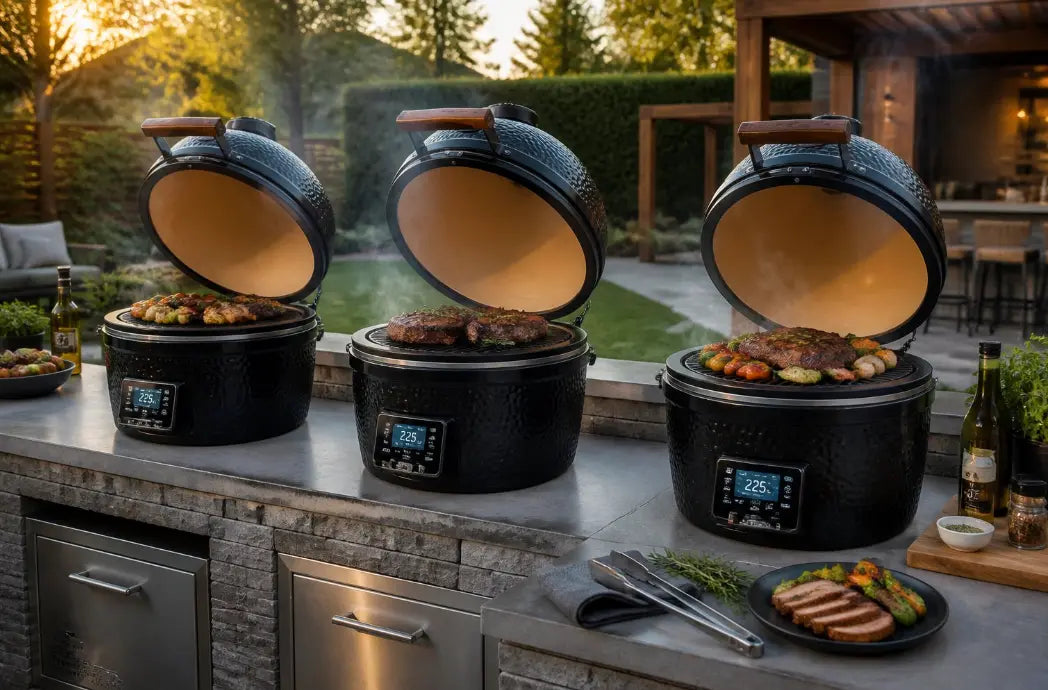
A kamado grill is the single most versatile cooker you can buy for your backyard — smoker, oven, grill, and pizza oven all in one ceramic shell.
The 2026 kamado market spans everything from $400 portable models to $2,000 premium ceramic units. This guide covers the top picks BetterPatio carries — focused on Primo, the brand made in the USA with a 20-year ceramic guarantee — plus what to look for when matching a kamado to your outdoor kitchen and cooking style.
- Ceramic walls are the spec that matters most. Thicker ceramic (1 inch or more) holds heat longer, uses less fuel, and survives decades of heat cycling without cracking.
- Primo's oval shape is the standout design. The patented oval lets you cook direct and indirect on the same grill at the same time — a flexibility round kamados cannot match.
- Size up if you regularly host. A 13-inch kamado feeds two people; an 18-inch handles a family of four to six; a 24-inch flagship cooks for ten or more. Buy one size larger than you think you need.
- All-in-one packages include the cart, side shelves, ash tool, and grate lifter. They cost more than the grill head alone but save you sourcing accessories separately — and most kamado owners need all of them anyway.
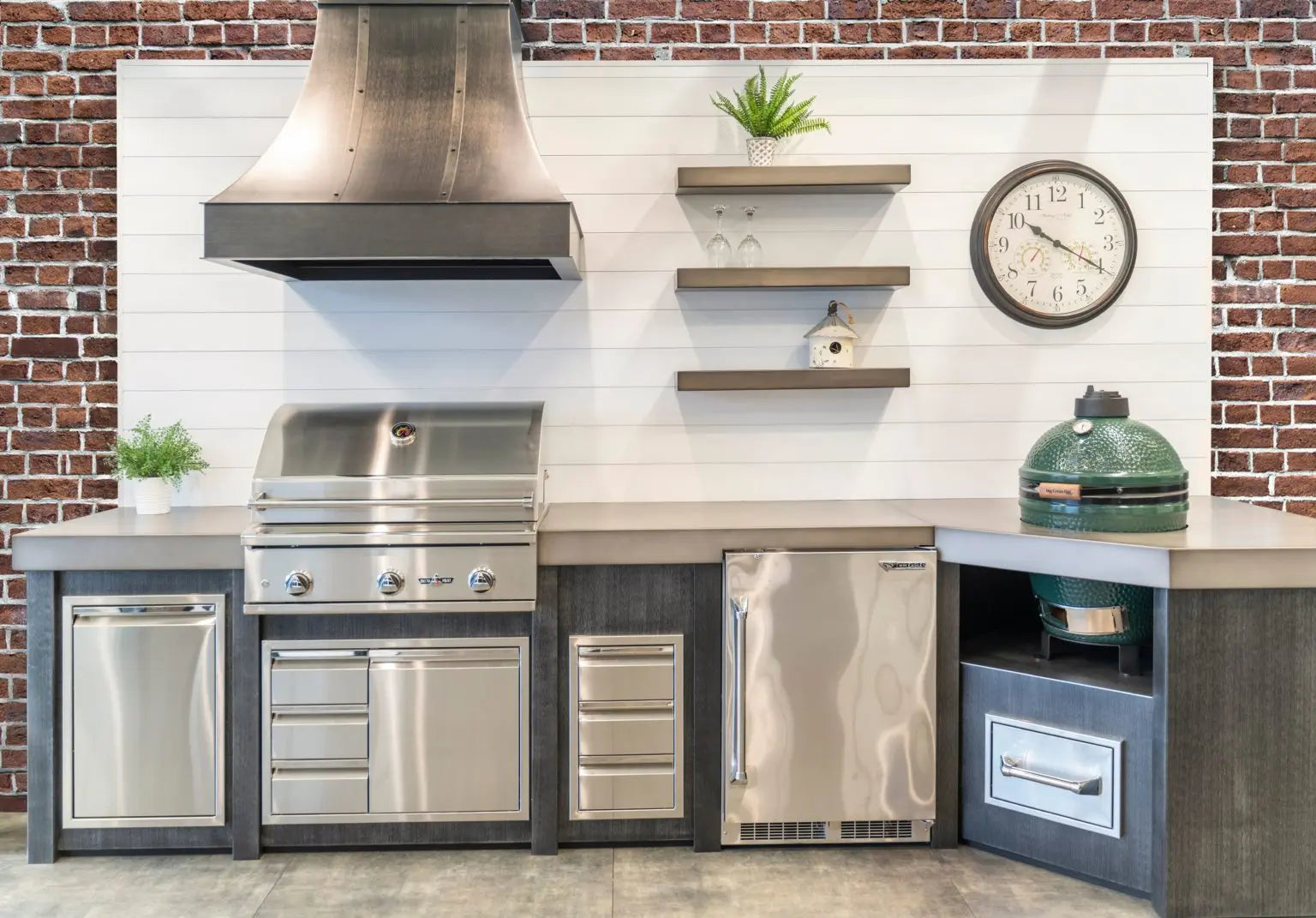
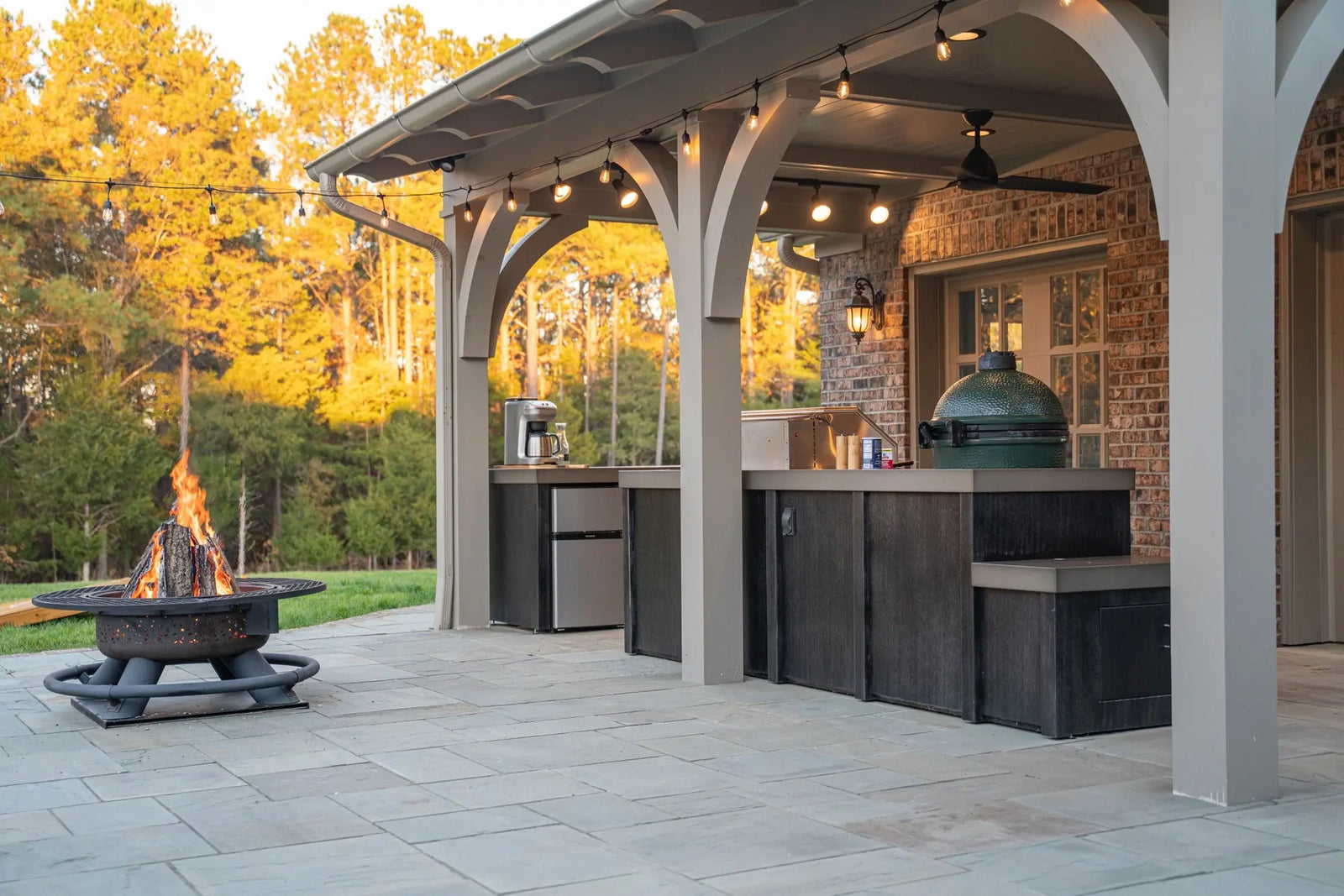
- Built-in kamados require a custom recessed cutout. The egg shape sits taller than a built-in gas grill, so the cooking grate has to be lowered to counter height. Plan this with your outdoor kitchen designer from day one.
Why kamado grills are worth it in 2026
The kamado category has grown steadily over the past decade because one grill replaces a smoker, pizza oven, and traditional charcoal grill. The thick ceramic walls hold heat better than any metal grill, which translates to four practical advantages: less fuel burned, steadier temperatures, deeper smoke flavor, and decades of useful life.
Heat retention and fuel efficiency
Ceramic walls — typically one to two inches thick on quality models — trap heat inside the cooking chamber and release it slowly. The tight-sealing lid keeps it there. This is why a single load of charcoal can run a kamado at 225°F for 12 to 18 hours, where the same load in an open grill would burn out in two or three.
Over a year of cooking, this efficiency adds up. A serious kamado owner might use 30 to 50 pounds of charcoal per year. A traditional smoker user often goes through that in a few weekends.
Outdoor cooking versatility
Kamados handle multiple cooking methods that traditionally require separate equipment:
- Low-and-slow smoking at 225°F to 275°F for brisket, pork shoulder, and ribs
- Indirect roasting at 325°F to 425°F for whole chickens, turkeys, and prime rib
- Direct grilling at 450°F to 550°F for steaks, burgers, and chops
- High-heat searing and pizza at 600°F to 750°F+ for steakhouse-quality crust and Neapolitan-style pies
- Cold smoking below 150°F for cheese, salmon, and bacon
One grill, five cooking modes — and a single ceramic shell that handles all of them with proper vent adjustments.
Durability
Quality ceramic kamados last 20 to 30 years with basic care. The ceramic does not rust, does not crack from weather exposure, and does not degrade from heat cycling. Most premium brands offer lifetime warranties on ceramic components. You will replace gaskets every 3 to 5 years and grates every 5 to 10 years, but the main body outlives most outdoor furniture.
Top kamado grill picks for 2026
BetterPatio carries Primo Ceramic Grills — the leading USA-made kamado brand — with multiple sizes and configurations covering every cooking need.
Primo Oval XL 400 All-In-One
The Oval XL 400 is Primo's flagship — and BetterPatio's most-ordered kamado. It offers 400 square inches of primary cooking surface (more than 680 sq in total with the optional rack system) across two oval cooking zones. The patented oval shape is the real differentiator: you can grill steaks directly over the coals on one side while roasting fish or vegetables indirectly on the other, simultaneously, without overcooking either.
The All-In-One package includes the ceramic grill head, heavy-duty cradle stand with locking casters, FDA-approved food-safe side shelves with utensil pins, ash tool, and grate lifter. The grill weighs roughly 250 pounds, sits on a steel cradle that takes the full load, and reaches temperatures from 150°F up past 850°F.
Primo Oval Large 300 All-In-One
The Oval Large gives you the same patented oval design at a slightly smaller scale — 300 square inches of primary cooking surface, which handles a family of four to six comfortably. Same two-zone cooking capability, same premium ceramic construction, smaller footprint for tighter patios. The All-In-One package matches the XL's contents (cart, side shelves, ash tool, grate lifter).
Primo Oval Junior 200 All-In-One
The Oval Junior is the most compact oval kamado — about 210 square inches of cooking surface — but it still cooks two 14-pound turkeys simultaneously thanks to the efficient oval shape. This is the right pick if you want kamado capability without a full-size footprint, or as a secondary grill alongside a primary gas grill in an outdoor kitchen.
Primo Round Kamado All-In-One
The Round Kamado is Primo's traditional 18.5-inch round-shape ceramic grill — 280 square inches of cooking area, classic kamado proportions, premium-grade ceramic with a 20-year guarantee. It does not offer the oval's two-zone capability, but the circular shape distributes heat evenly across the entire cooking surface, which is ideal for pizza and bread baking.
Primo Oval XL 400 Jack Daniel's Edition
The Jack Daniel's Edition is the same flagship XL 400 with custom branding — embossed Jack Daniel's logos on the ceramic, a distinctive color treatment, and Jack Daniel's branded accessories. Performance and warranty match the standard XL. It is a collector's edition, priced at a premium for the branding rather than additional cooking capability.
Primo X-Large Gas Primo Grill
For cooks who want kamado-style heat retention without managing charcoal, the X-Large Gas brings push-button ignition and gas burners to the ceramic format. Four 304 stainless steel tube burners produce 21,000 BTUs each. The ceramic body still acts as an insulator — retaining heat and moisture better than any standard gas grill — but you skip the charcoal lighting and ash cleanup. You also skip the smoke flavor.
Big Green Egg and Kamado Joe are well-known kamado brands but are not carried by BetterPatio. The Primo lineup covers the same cooking range with comparable build quality, US manufacturing, and a 20-year ceramic guarantee. If you specifically need a Big Green Egg or Kamado Joe, source through their authorized dealer networks.
Featured Primo kamados at BetterPatio


How to choose the right kamado grill
Size and cooking surface
The cooking surface determines how much food you can prepare at once. Match the size to your typical use, not just average meals:
| Kamado size | Cooking area | Feeds | Best for |
|---|---|---|---|
| 13-inch (junior) | ~133 sq in | 2-4 people | Tailgating, balconies, secondary grill |
| Primo Oval Junior 200 | ~210 sq in | 4-6 people | Small families, compact patios |
| 18.5-inch round / Oval Large | ~280-300 sq in | 4-8 people | Most households, everyday cooking |
| Primo Oval XL 400 Most popular | 400 sq in primary, 680+ sq in with racks | 8-12+ people | Regular entertaining, large families |
Round vs. oval shape
Round kamados — the traditional shape — provide even heat circulation and work well for everything. The oval shape (Primo's signature) adds direct and indirect cooking zones on the same grill. Sear steaks on the direct side, roast vegetables on the indirect side, simultaneously. This is a meaningful advantage if you cook multiple foods that need different temperatures.
Material and build quality
Ceramic wall thickness is the single most important spec. Quality ceramic walls measure 0.75 to 1.5 inches thick — thicker is better for heat retention and durability. Steel kamados exist (lighter, less expensive) but do not match ceramic for heat retention or longevity. Premium ceramic kamados from brands like Primo use multiple layers of ceramic with air gaps for additional insulation.
Check the hardware too — 304 stainless steel bands, cast iron top vents, and porcelain-coated cooking grates all signal long-term durability. Lower-grade hardware rusts before the ceramic shows any wear.
Ventilation and airflow
The bottom draft door and top vent control airflow and temperature. Quality vents stay where you set them and seal completely when closed. Cheap vent designs slip out of position or leak air, which makes precise temperature control nearly impossible. Test the vents before buying — they should move smoothly without binding.
All-in-one packages vs. standalone grill heads
Most kamado buyers benefit from an all-in-one package because the cart, side shelves, ash tool, and grate lifter are all essential accessories you would otherwise buy separately. Standalone grill heads (head-only configurations) make sense only if you are building the kamado into a permanent outdoor kitchen with a custom stand or recessed cabinet — in which case you skip the cart and use Primo's cradle inserts instead.
Warranty and brand reputation
Primo backs its ceramic components with a 20-year guarantee and offers a limited lifetime warranty on the overall grill. This is industry-leading coverage. Look for kamados with at least lifetime coverage on ceramics and multi-year coverage on metal parts. Avoid no-name brands without established dealer networks — replacement parts for kamados can be specialized, and you want a company that will still be around in ten years when you need a new gasket.
If you plan to build a kamado into an outdoor kitchen island, the cutout has to be recessed deeper than a built-in gas grill cutout. The kamado's egg shape sits taller, so the cooking grate needs to be lowered to counter height for safe and comfortable cooking. The bottom air vents must remain accessible — no fully enclosed cabinet. BetterPatio's design team can plan the kamado cutout into your island layout from day one.
Build a complete outdoor kitchen around your kamado
Keep reading
Explore BetterPatio outdoor kitchens
Frequently asked questions
What is the best kamado grill for 2026?
For most home cooks, the Primo Oval XL 400 All-In-One offers the best combination of cooking space, two-zone capability, and US-made build quality at a reasonable price point. The Oval Large is the better pick if you want the same patented oval design in a slightly smaller footprint. Both come with Primo's 20-year ceramic guarantee.
How long does a kamado grill last?
Quality ceramic kamados last 20 to 30 years or more with basic care. Primo backs the ceramic components with a 20-year guarantee. Wear items like gaskets need replacement every 3 to 5 years, and grates every 5 to 10 years, but the main body outlasts most outdoor equipment.
Are oval kamados better than round kamados?
Oval kamados give you more cooking flexibility because the elongated shape lets you set up direct and indirect cooking zones on the same grill at the same time. Round kamados distribute heat more evenly across the cooking surface, which can be slightly better for pizza and bread baking. For most cooks, the oval's two-zone capability is the bigger practical advantage.
Can I use a kamado grill year-round?
Yes. The thick ceramic insulation holds temperature in cold weather, wind, and rain far better than any metal grill. Many kamado owners use them through winter — the ceramic does not crack from freezing temperatures (as long as you let the grill cool gradually after a cook). A fitted cover protects the metal bands and hardware from snow and ice between uses.
How much fuel does a kamado grill use?
A single load of charcoal — about 3 to 5 pounds — can run a kamado at 225°F to 275°F for 12 to 18 hours. Higher temperatures burn fuel faster, but even high-heat searing uses surprisingly little charcoal because the ceramic walls retain so much heat. Most serious kamado owners use 30 to 50 pounds of charcoal per year for regular cooking.
Can a kamado grill be built into an outdoor kitchen?
Yes, but the cutout has to be recessed deeper than a standard built-in gas grill cutout because the kamado's egg shape sits taller. The cooking grate should be lowered to counter height for comfortable use, and the bottom air vents must remain accessible — no fully enclosed cabinet. BetterPatio's design team can plan the kamado recess as part of a custom outdoor kitchen design.
What accessories do I need with a kamado grill?
Essential at purchase: a heat deflector or plate setter for indirect cooking, an ash tool for cleanup, and a fitted grill cover. The All-In-One packages from Primo include the heat deflector, ash tool, and grate lifter — so you start with most of what you need. Optional add-ons that get added over time: pizza stone, rotisserie kit, second-tier cooking grates, and a digital temperature controller for unattended overnight smokes.
The best kamado grill is the one that matches your cooking style and your space. For most BetterPatio customers, that means the Primo Oval XL 400 All-In-One — large enough to entertain, versatile enough to handle smoking, grilling, and pizza on the same machine, and built in the USA with a 20-year ceramic guarantee.
If you are building an outdoor kitchen, plan the kamado cutout into the island layout from day one. Recessed installation looks better, cooks safer, and gives you the storage flexibility for the accessories you will inevitably accumulate over the years.
BetterPatio's design team can help you figure out which Primo size fits your space and how to integrate it into a complete outdoor kitchen build.