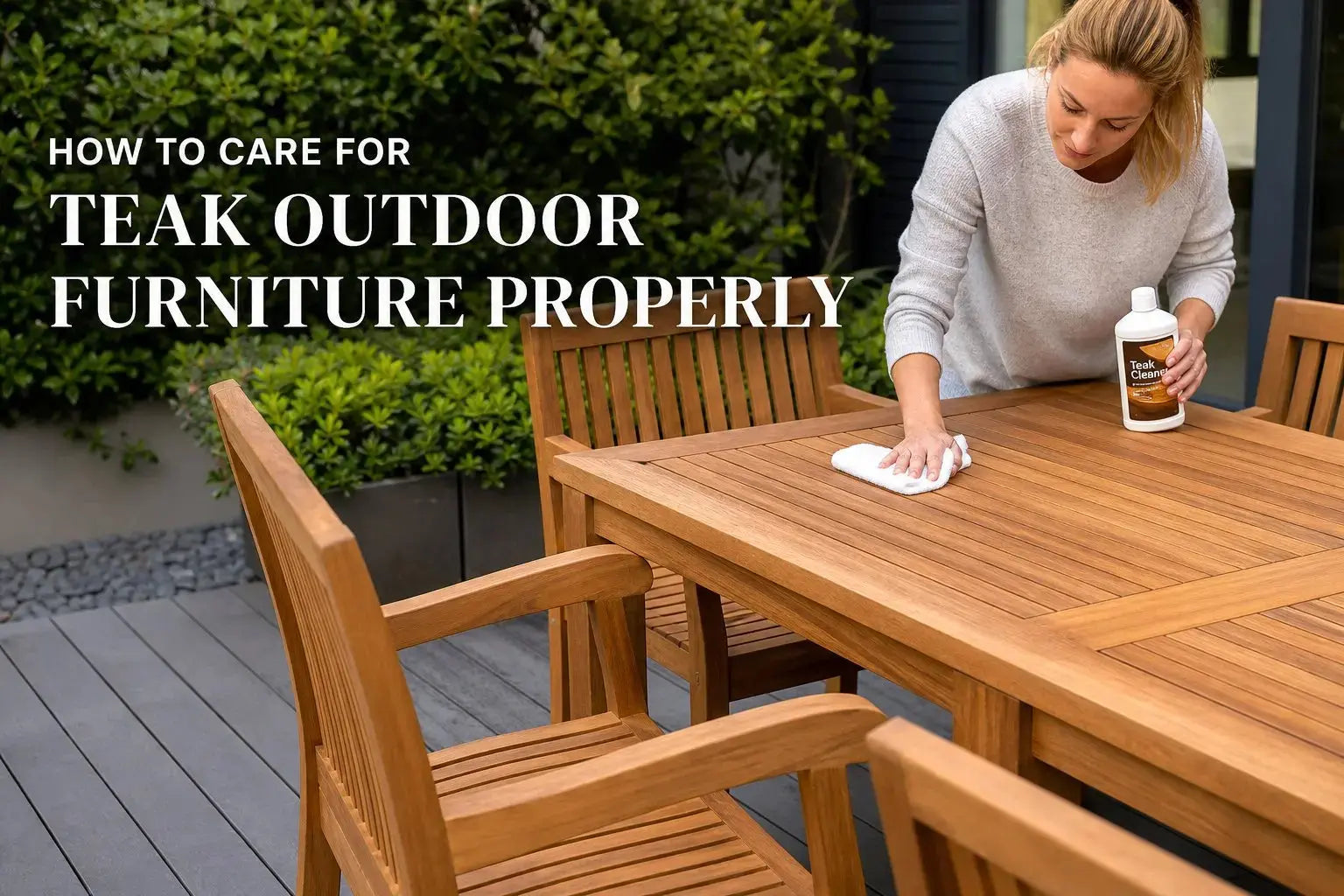
Knowing how to care for teak outdoor furniture is the difference between a patio set that looks tired after one summer and one that still looks great a decade from now.
Teak handles sun, rain, and changing weather better than almost any other wood, but it still rewards a simple routine. Whether you already own a set or are still browsing the Anderson Teak collection, this guide walks through exactly how to clean, protect, and maintain teak so it stays stunning season after season.

Before getting into cleaning and treatments, it helps to know why teak acts the way it does. Teak contains natural oils that protect it from water, pests, and rot, which is why it has remained one of the most trusted materials for outdoor and luxury patio furniture for generations.
Over time, teak shifts from a warm golden brown to a soft silver gray. That color change is completely natural and does not mean the wood is damaged or wearing out. The goal of teak care is not to fight this process, but to support it with the right habits.
If you are comparing teak against other outdoor materials before buying, it is worth browsing the full outdoor furniture catalog to see how teak's maintenance needs stack up against rattan, aluminum, and HDPE options.
Still shopping?If you have not picked out your pieces yet, our guide to the best teak outdoor furniture breaks down real dining, lounging, and conversation sets worth considering before you commit.
Caring for teak does not have to be complicated. A simple, consistent routine keeps it clean, protected, and looking great throughout the year.
If you live in a humid or coastal area, plan on cleaning more often. Salt air and moisture build up faster on exposed surfaces, but regular washing keeps that buildup from turning into a long-term problem.
Cleaning is the single most important part of teak care, and the good news is that it rarely takes more than simple tools and gentle products.
Mix mild soap with warm water in a bucket, then lightly wet the furniture with a hose before you start scrubbing.
Gently scrub with a soft brush, always following the direction of the wood grain rather than fighting against it.
Rinse thoroughly with clean water, then let the furniture air dry completely before using it again or adding cushions back.
Avoid scrubbing too hard. Gentle, repeated pressure removes dirt without damaging the wood fibers underneath.
For most homes, cleaning once a month during spring and summer is enough to keep teak looking its best. If your patio sees heavy use or frequent rain, clean it more often. Regular light cleaning is what actually prevents stains from setting in, rather than waiting and doing a deep clean later.
Easing inNot ready to commit to a full set? Smaller teak pieces are a great way to start, since they take less effort to clean and let you get a feel for the routine first.
If the idea of maintaining a full dining set feels like a lot, start smaller. These accent pieces deliver the same natural durability in a size that takes only minutes to clean.
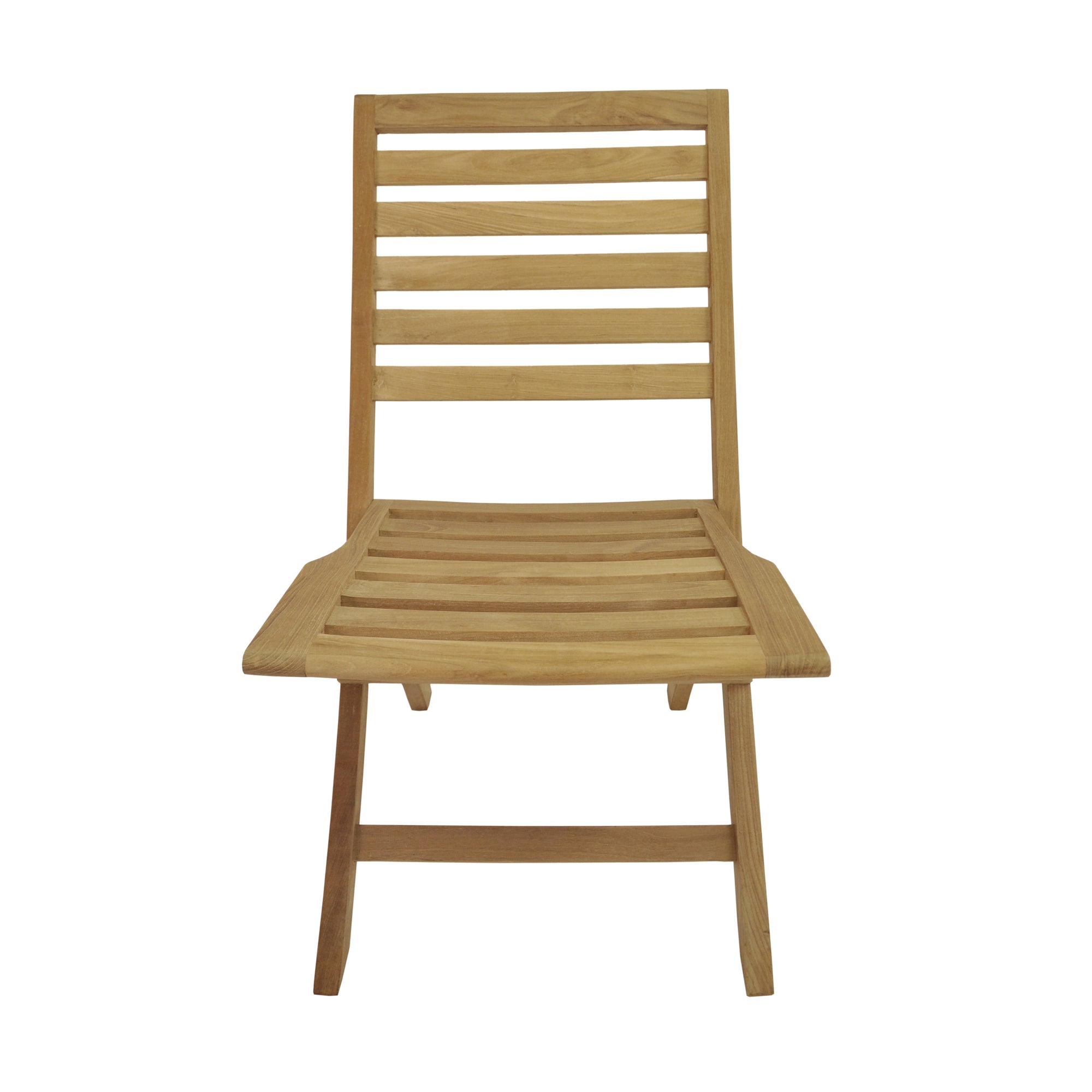
$900
Grade-A solid teak side chairs that fold flat for storage. No assembly, no fuss, ready to use right away.
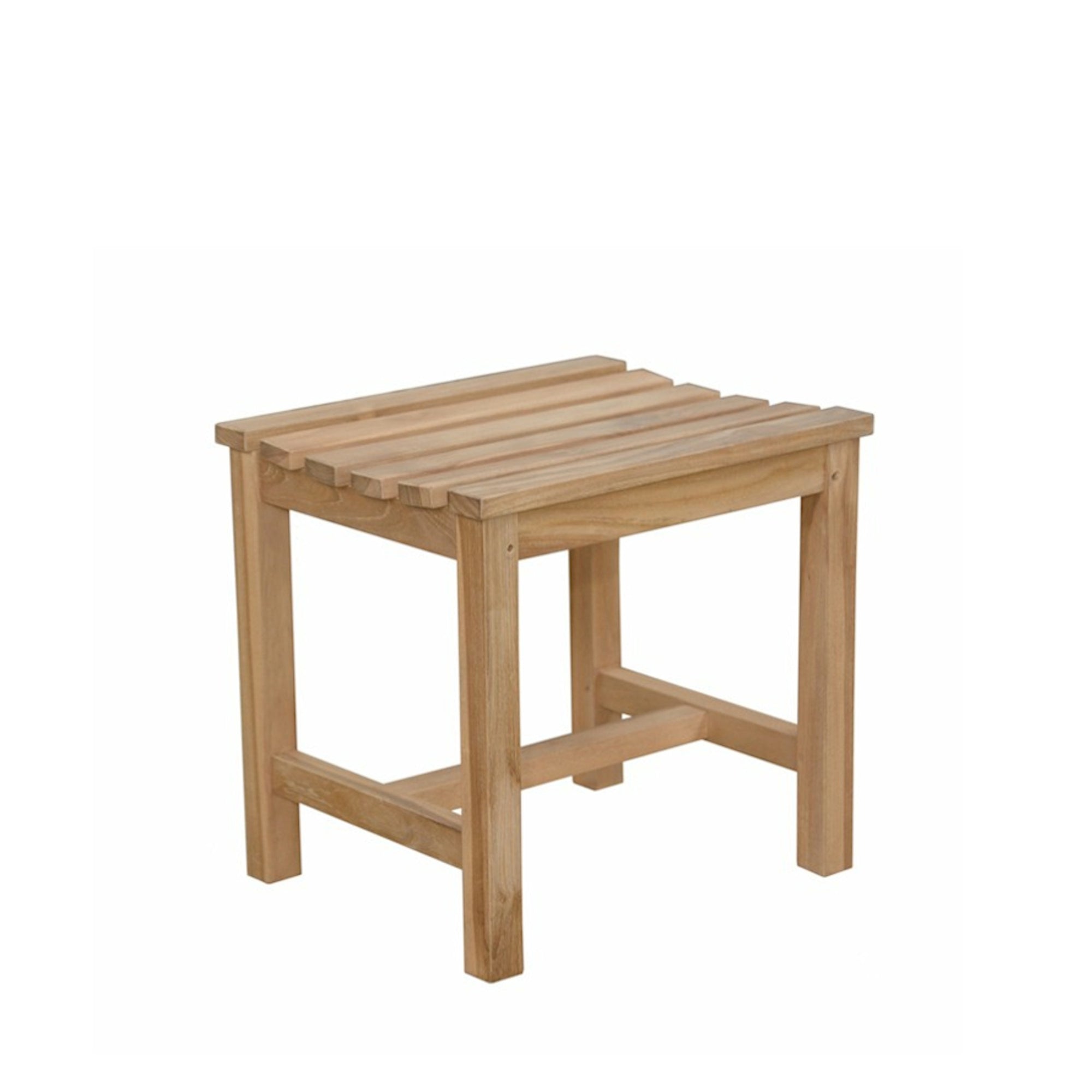
$350
A simple kiln-dried teak stool with a water-based sealer finish. Easy to wipe down and easy to move.
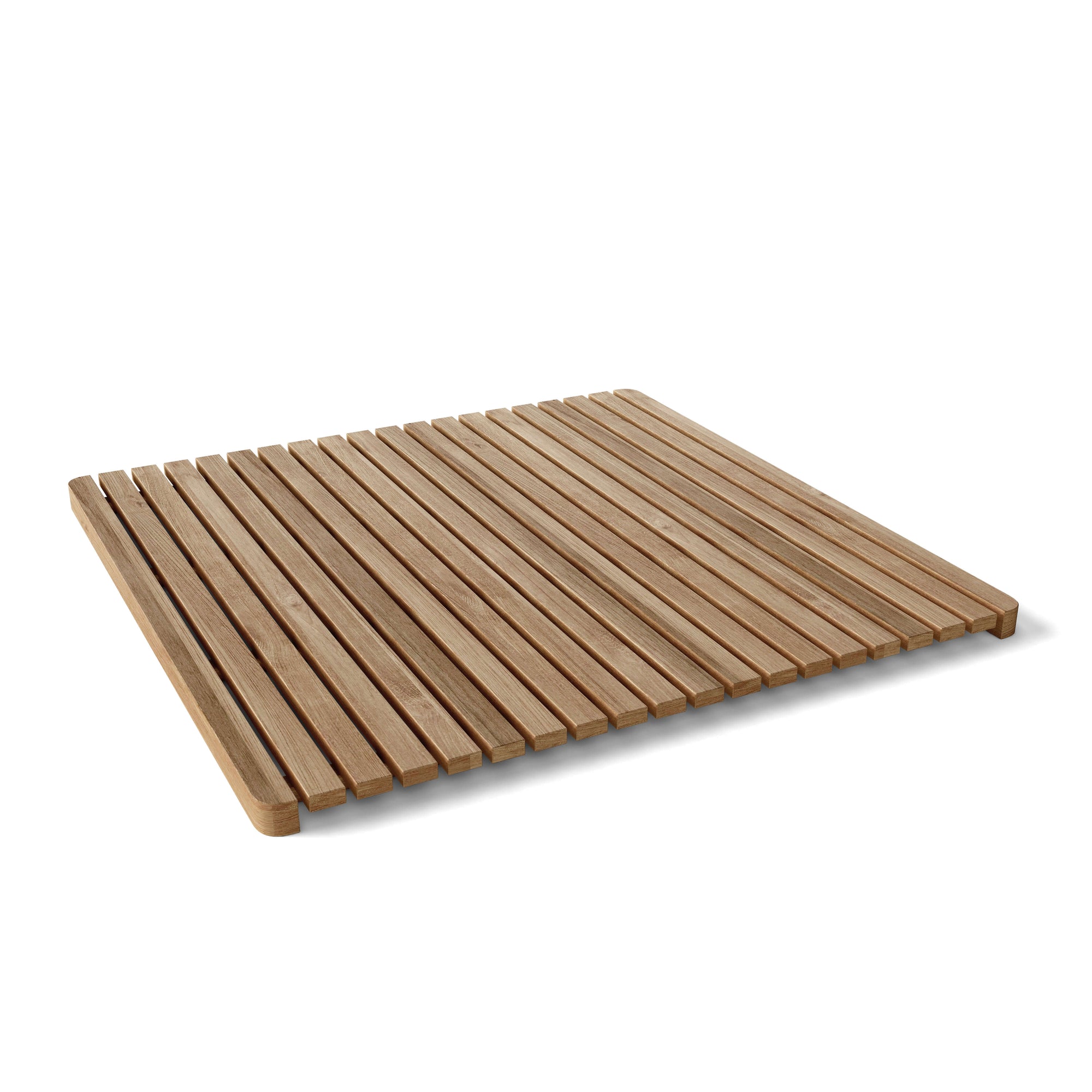
$270
A 30-inch square teak mat that pairs naturally with a hot tub or spa. Naturally water resistant, no assembly needed.
Mold and mildew tend to show up in damp or shaded areas, usually as dark spots or faint green patches on the surface.
To remove it safely, mix mild soap with warm water and scrub gently with a soft brush, then rinse well and allow the piece to dry in direct sunlight. For stubborn spots, a small amount of diluted white vinegar mixed with water can help, but always rinse thoroughly afterward.
To prevent mold from coming back, place furniture in areas with good airflow, avoid covering it while it is still wet, and clean a little more often during humid months.
One of the most common questions about teak care is whether to chase the golden color or let the wood weather naturally. Both are completely valid choices.
If you like the silver-gray look, simply clean your furniture on a regular schedule and leave it untreated. That patina is natural and actually adds a layer of protection on its own.
If you prefer the original honey brown color, use a teak cleaner made for outdoor furniture, ideally an oxygen-based or teak-specific formula rather than chlorine bleach. Light sanding with fine sandpaper can help if needed, always working with the grain, followed by a teak sealer to lock the color back in. Deep sanding is rarely necessary unless the furniture has heavy staining.

Teak is strong on its own, but a little extra protection helps it look its best for longer.
Use breathable furniture covers during long stretches of rain instead of plastic ones that trap moisture.In winter, you can either leave teak outside under a proper cover or move it to dry storage. Either approach works well as long as moisture is not trapped against the wood for long periods.
Many homeowners wonder if oiling is necessary once they understand teak's natural weather resistance. The honest answer is that it comes down to your style preference, not a durability requirement.
| Feature | Teak Oil | Teak Sealer |
|---|---|---|
| Purpose | Deepens the brown color | Maintains color and protects the surface |
| Maintenance | Needs frequent reapplication | Lasts considerably longer |
| UV Protection | Limited | Stronger and more consistent |
| Stain Resistance | Low | Noticeably higher |
If you choose to oil your furniture, make sure it is completely clean and dry first. Apply the oil evenly with a cloth, wipe off any excess, and let it dry fully before using the piece again. For most homeowners, a quality teak sealer ends up being the better long-term option, since it protects against stains and UV damage while cutting down on upkeep.
Using the wrong tool or product can damage even the best-built furniture. Knowing what to avoid matters just as much as knowing the right steps.
| Item | Why to Avoid It |
|---|---|
| High-pressure washers | Can erode the wood surface and strip away natural oils |
| Chlorine bleach | Can weaken wood fibers and discolor the surface |
| Steel wool or wire brushes | Scratches the surface and damages the grain |
| Thick paint or varnish | Does not bond well with teak's natural oils |
| Plastic covers | Trap moisture underneath and encourage mildew growth |
If your teak furniture looks rough, faded, or stained, there is a good chance it can be restored. Teak is forgiving wood that responds well to proper care, even after years of neglect.
Start with a deep clean using a teak cleaner, then lightly sand any rough areas, rinse, and let everything dry fully. From there, apply a teak sealer if you want to lock in the color. Even furniture that looks worn can come back to life with some patience, and restoration is almost always far cheaper than replacing the piece outright.
Consistency is really the whole secret to caring for teak well. A few small actions done on a regular schedule prevent bigger problems later.
If after reading all of this you decide wood maintenance simply is not for you, that is a completely reasonable call too. BetterPatio's Skyline Design collection offers synthetic fiber pieces that need almost no seasonal upkeep, and Panama Jack Outdoor blends woven wicker with teak accents for a lower-maintenance middle ground.
Once the care routine feels manageable, a full teak set is a genuinely low-effort way to upgrade a patio. These three pieces hold up beautifully with the exact routine covered above.
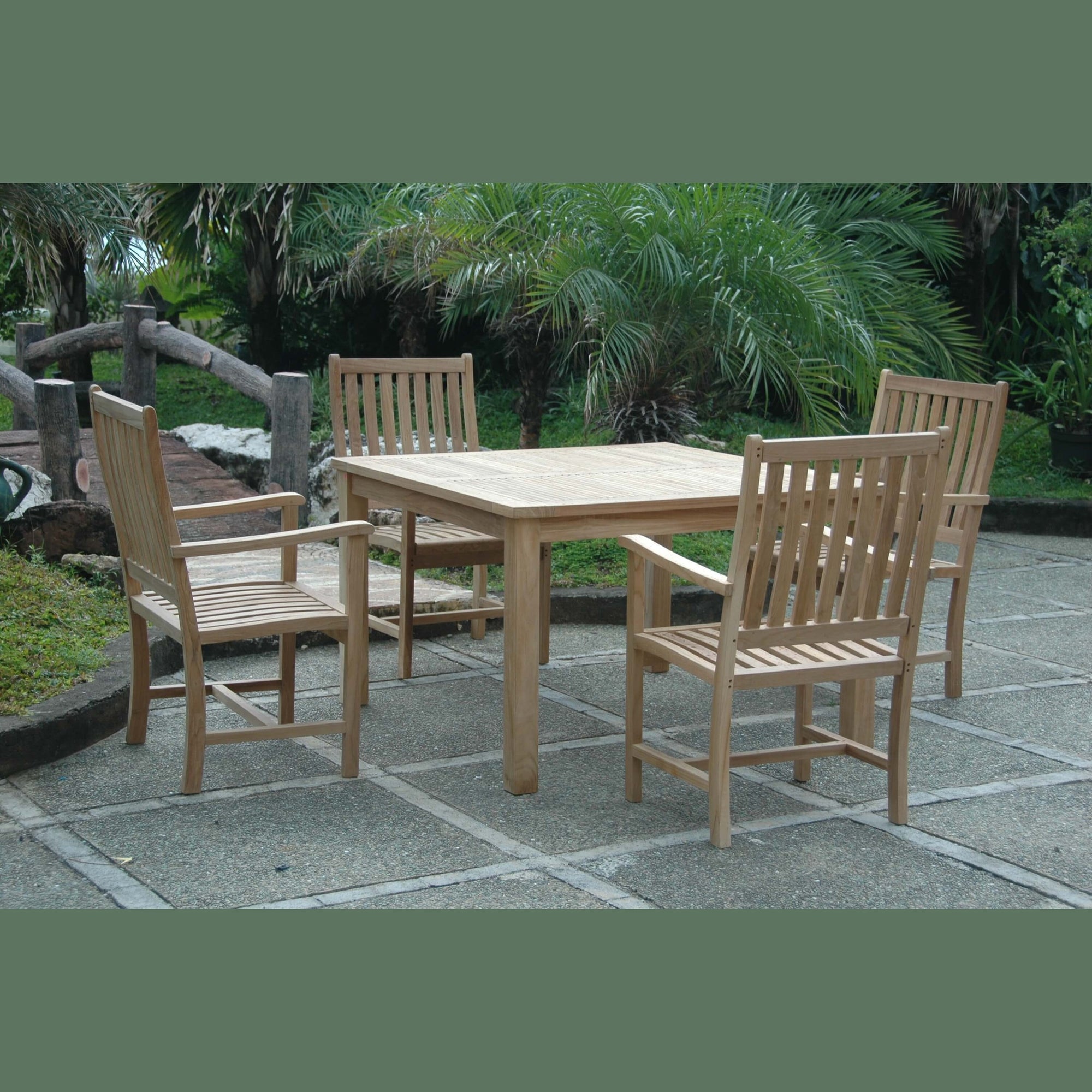
$3,600
A 47-inch square table with four curved Wilshire armchairs, built from kiln-dried Grade A teak.
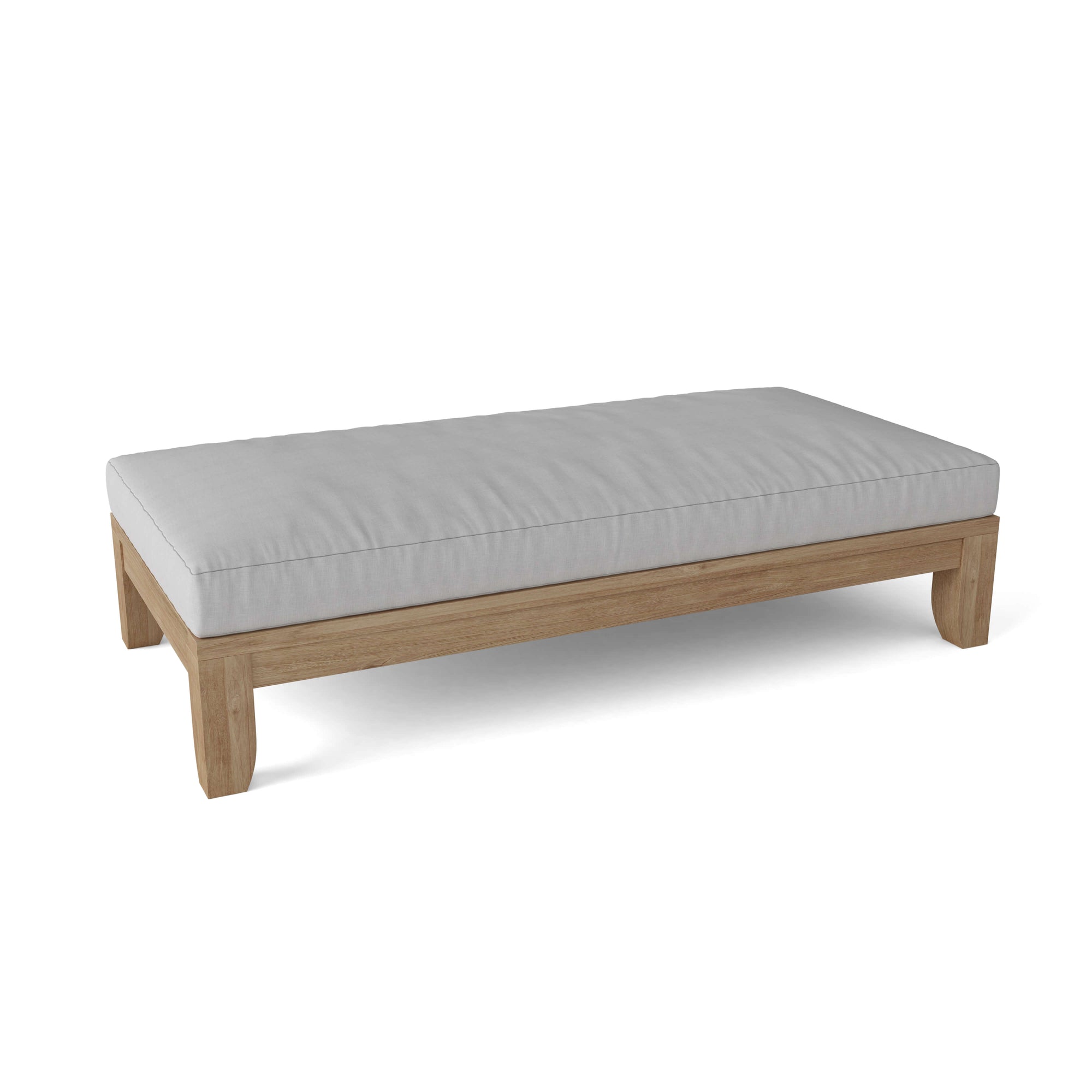
$1,800
Premium A-grade teak with custom Sunbrella cushions that resist UV fading, water, and mildew.
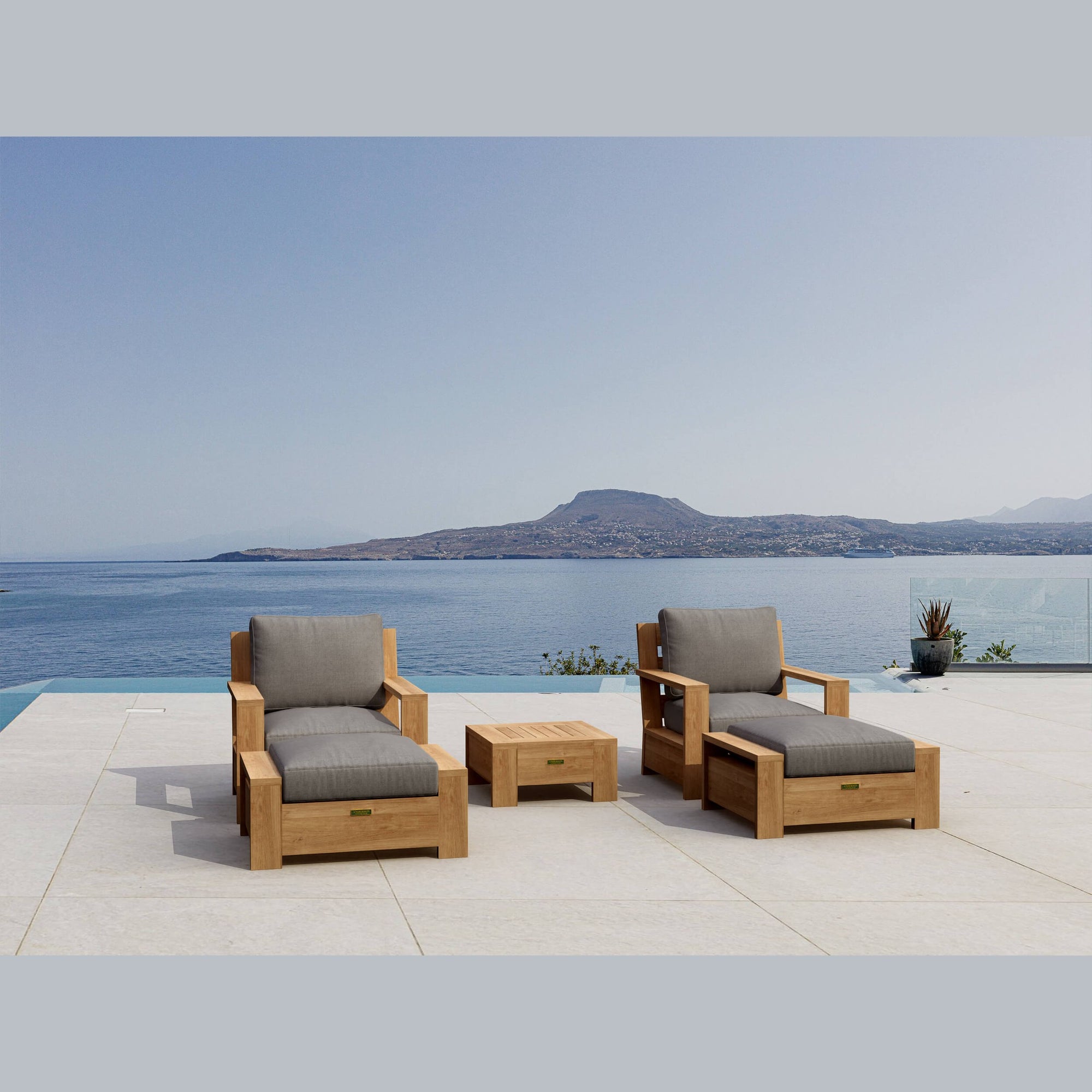
$6,950
Two deep seating armchairs, two ottomans, and a side table in kiln-dried, unfinished A-Grade teak.
No, oiling is not required. Teak naturally contains protective oils and can last for years without any added treatment. Oiling mainly helps maintain the brown color and needs to be reapplied regularly, so if you prefer the silver-gray look, you can skip it entirely.
Clean it regularly and use breathable covers during heavy rain or snow. Keeping it elevated and allowing airflow underneath helps prevent moisture buildup, and a teak sealer adds extra protection against staining. Seasonal attention makes a noticeable difference over time.
Sealing is usually the better long-term choice since it lasts longer and needs fewer reapplications. Teak oil enhances the color but requires more frequent upkeep. The right choice really depends on how much ongoing maintenance you want to take on.
Avoid high-pressure washers, chlorine bleach, steel wool, and harsh chemical cleaners, since all of them can strip natural oils or damage the wood surface. Plastic covers that trap moisture should be avoided as well. Gentle cleaning methods consistently work best.
It depends on your goals. If you like the natural aging process, regular cleaning alone is enough. If you want to preserve the golden color, a quality teak sealer is typically the best option. Consistent, light maintenance matters more than any single heavy treatment.
Learning how to care for teak outdoor furniture really comes down to a few simple habits: clean it regularly, protect it from extreme moisture, and decide early on whether you want the natural gray look or a sealed golden finish.
None of this requires special skills or a long list of products. A little consistency is what keeps teak furniture strong, beautiful, and ready for outdoor living year after year.

As the outdoor living trend continues to thrive, you may be wonder...

How to transform your outdoor space in 5 steps to...