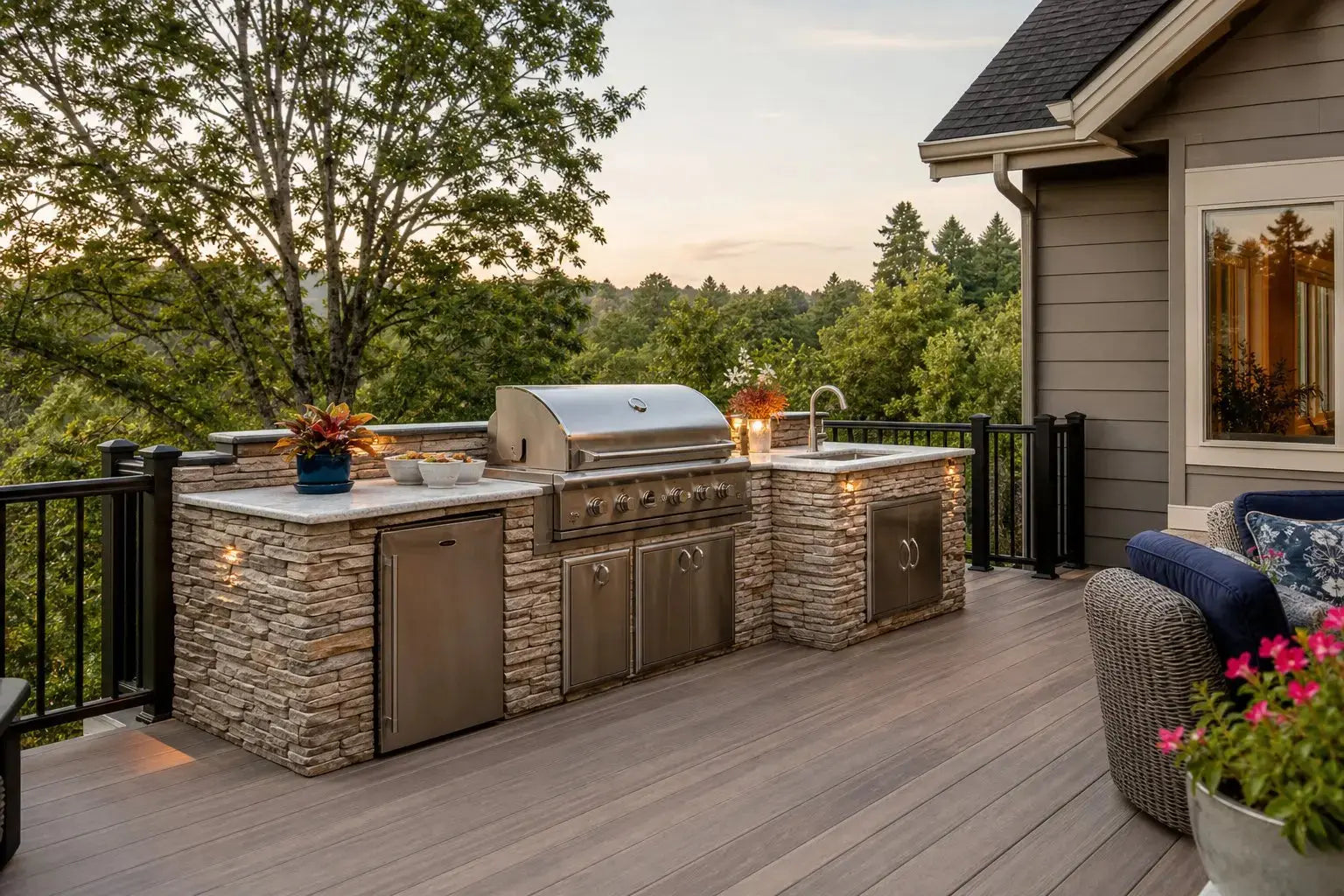
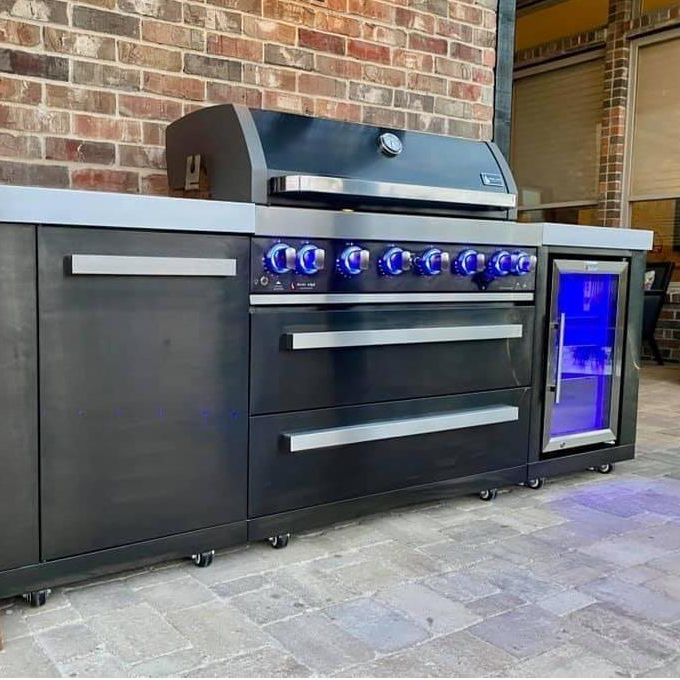
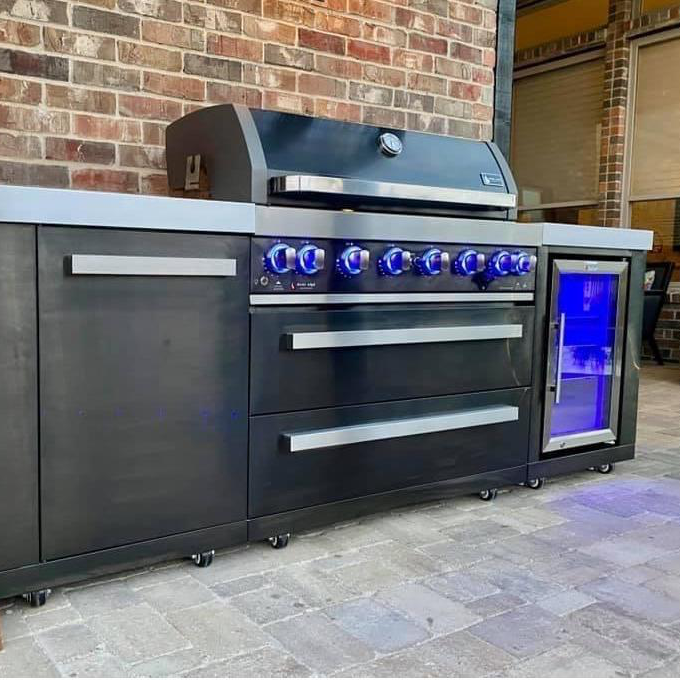
Yes, you can put an outdoor kitchen on a deck, but only if the structure can actually handle the weight, heat, and utilities involved.
An outdoor kitchen can completely change how you use a backyard, and if you already have a deck, it looks like the obvious spot for a grill station or a full setup. Before you start buying appliances, it helps to know exactly what to check, including whether a modular outdoor kitchen might be the safer fit for your specific deck.

Yes, you can put an outdoor kitchen on a deck, but only if the structure is strong enough and properly prepared. Not every deck is designed to support heavy appliances, stone countertops, or built-in cabinetry.
A simple grill and prep table is a very different load than a full outdoor kitchen with refrigeration and plumbing. Before building anything permanent, it pays to evaluate weight capacity, fire safety, and your local building rules first.
The deck itself is the foundation of the whole project. If that foundation is weak, everything built on top of it becomes a risk.
Most code compliant residential decks are designed to support roughly 40 pounds per square foot of live load, which covers people and furniture, plus 10 to 20 pounds per square foot of dead load from the deck itself. An outdoor kitchen adds to both numbers. Heavy countertops, grills, refrigerators, and cabinets increase the permanent weight sitting on the deck, and heavy appliances or masonry features can concentrate that weight in one spot rather than spreading it out the way furniture does.
| Kitchen Type | Approximate Weight Impact | Reinforcement Likely Needed |
|---|---|---|
| Portable grill + cart | Low | Usually no |
| Modular kitchen units | Moderate | Sometimes |
| Built-in masonry kitchen | High | Often yes |
| Pizza oven + stone counters | Very high | Almost always |
If you are planning anything beyond a simple grill station, it is worth having the deck inspected first.
A properly built wooden deck can hold significant weight, but that does not mean it can handle unlimited load. A few factors affect deck strength the most: joist size and spacing, beam size and placement, post and footing depth, wood condition and age, and fastener quality.
Older decks may not meet current building codes. If you notice sagging, soft wood, or loose railings, get that reinforced before installing any outdoor kitchen on top of it.
Reinforcement is common for permanent outdoor kitchens. Typical solutions include adding support posts beneath heavy areas, installing additional beams, doubling up joists under appliances, and upgrading footings. Spreading weight evenly across the deck matters too, since placing every heavy appliance in one corner adds unnecessary stress to a single section.
Heat and open flames are a real concern when cooking on a wooden platform, so fire safety should always come before design preferences.
Keep grills well away from structures, ideally around 10 feet when space allows, and always follow the manufacturer's clearance instructions. Avoid placing grills directly under low roofs, never run a charcoal grill in an enclosed or poorly ventilated space, and keep a fire extinguisher nearby at all times. Gas grills are typically the safer choice on decks since they produce far fewer sparks and flying embers than charcoal.
Even without an actual fire, heat can damage deck boards over time. Use fire resistant grill mats, install a non combustible pad under cooking zones, clean grease buildup regularly, and avoid setting hot pans directly on the deck surface. Composite decking resists heat and moisture better than untreated wood, but it still needs protection under any cooking equipment.
The right materials reduce weight and improve durability at the same time. Heavy masonry builds are usually not a good idea on a deck unless it has been specifically engineered for that load.
Lightweight, weather resistant materials are the safest bet: stainless steel framing, aluminum frames, outdoor rated cabinetry, and lightweight countertops.
| Material | Weight | Durability | Deck Friendly |
|---|---|---|---|
| Concrete block | Very heavy | Very durable | Rarely |
| Full brick | Heavy | Very durable | Often no |
| Stainless steel | Moderate to light | Excellent | Yes |
| Aluminum | Light | Excellent | Yes |
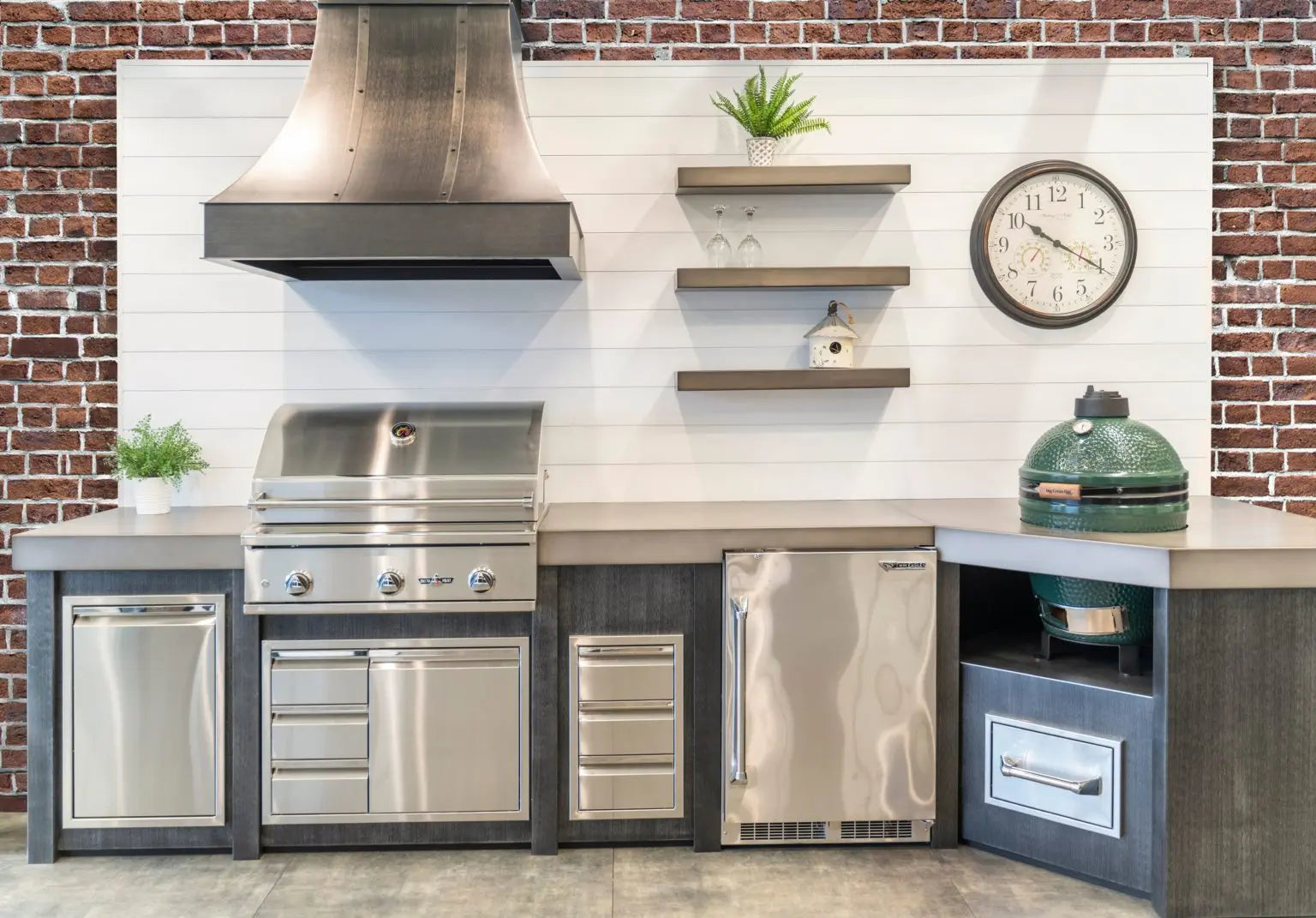
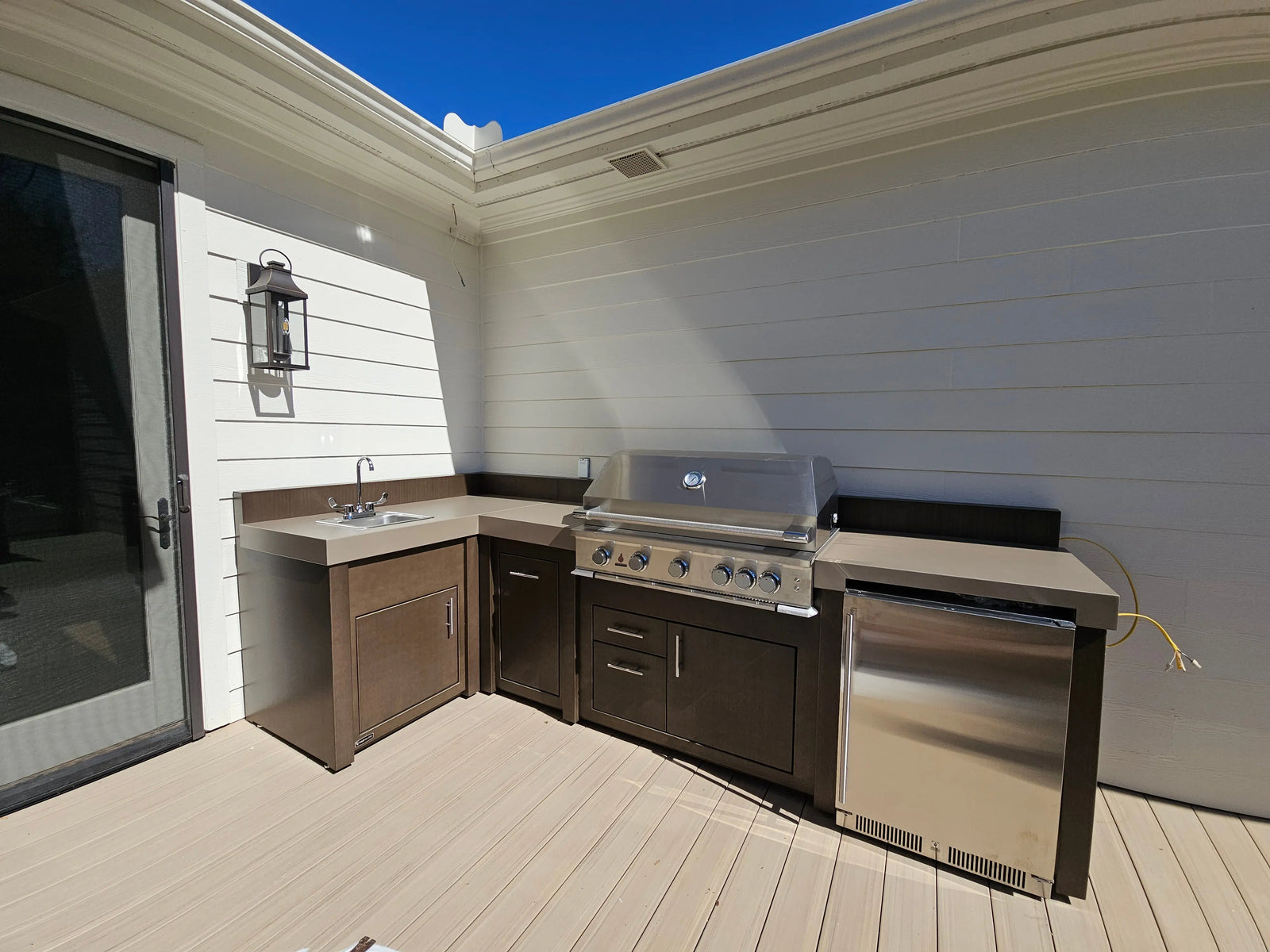
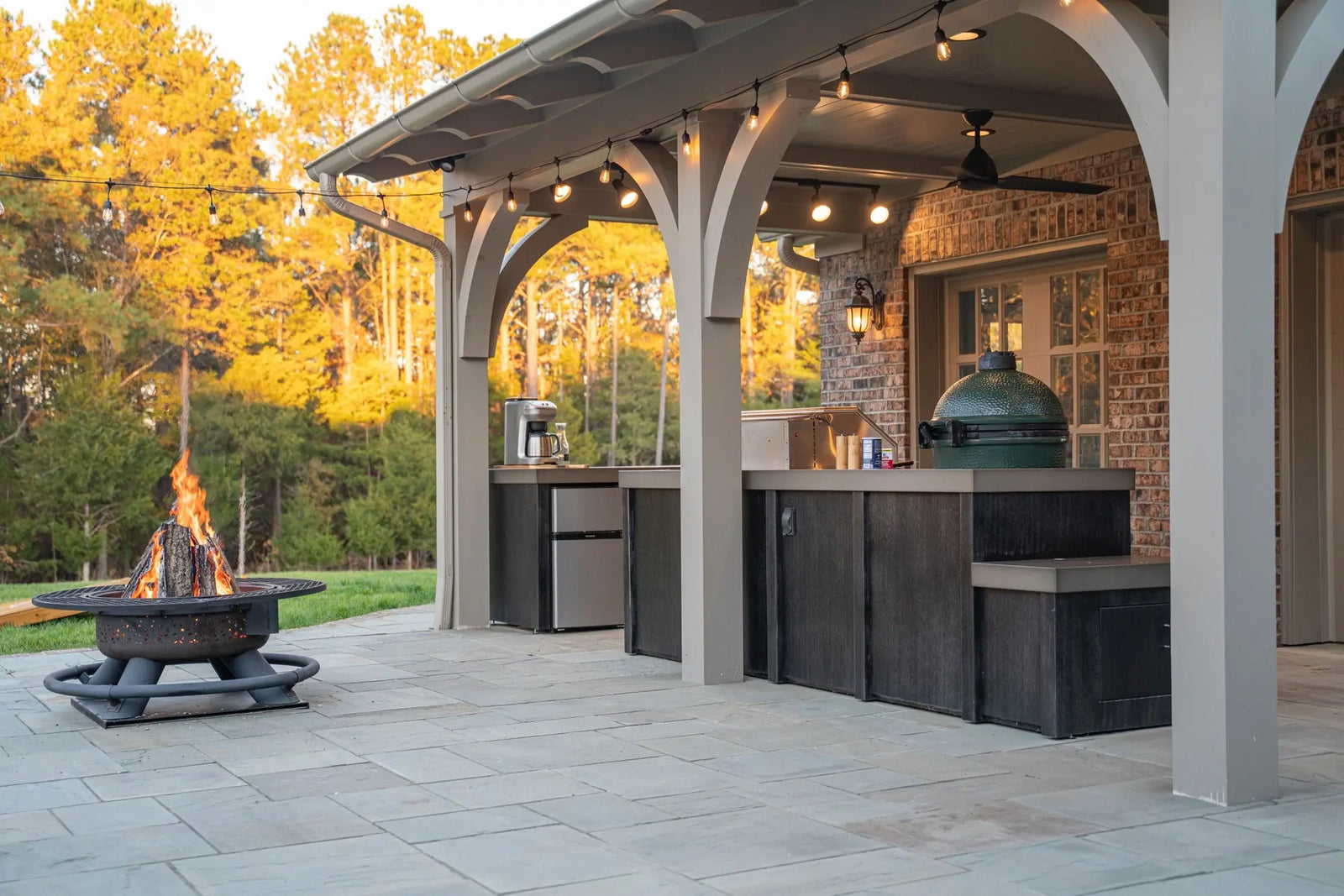
Stainless steel and aluminum offer real strength without piling on excess load. Both also resist rust and moisture, which makes them a natural fit for deck environments specifically. Here are three real setups built around exactly that kind of lightweight, deck-friendly construction.
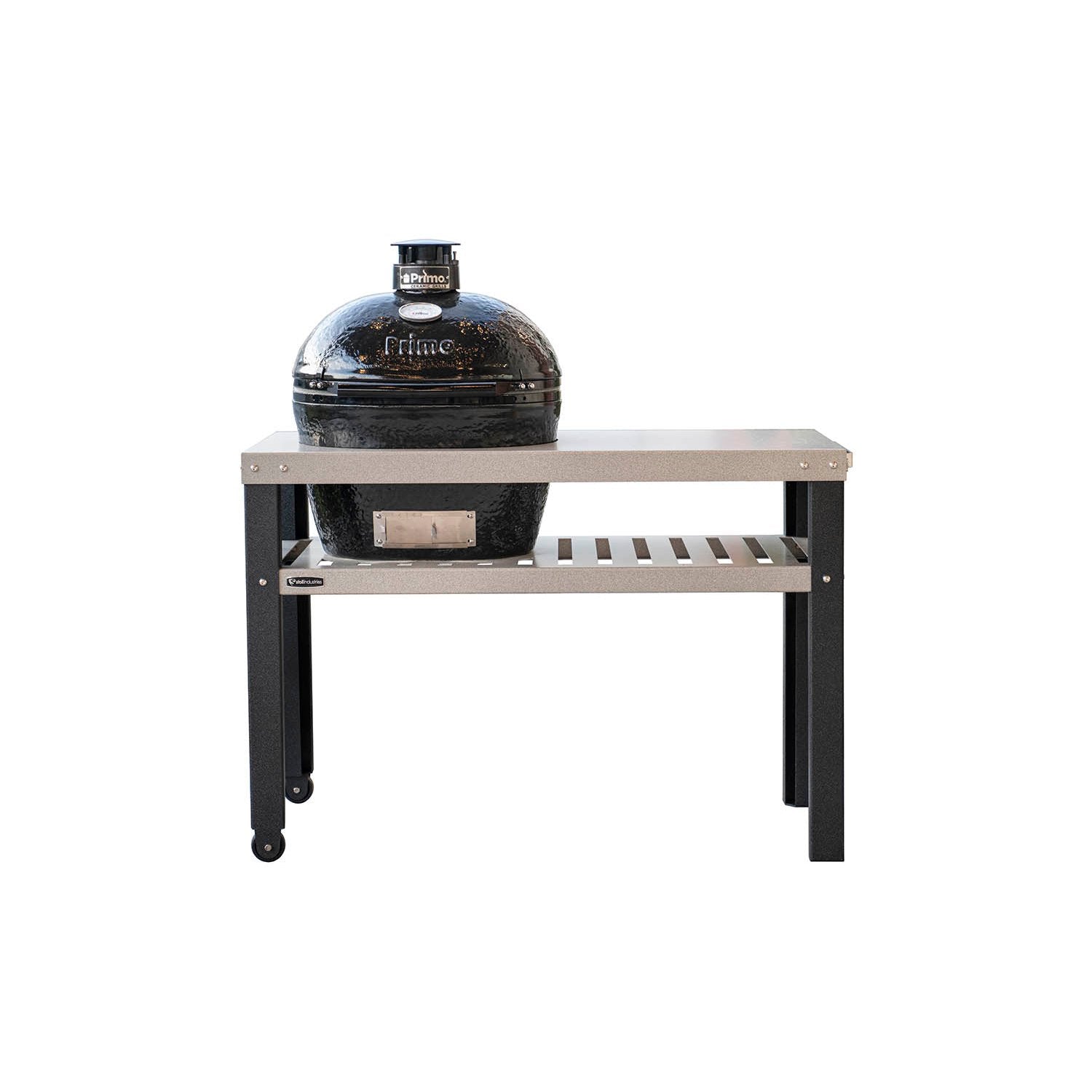
$1,799.99
A fully portable cart on caster wheels. It sits as furniture-level live load instead of permanent dead weight.
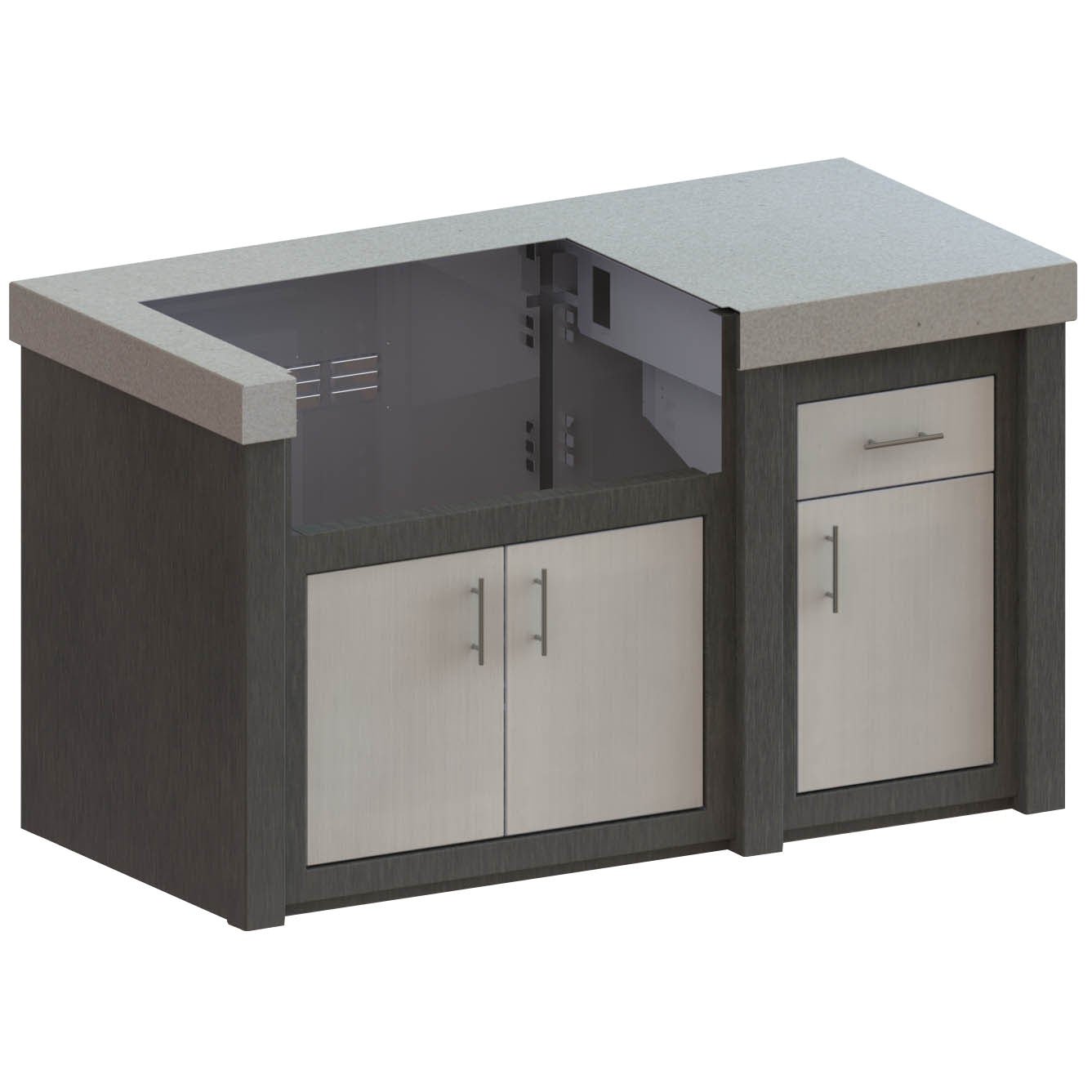
$4,990
A weather-resistant aluminum frame that ships pre-fabricated and can be disassembled for easy transport.
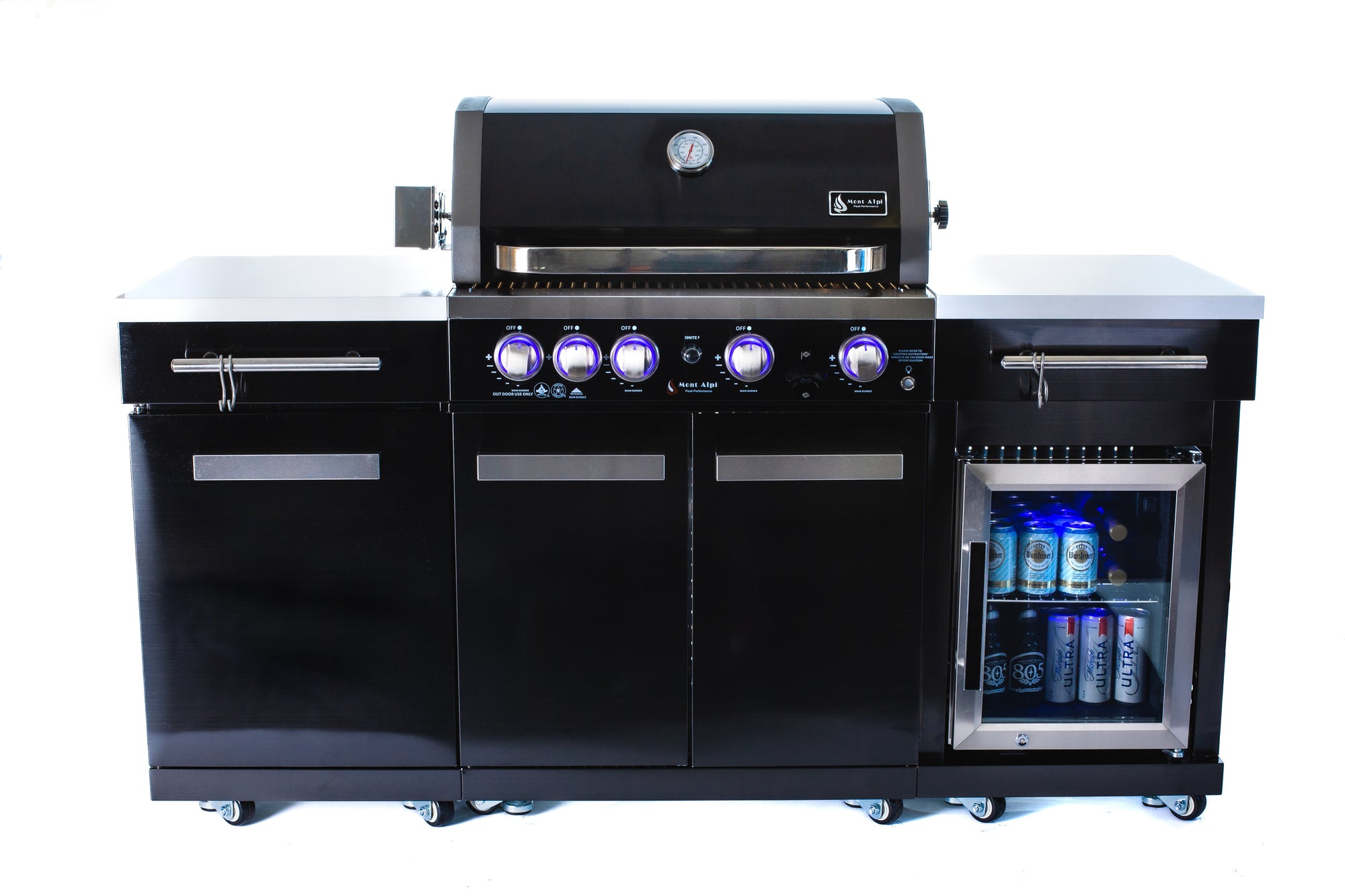
$2,600
A 304 stainless steel island with a built-in fridge, sized to avoid the bulk of a full masonry build.
If you are building a new deck or upgrading an old one, the surface itself matters too. Composite decking offers moisture resistance, pressure treated wood is the most affordable option, and hardwood decking gives a more premium appearance. Under the cooking area specifically, a protective tile or stone pad helps shield the main deck boards regardless of which surface you choose.
Adding utilities increases convenience, but it also takes careful planning. Gas lines, electricity, and plumbing all need to meet local regulations.
Natural gas requires professional installation and inspection, and it can come with permit requirements. Propane is simpler and more flexible, and many deck outdoor kitchens run on propane tanks stored safely away from any heat source. Always include proper shut off valves, secure connections, and regular leak checks.
Outdoor kitchens typically need GFCI protected outlets, weatherproof outlet covers, outdoor rated wiring, and proper grounding. If you are adding lighting, outdoor refrigeration, or other built-in appliances, professional electrical installation is strongly recommended rather than a DIY job.
You may need permits for structural reinforcement, gas line installation, electrical upgrades, and plumbing work. Skipping permits can lead to fines or complications during a home resale, so always check with your local building department before starting anything permanent.

Building an outdoor kitchen on a deck takes careful planning. A structured approach keeps the project both safe and efficient.
Check for rot or water damage, sagging boards, weak posts, and loose hardware. Repair any damage before moving forward.
Add extra support exactly where heavy appliances will sit, and make sure the added weight is distributed evenly.
Avoid heavy masonry unless your deck is specifically engineered for it. Modular systems and stainless steel setups keep stress on the structure to a minimum.
Hire licensed professionals for gas and electrical work, and confirm that everything meets local code requirements before use.
Round out the space with weather resistant seating, an outdoor dining table, storage, and shade. Teak outdoor furniture holds up well next to a working kitchen, and a custom fiberglass pergola adds shade without the weight of a traditional structure.
Outdoor kitchens can range from a few hundred dollars to tens of thousands. Keeping the design simple is the easiest way to stay on budget.
The most affordable setup is usually a grill station built from portable components. Even on a tight budget, never compromise on structural safety or fire protection to save money.
Stretch your budget furtherCheck the current Sale & Clearance selection before paying full price on any single piece of your setup.
Planning ahead prevents expensive repairs later, and every one of these mistakes is easy to avoid with a little upfront care.
It depends on the weight of the kitchen and the strength of the deck. A simple grill and small prep station may not require reinforcement, while larger built-in kitchens with heavy countertops often do. An inspection can confirm what is actually safe for your setup.
Many decks can support an outdoor kitchen if they are built correctly and in good condition. Joist size, beam size, and footing depth all matter, and older decks that do not meet current standards may need reinforcement before adding anything heavy.
Most residential decks are designed to hold about 40 pounds per square foot of live load, which includes people and furniture. Heavy appliances and permanent structures add to the total load, and how that weight is distributed across the deck matters just as much as the total amount.
Start by inspecting the deck and reinforcing it if needed, then choose lightweight, weather resistant materials and plan a balanced layout. Install any utilities according to local codes, and prioritize safety before focusing on design details.
So, can you put an outdoor kitchen on a deck? Yes, as long as the deck is strong enough, the materials are chosen wisely, and fire safety rules are followed from the start.
Careful planning turns a deck kitchen into a long term upgrade instead of a structural problem. Whether that means a simple rolling cart or a full modular setup, browsing real outdoor furniture built for the same conditions helps the rest of the space hold up just as well as the kitchen itself.

As the outdoor living trend continues to thrive, you may be wonder...

How to transform your outdoor space in 5 steps to...