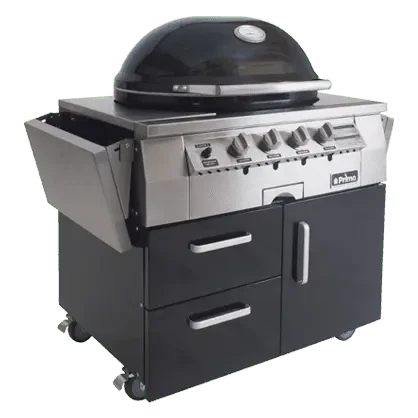
A kamado grill is a serious investment — premium ceramic models can last decades and replace three or four separate cookers, but only if you pick the right one for your space, climate, and cooking style.
This guide breaks down the specs that actually affect cooking performance and longevity: ceramic thickness, shape (round vs. oval), size, hardware quality, and brand reputation. By the end you should know exactly what to look for when you walk into a kamado purchase.
- Ceramic thickness is the single most important spec. Look for at least 0.75 inches; 1 inch or more is better. Thicker ceramic holds heat longer, uses less fuel, and lasts decades.
- Oval shape adds two-zone cooking; round shape distributes heat evenly. Primo's oval design lets you grill direct and roast indirect at the same time on the same grill — round kamados cannot do this.
- Size up if you regularly entertain. 13-inch kamados feed 2-4 people, 18-inch handles 4-6, and 24-inch flagships cook for 8-12+. Buy one size larger than your everyday needs.
- Hardware quality matters as much as the ceramic. Stainless steel bands, cast iron top vents, heavy-gauge cooking grates, and proper gasket construction all separate premium kamados from budget knockoffs.
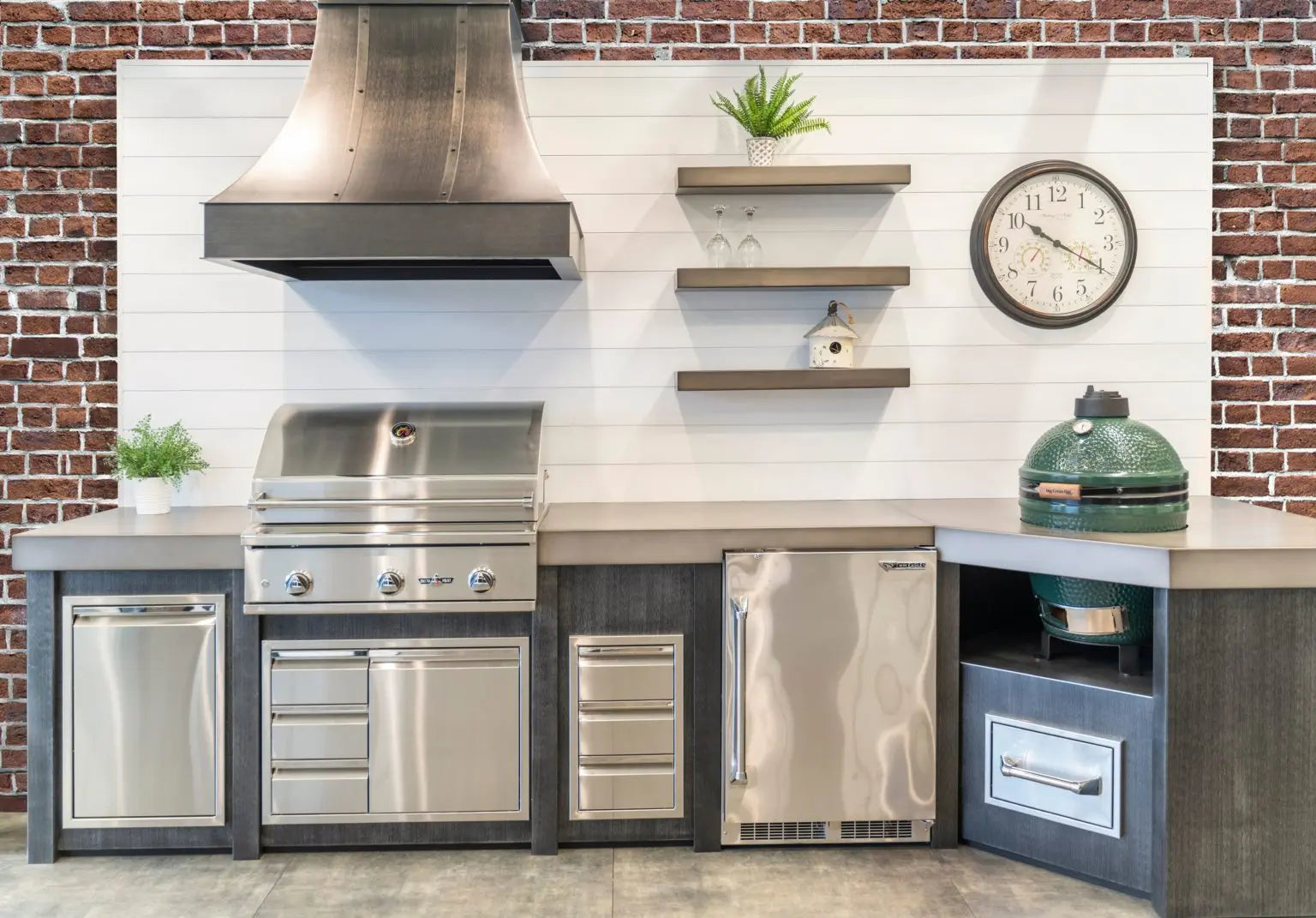
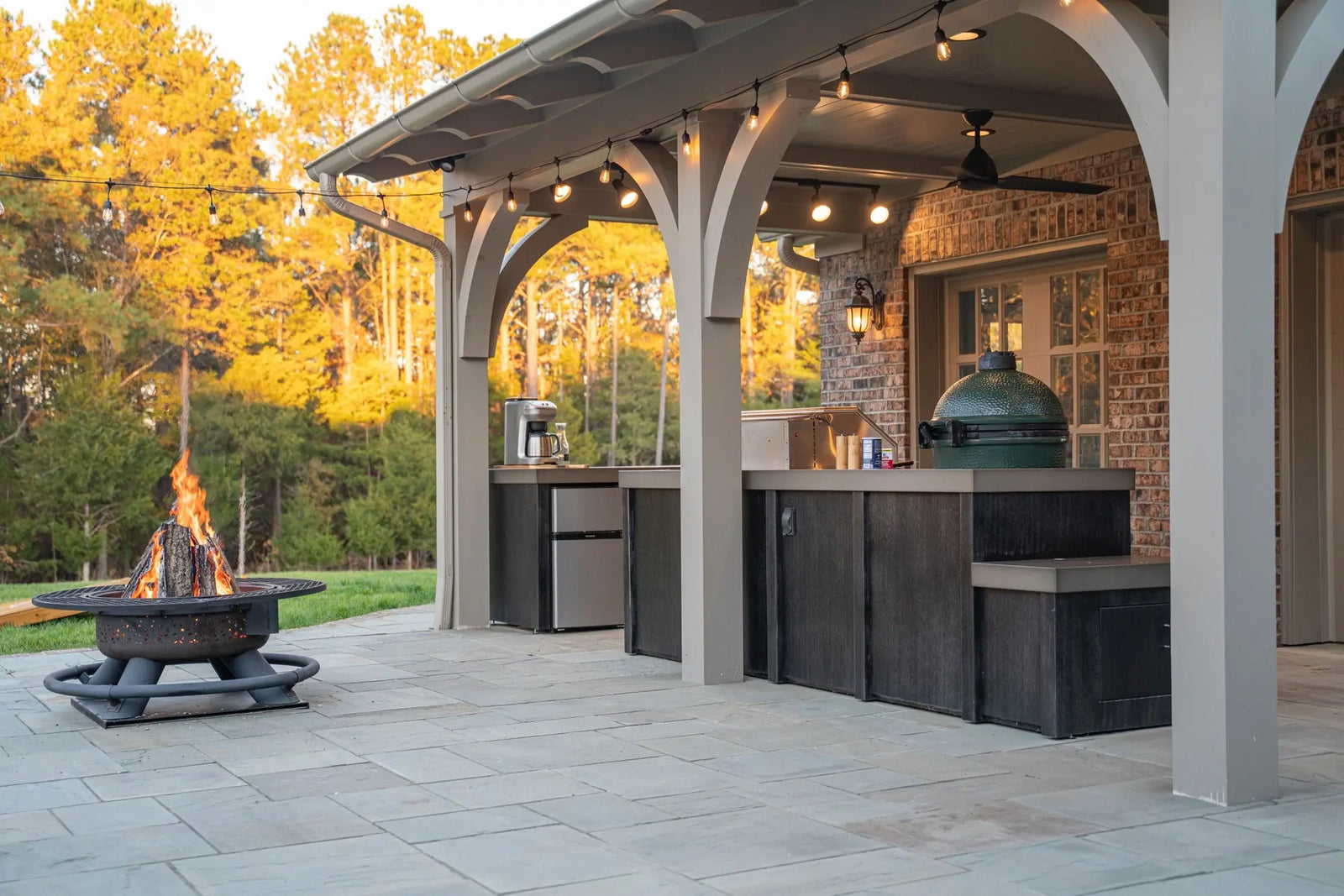
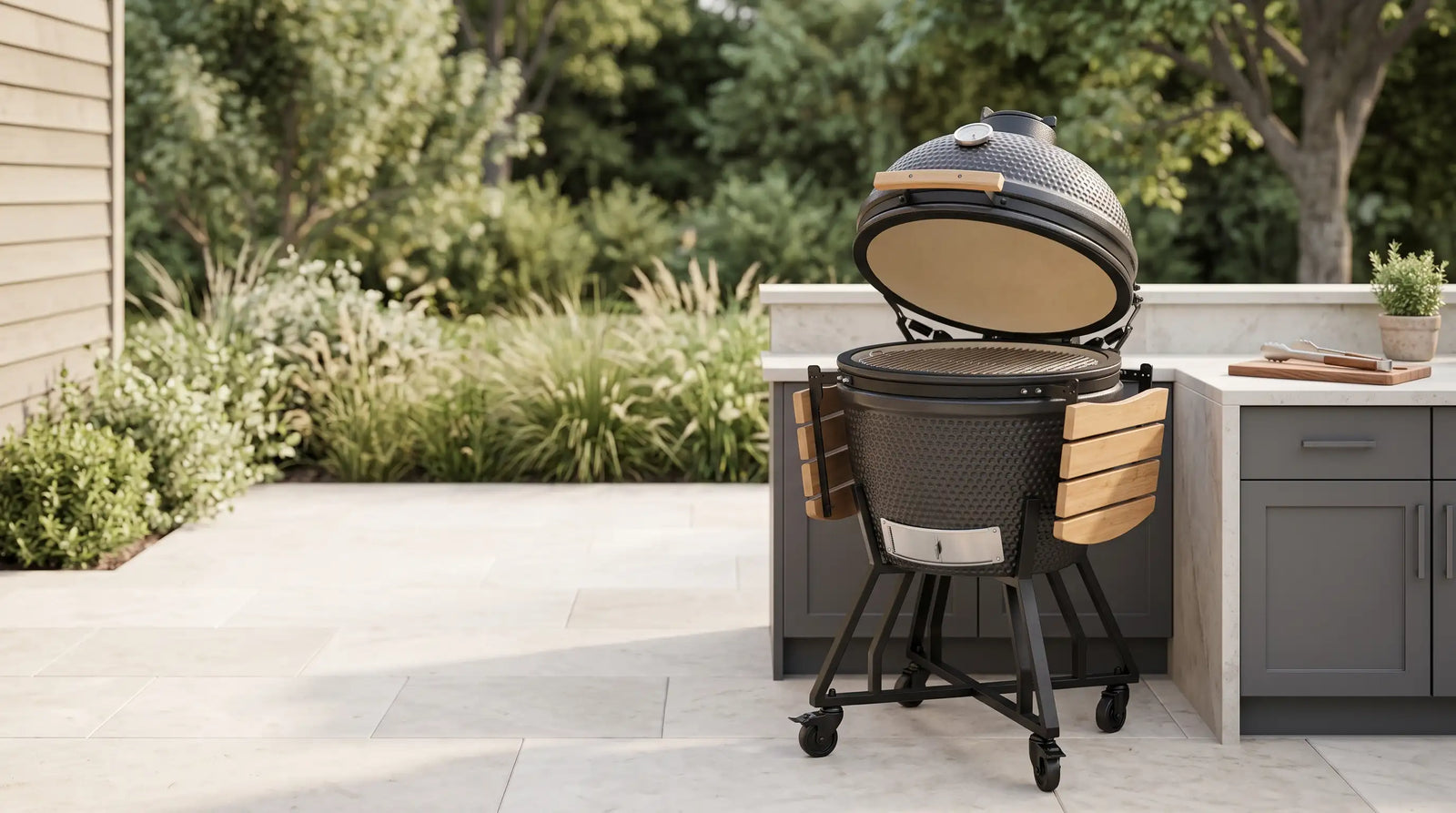
- Plan ahead if you're building a kamado into an outdoor kitchen. The egg shape sits taller than a built-in gas grill, so the kamado has to be recessed deeper. The bottom air vents must remain accessible — no fully enclosed cabinets.
Key benefits of kamado cooking
Heat retention and fuel efficiency
Ceramic kamados act like thermal batteries. Thick ceramic walls — typically 1 to 2 inches — absorb heat and release it slowly, which keeps the cooking chamber stable for hours with minimal fuel input. A single load of charcoal (about 3 to 5 pounds) can run a kamado at 225°F for 12 to 18 hours.
That fuel efficiency adds up over time. Serious kamado owners typically burn 30 to 50 pounds of charcoal per year for regular cooking. The same volume of cooking on a traditional offset smoker would consume several times that amount of fuel.
Temperature control and versatile cooking
You control kamado performance with two air vents — one at the bottom (oxygen intake) and one at the top (exhaust). Small vent adjustments let you set any temperature from 225°F for smoking to 750°F+ for pizza and searing. The thick ceramic walls respond slowly to vent changes, which prevents temperature spikes and keeps cooks predictable once you have the grill dialed in.
The same kamado handles five distinct cooking methods:
- Smoking at 225°F to 275°F for brisket, ribs, pork shoulder
- Roasting at 325°F to 425°F for whole chickens, prime rib, turkeys
- Baking at 400°F to 500°F for bread, pizza dough, casseroles
- Direct grilling at 450°F to 600°F for steaks, burgers, chops
- Searing and pizza at 600°F to 750°F+ for steakhouse-quality crust
One ceramic shell, five cooking modes — no need for separate smokers, pizza ovens, or grills.
Direct and indirect heat
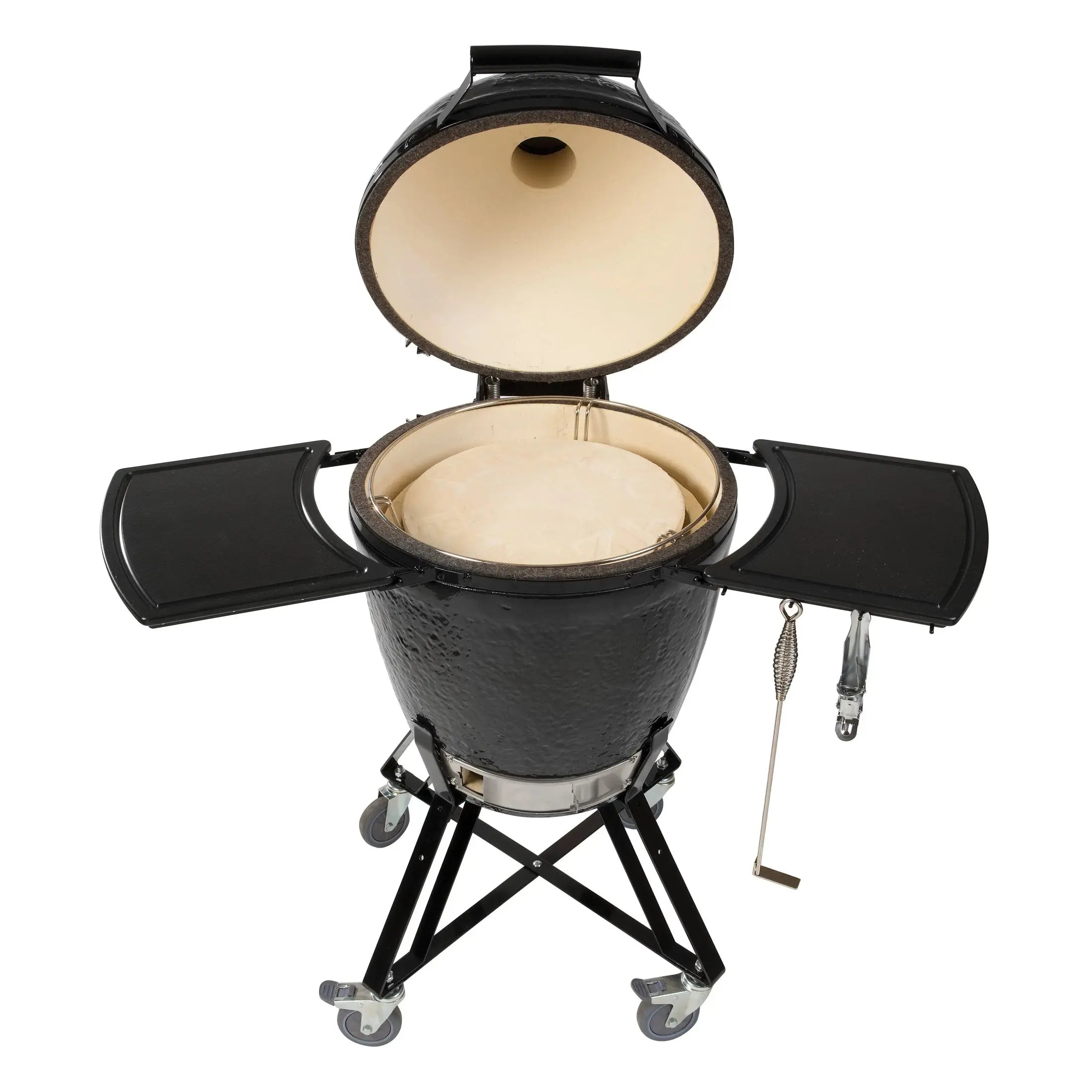
A ceramic heat deflector (also called a plate setter) sits between the fire and the food to enable indirect cooking. With the deflector in place, heat circulates around the cooking chamber instead of radiating directly at the food — the same principle as a convection oven. Pull the deflector out and you have direct-fire grilling. Switching modes takes about a minute.
The oval-shaped Primo kamados take this further by creating two cooking zones on a single grill. Coals on one side give you direct heat for searing; the indirect side handles delicate items like fish or vegetables. You cannot do this on a round kamado without splitting the cook into separate sessions.
Construction, materials, and shapes
Ceramic vs. metal
Real kamado grills use thick ceramic walls — the construction that gives the format its heat retention advantage. Quality ceramic walls measure 0.75 to 1.5 inches thick. Premium models stack multiple ceramic layers with air gaps for extra insulation.
Metal kamados exist (steel and cast aluminum versions). They cost less than ceramic, weigh less, and resist impact damage better. They do not match ceramic for heat retention — metal walls cool faster, so you use more fuel during long cooks. For a budget-conscious buyer or someone who needs a lighter grill (apartment balcony, frequent moves), metal is a reasonable compromise. For long-term performance, ceramic wins.
Round vs. oval
Most kamados use the traditional egg shape — round when viewed from above, with curved walls that direct heat evenly across the cooking surface. This is the classic format and works well for everything except cooking multiple foods that need different temperatures simultaneously.
Primo's patented oval design changes that. The elongated shape creates two distinct cooking zones — direct heat over the coals on one side, indirect heat on the other, simultaneously. For cooks who frequently prepare mixed loads (steaks plus vegetables, fish plus chicken), the oval is meaningfully more useful than a round kamado of equivalent cooking area.
Cooking surface and grates
Cooking surface area determines how much food you can cook at once. Small kamados offer 130 to 250 sq in (good for 2 to 4 people). Mid-size models provide 250 to 350 sq in (4 to 6 people). Large kamados give you 400 sq in or more for 8+ people.
Grate material affects cooking results and longevity. Stainless steel grates resist rust and clean easily but conduct heat differently than cast iron. Cast iron grates retain heat better and produce stronger sear marks but require regular seasoning and protection from moisture. Porcelain-coated cast iron splits the difference — heat retention close to bare cast iron, but the coating prevents rust.
Top kamado brands
Primo Ceramic Grills
BetterPatio's primary kamado brand. Primo is made in the USA with a 20-year guarantee on the ceramic and a limited lifetime warranty on the overall grill. The patented oval design is unique to Primo and gives you two-zone cooking capability that round kamados cannot match.
The lineup spans the compact Oval Junior 200 (210 sq in), the popular Oval Large 300 (300 sq in primary), the flagship Oval XL 400 (400 sq in primary, 680+ sq in with optional racks), and the traditional Round Kamado (280 sq in). All-In-One packages include the grill head, heavy-duty cradle stand, side shelves, ash tool, and grate lifter.
Big Green Egg and Kamado Joe
The two most recognized kamado brands in the US market. Big Green Egg is the original — the brand that built the modern kamado category in the 1970s — with multiple sizes and a strong dealer network. Kamado Joe followed in 2009 and pioneered the divide-and-conquer multi-rack cooking system. Both use thick ceramic construction and offer lifetime warranties on ceramics.
Neither brand is currently carried by BetterPatio. The Primo lineup covers comparable cooking range and construction quality, and the oval shape provides functional flexibility that round-only brands cannot match. If you specifically need a Big Green Egg or Kamado Joe, source through their authorized dealer networks.
Other brands
The kamado market includes budget options (Char-Griller Akorn with insulated steel construction, Vision Grills with entry-level ceramic), mid-range alternatives (Blaze Kamado with cast aluminum), and premium options (Komodo Kamado with thick ceramic and stainless hardware). Each serves a different price point and use case. For most outdoor kitchen buyers, the choice comes down to ceramic vs. metal and round vs. oval — the specific brand matters less than getting those two decisions right.
Featured kamado grills at BetterPatio


Essential accessories and installation
Accessories you need at purchase
- Heat deflector / plate setter: The single most important accessory. Required for indirect cooking, smoking, and baking. Most all-in-one packages include one — verify before ordering.
- Ash tool: Cleans out spent charcoal and ash between cooks. Usually included in all-in-one packages.
- Grate lifter: Lifts hot grates safely for adjusting charcoal or accessing the heat deflector mid-cook.
- Instant-read thermometer: The built-in dome thermometer measures air temperature; you need a separate probe for accurate food temperatures.
- Fitted grill cover: Protects the metal hardware (bands, hinges, vents) from rain and snow. The ceramic itself handles weather, but the hardware needs protection.
Accessories you can add later
- Pizza stone: Turns the kamado into a real outdoor pizza oven at 600°F+
- Rotisserie kit: For whole chickens and large roasts
- Multi-level cooking racks: Expand cooking surface and create temperature zones
- Digital temperature controller: Automates vent adjustment for unattended overnight smokes
- Specialty deflectors: Primo's SloRoller and similar designs improve smoke distribution
Placement and safety
Set your kamado on a stable, level surface. The grill stays hot for hours, so keep it at least 3 feet from walls, railings, and overhead structures. Freestanding kamados work on patios, decks, and concrete pads — confirm the surface supports 200 to 400 pounds depending on model size.
Never place a kamado directly on wood or composite decking. Use a thermal barrier (a grill mat or paver pad) underneath. Quality kamados include heat-shielding ceramic feet, but the surrounding deck still needs protection from radiant heat.
If you are building a kamado into an outdoor kitchen island, the cutout has to be recessed deeper than a typical built-in gas grill cutout because the kamado's egg shape sits taller. The cooking grate should be lowered to counter height for comfortable use, and the bottom air vents must remain accessible. BetterPatio's design team can plan the recess as part of a free outdoor kitchen consultation.
Maintenance for the long haul
Ceramic kamados require surprisingly little maintenance:
- Leave ash in place between cooks — it protects the firebox from extreme heat. Remove it when it builds up to about an inch deep.
- "Burp" the grill before opening the lid fully — crack it an inch for a few seconds to let oxygen in gradually. This prevents flashbacks at high cooking temperatures.
- Check the gasket seal annually and replace it when you see gaps or tears. A tight seal is essential for temperature control.
- Clean cooking grates after each use while they are still warm — the high heat burns off most residue.
- Tighten the metal bands once or twice a year. Ceramic expands and contracts with temperature changes, which loosens the hardware over time.
Build a complete kamado-centered outdoor kitchen
Keep reading
Explore BetterPatio outdoor kitchens
Frequently asked questions
What size kamado grill should I buy?
A 13-inch kamado feeds 2 to 4 people (couples, small families). An 18-inch handles 4 to 6 people and works for most households. A 24-inch flagship cooks for 8 to 12+ people and suits larger families or frequent entertainers. Consider your typical cookout size, not just daily meals — if you host gatherings even occasionally, buy one size larger than your everyday needs require. For Primo specifically, the Oval Large 300 fits most households and the Oval XL 400 is the most popular flagship.
How thick should the ceramic walls be?
At least 0.75 inches, and 1 inch or more is better. Thicker ceramic holds heat longer, uses less fuel, and survives decades of heat cycling without cracking. Premium kamados use multiple ceramic layers with air gaps between them for additional insulation. Avoid thin ceramic or hollow construction — the savings upfront cost you in fuel consumption and reduced lifespan.
Are oval kamados better than round kamados?
Oval kamados give you more cooking flexibility because the elongated shape creates direct and indirect cooking zones on the same grill at the same time. Round kamados distribute heat more evenly across the cooking surface — slightly better for pizza and bread baking. For most cooks, the oval's two-zone capability is the more practical advantage. Primo's patented oval design is the most established oval format on the market.
Can I leave a kamado outside year-round?
Yes. Ceramic kamados handle rain, snow, freezing temperatures, and direct sun better than any metal grill. The ceramic body does not rust or degrade from weather. A fitted grill cover protects the metal bands, hinges, and vents from rust between uses. In winter, just let the grill cool gradually after a cook — thermal shock from rapid temperature changes is the main risk to ceramic.
Can a kamado grill be built into an outdoor kitchen?
Yes, but with specific design considerations. The kamado's egg shape sits taller than a built-in gas grill, so the cutout has to be recessed deeper to bring the cooking grate to counter height. The bottom air vents must remain accessible — no fully enclosed cabinets. Storage for kamado accessories (heat deflectors, pizza stones, rotisserie kits) should be planned into the surrounding island layout.
How long does a kamado grill last?
Quality ceramic kamados last 20 to 30 years with basic care. Primo backs the ceramic components with a 20-year guarantee and offers a limited lifetime warranty on the overall grill. Wear items like gaskets need replacement every 3 to 5 years; grates every 5 to 10 years. The ceramic body itself outlasts most other outdoor equipment.
What charcoal works best in a kamado?
Natural lump charcoal produces the cleanest burn and best flavor in kamado grills. It lights faster than briquettes, produces less ash, and adds wood character from the chunks of actual hardwood. Briquettes work too but contain binders that produce more ash buildup over time. Avoid lighter fluid and match-light charcoal — both add chemical flavors that the sealed ceramic chamber traps around your food.
The kamado you should buy depends on three things: how often you cook, who you cook for, and whether you want a built-in or freestanding setup. Get those decisions right and the specific model almost takes care of itself.
For most outdoor kitchen builds, a mid-size to large ceramic kamado with the oval shape (Primo Oval Large 300 or XL 400) covers smoking, grilling, baking, and pizza on one machine for 20+ years. Pair it with a built-in gas grill for weeknight cooking flexibility, and you have an outdoor kitchen that handles everything from Tuesday burgers to a 12-hour brisket smoke.
BetterPatio's design team can help you size the kamado correctly for your space and integrate the recess into a custom outdoor kitchen layout.