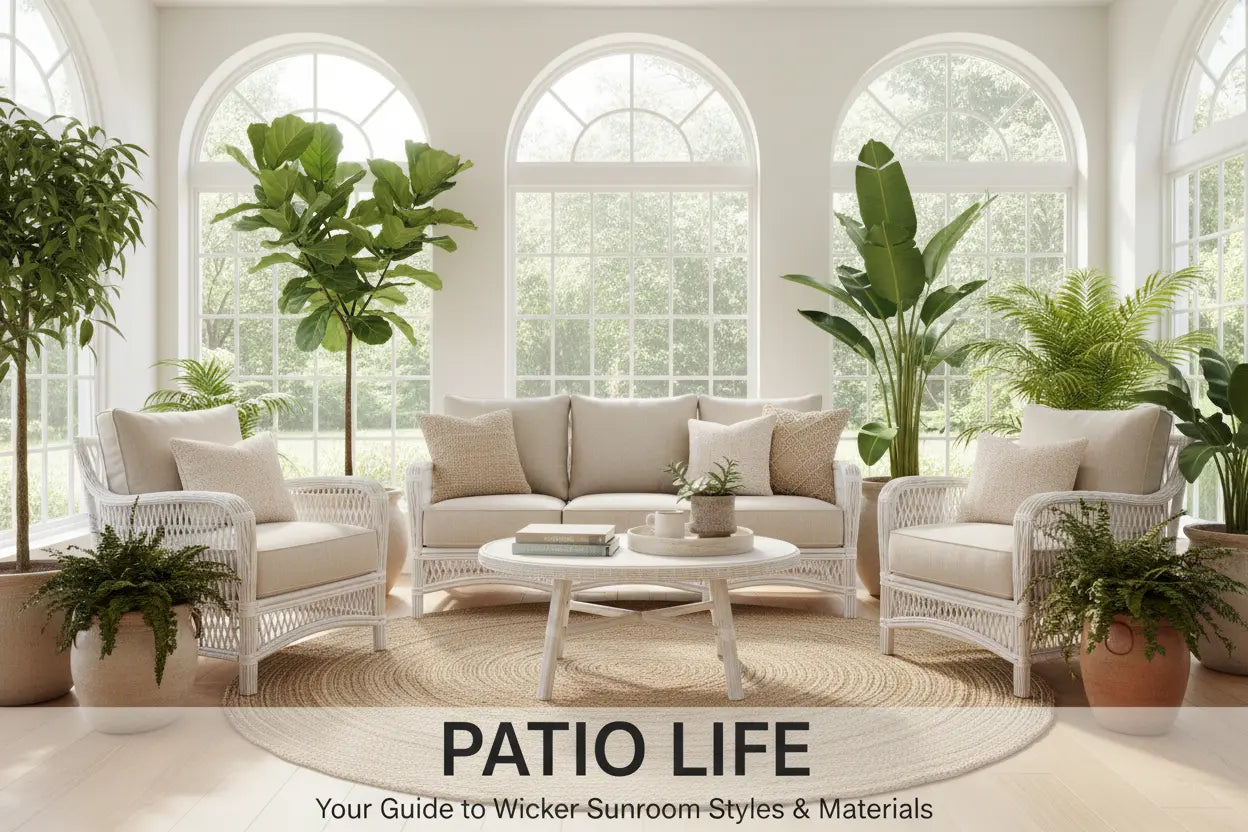
The best wicker sunroom furniture combines durability, comfort, and visual warmth to create a space that feels both relaxed and intentional. Resin wicker consistently outperforms natural wicker in sunroom settings because it resists moisture, fading, and temperature swings without sacrificing the classic woven aesthetic.
Sunrooms occupy a unique design space. They sit between the indoors and outdoors, which means furniture placed inside them faces challenges that neither typical living room pieces nor full patio sets are always built to handle. Ultraviolet light streams through glass panels for hours each day. Humidity fluctuates with the seasons. Foot traffic tends to be higher than in a formal sitting room. Choosing the right wicker pieces means understanding those pressures before walking into a showroom or clicking "add to cart."
Wicker is not a material itself. It is a weaving technique applied to materials ranging from rattan and willow to synthetic resin. That distinction matters enormously when shopping for sunroom pieces, because the base material determines how a piece will hold up over time.
Natural wicker woven from rattan, seagrass, or bamboo brings authentic texture and a handcrafted quality that many homeowners love. The problem is that natural fibers absorb moisture. In a sunroom where condensation forms on glass during cold mornings and afternoon heat drives humidity up, natural wicker can warp, crack, and even develop mold over months of exposure. It works beautifully in climate-controlled spaces with consistent temperatures, but it requires more care than most people anticipate.
Resin wicker, sometimes labeled all-weather wicker, is woven from polyethylene or PVC strands over aluminum or steel frames. It looks nearly identical to natural wicker in photographs and in person, but it handles temperature cycling, UV exposure, and humidity without degrading. Most quality resin wicker pieces carry UV-inhibitor treatments that slow color fading even in south-facing rooms flooded with direct sun for six or more hours per day.
For most U.S. homeowners, especially those in high-humidity states like Florida, Georgia, or along the Gulf Coast, resin wicker is the practical choice. Homeowners in drier climates like Arizona or Colorado may find that natural wicker performs acceptably with minimal maintenance, but resin still offers a lower-maintenance alternative.
 Key Styles and How They Fit Different Sunrooms
Wicker furniture comes in a wide range of silhouettes, and the right style depends on both the dimensions of the space and the aesthetic the homeowner wants to achieve.
The rolled-arm wicker sofa and matching club chairs remain the most recognizable sunroom configuration. These pieces typically feature thick, rounded arms, high backs, and deep cushion wells. They read as traditional and cozy, pairing well with floral or botanical print fabrics. For a sunroom attached to a colonial or craftsman-style home, rolled-arm sets feel native to the space.
A growing number of buyers are drawn to low-profile wicker sectionals that borrow their silhouette from contemporary outdoor lounges. These modular pieces sit closer to the ground, feature thinner arms, and use cushions with clean, straight edges rather than rounded corners. Shoppers interested in this look should explore modern sunroom furniture options that balance the warmth of wicker weave with a more current, streamlined frame design.
Not every sunroom is a lounging space. Many serve as informal dining areas, especially in homes where the sunroom connects directly to the kitchen or breakfast nook. Wicker dining chairs paired with a glass-top or solid wood table work well in this context. The chairs are lighter than upholstered dining seats, which makes it easy to pull extra seating from the adjacent living area when guests arrive.
A conversation set typically includes two or four chairs arranged around a low central table, with an optional loveseat or bench. This format works especially well for smaller sunroom footprints. Homeowners who are working with limited square footage should check out small sunroom furniture to find compact conversation sets that do not overwhelm the space or block natural light pathways.

The wicker weave gets most of the visual attention, but the frame underneath and the fabric covering the cushions are equally important to long-term satisfaction.
| Frame Type | Weight | Rust Risk | Longevity | Best For |
|---|---|---|---|---|
| Aluminum | Light | None | 10-20 years | Sunrooms with frequent moves |
| Steel | Heavy | Moderate (if coating chips) | 8-15 years | Stationary configurations |
| Solid Wood (rattan) | Medium | N/A | 5-10 years | Climate-controlled rooms |
| Powder-coated Steel | Medium-Heavy | Low | 12-18 years | High-humidity sunrooms |
Aluminum frames are the strongest long-term choice for most sunrooms. They will not rust, they are light enough to rearrange easily, and they do not add excessive weight for homes with older flooring or decking beneath the sunroom. Powder-coated steel is a reasonable alternative when extra sturdiness is a priority, but chips in the coating must be addressed promptly to prevent rust in humid conditions.
Cushions represent the single biggest comfort variable in a wicker set. Look for these specific properties:
Fabrics like Sunbrella Meridian or comparable solution-dyed acrylics from Outdura or Trivantage are industry standards for this type of application. A set that uses these materials will maintain its color and integrity significantly longer than one with printed polyester, which fades within one to two seasons.

Shopping for wicker sunroom furniture involves more than finding a set that looks appealing in a photo. Several practical considerations often get overlooked until after delivery, and some mistakes are expensive to correct.
Measure the room with furniture in it. Most people measure the empty room, select a set, and then realize that the conversation flow is awkward or that traffic paths are blocked. Use painter's tape on the floor to mock up the footprint of proposed pieces before ordering. A 96-inch sofa that looks proportional in a showroom photograph may overwhelm a 12-by-14-foot sunroom.
Consider the door clearance. Sectional pieces and large sofas sometimes cannot make it through standard 32-inch doorways without removal of legs or disassembly. Check the dimensions of any delivery path before committing to a specific piece.
Match the furniture aesthetic to the home. A sunroom is an extension of the home, not a separate zone. A modern, minimalist home interior will look inconsistent if the attached sunroom is full of heavily ornate rolled-arm Victorian-style wicker. Browsing indoor sunroom furniture collections that span multiple styles helps establish where the preferences for a specific home actually fall.
Set a realistic budget. A quality resin wicker conversation set with aluminum frames and solution-dyed cushions runs between $800 and $2,500 depending on the number of pieces. Full sectionals with chaises can exceed $4,000 from premium brands. Pieces priced significantly below these ranges often use lower-density foam, weaker frames, or inferior fabric that degrades faster and costs more over time because replacement comes sooner.
Check the warranty terms. Reputable manufacturers typically offer a three-year warranty on frames and one year on cushion fabric. Warranties shorter than that are a signal worth questioning.
Even the best wicker furniture lasts longer with routine attention. Maintenance for resin wicker is straightforward but requires consistency.
These habits add up to a significant difference in lifespan. A set that receives consistent care will remain in excellent condition for a decade or longer, while a neglected set may look worn and feel uncomfortable within three to four years.

Choosing the best wicker sunroom furniture is ultimately about matching material quality to the specific demands of the space. Resin wicker over aluminum frames with solution-dyed cushion fabric covers the majority of sunroom environments effectively, offering a low-maintenance, visually warm option that holds up for years. Style preferences, room size, and budget all shape the final decision, but those choices become much more satisfying once the material fundamentals are in place.
The next step is straightforward: measure the sunroom carefully, identify the primary use case (lounging, dining, conversation), and explore collections that match both the aesthetic of the home and the practical demands of the space. Starting with quality foundations means the room will look as good in year seven as it did on the first day the furniture arrived.
Yes, resin wicker is safe and appropriate for year-round indoor sunroom use with minimal maintenance. Resin wicker tolerates temperature fluctuations, humidity changes, and UV exposure far better than natural wicker alternatives. As long as the room does not experience freezing temperatures consistently, resin wicker pieces will remain structurally sound throughout all four seasons.
Resin wicker with UV inhibitors handles direct afternoon sun well, though cushion fabric is the more vulnerable component. Wicker frames generally resist UV degradation for years when treated properly. Solution-dyed acrylic fabrics like Sunbrella are specifically engineered for direct sun exposure and will outlast standard polyester fabrics by a significant margin.
Compact conversation sets with two to four pieces and a low central table are typically the most functional choice for small sunrooms. Loveseat-and-chair combinations or bistro sets take up less floor space than full three-piece sofa configurations. Keeping pathways clear and leaving at least 30 to 36 inches of walking space between pieces prevents the room from feeling cluttered.
Yes, wicker mixes well with wood, upholstered pieces, and metal accents when proportions and color tones are coordinated. A wicker sofa paired with a solid wood coffee table and a linen upholstered side chair creates a layered, collected look that feels intentional rather than accidental. The key is maintaining consistent color temperature across all pieces.
With quality solution-dyed fabric and regular maintenance, cushions typically last five to eight years before noticeable degradation occurs. Cheaper fabrics may show significant fading and wear within two years, particularly in rooms with strong direct sun. Foam cores in lower-quality cushions compress and lose support faster, which affects comfort more visibly than fabric wear alone.

As the outdoor living trend continues to thrive, you may be wonder...

How to transform your outdoor space in 5 steps to...