A $100 cover protects a $5,000 grill. Skipping it is one of the most avoidable ways to shorten the life of your outdoor kitchen.
Sun fades finishes. Rain rusts hardware. Snow and ice crack seals. Pollen, dust, and bird droppings stain countertops. A good cover blocks all of it. But not every cover is worth buying, and not every situation calls for one.
This guide covers the types of outdoor kitchen covers, what to look for, when to use them, and when you can skip them.
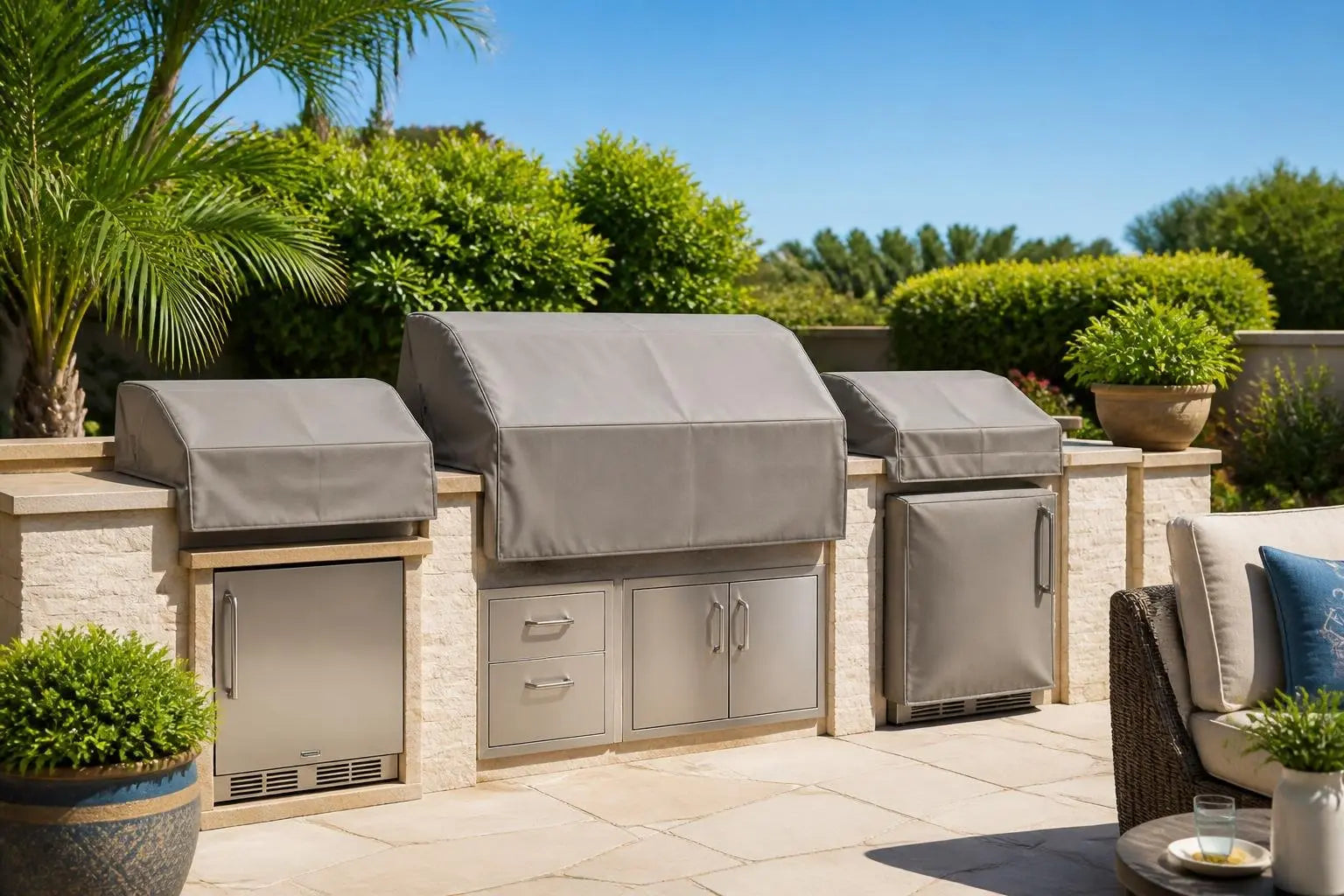
These are fitted covers designed for a specific appliance: grill cover, side burner cover, refrigerator cover, or access door cover. They protect one component at a time and are the most common type.
Brand-specific covers (like Blaze grill covers) are designed to match the exact dimensions of each model. They fit snugly, stay in place during wind, and last longer than generic alternatives.
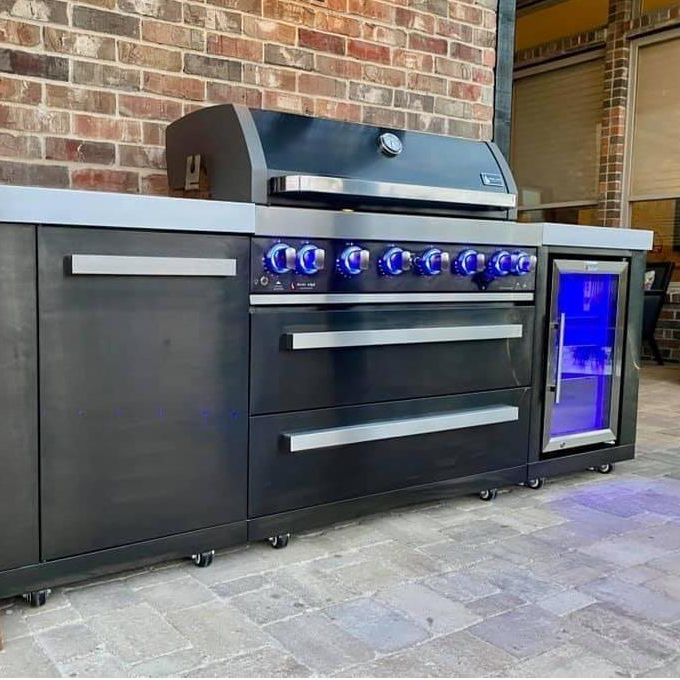
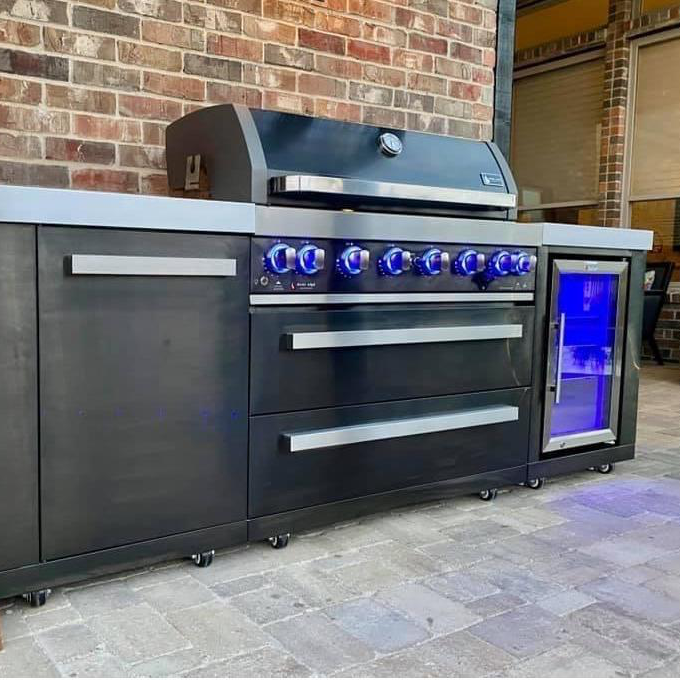
A full island cover wraps the entire outdoor kitchen island, covering the countertop, grill, refrigerator, storage compartments, and all exposed surfaces in one piece. These are ideal for extended off-seasons, vacation homes, or kitchens that sit unused for weeks at a time.
Universal covers come in standard sizes (small, medium, large) and are not made for a specific brand or model. They cost less but fit loosely, which allows wind to get underneath and blow them off. They also wear out faster at stress points because the fit is not precise.
| Feature | Why It Matters |
|---|---|
| UV-resistant fabric | Prevents cracking and fading from sun exposure. Essential in sunny climates. |
| Waterproof or water-resistant | Keeps rain and snow off metal surfaces. Prevents rust and mildew. |
| Breathable lining | Allows moisture to escape from underneath. Prevents condensation and mold growth. |
| Fitted design (brand-specific) | Stays in place during wind. Protects all edges and seams. Lasts longer. |
| Secure fastening (straps, drawstring, Velcro) | Prevents the cover from blowing off in storms. |
| Heavy-duty fabric (600D polyester or better) | Resists tearing, abrasion, and punctures from branches or debris. |
| Ventilation openings | Allows air circulation to prevent trapped moisture. |
Wait until the grill has fully cooled before putting the cover on. Covering a hot grill traps heat and moisture, which can damage the cover fabric and cause condensation that leads to rust inside the grill.
A quality fitted cover lasts 2 to 5 years depending on climate and UV exposure. Covers in direct sun year-round degrade faster than those under partial shade. Signs it is time to replace a cover:
Yes. Cover your grill after every use once it has fully cooled. This prevents grease buildup from attracting pests, protects burners and ignition systems from moisture, and keeps dust and debris off the cooking surface.
Yes. Brand-specific fitted covers are designed to match exact grill dimensions. They fit snugly, stay in place during wind, protect all edges and seams, and last significantly longer than loose-fitting universal covers.
A tarp is better than nothing but not ideal. Tarps are not breathable, which traps moisture underneath and promotes condensation and rust. They also lack secure fastening and blow off in wind. A fitted cover with ventilation is always the better choice.
Most covers can be cleaned with mild soap and water and a soft brush. Do not machine wash or use harsh chemicals. Let the cover air dry completely before putting it back on the appliance. Storing a damp cover promotes mold and mildew growth.
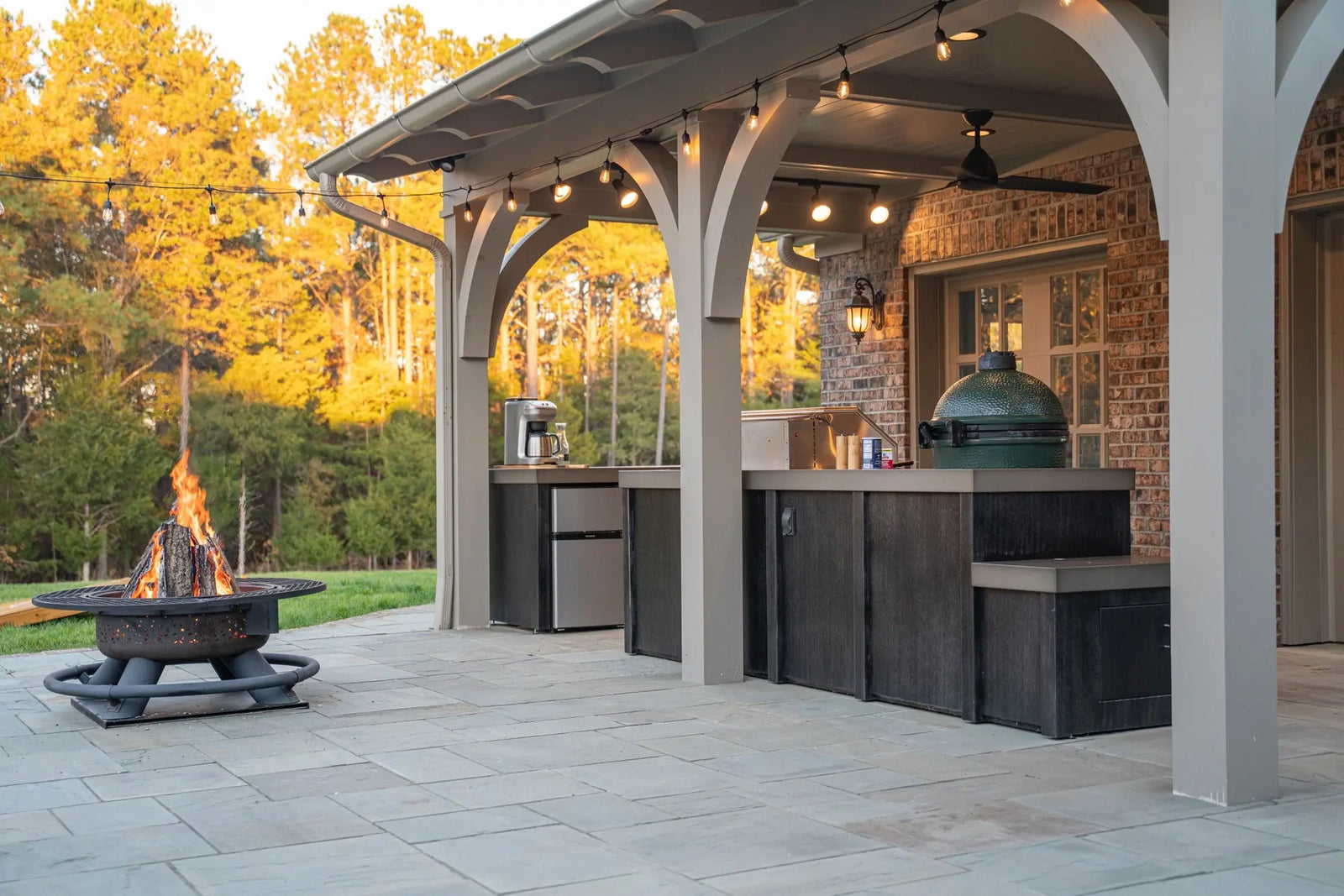
If your pergola has a solid roof that blocks rain and debris, you may be able to skip full island covers. However, you should still cover the grill after each use to protect burners from moisture, grease buildup, and pests. Louvered pergola roofs do not block all rain.
Covers are the cheapest form of protection for the most expensive parts of your outdoor kitchen. A fitted grill cover after every use and a full island cover during the off-season add years to the life of your appliances, countertops, and finishes.
Buy brand-specific covers when available. Replace them when they start to crack or lose waterproofing. And never cover a hot grill.

As the outdoor living trend continues to thrive, you may be wonder...

How to transform your outdoor space in 5 steps to...