Knowing how to choose an outdoor kitchen layout is the first step toward building a backyard space you'll actually use. The right layout can make cooking outside feel effortless, while the wrong one can leave you with a setup that fights against your yard, your workflow, and your budget.
Every yard is different. Factors like size, shape, sun exposure, and how you like to entertain all play a role in determining which layout works best for you. This guide breaks down what to look for so you can make a confident, informed decision before breaking ground.

The right outdoor kitchen layout really depends on your cooking habits and how many people you usually have over. If you know your space and how you'll use it, you'll avoid expensive mistakes and end up with a space that actually fits your life.
Start by measuring the exact size of your potential outdoor kitchen area. You'll need at least 6 to 10 feet of width for a basic grill station with just a little counter space. If you want a built-in grill, prep area, and outdoor fridge, you're looking at 12 to 16 feet of linear space.
The shape matters as much as the size. An L-shaped area separates cooking from drinks. U-shaped spaces let you create distinct work zones with the grill, sink, and storage each on their own side.
Take your yard's quirks into account. Trees, slopes, and property lines all affect where you can build. Measure how far your kitchen will be from the house — this can really change the cost of running utilities.
At minimum, budget 6–10 ft of width for a basic grill station. For a full built-in grill, prep counter, and outdoor fridge, plan for 12–16 ft of linear space. Measure twice — running utilities to the wrong spot costs more to fix than getting it right the first time.
Think about how many people you usually have over. If you host big groups, you'll need plenty of counter space for prep and serving. Smaller gatherings? You can get by with less.
Your cooking style matters, too. If you just grill burgers now and then, a simple grill station with a bit of storage is fine. If you cook outside all the time, you might want a pizza oven, ice maker, or extra burners for side dishes.
Be honest about what appliances you'll really use. People often add things that just take up space and money.
Leave 42 to 48 inches behind the grill so people can walk past without getting too close to the heat. You'll need 36 inches in front of cabinet doors and the fridge so they open all the way.
Create a work triangle between your grill, prep area, and sink — just like an indoor kitchen. Keep these zones four to nine feet apart. That way, you're not running laps while you cook.
Keep your built-in grill at least 10 feet from the house, deck railings, and tree branches. Try to keep high-traffic walkways away from the cooking zone, so guests aren't brushing past hot surfaces.
Planning your seating area alongside your kitchen layout? Shop our patio furniture to find pieces that fit your space and complement your setup.

Most outdoor kitchens fall into four main layouts, each with its own strengths. The straight layout fits tight spaces, the L-shape offers flexibility in corners, the U-shape gives serious cooks lots of space, and the island layout makes a great social hub in open yards.
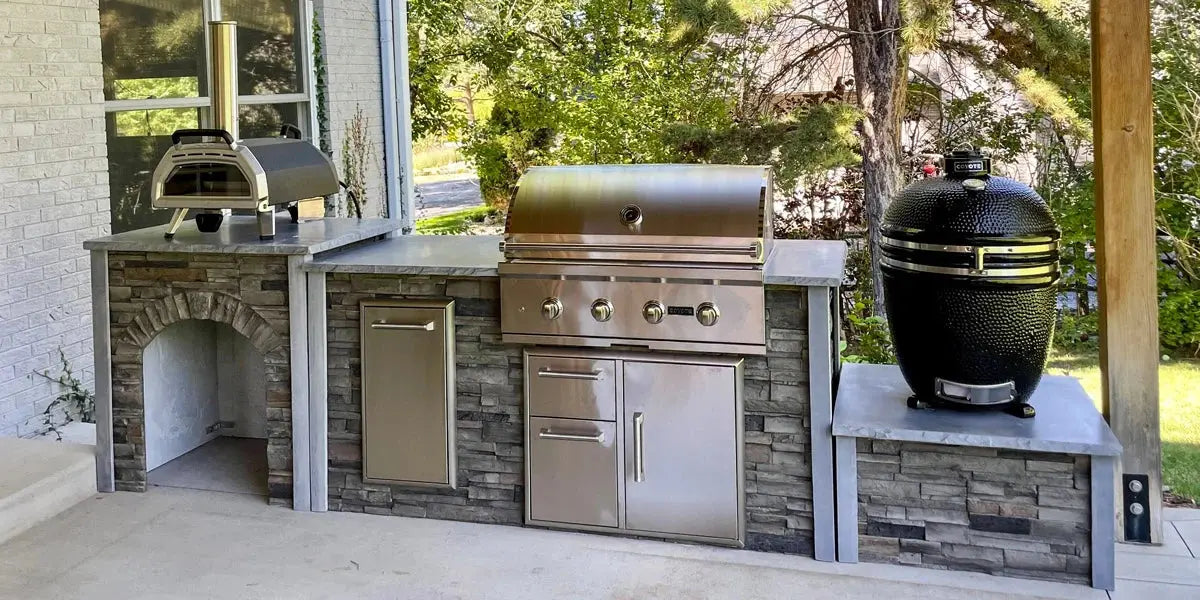
The linear outdoor kitchen lines up all appliances and counters in a row. If you've got 6 to 12 feet of width and not much depth, this is your friend.
Put the grill at one end, with prep counter running out from there. Add an under-counter fridge for drinks and stash storage below. The cost usually runs between $3,000 and $8,000, depending on what you pick and where you live.
This setup works well against a fence or house wall. Building against an existing structure saves money since you only have to finish three sides. You can add shelves or hooks for storage and utensils.
Bar-height seating fits along the front if you extend the counter 12 to 15 inches. It's a casual dining spot and doesn't need extra space behind the kitchen.
Best for: Narrow yards, tight budgets, and setups against an existing wall or fence. The most affordable layout with the smallest footprint.
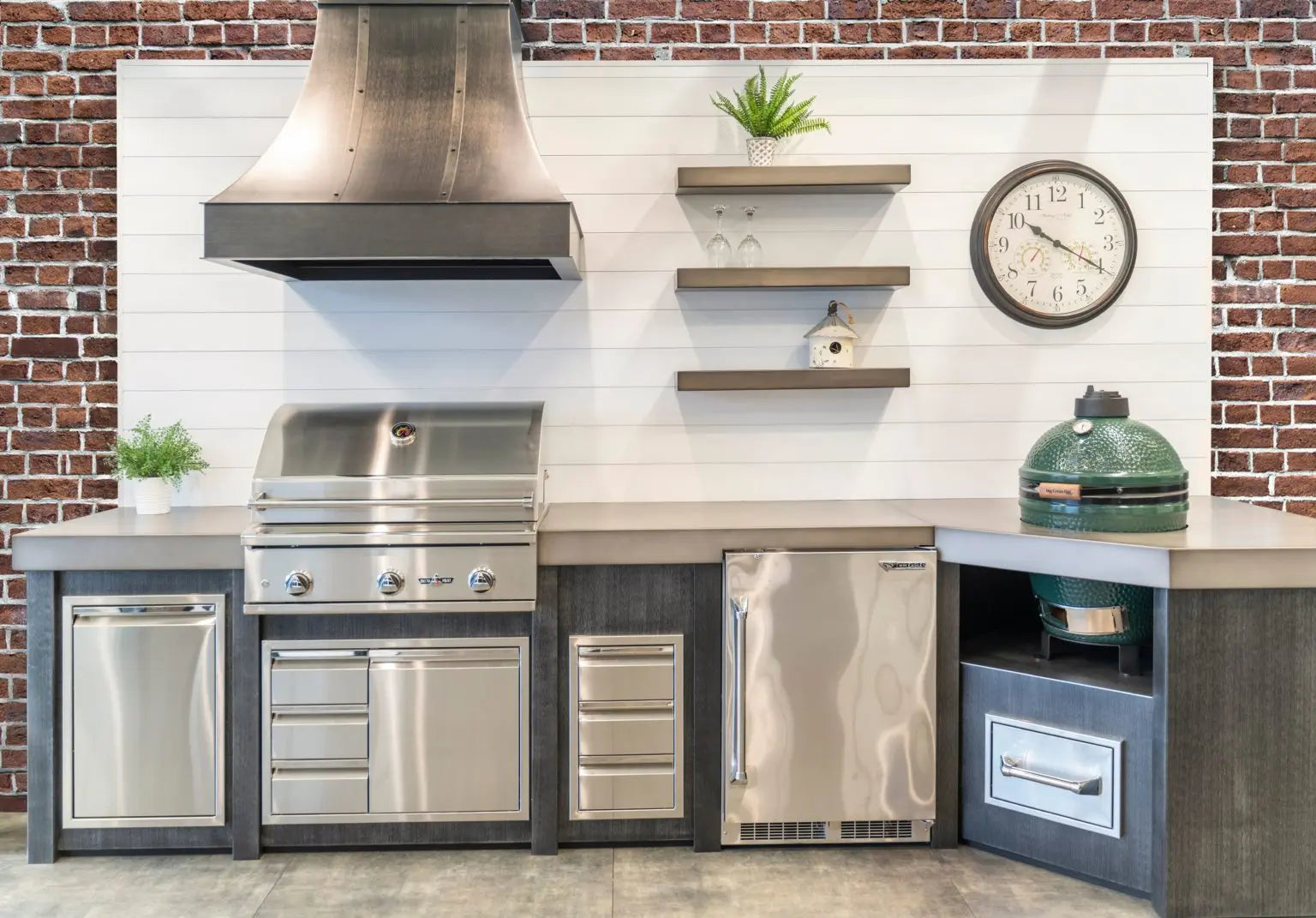
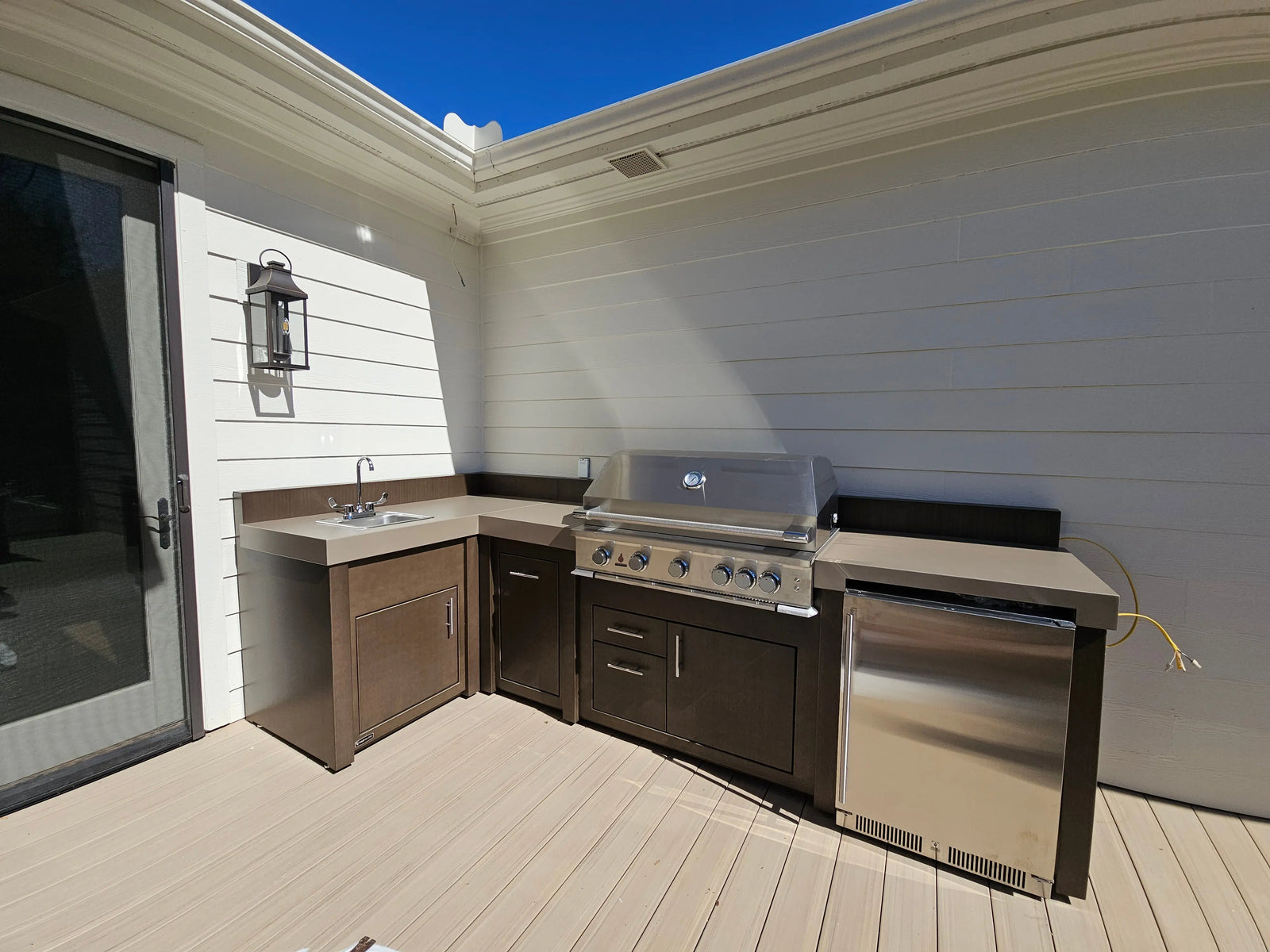
The L-shaped outdoor kitchen uses two counters that meet at a corner, usually 8 to 12 feet long on each side. This setup creates clear cooking and prep zones.
Put your grill and smoker on one wing, and use the other for your sink, fridge, and prep counter. The corner forms a natural work triangle, so everything's close by while you cook.
This layout fits nicely in yard corners where two walls or fences meet. You can use existing structures as backing, saving on costs. The L-shape also blocks wind from two sides, which helps keep grill temps steady.
Key advantages:
Add bar stools along the outside edges so guests can sit facing you while you cook. Expect to spend $8,000 to $25,000 for a full L-shaped setup with good appliances.
Best for: Corner yards, medium-to-large spaces, and anyone who wants a natural work triangle without the full footprint of a U-shape.
The U-shaped outdoor kitchen wraps counters and appliances around three sides. You'll need at least a 10x10 foot area, but you get tons of counter space and storage.
Put your grill, smoker, and pizza oven along the back. The sink and main prep counter go on one side, with the fridge, bar, and storage on the third. Everything stays within arm's reach as you move through your cooking routine.
This setup is great for people who cook outside a lot and make more complex meals. You get dedicated zones for different tasks, and the enclosed design blocks wind from three directions.
Typical U-shaped features:
The front stays open so people can move through. Guests can sit at the bar on the outer edge and stay out of your cooking path. Plan on $15,000 to $50,000 depending on what you include.
Best for: Serious outdoor cooks, large yards, and anyone who wants dedicated zones for every task. The most expansive layout with the highest cost.
The outdoor kitchen island stands alone in your patio or yard. You can walk around it from all sides, so it's the most social layout.
Build your island 6 to 10 feet long with the grill in the middle. Put prep counters on both sides. The back of the island can extend 12 to 15 inches for bar seating, so guests can face you while you cook.
Islands work best in open spaces, not up against walls or fences. You'll want at least 3 feet of clearance all around for easy movement. The island becomes the visual centerpiece of your outdoor space.
Put the island between your house and a pool, fire pit, or dining area. This lets people flow naturally from inside to outside. If you want to move it around for events, go for a smaller island on wheels or casters.
Basic island setups usually cost $5,000 to $15,000. If you add a second parallel island for extra prep or bar service, the budget jumps to $20,000 to $60,000, but you get a real high-end galley-style kitchen.
Best for: Open yards, social entertaining, and homeowners who want the kitchen as a centerpiece. The most interactive layout but requires the most clearance.

Your yard's quirks will decide where your outdoor kitchen goes and what materials you'll need. Sun, wind, and existing structures all play a part in how well your kitchen works and how long it'll last.
Sun exposure can make or break an outdoor kitchen. Direct afternoon sun on your grill and prep area? That'll make summer grilling a sweaty chore.
If your grill faces west, you're stuck cooking in full sun during the hottest part of the day. That gets old fast in July.
Wind direction is sneaky but important. Put your grill in the wrong spot, and smoke blows straight at your house or into your guests' faces. Walk your yard at different times to see which way the wind usually goes.
If you're near the coast, salt air will eat up the wrong materials. Go for marine-grade polymer, powder-coated aluminum, or 316-grade stainless steel cabinets — standard 304 stainless steel is more likely to corrode in salt air. Always check the grade before you buy.
Shade helps, but it brings its own issues. A covered cooking area keeps you cool, but you'll need good ventilation to clear smoke and grease.
Plan utilities before you build anything. Running gas, electric, and water lines after the patio's done is pricey and a real headache.
The farther your kitchen sits from the house, the more utilities cost. Sometimes moving it a few feet closer saves thousands.
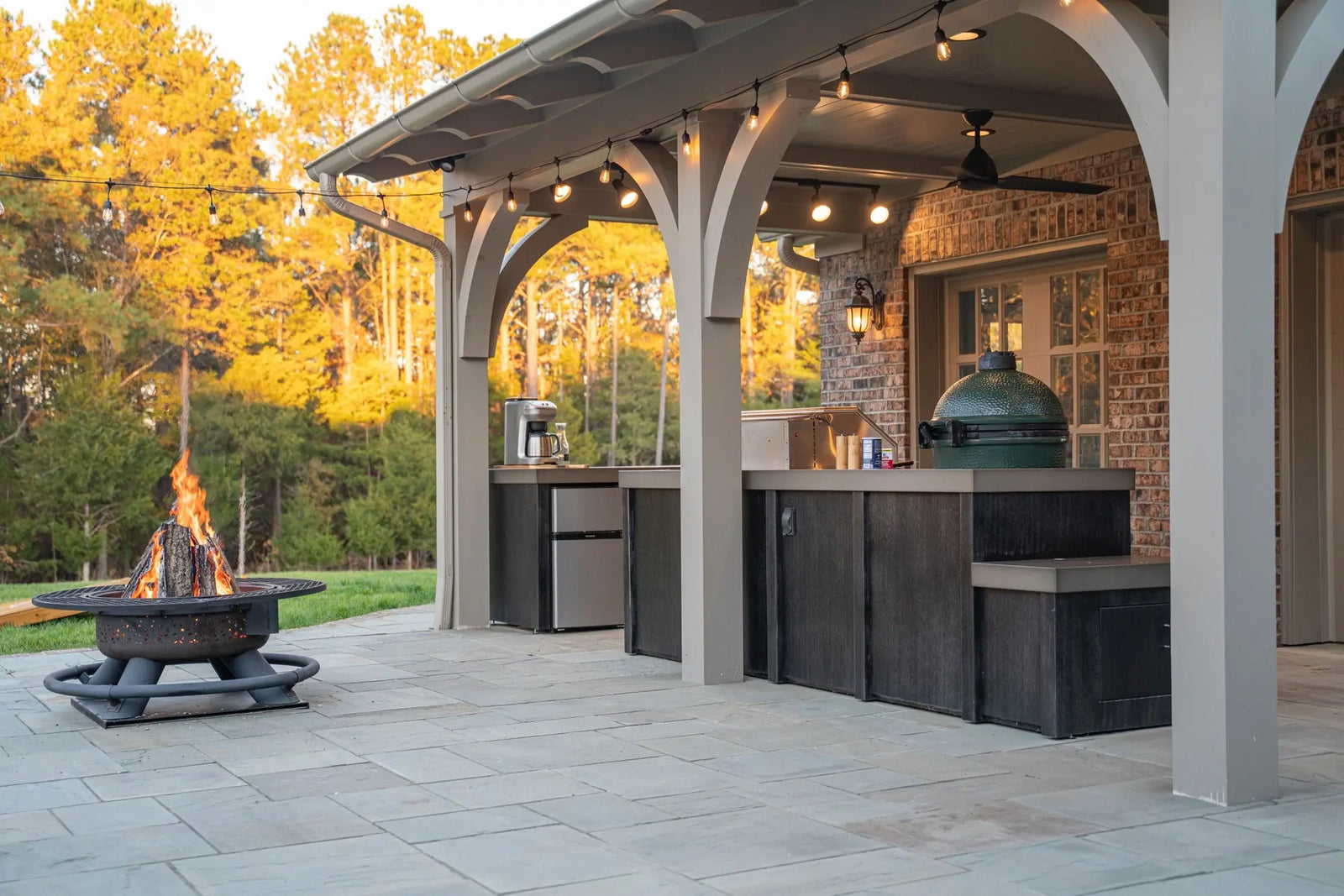
Your existing patio, deck, or fence will shape your layout options. A narrow patio works better with a straight or galley layout. A big open area can handle an island or U-shape.
Decks have weight limits. Not every deck can hold a full outdoor kitchen with stone or concrete. You might need weatherproof cabinetry that's lighter, or extra support before you build.
Fences and walls can help — they give you natural boundaries and block wind. They're also good spots for mounting lights or running utility lines out of sight.
If you've got a fire pit or pool, make sure your kitchen layout keeps traffic flowing smoothly between spaces. You don't want people cutting through your cooking area to get to the pool.
Looking for comfortable seating that works with your outdoor kitchen design? Explore our outdoor sectionals and find the perfect fit for your patio.

As the outdoor living trend continues to thrive, you may be wonder...

How to transform your outdoor space in 5 steps to...