Free US Shipping & No Sales Tax Outside California

0

Cart

Your Cart is Empty

SHOP
Start your Custom Build
LEARNING CENTER
ABOUT US

Winterizing Your Outdoor Kitchen (Climate-by-Climate Guide)

Winterizing Your Outdoor Kitchen
Seasonal Maintenance

An outdoor kitchen that is not properly winterized can suffer burst pipes, cracked countertops, corroded appliances, and rust damage that costs thousands to repair.

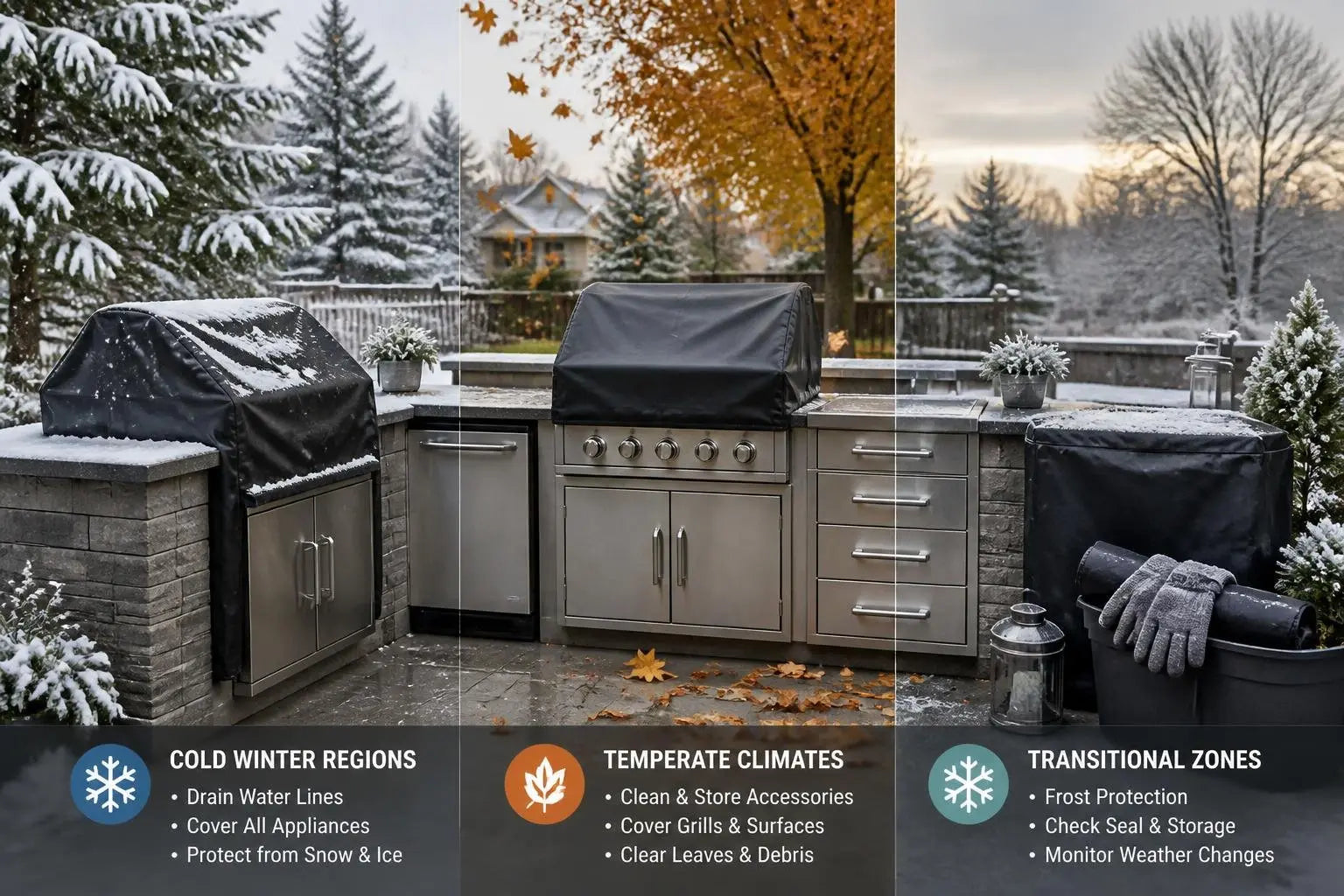
What you need to do depends entirely on where you live. A homeowner in Phoenix has a different checklist than one in Chicago. This guide breaks winterization tasks by climate zone so you only do what your weather actually requires.

Follow the right checklist for your region and your outdoor kitchen will emerge in spring ready to fire up with zero repairs.

Key Takeaways
  • In cold-winter climates, drain all water lines and disconnect gas before freezes hit.
  • Cover all grills, fridges, and exposed equipment regardless of climate.
  • Seal granite and concrete countertops before the wet season begins.
  • Stainless steel appliances need a protective coating in coastal or humid climates.
  • Mild climates still need off-season maintenance to prevent UV damage and pest buildup.

Winterization By Climate Zone

Climate Zone Key Threats Winterization Level
Cold winters (Northeast, Midwest, Mountain West) Freeze-thaw, ice, snow load Full winterization required
Mild winters (Southeast, Mid-Atlantic) Humidity, occasional freeze, pests Moderate winterization
Warm year-round (Southwest, Southern California, Florida) UV damage, dust, occasional storms Light maintenance only
Coastal (any region) Salt air corrosion, humidity, storms Moderate to heavy

Cold-Winter Climates: Full Winterization

If you get hard freezes (below 32°F for extended periods), you need full winterization. Frozen water in pipes, faucets, and ice makers expands and cracks fittings, valves, and supply lines.

Water Lines And Plumbing

  • Shut off the water supply at the house connection.
  • Open all outdoor faucets and valves to drain remaining water.
  • Blow out water lines with compressed air to remove trapped water.
  • Drain the ice maker reservoir and water lines.
  • Remove and store P-traps or pour RV antifreeze into drain traps to prevent freeze cracking.

Gas Lines And Appliances

  • Turn off the gas supply at the shutoff valve near the kitchen.
  • Disconnect propane tanks and store them upright in a ventilated area away from the house.
  • Clean the grill thoroughly: remove grease, food residue, and ash.
  • Cover the grill, side burner, and any exposed gas appliances with fitted covers.

Countertops And Surfaces

  • Seal granite and concrete countertops before the first freeze. Water that absorbs into unsealed stone expands when frozen and causes cracks.
  • Clean and dry all surfaces. Remove any standing water or debris.
  • Cover countertops if possible, or use a full island cover.

Electrical

  • Unplug outdoor refrigerators and beverage centers. Leave doors slightly ajar to prevent mold.
  • Disconnect and store any removable outdoor TVs or speakers.
  • Turn off dedicated outdoor circuits at the breaker panel.

Mild-Winter Climates: Moderate Winterization

If you get occasional freezes but not sustained cold (Southeast, Mid-Atlantic), you still need to protect water lines and cover equipment, but you can skip the full plumbing blowout.

  • Wrap exposed water lines with insulation or heat tape if temperatures drop below freezing overnight.
  • Cover the grill and refrigerator with fitted covers.
  • Clean grease traps and drain lines before the wet season.
  • Seal granite countertops annually.
  • Check for pest nesting inside cabinets and storage compartments. Mice and wasps love enclosed outdoor spaces.

Warm Year-Round Climates: Light Maintenance

In Phoenix, Southern California, or South Florida, freezing is not a concern. But UV exposure, dust storms, and occasional severe weather still take a toll.

  • Cover grills and appliances when not in use to reduce UV fading and dust accumulation.
  • Clean and condition stainless steel surfaces quarterly with a food-safe stainless steel protectant.
  • Check gas connections and hoses for cracking or dry rot caused by sun exposure.
  • Inspect and clean drain lines for buildup from hard water or mineral deposits.
  • Reseal countertops annually if using granite or concrete.

Coastal Climates: Salt Air Protection

Salt air is the most corrosive environment for outdoor kitchens. Even 316 stainless steel will pit and corrode without regular cleaning in coastal areas.

  • Rinse all stainless steel surfaces with fresh water weekly (or after every storm).
  • Apply a stainless steel protectant designed for marine environments.
  • Cover all equipment when not in use. Salt deposits accelerate corrosion on exposed metal.
  • Inspect hinges, drawer slides, and hardware for rust monthly.
  • Use 316 grade stainless steel for all appliances and hardware. 304 grade corrodes faster in salt air.

Spring Reopening Checklist

When the season turns, run through this checklist before firing up the kitchen for the first time.

  • Turn on the water supply and check for leaks at every connection.
  • Turn on the gas supply and check for leaks with soapy water at every fitting.
  • Plug in the refrigerator and let it reach temperature before stocking.
  • Remove all covers and inspect for pest nests, debris, or damage.
  • Clean the grill interior, replace any deteriorated grill grates or burner covers.
  • Test all GFCI outlets by pressing the test and reset buttons.
  • Inspect countertop seals and reseal if water no longer beads on the surface.

Shop Outdoor Kitchen Covers And Accessories

Grill protection
Blaze Grill Covers
Fitted covers designed for Blaze built-in grills. Heavy-duty fabric with weather-resistant construction. Sized to match each Blaze grill model.
Shop Blaze covers
Outdoor rated
Outdoor Refrigeration
Refrigerators and beverage centers built for outdoor weather from TrueFlame, Cal Flame, Summerset, and RCS.
Shop refrigeration
Year-round warmth
Outdoor Heating
Extend your outdoor kitchen season with fire pits, fire tables, and outdoor heaters. Multiple styles and fuel types available.
Shop outdoor heating

Keep Reading


Frequently Asked Questions

Do I Need To Winterize My Outdoor Kitchen In Florida?

Full winterization is not needed in most of Florida. However, you should still cover appliances when not in use, clean stainless steel regularly to prevent corrosion from humidity, and seal granite or concrete countertops annually to prevent staining.

How Do I Drain Water Lines In An Outdoor Kitchen?

Shut off the water supply at the house connection, then open all outdoor faucets and valves to let water drain by gravity. For a thorough draindown, use compressed air to blow out remaining water from the lines. Pour RV antifreeze into drain traps to prevent freeze damage.

Can I Leave My Outdoor Refrigerator Outside In Winter?

In mild climates, yes, with a cover. In cold climates, unplug the refrigerator, clean it thoroughly, and leave the door slightly ajar to prevent mold and mildew growth. Outdoor-rated refrigerators are designed to handle temperature swings, but they should not run in below-freezing conditions.

Should I Turn Off The Gas To My Outdoor Kitchen In Winter?

Yes, in cold-winter climates. Turn off the gas at the shutoff valve near the kitchen. If you use propane, disconnect the tank and store it upright in a ventilated area. In mild climates where you might grill year-round, you can leave the gas on but should still do a leak check each spring.

How Often Should I Seal My Outdoor Kitchen Countertops?

Seal granite and concrete countertops once per year, ideally before the wet season or winter begins. Test by dripping water on the surface. If it absorbs rather than beading up, it is time to reseal. Porcelain and sintered stone countertops do not need sealing.

Conclusion

Winterizing your outdoor kitchen takes one afternoon per year and prevents damage that costs thousands to repair. Match your maintenance to your climate zone, and you will never open the season with a broken pipe, a rusted grill, or a cracked countertop.

Do the full checklist in fall, the reopening checklist in spring, and your outdoor kitchen will perform for a decade or more.


Explore BetterPatio Outdoor Collections


Leave a comment