The fuel type you choose for your built-in grill changes how you cook, how your food tastes, and how much hands-on attention every meal requires.
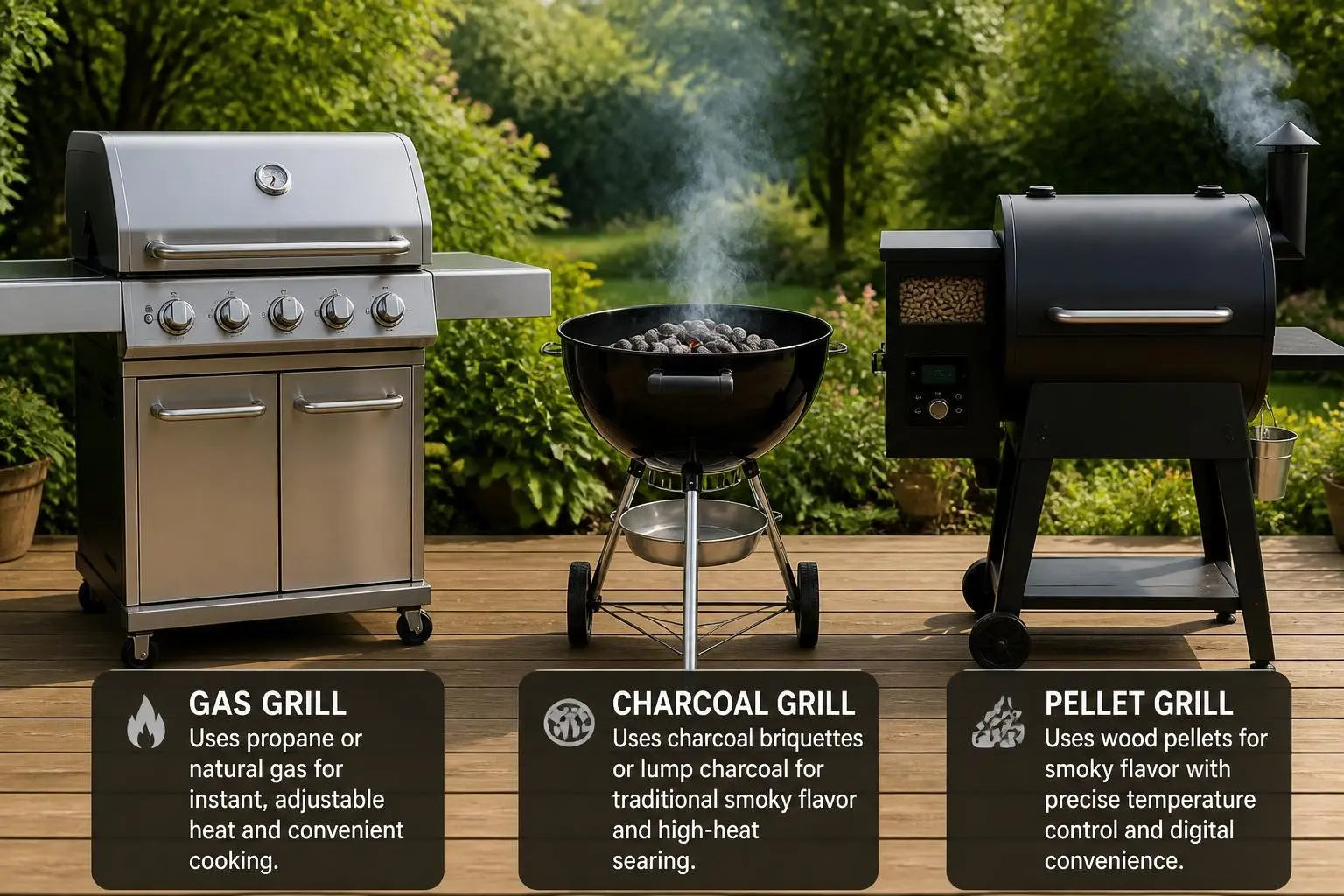
Gas is the most common choice for built-in outdoor kitchen grills, but charcoal and pellet grills each offer advantages that gas cannot replicate. The right pick depends on whether you prioritize convenience, flavor, or versatility.
This guide compares all three fuel types for built-in outdoor kitchen grills so you can choose with confidence.
| Feature | Gas | Charcoal | Pellet |
|---|---|---|---|
| Heat-up time | 10-15 minutes | 20-30 minutes | 10-15 minutes |
| Temperature control | Precise (knob-based) | Manual (vent-based) | Precise (digital) |
| Smoke flavor | Minimal | Strong | Moderate to strong |
| Max searing temp | High (700°F+) | Very high (800°F+) | Moderate (450-500°F) |
| Cleanup | Low (brush grates) | High (ash removal) | Moderate (ash + hopper) |
| Fuel source | Natural gas or propane | Charcoal briquettes or lump | Wood pellets |
| Best for | Daily grilling, convenience | Flavor chasers, weekend cooks | Low-and-slow, smoking |
| Built-in availability | Very common | Limited models | Growing but limited |
| Needs electricity? | No (ignition only) | No | Yes (fan + controller) |
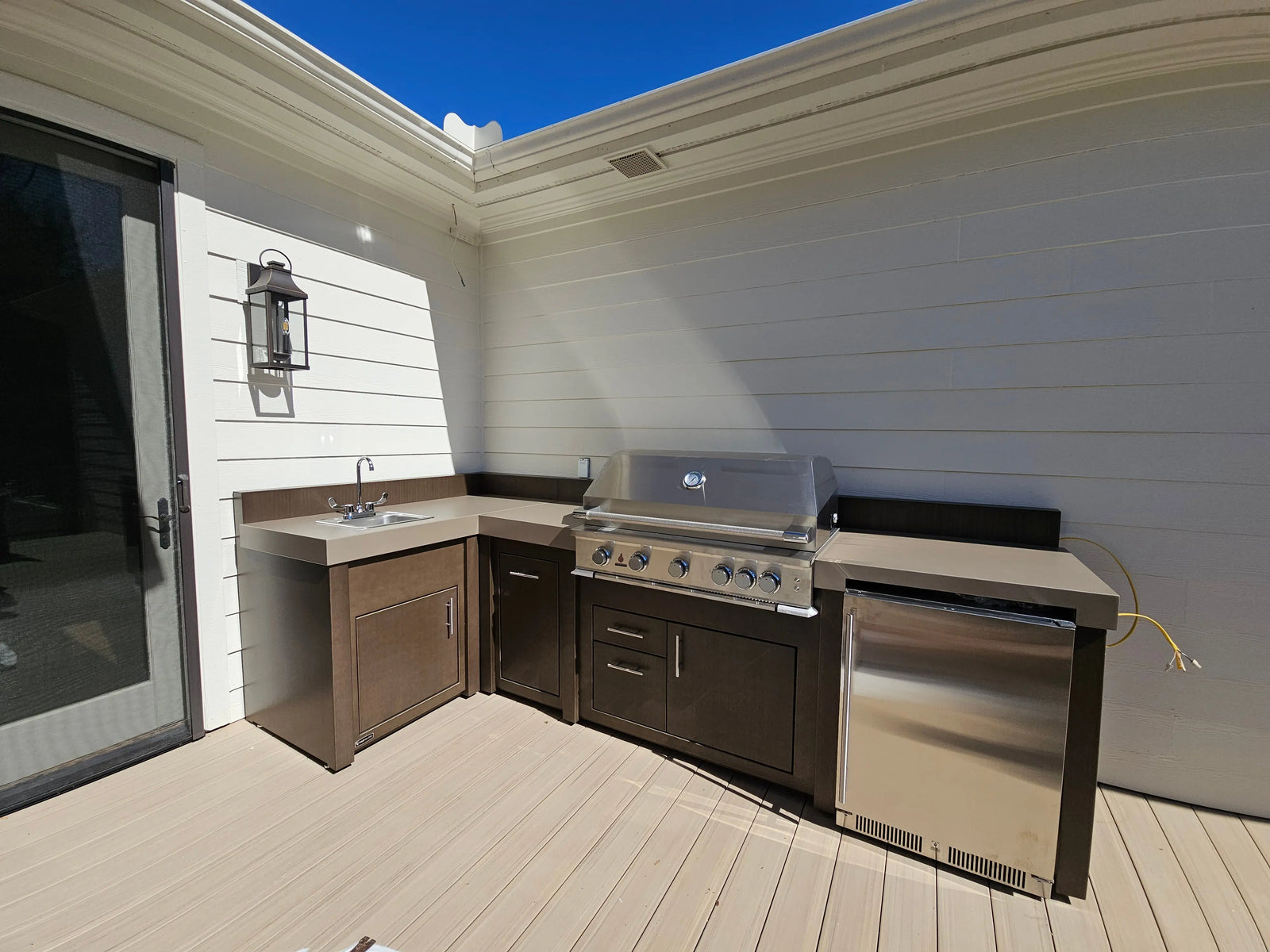
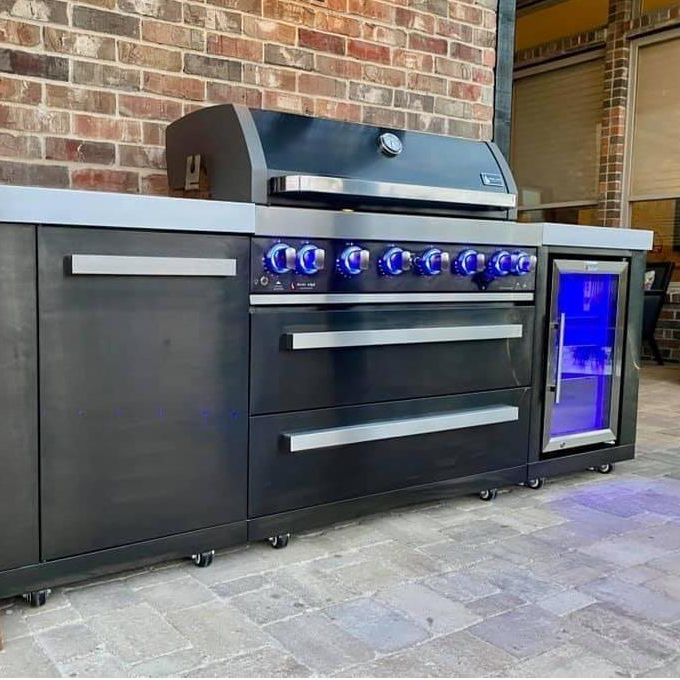
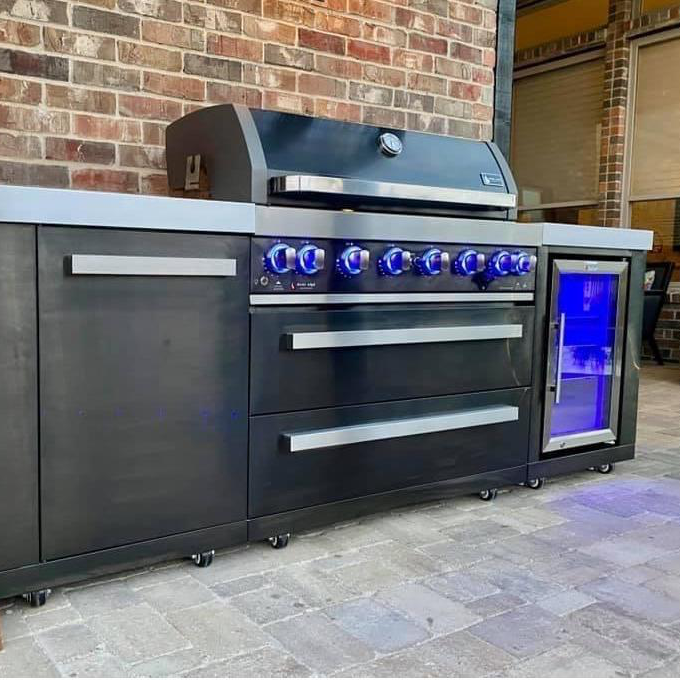
Gas is the default fuel type for built-in grills. It heats up in 10 to 15 minutes, holds temperature with a turn of the knob, and requires minimal cleanup. For homeowners who grill multiple times a week, gas is the most practical option.
Built-in gas grills connect to a permanent natural gas line or a dedicated propane tank. Natural gas is preferred because you never run out of fuel mid-cook. Most brands carried by BetterPatio, including Cal Flame, Blaze, Summerset, TrueFlame, and Fire Magic, offer built-in gas models.
Charcoal delivers the strongest smoky flavor. The high radiant heat from burning charcoal creates a sear that gas struggles to match. For cooks who prioritize taste above convenience, charcoal is hard to beat.
Built-in charcoal grills are less common than gas models but are available from select brands. Blaze, for example, offers built-in charcoal grills in their grill collection. Primo also makes kamado-style charcoal grills designed for built-in installations.
Pellet grills burn compressed wood pellets and use a digital controller to maintain precise temperatures. They combine the wood-fired flavor of charcoal with the set-and-forget convenience of gas. They excel at low-and-slow smoking but can also grill, bake, and roast.
The trade-off is searing. Most pellet grills top out around 450 to 500°F, which is enough for grilling but does not match the high-heat sear of charcoal or a dedicated gas infrared burner. They also require an electrical connection for the fan and controller.
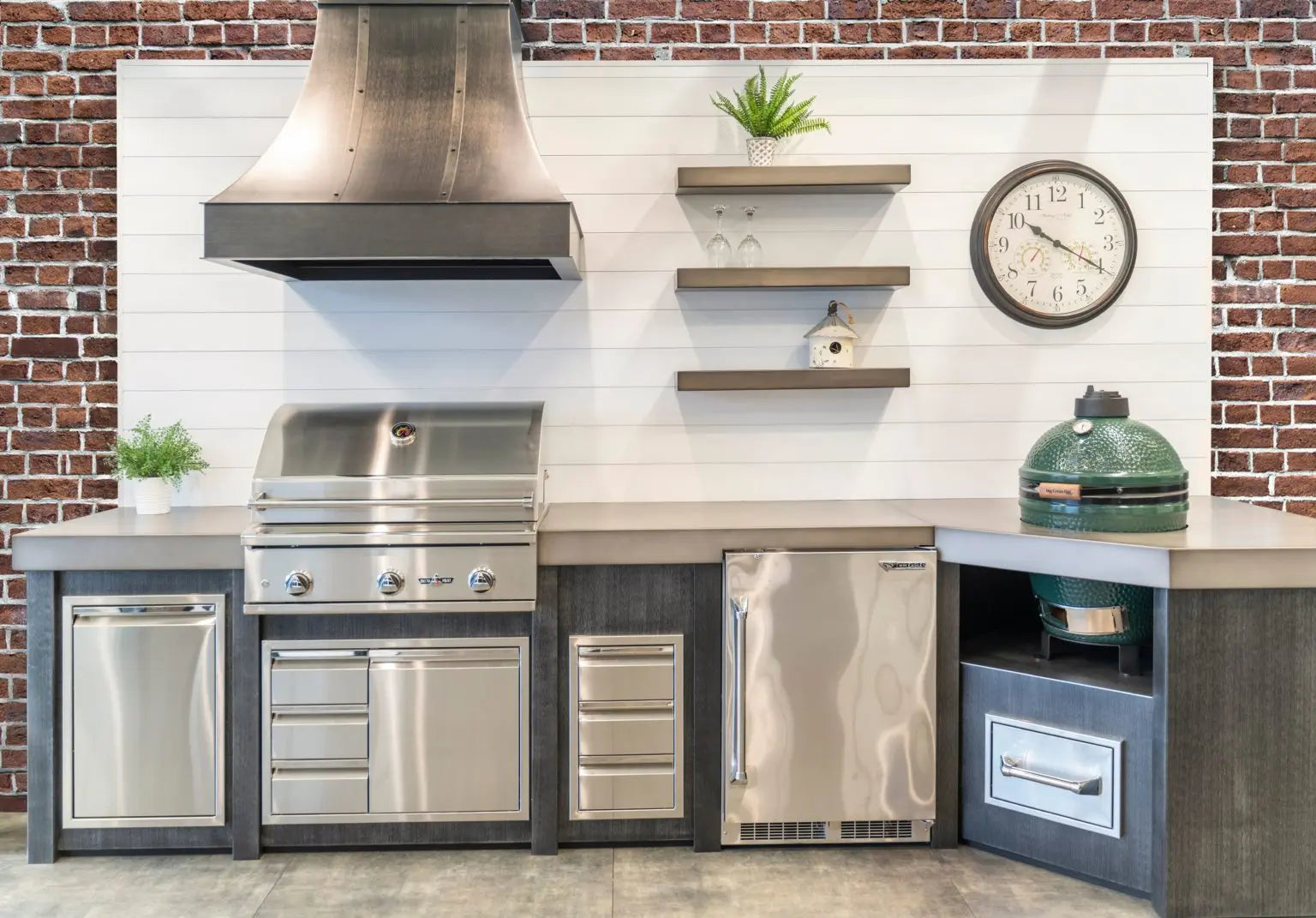
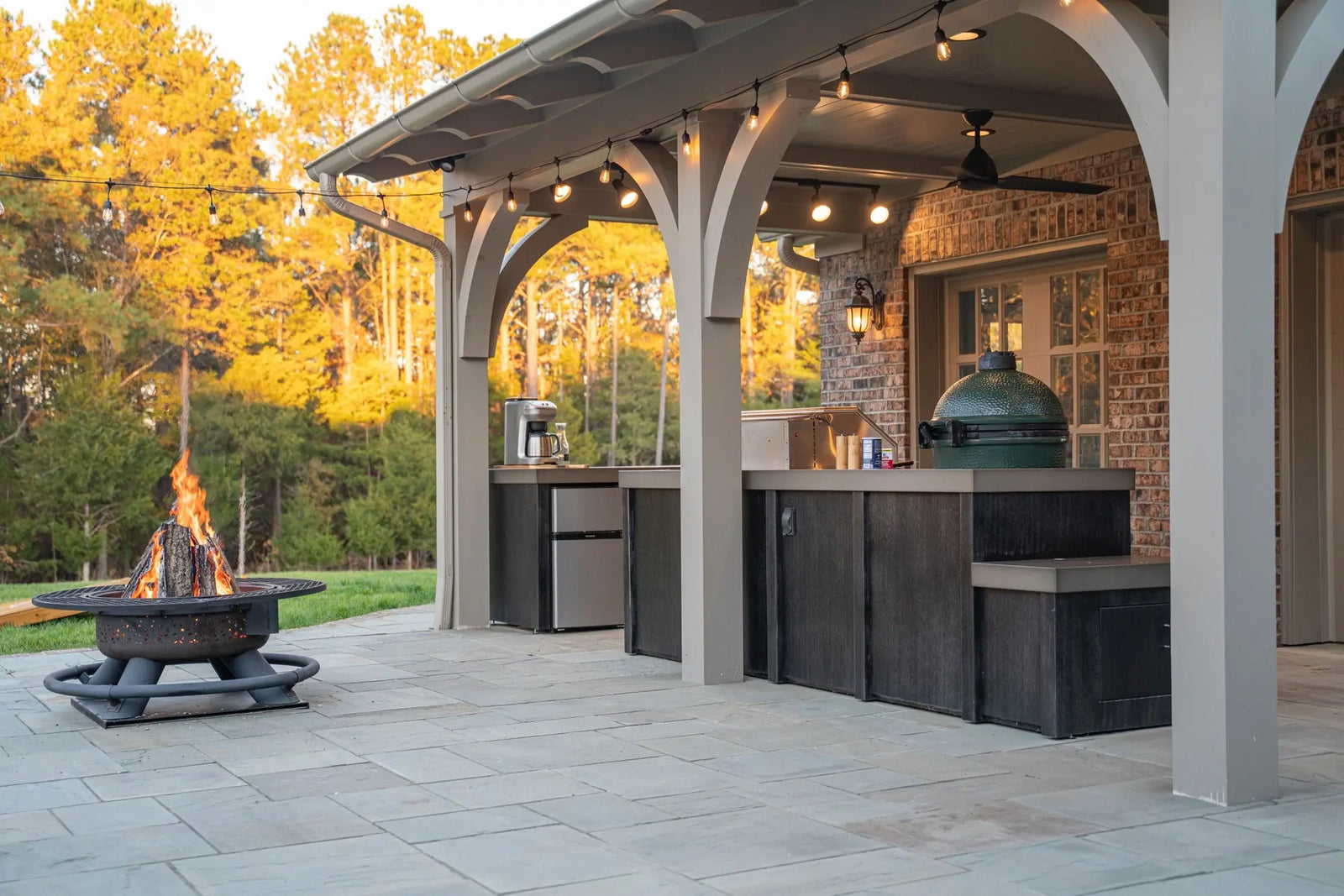
Yes. Many outdoor kitchens include a gas grill as the primary cooking station and add a charcoal grill or pellet smoker as a secondary unit. This gives you convenience for weeknight dinners and smoke flavor for weekend cookouts.
If your layout has the counter space, adding a second grill is straightforward. BetterPatio builds custom layouts including L-shaped and U-shaped configurations that can accommodate multiple grills and cooking appliances.
Gas is the best fuel type for most built-in outdoor kitchen grills. It heats up fast, holds temperature precisely, requires minimal cleanup, and has the widest selection of built-in models. Choose charcoal or pellet if smoke flavor is your top priority.
Yes, but options are more limited than gas. Pellet grills require an electrical outlet for the fan and digital controller. They excel at smoking and low-temperature cooking but do not sear as well as gas or charcoal grills.
No. Gas grills and charcoal grills have different ventilation, ash management, and heat requirements. You cannot burn charcoal in a gas grill. If you want both fuel types, install separate grill units in your island.
Yes, when installed with proper ventilation and non-combustible framing. Built-in charcoal grills are designed for island installation with appropriate clearances. Follow the manufacturer's ventilation specifications and use non-combustible materials around the grill.
Charcoal produces the strongest smoky flavor, especially when using lump hardwood charcoal. Pellet grills produce moderate to strong smoke flavor depending on the wood pellet type. Gas grills produce minimal smoke on their own but can use smoker boxes with wood chips.
For most outdoor kitchens, gas is the practical choice. It is fast, clean, and has the most built-in options. If flavor is your priority, add a charcoal or pellet grill as a secondary station.
The best outdoor kitchens give you options. Plan your layout with enough counter space to accommodate the fuel types you want, and you will never be stuck wishing you had chosen differently.

As the outdoor living trend continues to thrive, you may be wonder...

How to transform your outdoor space in 5 steps to...