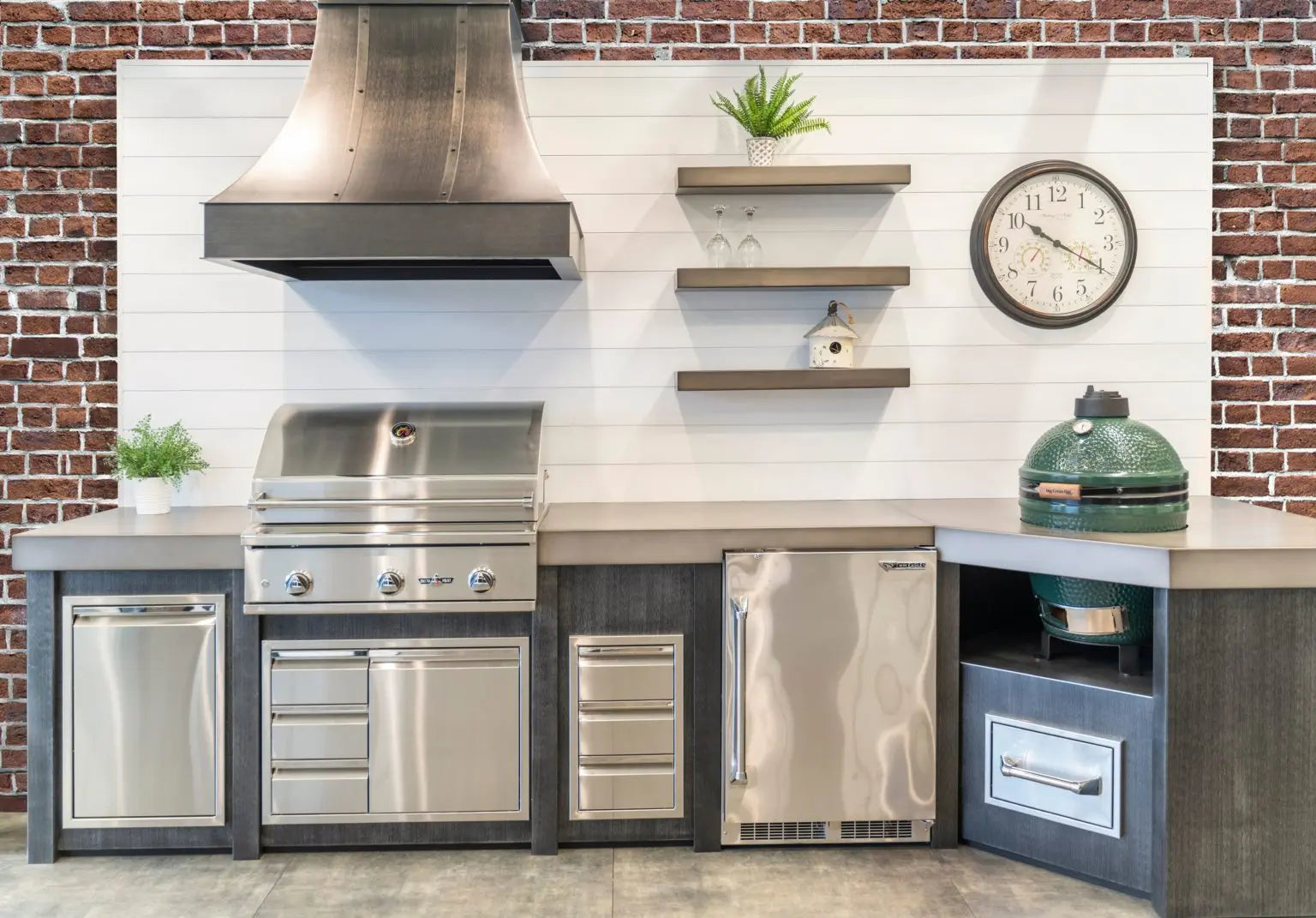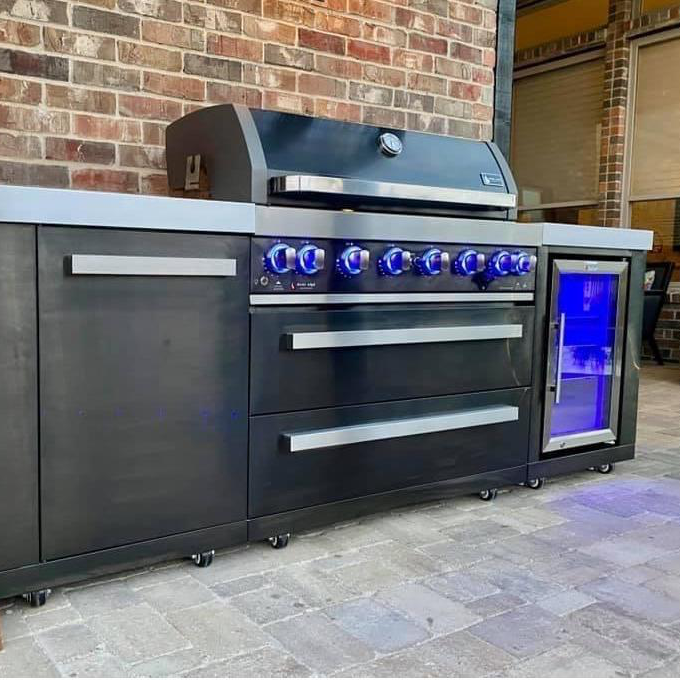

Coyote C-Series 30" Built-In Grill - C3C30
Compare this built-in gas grill and confirm its selected fuel type, total gas demand, electrical features, and installation requirements.
View Product Details
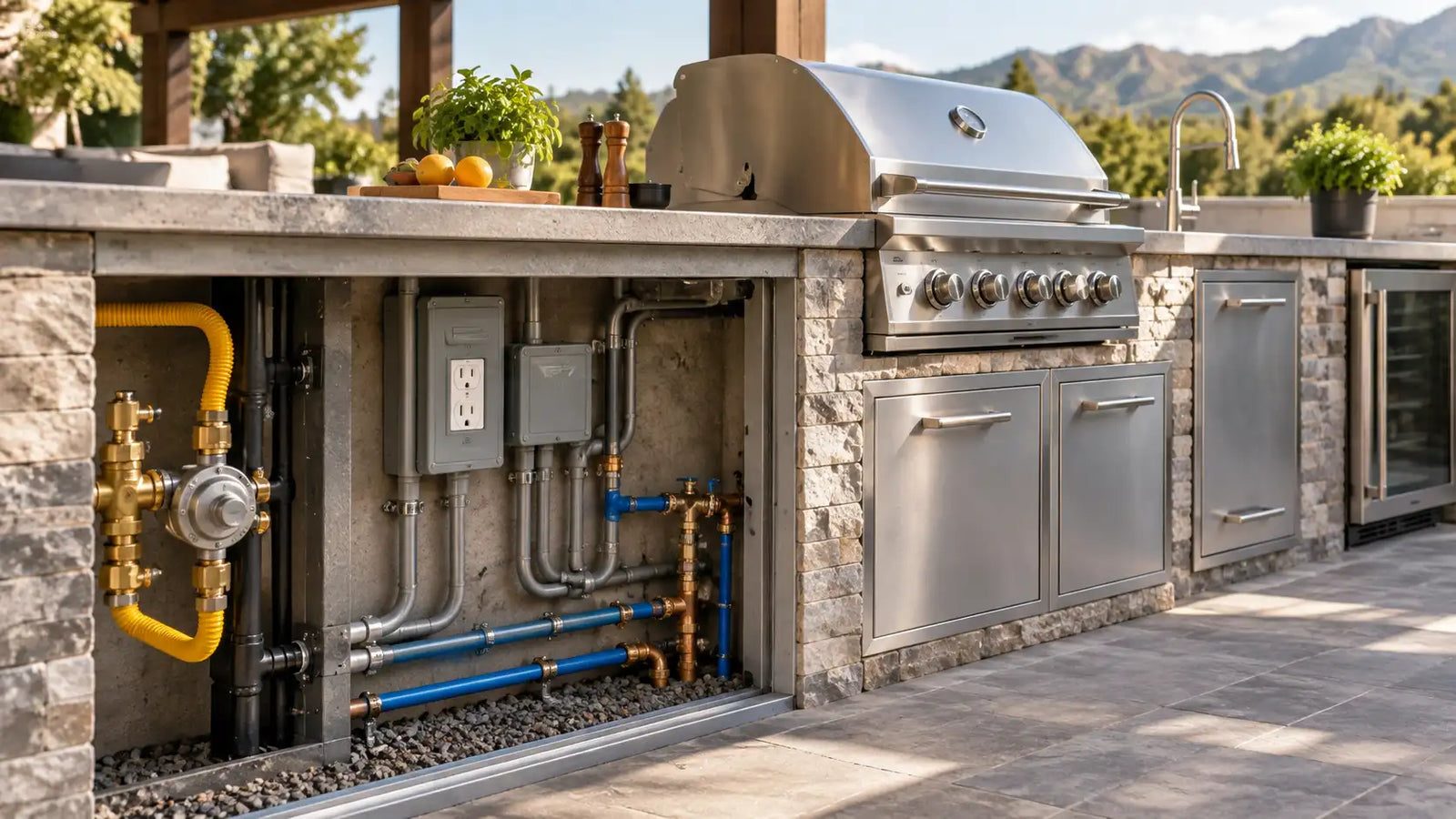
Running gas, electrical, and water lines to your outdoor kitchen is far cheaper before the patio is poured than after. This is the step most homeowners skip, and the most expensive to fix later.
Every appliance in your outdoor kitchen needs a utility connection. A grill needs gas. A fridge needs power. A sink needs water supply and drainage. Planning these hookups before construction prevents tearing up finished hardscape to add lines you forgot.
This guide covers what each hookup requires, estimated costs, and when to hire a professional versus doing it yourself.

| Appliance | Gas | Electric | Water | Drain |
|---|---|---|---|---|
| Built-in grill | Yes | Ignition only | No | No |
| Side / power burner | Yes | No | No | No |
| Outdoor refrigerator | No | Yes (120V) | No | No |
| Beverage center / ice maker | No | Yes (120V) | Yes (ice maker) | Yes (ice maker) |
| Sink | No | No | Yes (hot + cold) | Yes |
| Outdoor TV | No | Yes (120V) | No | No |
| Task / landscape lighting | No | Yes (120V or low-voltage) | No | No |
| Pizza oven (gas) | Yes | No | No | No |
Every gas grill, side burner, power burner, and gas pizza oven needs a dedicated gas line. You have two options: natural gas (piped from your home's existing gas meter) or propane (a dedicated tank).
Running a natural gas line from your home's meter to the outdoor kitchen typically costs $500 to $2,000 depending on distance and complexity. Propane setups with a new tank cost $300 to $1,000.
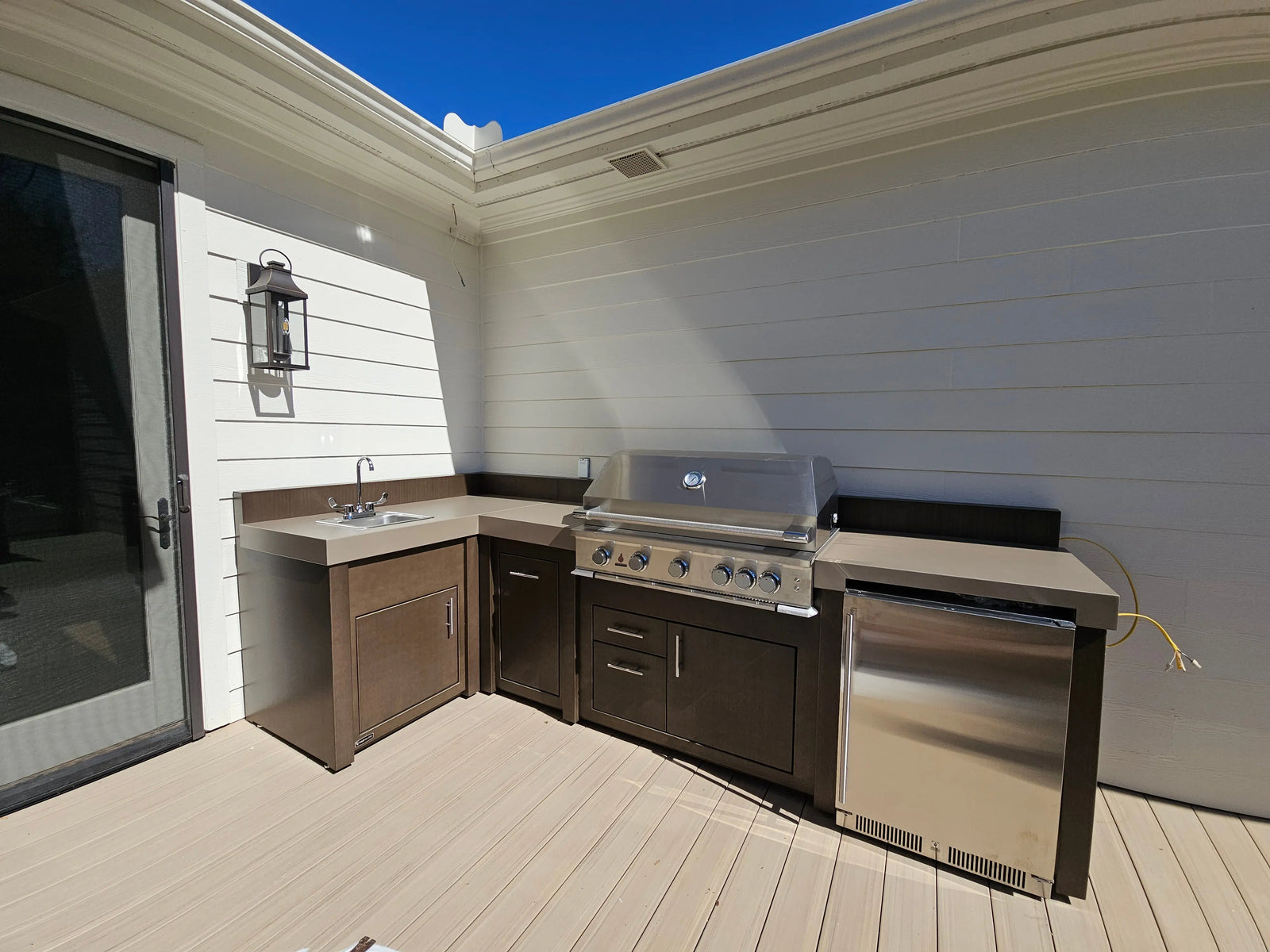
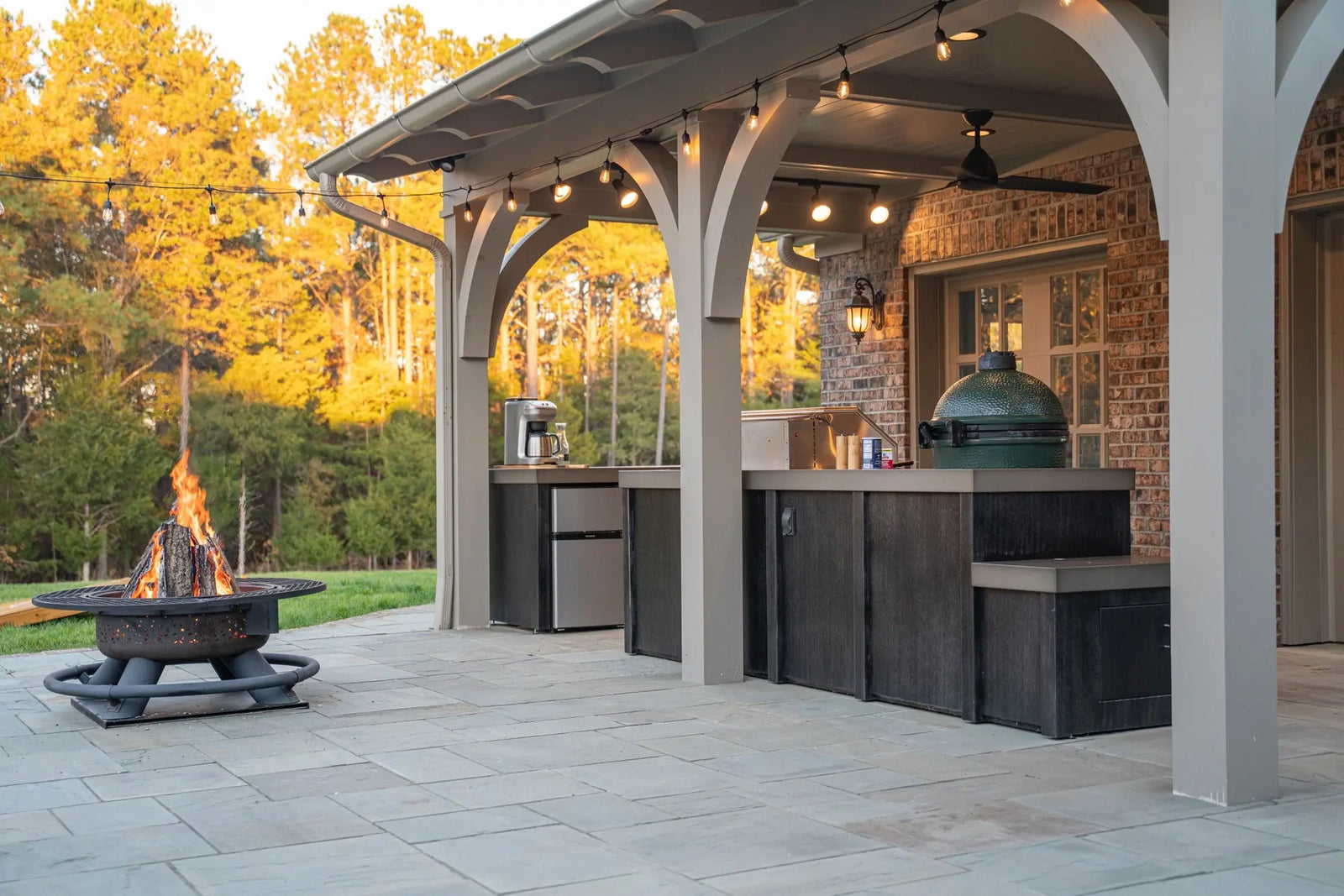
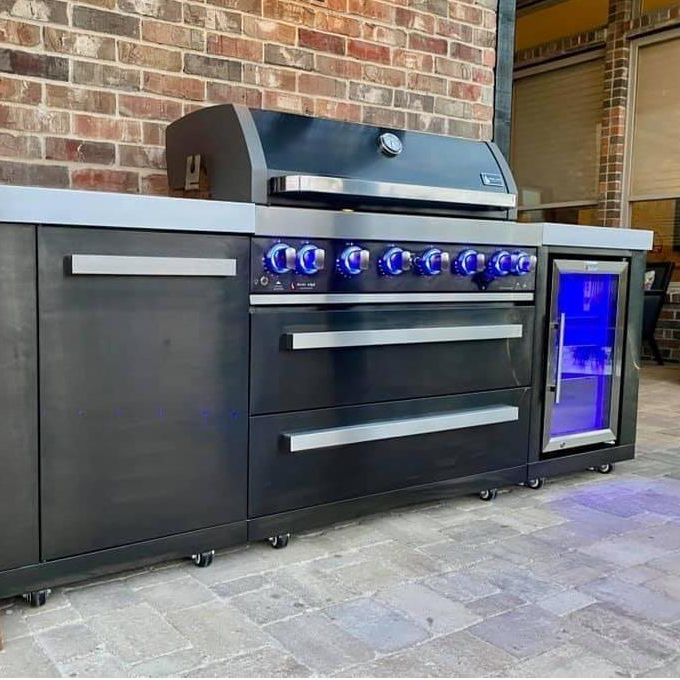
BetterPatio outdoor kitchens do not include electrical or plumbing. Grills, refrigerators, and other appliances require on-site electrical supply. Plan your utility connections before your kitchen arrives.
Refrigerators, ice makers, outdoor TVs, and lighting all need electrical power. Even basic outdoor kitchens benefit from at least two dedicated outlets near the island.

Adding two GFCI outlets to an outdoor kitchen typically costs $300 to $1,000 depending on the run distance from your electrical panel. A dedicated 20-amp circuit for a refrigerator adds $200 to $500. Low-voltage lighting circuits add $200 to $800.

If your outdoor kitchen includes a sink or an ice maker with a water line, you need both a water supply connection and a drain.
Running water supply and drain lines to an outdoor kitchen typically costs $1,000 to $3,000 depending on distance from the house, depth of burial, and whether you need to cut through concrete.
Running utility lines under an existing patio means cutting through concrete or pavers, trenching, installing the lines, and then re-pouring or re-laying the surface. This can double the cost of the utility work.
If you are building a new patio, run all utility conduit and stub-outs before the concrete pour. Even if you do not plan to install a sink or ice maker right away, running an extra water line and drain stub-out costs almost nothing during initial construction and saves thousands later.
Compare this built-in gas grill and confirm its selected fuel type, total gas demand, electrical features, and installation requirements.
View Product Details
Plan outdoor cold storage with access to the power connection. Check the exact circuit, cutout, and ventilation requirements.
View Product Details
Explore a customizable island layout. Confirm appliance compatibility and proposed utility locations with BetterPatio and your installer.
View Product DetailsYes, in most areas. Gas line installation requires a licensed plumber or gas fitter and a permit. Improperly installed gas lines create fire and explosion hazards. Always hire a licensed professional and schedule the required inspection.
Plan for at least two GFCI-protected outlets. One dedicated circuit for the refrigerator and one for general use (lighting, phone charging, small appliances). If you are adding an outdoor TV, plan a third outlet on a separate circuit.
A garden hose can provide cold water to an outdoor sink as a temporary solution, but it does not meet plumbing code for a permanent installation. You will not have hot water, and the drain still needs to connect to a proper sewer line or approved drain field.
Natural gas is preferred if your home has it. It provides unlimited fuel with no tanks to refill and lower operating cost. Propane is the alternative for homes without natural gas service and requires periodic tank refills.
Total utility hookup costs typically range from $2,000 to $6,000 for gas, electrical, and water connections combined. Costs increase significantly if you need to cut through an existing patio. Planning utility runs before pouring concrete saves thousands.
Utility hookups are the invisible foundation of every outdoor kitchen. They determine which appliances you can use, how much the installation costs, and whether your kitchen meets code.
Plan every gas, electrical, and water connection before any concrete is poured. Run extra conduit for future additions. And always hire licensed professionals for gas and electrical work. The cost of doing it right the first time is always less than fixing it later.

As the outdoor living trend continues to thrive, you may be wonder...

How to transform your outdoor space in 5 steps to...